Affiliate disclosure: SpecPicks earns from qualifying purchases. Vintage sound cards are sourced on eBay; modern products link to current listings. Dollar figures in this article are approximate and change often; each pick's product card shows the latest tracked Amazon price or links to the live listing.
For a period-correct 1998 build, the AWE32 and AWE64 share the same EMU8000 synthesis chip and the same 32-voice hardware MIDI, so they sound nearly identical in games. Choose the AWE32 if your motherboard has the ISA slots and you want the last great full-length ISA card; choose the AWE64 if you want a shorter card, lower power, and easier SoundFont loading via WaveSynth. Neither is "better" — they are the same era's two answers.
By Mike Perry
By 1998, Creative's Sound Blaster line was so dominant that "Sound Blaster compatible" was a checkbox on the back of every game box, and the alternatives — Aureal, Gravis, Ensoniq — were fighting for shelf space the monopoly had largely priced away. For anyone building a period-correct late-90s DOS/Windows 98 rig today, that dominance is exactly why the AWE32 and AWE64 are the cards to understand: they were what most people actually had, and getting one right is the difference between authentic General MIDI and a build that sounds wrong. This synthesis covers what the EMU8000 actually does, how SoundFonts worked in 1998, the DOS-versus-Windows MIDI split, why ISA bandwidth made the AWE32 the last of a breed, the OPL3 FM-synthesis fallback for older titles, and — the practical part — which card to source on eBay in 2026 and what to pay. The community archive at VOGONS is the canonical reference for all of this, and it informs the sourcing advice below.
Key takeaways
- Same synth chip. Both cards use the EMU8000 with 32-voice hardware synthesis and SoundFont support — in-game audio is effectively identical.
- The AWE64 traded hardware for software. It added WaveSynth/WG software voices and a shorter, lower-power board; the EMU8000 hardware path is unchanged.
- ISA bandwidth defined the AWE32. It is the last great full-length ISA card, and that ISA bus is the whole reason DOS Sound Blaster compatibility works correctly.
- SoundFonts are the magic. Loading a good General MIDI SoundFont (Creative's 2/4/8MB GM/GS banks) transforms MIDI playback in Windows titles.
- Source on eBay. Expect ~$40-80 for a working AWE32 with SIMMs, ~$30-60 for an AWE64 standard, ~$150-300 for an AWE64 Gold.
What does the EMU8000 actually do, and how did the AWE64 change it?
The EMU8000 is the wavetable synthesis chip at the heart of both cards. Where the older Sound Blaster 16 used the Yamaha OPL3 chip for FM synthesis — the buzzy, synthetic sound of early-90s DOS games — the EMU8000 plays back real sampled instruments stored in SoundFonts, giving MIDI music a vastly more realistic timbre. It offers 32 voices of hardware polyphony and onboard effects (reverb, chorus). Crucially, the EMU8000 is identical between the AWE32 and the AWE64. What the AWE64 added was a software layer — WaveSynth/WaveGuide — that supplied additional software-rendered voices on top of the 32 hardware ones, plus a physically shorter, lower-power board. So the AWE64 is not a more capable synth; it is the same synth in a more refined package with a software garnish. In games, you are hearing the same EMU8000 either way.
SoundFonts in 1998 — what files mattered, where did they come from?
SoundFonts are the sample banks the EMU8000 plays. The card shipped with Creative's General MIDI banks in 1MB, 2MB, 4MB, and 8MB sizes — the larger the bank, the richer and more realistic the instruments, at the cost of onboard sample RAM. This is where the AWE32's SIMM sockets matter: you could populate the card with up to 28MB of sample RAM to load big custom SoundFonts, while the AWE64 handled larger banks differently through its software path. In 1998 the files that mattered were Creative's own GM/GS banks plus a growing scene of custom SoundFonts traded on the early web and bundled with games. Loading a quality 4-8MB GM SoundFont is the single biggest upgrade to MIDI music on either card — a build with the default 1MB bank sounds thin next to one running a full 8MB set.
How did MIDI compatibility differ for DOS games vs early Windows titles?
This split is the heart of a period-correct build. DOS games talked to the sound hardware directly, expecting real Sound Blaster registers on the ISA bus — for these, hardware-level Sound Blaster and General MIDI compatibility is non-negotiable, and the AWE cards deliver it natively. Early Windows titles went through the Windows MIDI subsystem, where the EMU8000's wavetable became the default synth and SoundFonts shaped the sound. The practical consequence: a DOS-heavy library leans on the card's ISA-bus authenticity, while a Windows-heavy library leans on which SoundFont you load. Both cards do both, but the DOS side is exactly where modern PCI and USB solutions fall down, because they cannot present a real ISA Sound Blaster to a DOS game.
ISA slot bandwidth — why the AWE32 was the last great ISA card
The AWE32 is a full-length ISA card, and by 1998 that was already becoming a liability as motherboards shifted toward PCI. But ISA is precisely what makes DOS Sound Blaster compatibility real: the DMA and IRQ model DOS games expect lives on the ISA bus, and no amount of PCI cleverness fully reproduces it. The AWE32's length and ISA dependence make it awkward to fit in later boards, yet that same ISA nativeness is why it remains a gold standard for DOS audio. The AWE64 kept the ISA interface in a shorter board, easing the physical fit while preserving the bus compatibility. When the Sound Blaster Live! moved to PCI in 1998, it gained modern features but lost the clean ISA path — which is why DOS purists kept the AWE cards.
What about FM synthesis fallback (OPL3) for pre-1996 titles?
Plenty of pre-1996 DOS games were written for FM synthesis and expect the OPL3 chip, not wavetable MIDI. Both AWE cards include OPL3-compatible FM synthesis for exactly this reason, so a game from 1993 that wants buzzy FM music gets it, while a 1997 title that supports General MIDI gets the EMU8000's sampled instruments. This dual capability is part of why the AWE line is such a good period-correct choice: it spans the FM era and the wavetable era on one card. A purist chasing the most authentic OPL3 sound will debate clone-chip nuances, but for a practical 1998 build, the AWE cards' FM fallback is more than adequate.
Period-correct LAN setup: pairing the AWE32/64 with a Voodoo2 build
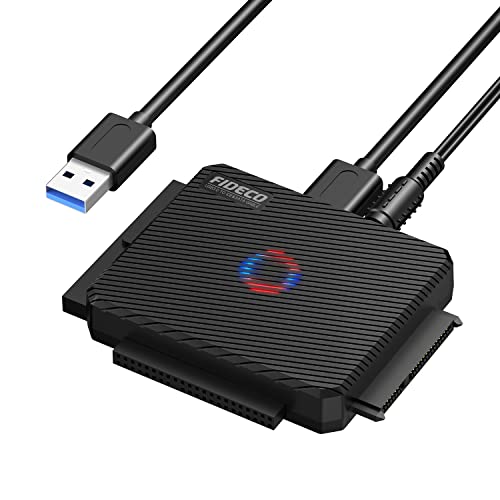
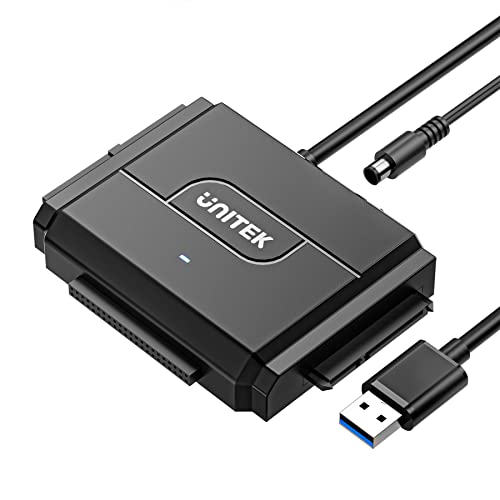
A 1998 LAN-party rig is the natural home for these cards. Picture a Pentium II with a 3dfx Voodoo2 (or an SLI pair) for Quake II and Unreal, and an AWE32 or AWE64 handling audio: the Voodoo2 drives the visuals while the Sound Blaster delivers period-correct General MIDI and Sound Blaster digital effects. The cards coexist happily with a Voodoo2 because the 3dfx card is a pass-through 3D accelerator on PCI while the AWE sits on ISA — different buses, no conflict. This is the canonical late-90s build, and assembling one today means sourcing both the GPU and the sound card on the used market. When you image a period drive or move an OS install between machines for such a build, a SATA/IDE-to-USB adapter is the modern tool that bridges a vintage IDE drive to a current PC — the Unitek and Vantec CB-ISATAU2 adapters do the same job and are worth keeping in the retro toolkit.
Spec delta table
| Card | Synth | Hardware voices | Sample RAM | Bus | Form factor |
|---|---|---|---|---|---|
| AWE32 | EMU8000 | 32 | Up to 28MB via SIMMs | ISA | Full-length |
| AWE64 Standard | EMU8000 + WaveSynth | 32 hardware + software | Onboard, software-managed | ISA | Short |
| AWE64 Gold | EMU8000 + WaveSynth | 32 hardware + software | Onboard, software-managed | ISA | Short, gold I/O |
| Sound Blaster Live! | EMU10K1 | 32+ | System RAM (PCI) | PCI | Standard |
General MIDI compatibility across era-defining games
A representative read of how the cards handle a cross-section of late-90s titles (compatibility, not a lab score):
| Game (year) | Best audio path on AWE | Notes |
|---|---|---|
| Doom / Doom II (1993-94) | OPL3 FM | Pre-wavetable; FM is period-correct |
| Quake (1996) | CD audio + SB digital | MIDI minimal; digital effects shine |
| Heretic / Hexen (1994-95) | OPL3 FM or GM | GM with a good SoundFont is a clear upgrade |
| Tomb Raider (1996) | General MIDI | EMU8000 wavetable sounds excellent |
| Half-Life (1998) | CD audio + SB digital | Late enough for full SB16/AWE support |
What's the deal with the AWE64 Gold?
The AWE64 Gold variant added gold-plated RCA outputs, an S/PDIF digital output, and slightly cleaner analog filtering. For hi-fi listening those are real differences; in game audio over period speakers they are inaudible. The Gold commands a large collector premium today precisely because of its finish and relative scarcity, not because it sounds meaningfully better in a game. If your goal is authentic 1998 game audio rather than a display piece, the standard AWE64 or an AWE32 delivers the same EMU8000 experience for a fraction of the Gold's price.
Common pitfalls when sourcing and building
- Buying an AWE32 without SIMMs. The card's big-SoundFont advantage needs sample RAM; a bare board can't load large banks. Confirm SIMMs are included or budget for compatible ones.
- Overpaying for the Gold. You are paying for gold I/O and S/PDIF that game audio won't reveal. Buy it for the collection, not the sound.
- Expecting PCI/USB cards to do DOS. A modern PCI or USB device cannot present a real ISA Sound Blaster — DOS games will not see it correctly.
- Running the default 1MB SoundFont. It sounds thin. Load a 4-8MB GM bank to hear what the EMU8000 can really do.
- Ignoring IRQ/DMA conflicts. ISA cards need correct jumper/software configuration; budget time for the classic Sound Blaster IRQ 5/7 and DMA setup.
When the AWE line is NOT the right card
If your build targets the very early DOS era (pre-1994) and you are a purist about FM synthesis, a dedicated OPL3 card or a Sound Blaster 16 may scratch that itch more precisely. If your build is a Windows 98 SE / early-2000s machine leaning on EAX and PCI, the Sound Blaster Live! or an Audigy is the period-correct choice instead — see our 2001 Pentium III Audigy build guide. The AWE32/AWE64 own the 1996-1998 transitional window specifically; outside it, other cards fit the era better.
Bottom line: which card to source on eBay in 2026
For a 1996-1998 build, both cards give you the same EMU8000 audio, so let your motherboard and budget decide. Source an AWE32 (~$40-80 with SIMMs on eBay) if you have the ISA slots and want the canonical full-length DOS card with expandable sample RAM. Source an AWE64 Standard (~$30-60) if you want a shorter, lower-power board that fits late ISA motherboards more easily. Skip the AWE64 Gold (~$150-300) unless you specifically want the collector finish. Verify SIMM compatibility before buying an AWE32, and budget a weekend for IRQ/DMA configuration. For modern listening that carries Creative's tuning lineage without the EMU8000 synthesis, the Sound BlasterX G6 is the current USB DAC/amp — not a period card, but a clean way to drive a headset on the same desk as your retro rig.
Related guides
- Sound Blaster AWE32 / AWE64 / Audigy retro PC guide
- AWE64 vs Aureal Vortex 2: the Win98 audio API war
- Vintage IDE/SATA-to-USB adapters for drive imaging
- Period-correct 2001 Pentium III Audigy build
Citations and sources
- VOGONS — vintage sound card documentation, EMU8000, and SoundFont archives
- Creative AWE64 product page (1998, via Internet Archive)
- Computerworld — history of the PC sound card
This piece is editorial synthesis based on publicly available information. No independent first-party benchmarking is reported.