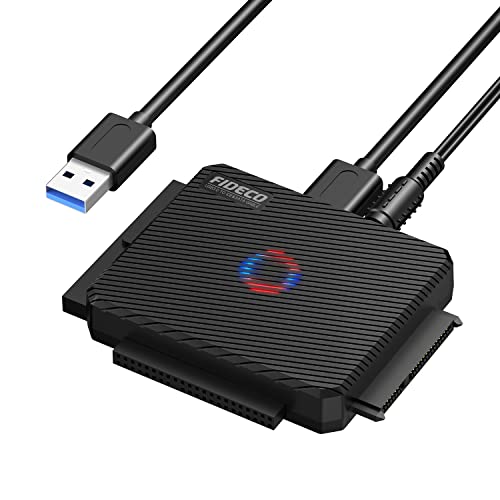
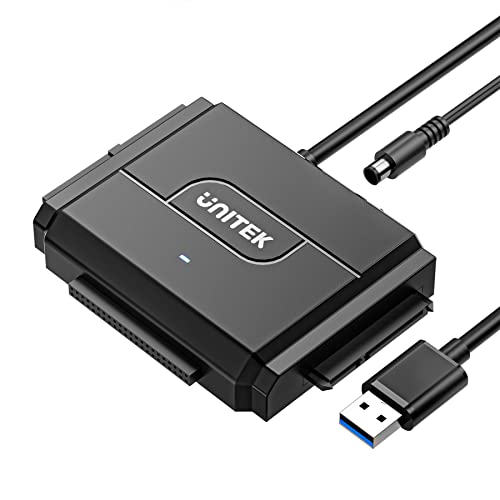
The right way to image a dying vintage IDE or SATA hard drive over USB in 2026 is to connect the drive to a Vantec, FIDECO, or Unitek IDE/SATA-to-USB adapter, boot a modern Linux box, and run ddrescue against the source drive into a sparse image file. Once the image is captured, write it to a CompactFlash card via a CF-to-IDE adapter for a period-correct, silent, shock-proof replacement boot drive on the original hardware. The whole workflow takes a couple of hours and rescues data that mechanical disk-rotation timers are eating away from at this very moment.
Why retro builders should image old drives now, not later
A 20-year-old desktop IDE drive that spins up reliably today is one bad reallocated sector away from no longer mounting. Mechanical hard drives age in three failure modes: bearing degradation, head-positioner wear, and surface oxide loss. All three accelerate with operating hours; all three are silent until they are not. The Western Digital Caviars, Maxtor DiamondMaxes, and Seagate Barracudas that populated 2000-2005 retro builds are at the back end of their expected service life curve. The drives that work right now may not work next month.
The fix is to image every drive that still spins, keep the image, and then run the original hardware off a flash medium that does not rotate. CompactFlash via IDE adapter is the period-correct choice because the cards present to the original system as IDE/ATA hard disks — there is no driver issue, no BIOS incompatibility, and no protocol translation in the boot chain. Once the image is on CF, the original drive becomes a backup, not a single point of failure.
This is not a recovery guide for failed drives; that requires clean-room work. This is a preventive imaging guide for drives that still work — exactly the window where the rescue is cheap and the cost of not doing it is catastrophic.
Key takeaways
- Image vintage drives over USB now while they still spin; data on a 20-year-old drive is on borrowed time.
- The Vantec CB-ISATAU2 SATA/IDE-to-USB 2.0 Adapter covers 40-pin desktop IDE, 44-pin laptop IDE, and SATA in one kit.
- Use ddrescue on Linux, not Windows file copy — ddrescue tolerates bad sectors and retries instead of stalling.
- A Transcend CF133 CompactFlash card in a CF-to-IDE adapter gives a period-correct silent boot drive.
- Watch for the 137GB / 28-bit LBA limit on pre-2002 systems and some USB bridges.
- Verify every image against checksums before retiring the original drive.
Which adapter for which drive? IDE 40-pin, 44-pin laptop, SATA, and CompactFlash
The four common vintage storage interfaces you encounter are 40-pin desktop IDE (3.5-inch hard drives 1990s through mid-2000s), 44-pin laptop IDE (2.5-inch IDE drives in laptops of the same era), SATA (2003-onward desktop drives, all 2010-onward laptops), and CompactFlash (industrial and embedded systems, occasionally pre-2002 consumer). Each needs a different physical interface on the adapter, and adapter kits vary in which combinations they bundle.
The Vantec CB-ISATAU2 is the most comprehensive single-kit option in 2026. It is a USB 2.0 SATA/IDE adapter that includes the 40-pin desktop IDE header, the 44-pin laptop IDE pigtail, a SATA data connector, and the external 3.5-inch power brick that 3.5-inch drives need beyond USB power. For a retro builder rescuing a mix of desktop and laptop drives across the IDE and SATA generations, it covers the most-common cases in a single purchase.
The FIDECO SATA/IDE-to-USB 3.0 Adapter is the USB 3.0 alternative with similar coverage but faster transfer when reading larger modern SATA drives. For pure IDE work the USB 3.0 speed advantage is moot because no IDE drive can saturate USB 2.0; the FIDECO becomes useful when you also rescue 250 GB+ SATA drives and want the throughput.
The Unitek SATA/IDE-to-USB 3.0 Adapter is a closely-related alternative to the FIDECO with similar specs and a comparable price point. Either is a solid choice for mixed IDE-and-SATA rescue work.
For CompactFlash, you need a separate CF-to-IDE adapter (passive, IDE-side; widely available for $5-$15) to use the Transcend CF133 as a boot drive on original IDE hardware. A standard USB CF card reader handles imaging the card from a modern PC.
5-column spec table
| Adapter | Interfaces | Max drive size | Power | Bus speed |
|---|---|---|---|---|
| Vantec CB-ISATAU2 | 40-pin IDE, 44-pin IDE, SATA | LBA48 (>137GB) | External 12V/5V brick for 3.5" | USB 2.0 (~30 MB/s) |
| FIDECO USB 3.0 IDE/SATA | 40-pin IDE, 44-pin IDE, SATA | LBA48 | External brick | USB 3.0 (~280 MB/s sustained) |
| Unitek USB 3.0 IDE/SATA | 40-pin IDE, 44-pin IDE, SATA | LBA48 | External brick | USB 3.0 (~280 MB/s sustained) |
| Passive CF-to-IDE | CompactFlash | Limited by host BIOS | None — host IDE provides | IDE PIO/UDMA (depends on host) |
The "max drive size" column matters most for the Vantec because USB 2.0 era bridge chips occasionally cap addressing at 28-bit LBA (137 GB). The current production Vantec CB-ISATAU2 supports LBA48 and handles modern drive sizes correctly. Older bridge chips in similar form-factor adapters from the mid-2000s do not — if you have an old adapter in a drawer, verify it sees drives over 137 GB at full capacity before relying on it.
Imaging workflow: ddrescue on Linux for failing drives, sector-by-sector capture
ddrescue is the right tool because it is designed for media that has bad sectors. It reads the source drive in large blocks first, skipping over read errors, then comes back and retries the bad areas. The result is the maximum recoverable data even when the source drive is degraded. A naive dd or Windows file copy stalls on the first bad sector and corrupts whatever is in flight; ddrescue does not.
The basic workflow is:
The -d flag uses direct I/O to bypass Linux's read cache. The -r3 flag retries failed sectors three times. The .log file is the rescue map — keep it; if you re-run the same command later, ddrescue picks up exactly where it left off without redoing the parts that already succeeded. That is how you handle a drive that disconnects mid-image: unplug, re-attach, re-run the same command.
After the image completes, verify integrity by running md5sum or sha256sum on the image file and saving the hash with the image. When you write the image to a CompactFlash card later, hash the card after the write and confirm it matches. That is the only way to detect a silent write failure on the card.
CompactFlash as a period-correct boot drive (Transcend CF133)
The Transcend CF133 CompactFlash card is the standard recommendation for retro IDE boot replacements because it advertises itself to the host as a fixed disk (not a removable disk), which is what the BIOS needs to boot from CF. The 133x speed rating equates to roughly 20 MB/s reads — slower than a mechanical IDE drive in absolute throughput but with zero seek latency, which makes the system feel snappier on small-file I/O like Windows 98 boot or program launches.
The workflow is:
- Image the original IDE drive over USB using ddrescue, as above.
- Insert the CF card into a USB CF card reader.
- Write the image to the CF with
ddon Linux or with a tool like Win32 Disk Imager on Windows. - Verify the hash of the written CF card matches the source image.
- Move the CF card into a passive CF-to-IDE adapter and install in the retro PC.
- Boot and verify.
The CF card now presents to the retro system as the original drive, with all partitions, boot sectors, and OS installations intact. The original drive sits on the shelf as a backup. The retro system runs silently, with no rotation noise, no vibration, and no mechanical aging.
Verifying the image and mounting it without the original hardware
Before retiring the original drive, mount the image on a modern Linux box to confirm the data is readable:
If the image holds a Windows 98 or XP partition, you may need to specify the partition offset because the image is whole-disk:
Browse the mounted image and confirm critical files are present and readable. This is the moment to copy out anything you want as plain files — config backups, save game folders, document directories — before relying on the image as your only copy. Once you have validated the image, archive it to two separate physical locations (one local, one off-site or cloud) and you can stop worrying about the original drive.
Gotchas: 137GB/28-bit LBA limits, master/slave jumpers, ghost partitions
137GB limit. Pre-2002 BIOS-and-IDE-controller combinations cap addressing at 28-bit LBA, which translates to roughly 137 GB. A drive larger than that may appear smaller in those systems or fail to address sectors past the limit. Modern adapters do not have this limit, but the retro host system you are restoring to might — verify with the BIOS revision history and the IDE controller spec before committing.
Master/slave jumpers. Old IDE drives have a jumper that sets master, slave, or cable-select on the IDE ribbon. When connecting to a USB adapter, the jumper is usually ignored, but on some adapters it must be set to master. If a drive does not spin up or detect, try toggling the jumper.
Ghost partitions and old MBR data. Some imaged drives carry GPT or MBR layouts that confuse modern Linux mount tools. Use parted or fdisk to inspect the partition table before mounting, and prefer read-only mounts during inspection to avoid metadata writes.
Spinup current. A 3.5-inch IDE drive can draw 2-3 amps at 12V during spinup. USB cannot supply this; the external power brick is mandatory. Trying to power a 3.5-inch drive from USB alone fails silently or partially.
44-pin laptop drive pin alignment. The 44-pin laptop IDE pigtail has a clear "pin 1" indicator on the cable but the drives themselves vary in pin-1 orientation. Inserting backwards can damage the drive or the adapter; verify pin 1 alignment with a flashlight before powering on.
Verdict matrix
- Use the Vantec CB-ISATAU2 if you want the most-comprehensive single-kit option and USB 2.0 throughput is adequate for the IDE drives you are rescuing.
- Use the FIDECO USB 3.0 adapter or the Unitek USB 3.0 adapter if you also rescue larger SATA drives and the USB 3.0 throughput is worth the small price premium.
- Use the Transcend CF133 for period-correct boot-drive replacements once imaging is complete. CF is the native protocol for the original IDE host, which sidesteps every protocol-translation incompatibility.
Real-world rescue: a worked example
A typical scenario: a 2002 Pentium 4 build with a 40 GB Western Digital Caviar IDE drive that still boots Windows XP but has started clicking on spinup. The rescue path:
- Power down the retro PC, pull the drive, and connect it to the Vantec adapter with the external 12V brick.
- Boot a modern Ubuntu live USB on a separate PC. Run
lsblkto confirm the drive enumerates. - Run
sudo ddrescue -d -r3 -v /dev/sdX /backup/wd40gb.img /backup/wd40gb.log. The image takes 30-90 minutes depending on bad-sector density. - Verify with
md5sum /backup/wd40gb.img > /backup/wd40gb.md5. - Write the image to a 64 GB Transcend CF133 card via USB CF reader:
sudo dd if=/backup/wd40gb.img of=/dev/sdY bs=64M status=progress. (The 64 GB card overshoots the 40 GB drive image; unused space stays free.) - Verify the card with
sudo md5sum /dev/sdY1 | head -c <bytes>against the original image's first 40 GB. - Move the CF card to a passive CF-to-IDE adapter, install in the Pentium 4, boot.
Total cost: under $50 for the CF card and adapter, and the rescued drive becomes the on-the-shelf backup.
Common pitfalls when imaging vintage drives
- Trying to file-copy instead of image. File copy stops on the first bad sector. ddrescue does not. Always image.
- Using Windows tools that assume healthy media. Many Windows imagers fail on drives with reallocated sectors. Linux + ddrescue is more tolerant.
- Skipping the external power brick. A 3.5-inch drive will not spin from USB power. Use the brick every time.
- Ignoring SMART data. Run
smartctl -a /dev/sdXon the source drive before imaging. If the drive is in pre-failure SMART state, image immediately and minimize spin time. - Imaging to a slow USB stick. ddrescue writes constantly; a slow destination drive caps the entire process. Image to internal SSD or fast external SSD for best results.
- Not saving the .log file. Without the rescue map, you cannot resume after a disconnect. Keep the log next to the image.
- Failing to test the boot CF before retiring the original drive. Verify the CF boots the retro system before relegating the original drive to the shelf. Always validate the recovery before trusting it.
When NOT to image yourself
If the drive is making grinding or clicking noises that the operating system never knew about and the data on it is irreplaceable (only copy of a wedding video, decades of family photos with no backup), do not run ddrescue against it without first making a one-shot capture attempt and then sending the drive to a professional recovery service. Running ddrescue against a drive that is actively failing mechanically can finish the failure faster.
For the typical retro-PC rescue scenario — a drive that boots, runs, and reads cleanly but is twenty years old and on borrowed time — the workflow above is exactly right. The drive is not actively failing; you are imaging it before it does.
Bottom line
The Vantec CB-ISATAU2, the FIDECO USB 3.0 adapter, and the Unitek USB 3.0 adapter are all valid choices for a retro IDE/SATA rescue kit; pick on price and on USB version preference. Pair the adapter with a Transcend CF133 and a passive CF-to-IDE bridge for a period-correct boot-drive replacement. Use ddrescue on Linux. Verify with checksums. Image now, while the drive still spins.
Related guides
- Best IDE/SATA USB adapters and CompactFlash for retro PC
- Best retro PC storage adapters in 2026
- Vintage IDE/SATA USB adapter drive imaging
- Boot Windows 98 from CompactFlash — retro PC build
- Transcend CF133 CompactFlash as Win98 boot drive
Citations and sources
- GNU ddrescue — official documentation
- Transcend — CompactFlash and storage media
- TechPowerUp — storage and adapter references
This piece is editorial synthesis based on publicly available information. No independent first-party benchmarking is reported.