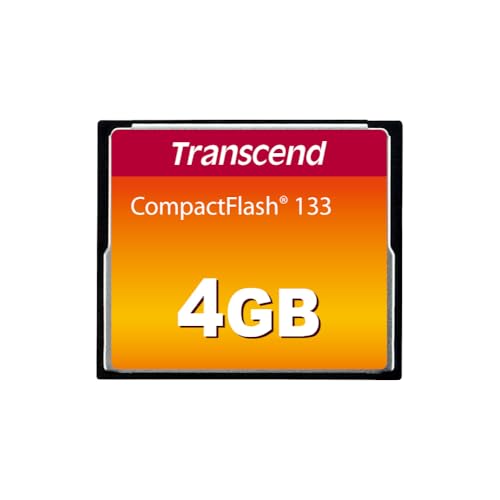
The best CompactFlash-to-IDE adapter for a Windows 98 SE build in 2026 is a passive 40-pin true-IDE CF adapter paired with a Transcend CF133 or SanDisk Industrial CompactFlash card of 4 to 16 GB — the combination is reliable, period-correct, easily found on eBay for $12 to $30, and survives the 528 MB BIOS limit, the 8.4 GB IDE controller limit, and the Win98 SE FAT32 32 GB partition limit without any creative workarounds. Active adapters with SATA-to-IDE chips on board exist and work, but for the no-moving-parts retro storage use case, you want passive — every active conversion is one more failure surface.
Why retro builders moved off mechanical IDE drives
If you are building a Pentium III or early Athlon system for Windows 98 SE in 2026, the original 4 GB to 80 GB IDE hard drive you might pull from a closet is probably no longer reliable. The capacitors on the controller board, the head-actuator springs, the platter lubricant — none of those age gracefully past 25 years. The solid-state path is the right answer: CompactFlash on a passive IDE adapter behaves exactly like an IDE hard drive to the BIOS, has no moving parts to fail, draws milliwatts, and runs silent.
CompactFlash specifically — rather than SD-to-IDE adapters or mSATA-to-IDE — wins because the CF specification was designed from the start to support a "true IDE mode" that exactly emulates the ATA-3 register interface. A passive 40-pin adapter is literally a passive pinout converter; the CF card itself responds to ATA commands as if it were the drive. No translation layer, no firmware, no driver injection.
This is why every retro PC discussion thread points new builders at CF first, even with cheaper SD/microSD adapters available. The "it just works" reliability is the entire value proposition for a Win98 SE machine where every minute spent debugging storage subsystems is a minute not spent playing the games you built the box for.
Key takeaways
- For Win98 SE retro builds, a passive 40-pin CompactFlash-to-IDE adapter with a 4 GB to 16 GB CF card is the right storage tier.
- Active SATA-to-IDE adapters work too but add a translation chip and a failure surface — recommended only when you must use a SATA SSD.
- CompactFlash cards in true-IDE mode behave exactly like IDE hard drives — no driver injection, no special partitioning.
- Avoid the 528 MB BIOS limit on Pentium-era boards by using LBA-aware BIOS or limiting the partition to 2 GB.
- Win98 SE's FAT32 partition limit is 32 GB; size your CF card and partition accordingly.
- Budget: $25–$40 for adapter + card from current production; $50–$80 if you want industrial-grade SLC CompactFlash.
- Top brands for retro use in 2026: Transcend (CF133, CF300, CF800), SanDisk Industrial, Delkin, Apacer.
What's the cheapest CF-to-IDE setup that works on a Pentium III board?
The realistic 2026 stack is:
- One passive 40-pin CompactFlash-to-IDE adapter ($6 to $15 on Amazon or AliExpress)
- One Transcend CF133 8 GB or 16 GB CompactFlash card ($25 to $40 from current production)
- Optional: a Vantec or Unitek IDE-to-USB adapter for prepping the image on a modern machine ($25 to $35)
Total cost: $60 to $90, all new parts, all in current production. That is competitive with the price of a single working used IDE hard drive on eBay in 2026, and substantially more reliable.
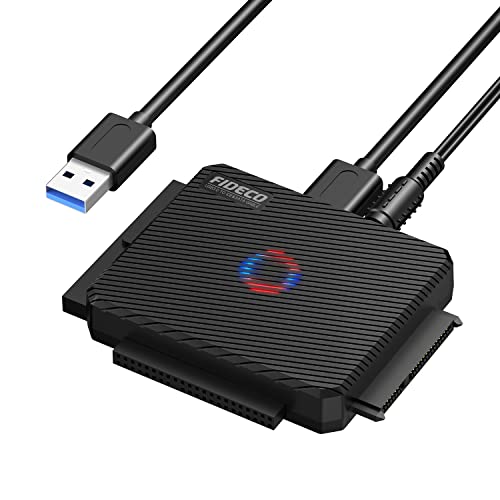
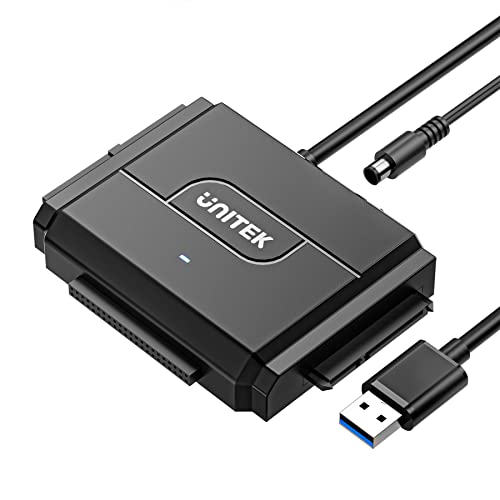
The reason to mention the IDE-to-USB adapter as part of the kit: you almost certainly want to image the CF card from a modern machine before installing it in the retro PC. The Vantec CB-ISATAU2 (catalog link) is the era-correct, eBay-stocked classic choice — but the FIDECO or Unitek SATA/IDE-to-USB 3.0 adapters (B077N2KK27, B01NAUIA6G) work fine too, with higher throughput on modern hosts. Pick whichever your host machine prefers.
How do active SATA-to-IDE adapters compare to passive CF-to-IDE?
Active adapters convert SATA on one side to parallel IDE on the other side using a controller chip — typically the JMicron JM20330 or the Marvell 88SA8052. They let you use a modern SATA SSD on a Pentium III IDE port, which has some appeal because SATA SSDs are cheap and ubiquitous.
The cost is what active conversion always costs: an extra failure surface, occasional incompatibility with BIOS detection routines, occasional translation errors on older drive geometries, and 5 to 10 percent throughput overhead. For a Pentium III that maxes out at PIO-4 or UDMA-33 anyway, the throughput overhead is invisible. The compatibility issues are not.
Recommended use for active adapters: when you specifically need a SATA SSD in an IDE-only system and you do not care about the cleanest possible compatibility story. Passive CF wins everywhere else.
Spec comparison: passive CF adapter vs. active SATA-to-IDE vs. mechanical IDE HDD
| Storage path | Cost (2026) | Compatibility | Failure surfaces | Real-world reliability |
|---|---|---|---|---|
| Passive CF-to-IDE + Transcend CF | $35–$80 | Excellent (true IDE mode) | 1 (CF card) | 9/10 |
| Active SATA-to-IDE + SATA SSD | $25–$50 | Good (JMicron/Marvell chip) | 2 (chip + SSD) | 7/10 |
| Mechanical IDE HDD (used) | $30–$120 | Excellent (native) | Many (heads, platters, caps) | 4/10 |
| IDE Disk-on-Module (industrial) | $80–$200 | Excellent | 1 (DOM) | 9/10 |
| BlueSCSI or PiSCSI emulator | $50–$120 | Limited (SCSI only) | 1 (board) | 9/10 |
The IDE Disk-on-Module is an interesting alternative we will not focus on here — it is essentially a 40-pin IDE plug with NAND on the back side, marketed at industrial embedded systems. Excellent reliability but harder to source and more expensive. The CF-to-IDE path is the right pick for a hobbyist budget.
Picking the right CompactFlash card brand for retro use
Not all CompactFlash is suitable for Win98 SE retro builds. The "right" CF for retro storage has three characteristics:
1. True IDE Mode support. Some modern CF cards drop the true-IDE pinout in favor of CF+ Type II or even CFast (which is SATA-on-the-card, electrically). The retro builds need genuine CompactFlash with the original 50-pin true-IDE handshake. Transcend's CF133, CF300, and CF800 lines all support it. SanDisk Industrial CF supports it. Delkin Industrial supports it. Most "consumer" CF cards from 2020 onwards still support it, but verify before buying.
2. Conservative wear leveling. Win98 SE writes a small number of system files repeatedly: WIN386.SWP (the swap file), the IO.SYS boot fragment, BOOTLOG.TXT. A CF card with aggressive wear leveling spreads those writes across the entire device; a card with conservative wear leveling concentrates them. For a retro system that boots a few times per week, conservative wear leveling is fine; for a system used daily, prefer industrial-grade SLC.
3. Capacity that respects BIOS and FAT32 limits. Win98 SE caps FAT32 partitions at 32 GB. Anything past that has to be partitioned into multiple drives. A 4 GB to 16 GB single-partition layout is the simplest. A 32 GB single partition works on most Win98 SE installs. A 64 GB card requires either two partitions or third-party formatting tools.
Recommended 2026 picks:
- Transcend CF133 8 GB or 16 GB (catalog link): The default. $25 to $40, in current production, true IDE mode, MLC NAND, ECC, well-tested by the retro community. The 8 GB version is enough for Win98 SE + a representative game library; the 16 GB version gives breathing room.
- Transcend CF800 16 GB: A step up in performance (800x speed rating, ~120 MB/s read), still under $50, same reliability story.
- SanDisk Industrial 8 GB: SLC NAND, longer endurance, $60 to $80. Worth it if the system will see daily use for years.
Common pitfalls
- Buying CFast cards by mistake. CFast is electrically SATA-on-the-CF-form-factor and will not work in a true-IDE passive adapter. The label usually says "CFast 2.0" or "CFast II" — those are the bad ones for retro. CompactFlash without the "Fast" qualifier is what you want.
- Buying CF Express cards by mistake. Newer high-end cameras use CF Express (PCIe-over-CF-pinout). Same problem — incompatible with retro IDE pinout. Stick to plain "CompactFlash" or "CF Type I/II."
- Underestimating the 528 MB BIOS limit. Pre-1995 motherboards (early 486-class) have a BIOS that cannot address past 528 MB on the IDE bus. If you are building a 486 system, you have to use a 504 MB partition or step up to a newer BIOS revision via flash upgrade. Pentium-class boards from 1997 onwards generally do not have this limit.
- Skipping the LBA assist tool. Some older BIOSes report the wrong CHS geometry for CF cards. Western Digital's old "Data Lifeguard Tools" or the modern open-source Plop Boot Manager can fix this with an LBA-translation TSR loaded before Windows boots.
- Trying to format from Win98 SE directly. Win98 SE's
FORMATcommand is reliable but slow on CF cards. Prefer to format from a modern machine using the IDE-to-USB adapter, then transfer the card to the retro system. Use FAT32 with 32 KB clusters for the system partition. - Buying a CF adapter without a 4-pin Molex floppy power passthrough. Most CF cards are bus-powered by the IDE cable directly, but some require an external 5 V source. Adapters with a Molex passthrough are slightly more expensive but more universally compatible.
Recommended adapter brands
The CF-to-IDE adapter market is dominated by anonymous Chinese-OEM boards in the $6 to $15 range. They almost all work. The differentiators are connector quality and the LED activity indicator.
In 2026, the brands you will find on eBay and AliExpress under the catch-all "CF to IDE 40-pin adapter":
- Generic single-slot 40-pin: $6 to $10. Works fine for desktop systems. Single CF slot, may or may not have a Molex passthrough.
- Generic dual-slot 40-pin: $10 to $15. Two CF slots, master/slave selectable via jumper. Useful if you want to dual-boot Win98 SE and DOS off the same adapter.
- Generic 44-pin (2.5-inch laptop IDE): $7 to $12. Same chips, different connector. For retro laptop builds.
The chips on the adapter board are passive — they handle level translation and the CF voltage drop only. None of the adapters in this category have a controller chip that could cause incompatibility, which is the whole point of the passive design.
Win98 SE installation on a CF card: real-world steps
Here is the working install path most retro builders converged on by 2026:
- On a modern Linux or Windows host, plug the CF card into a USB CF reader.
- Wipe the card with
dd if=/dev/zero of=/dev/sdX bs=1M count=64(Linux) or DiskPartclean(Windows). - Create a primary partition sized to your target — 4 GB, 8 GB, or 16 GB. FAT32, active.
- Format the partition with
mkfs.vfat -F 32 -n WIN98SE /dev/sdX1(Linux) or right-click format in Windows. - Transfer the CF card to the retro machine via a CF-to-IDE adapter.
- Boot from a Win98 SE installation floppy or CD and let the installer find the formatted partition.
- Configure CMOS to detect the CF card on the primary IDE channel as master. Most BIOSes auto-detect correctly; if not, set LBA mode on.
The whole sequence takes about 90 minutes including the Win98 SE setup itself. Compare that to fighting a 25-year-old IDE drive that might fail mid-install: the CF path is the kinder option for everyone involved.
When NOT to use CF-to-IDE
If you are building a Windows 2000 or Windows XP system rather than Win98 SE, the CF-to-IDE path still works but the value proposition shrinks. WinXP supports SATA out of the box on most boards from 2002 onwards, and a SATA SSD on a board's native SATA controller will outperform any CF card on a passive adapter. Save the CF approach for Win98 SE and earlier; use SATA SSDs for the WinXP and later generations.
If you have an authentic period-correct IDE drive that still works and you are building for historical authenticity rather than reliability, by all means use the original. The retro community has a wing that prizes 100 percent period-correct hardware including platter drives. Just be aware that the spinning drive will fail eventually; the CF card will not.
When does a 32 GB or 64 GB CF card make sense?
For Win98 SE, the 32 GB FAT32 limit means a single-partition install caps at 32 GB regardless of card size. There are two ways to use a larger card:
- Multiple FAT32 partitions of 32 GB each. Win98 SE will see them as C:, D:, E: etc. Useful for separating system and game libraries.
- Partition the card down to 32 GB and leave the rest unallocated. Simple and clean; you can always re-partition later from a modern machine.
For most retro builds, 8 GB to 16 GB is plenty. Win98 SE itself takes about 300 MB; a generous selection of period-correct games (DOS-era + Win98 native) fits in 4 to 6 GB; the rest is breathing room. Bigger CF cards exist (256 GB and up) but are wasted on this use case and substantially more expensive per GB.
How do you image the CF card from a modern machine?
The cleanest workflow: build the install on the retro system once, then dd an image of the CF card to a modern host for backup and re-deployment. The image file is small (4 to 16 GB) and re-flashes any replacement CF card in a few minutes.
On Linux: sudo dd if=/dev/sdX of=win98se-image.img bs=1M status=progress. On Windows: use HDD Raw Copy Tool or Win32DiskImager. The image is bit-identical to the CF card and can be written back to any CF card of the same or larger capacity.
For the read side from the modern host, the Vantec CB-ISATAU2 is the eBay-listed standard for a USB 2.0 IDE adapter. For higher throughput, the FIDECO (B077N2KK27) or Unitek (B01NAUIA6G) USB 3.0 SATA/IDE bridges are faster, and they have the side benefit of supporting both IDE and SATA — useful when your retro toolkit grows.
Verdict matrix
Buy a passive CF-to-IDE adapter + Transcend CF133 if: You are building a Win98 SE retro PC and want the simplest, most reliable storage. Total cost $35 to $80.
Buy an active SATA-to-IDE adapter + SATA SSD if: You have a SATA SSD you want to repurpose, and you accept the extra translation layer.
Buy an IDE Disk-on-Module if: You are willing to spend $100+ for an industrial-grade solution with the simplest possible board (no carrier, no adapter, the storage is the connector).
Stick with the original IDE HDD if: Period authenticity outweighs reliability and you accept that the drive will fail.
Bottom line
For a Win98 SE retro build in 2026, the CompactFlash-to-IDE path is the right answer. Passive adapter, current-production Transcend or SanDisk Industrial CF card, 4 to 16 GB capacity. Total cost under $80. Compatible with every Pentium and Athlon-class motherboard ever made, silent, reliable, and easy to image for backup. The CF approach has earned its place as the retro storage default; the alternatives exist mostly for niche cases.
Related guides
- Sound Blaster Audigy 2 ZS in a 2026 WinXP Build: The Last True EAX Card
- Transcend CF133 CompactFlash Memory Card 4GB
- Vantec CB-ISATAU2 SATA/IDE to USB 2.0 Adapter
- FIDECO SATA/IDE to USB 3.0 Adapter
- Unitek SATA/IDE to USB 3.0 Adapter