
The best plug-and-play retro mini in 2026 is the Sega Genesis Mini if you want the deepest and most varied library, followed by the SNES Classic for polished 16-bit essentials, and the NES Classic Mini for foundational 8-bit history. Pair any of them with an 8BitDo SN30 Pro for a wireless upgrade.
Editorial intro: why official minis still beat DIY for instant nostalgia
You can build a better retro console than any of these three. A $60 Raspberry Pi 5 with a good SD card and legally-sourced ROMs will run any 8-bit or 16-bit system flawlessly and most 32-bit systems well. So why do the official minis still sell? Because the alternative involves reading a two-hour setup guide, configuring RetroPie, sourcing games, and troubleshooting HDMI black screens on the couch at 11 pm while your friend is waiting to play Contra.
The three official minis (Genesis Mini, SNES Classic Edition, NES Classic Mini) are the retro equivalent of a Kindle vs a shelf of import paperbacks. Fewer options, curated content, hassle-free. They plug in and work in under a minute. The libraries are locked, the emulator is invisible, and your seven-year-old can pick them up without asking any questions. For gifts, guest-room setups, and adults who want to relive a childhood in the ten minutes between putting the kids to bed and falling asleep, the minis remain the correct answer in 2026.
They are not the correct answer if you want a hundred-plus systems and a growing library. That's what the Raspberry Pi comparison at the bottom of this piece is about. First, let's compare the three minis head-to-head.
Key takeaways
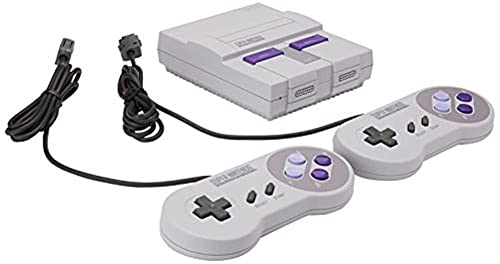
- SNES Classic Edition — the highest-praised curated library; Super Metroid, Chrono Trigger, Star Fox 2 (previously unreleased), Yoshi's Island. The comfortable pick if you can only afford one.
- Sega Genesis Mini — 42 games spanning eight genres; the deepest per-dollar library and includes hidden games unlocked by button codes.
- NES Classic Mini — the foundational library. Mario 1/2/3, Zelda 1, Kid Icarus, Metroid. Great for kids but the shortest controller cable of the three.
- 8BitDo SN30 Pro — wireless upgrade path with an official adapter, works across all three consoles and modern platforms.
- Prices moved up sharply since 2020 — production runs ended and secondary-market pricing runs $150–$250 for boxed units. Buy from a reputable seller.
Step 0: which library matters most to you?
Look at the top ten games on each system. If more than five of them are formative childhood memories, buy that mini. Do not try to buy all three unless you're a collector — the overlap in "games you'd actually replay" is small enough that one mini covers 80% of anyone's nostalgia budget.
- You grew up with Mario 3, Duck Hunt, Contra? → NES Classic Mini
- You grew up with Super Mario World, Zelda: ALTTP, F-Zero? → SNES Classic Edition
- You grew up with Sonic, Streets of Rage, Golden Axe, Phantasy Star? → Sega Genesis Mini
The Genesis Mini also includes Darius, Tetris (rare on Genesis), and unlockable secret games via Konami-code style inputs — the deepest content of the three.
Spec-delta table: built-in games, controllers, output, price
| Spec | Genesis Mini | SNES Classic | NES Classic |
|---|---|---|---|
| Included games | 42 (+ hidden) | 21 | 30 |
| Controllers included | 2× 3-button | 2× wired SNES | 1× wired NES |
| Controller cable length | ~1.5 m | ~1.5 m | ~0.75 m (!) |
| Video output | HDMI 720p | HDMI 720p | HDMI 720p |
| Power | USB Micro-B | USB Micro-B | USB Micro-B |
| Save states | Yes, 4 per game | Yes, 4 per game | Yes, 4 per game |
| Region variants | US / JP / EU | US / JP / EU (SFC) | US / EU / JP (Famicom) |
| Original launch price | $79.99 | $79.99 | $59.99 |
| Typical 2026 price | $150–$205 | $180–$210 | $180–$220 |
The NES Classic controller cable length is a famous complaint — 30 inches (~0.75 m) is too short for couch play unless the console is on top of the TV. Nintendo addressed it partially by including an extension in later batches, but by then aftermarket 8BitDo extension cables were already the fix everyone bought.
Benchmark/feature table: emulation accuracy and save features
| Feature | Genesis Mini | SNES Classic | NES Classic |
|---|---|---|---|
| Emulator | M2 (custom) | Canoe (Nintendo) | Kachikachi (Nintendo) |
| Frame accuracy | Excellent | Excellent for supported titles | Very good |
| Save states | 4 per game | 4 per game | 4 per game |
| Rewind | No | Yes (Star Fox 2 only) | No |
| Multi-tap support | No | No (max 2 controllers) | No |
| CRT filter | 3 modes | 3 modes | 3 modes |
| Aspect options | 4:3, stretched, pixel-perfect | 4:3, stretched, pixel-perfect | 4:3, stretched, pixel-perfect |
M2's Genesis emulator is the standout — arcade-perfect frame timing and audio, based on M2's decades of shooter-arcade emulation for Sega. Nintendo's Canoe emulator is fine for the curated SNES lineup but is single-purpose and doesn't handle chip-heavy games (Star Fox uses a Super FX 2 core specifically for that title). Kachikachi is functional but less refined than M2.
Controllers and expandability: adding an 8BitDo SN30 Pro
All three minis have a proprietary controller port — cosmetically it looks like a classic Nintendo/Sega port but electronically it's USB. Third parties, notably 8BitDo, sell official adapters that plug into the mini and pair to a wireless Bluetooth pad. Combined with the 8BitDo SN30 Pro, you get wireless play with a modern d-pad and Hall-effect sticks (G Classic revision). The SN30 Pro's d-pad is arguably better than the original SNES d-pad for precise inputs in Super Mario World and Yoshi's Island.
The 8BitDo adapters are sold per-console (there's an NES version, an SNES version, and a Genesis version). Budget an extra $25–$30 per console for the adapter. Once paired, the SN30 Pro's Home button maps to the mini's Reset function so you can drop back to the game menu without walking to the console. This is the single upgrade we'd make to any of these consoles.
Where each mini falls short vs a Raspberry Pi build
Every mini has a fixed library. That's the point — but if in year three you finish everything included, you're done unless you swap consoles. A Raspberry Pi 5 running Batocera or RetroPie gets you every NES, SNES, Genesis, Master System, Game Gear, Neo Geo Pocket, PC Engine, and Atari 2600 game ever made, plus PS1 and N64 with acceptable accuracy, for less money than one mini. If you want a growing library, that's the correct architecture.
The Pi loses on three fronts: 1. Setup complexity. A first Pi build takes 2–4 hours. A first NES Classic takes 30 seconds. 2. Authenticity. The Genesis Mini's M2 emulator is more accurate than most Pi setups run out of the box. 3. Legality of games. ROM sourcing is a gray zone at best. Buying the mini gets you a licensed library on physical hardware.
Our Genesis Mini vs Raspberry Pi comparison covers the tradeoff in more detail.
Collectibility and current pricing notes
All three consoles were limited-production. Production runs ended in 2018 (NES Classic), 2019 (SNES Classic), and continues sporadically for the Genesis Mini (Sega restocked with the Genesis Mini 2 in some regions, though limited in North America). Secondary-market pricing has climbed:
- NES Classic Mini: $180–$220 boxed, up from $59.99 MSRP
- SNES Classic Edition: $180–$210 boxed, up from $79.99 MSRP
- Genesis Mini: $150–$205 boxed, up from $79.99 MSRP
Prices fluctuate weekly. Check eBay sold-listings rather than active-listing asks — sold prices are ~20% lower than asks on average. Complete-in-box (CIB) units command a premium; loose consoles with third-party controllers sell for less.
Verdict matrix: pick each console if…
- Genesis Mini — you want the widest library, best per-dollar value, and prefer Sega's late-80s/early-90s catalog.
- SNES Classic — you want the highest-quality curated library and consider Chrono Trigger + Zelda: ALTTP + Super Metroid non-negotiable.
- NES Classic Mini — you want to introduce a child to the original Mario and Zelda, or you want the console with the strongest historical significance.
- 8BitDo SN30 Pro + adapter — regardless of which console you choose, add one for wireless.
Recommended pick
For a first-time buyer in 2026 we recommend the SNES Classic Edition. Its 21-game library has the best hit rate of any of the three — every game is a genuine classic and Star Fox 2 is worth the price of admission alone as a game no one else can play. Add the 8BitDo SN30 Pro with the SNES adapter and you have the most polished retro console setup available at any price.
If you're a Sega loyalist, the Genesis Mini is our second pick — 42 games vs 21 is not a small edge. The NES Classic Mini we recommend last, mainly because 8-bit games have aged the hardest of the three eras and, as covered, the controller cable is genuinely too short for adult couch play without an extension.
Common pitfalls and gotchas
- Fake NES Classics on secondary market. Bootleg NES Classic Minis appeared in ~2019 and are still listed on eBay. Look for the tamper-evident seal on the box, real Nintendo serial number ("CLV-101" model number), and the correct HDMI output resolution (720p, not 1080p as some clones claim). Buy from a reputable seller with returns.
- Power supply choice matters. All three consoles use USB Micro-B for power and pull ~500 mA. Underpowered wall adapters (some phone chargers) cause random resets. Use the included adapter or a 5V/1A+ USB brick.
- HDMI-CEC weirdness. Some TVs treat the mini's HDMI-CEC handshake incorrectly and refuse to display the console until you cold-boot the TV. Disable CEC on the TV, or plug the console in before turning the TV on.
- Save state slots are silent overwrites. All three consoles let you save state without confirmation. If you have four save slots and a kid loads one and immediately saves over it while playing a different game, the original save is gone. There's no undelete.
- Region confusion. Sega Genesis Mini has US, EU, and JP variants with slightly different game rosters. The JP Mega Drive Mini has more Japan-exclusive titles (Bare Knuckle III, Alien Soldier). Check the SKU before importing.
- Battery-backed save chips. Any physical retro console you also own with real cartridges (not covered here) needs its battery-backed save chip replaced every 15–25 years. The minis don't have this issue but many collectors do.
When NOT to buy a retro mini
If you already own a modded Raspberry Pi or a Nintendo Switch with the online expansion pack, buying a retro mini is largely redundant. The Switch's NES/SNES/Genesis/N64 emulation via Nintendo Switch Online covers most of the same catalog with cloud saves and modern controller support. Buy a mini as a gift or for guests, not as a replacement for a Switch you already have.
Similarly, if your primary use case is "one specific game" — you want to play Chrono Trigger, full stop — you can buy Chrono Trigger on Steam or the Switch eShop for less than a mini and play it on the hardware you already own. The mini's value is the whole curated library plus the plug-and-play physical form factor, not any individual title.
Sources
- Nintendo — official product info for SNES Classic and NES Classic
- Sega — Genesis Mini product page
- Tom's Hardware — retro-mini console reviews and comparisons

![Nintendo NES Classic Mini EU Console [video game]](https://m.media-amazon.com/images/I/51QVgoMv-CL._SL500_.jpg)
