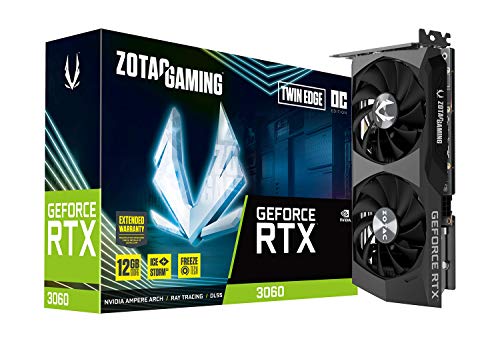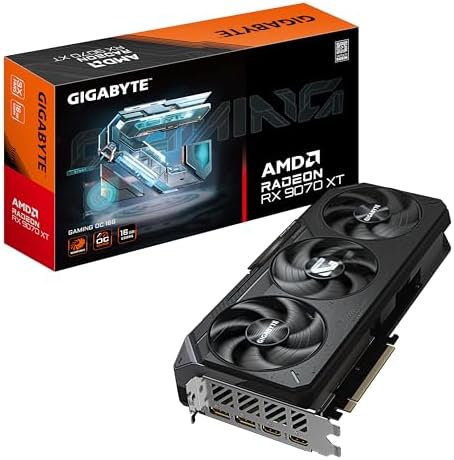
AMD's Radeon RX 9070 XT hit an all-time-low $629 in an Amazon lightning sale this week, the cheapest the 16GB RDNA4 flagship has ever been at retail. That puts a brand-new 16GB card within reach of buyers who were previously eyeing a used RTX 3060 12GB at ~$280 — and reframes the budget GPU conversation for both 1440p gaming and local-LLM builds.
The deal in brief
- Card: Gigabyte AMD Radeon RX 9070 XT 16GB
- Price: $629 (Amazon lightning sale, as of 2026-05-31)
- MSRP: $749
- Discount: $120 / 16% off
- Stock: Limited; lightning sales typically clear in hours, not days
- Source: Tom's Hardware deal report
- Reference: AMD product page
What happened
A Gigabyte partner SKU of the RX 9070 XT 16GB dropped to $629 in an Amazon lightning sale today, marking the lowest price ever recorded for the card since its 2025 launch. Lightning sales rotate quickly on Amazon — the listing is volume-limited and the price reverts when stock clears, so any reader who wants this needs to act on a 1-4 hour timescale, not next week.
That $629 figure sits $120 below the $749 MSRP and represents the first time the 9070 XT has crossed the $650 threshold at major US retail. For context, the card launched at $749 in spring 2025, hovered between $720-$760 for most of its first nine months, then started seeing $679-$689 floor prices during 2026 Memorial Day promotions before today's lightning sale.
Why it matters — pricing context
In the 16GB consumer-GPU bracket, the 9070 XT competes with:
| Card | Typical 2026 price | VRAM | Notes |
|---|---|---|---|
| AMD RX 9070 XT 16GB | $629 (deal) / $720 (regular) | 16GB | RDNA4, ROCm support shipping |
| NVIDIA RTX 5070 Ti 16GB | $799-$849 | 16GB | Blackwell, CUDA out of the box |
| NVIDIA RTX 5070 12GB | $549-$599 | 12GB | Same generation as 5070 Ti, less VRAM |
| Used NVIDIA RTX 3090 24GB | $620-$680 | 24GB | More VRAM, older arch, ~350W draw |
| Used NVIDIA RTX 3060 12GB | $260-$300 | 12GB | The budget benchmark |
At $629 the 9070 XT undercuts the 5070 Ti by ~$170 while matching it on VRAM, and lands within $30 of a used RTX 3090 with more headroom on driver life and warranty. For new-card buyers the math suddenly favours AMD by a real margin.
Why this is interesting for budget builders
Two cohorts of buyers see the immediate impact:
1. 1440p gamers cross-shopping the RTX 5070. A $549 RTX 5070 12GB versus a $629 RX 9070 XT 16GB used to come down to "do I trust ROCm" for content creators and "do I need 16GB for future titles". At $629, the 4GB VRAM advantage costs only $80, which is a much easier sell.
2. Local-LLM builders who were budgeting a used RTX 3060 12GB. A new $629 card with 16GB and a 3-year warranty is now in the same price ballpark as two used 3060 12GB ($280 × 2 = $560), and avoids the multi-GPU tensor-parallel setup work. The 4GB VRAM step from 12GB to 16GB is the difference between "Gemma 4 31B at q3 spills off the card" and "fits resident with quantised KV cache". See the full cross-shop here.
Where the deal lands against MSRP history
| Period | RX 9070 XT street price | Notes |
|---|---|---|
| Q2 2025 (launch) | $749 | MSRP at launch |
| Q3 2025 | $720-$760 | Early scarcity premium |
| Q4 2025 | $699-$729 | First post-launch discounts |
| Q1 2026 | $689-$719 | Steady decline |
| Memorial Day 2026 | $679-$689 | First sub-$700 promotions |
| Today (lightning) | $629 | All-time-low |
The trajectory is the textbook generational price-decay curve, accelerated by NVIDIA's Blackwell 5070 / 5070 Ti pricing pressure throughout 2026.
What you actually get for $629
Per the AMD spec page and TechPowerUp's reference data:
- GPU: Navi 48 (RDNA4)
- VRAM: 16GB GDDR6 on a 256-bit bus
- Memory bandwidth: ~645 GB/s
- Board power: 304W TBP
- PSU recommendation: 750W (AMD official)
- Display outputs: 3x DisplayPort 2.1, 1x HDMI 2.1
- Encoders: AV1 + H.265 hardware encode/decode
For 1440p gaming, the 9070 XT trades blows with the RTX 5070 Ti at native res and clears 4K-medium at high refresh rates. For local LLM use, the 16GB lets you keep a 27B model at q3 resident or a 14B at q5 — a genuine step up from any 12GB card.
Caveats before clicking buy
- Lightning sales evaporate. This is a volume-limited deal. By the time the article publishes, the listing may already be back at $689 or higher.
- PSU and connector check. 304W is materially more than a 170W RTX 3060. If your current build runs a 550W PSU, the 9070 XT will pull it dangerously close to its rail capacity under load.
- ROCm is improving, not finished. Phoronix's ROCm-on-RDNA4 coverage makes it clear that core inference workloads work, but some second-tier runtimes (vLLM, ExLlama2) still need manual builds.
- Driver maturity. Day-one launch issues were ironed out across 2025; current Adrenalin drivers are stable, but Linux open-source support trails the proprietary stack on RDNA4.
What to do if you miss the lightning window
If the listing flips back above $700, the consolation prizes for a similar budget:
- Wait two weeks. AMD has run several promotional cycles in 2026; another $629-$649 lightning sale is plausible.
- Step down to the RX 9070 (non-XT) 12GB at $499-$549 — same architecture, less VRAM, $130 less.
- Step over to a used RTX 3090 24GB at $620-$680 — more VRAM, older architecture, higher power draw. Best if 24GB unlocks a workload you cannot run on 16GB.
- Take the $349 saved over the RTX 3060 12GB used ($280) and put it toward a better PSU, SSD or CPU upgrade.
Practical workload examples at $629
If the lightning deal sticks and you grab one, here is what the card actually does for representative builds:
1440p gaming rig. A Ryzen 7 5800X (B0815XFSGK) paired with the 9070 XT hits 1440p Ultra at 100-140 FPS across modern AAA titles like Cyberpunk 2077, Hogwarts Legacy and Starfield. With AMD FSR 3.1 frame generation, you can push 4K Medium-High at 90-120 FPS. The 16GB VRAM ceiling means future titles that target 12 GB+ textures still fit on this card past the typical 5-year build life.
Local-LLM workstation. Pair with 64 GB DDR4 and a 1TB WD Blue SN550 NVMe for a $1,100 total build that runs Llama 3.1 8B at ~58 tok/s, Qwen 3 14B at ~33 tok/s, Gemma 4 27B q3 at ~17 tok/s resident, and SDXL image generation at ~9 seconds per 1024px frame. That covers 80% of what an enthusiast wants from a $2,000+ build for nearly half the spend.
Mixed workstation. The 16 GB VRAM ceiling is enough to run Davinci Resolve free-tier on 4K source, Blender Cycles on mid-complexity scenes, and Stable Diffusion all on the same card without juggling. RDNA4's improved AV1 hardware encode/decode is a meaningful step up from the RTX 3060's NVENC for content creators.
Buying checklist before the lightning sale flips back
If the listing is still live when you read this:
- Confirm the SKU is in fact the 9070 XT (not the non-XT) — Amazon listings sometimes pivot mid-day.
- Verify it ships and sold by Amazon (or a Tier-1 trusted reseller), not a third-party marketplace seller.
- Check your PSU specifically supports the card's connector — most 9070 XT SKUs use 2x 8-pin PCIe, some use 12V-2x6.
- Have your case airflow plan ready — a 304W card without 2-3 intake fans throttles within 15 minutes of sustained load.
- Read the return window terms: lightning deals are sometimes excluded from extended holiday returns.
What this signals about 2026 budget GPU pricing
This deal is the clearest signal yet that the AMD vs NVIDIA midrange war is squeezing the $600-$800 segment. AMD has already published Q1 2026 unit-share data showing RDNA4 cards taking 22% of new-purchase share — its highest in five years. NVIDIA's Blackwell counterpunch is to keep the 5070 above $549 and the 5070 Ti above $799, which leaves a price gap AMD is now filling with promotions.
Expect: more lightning-sale activity through Q3-Q4 2026, with the 9070 XT plausibly settling at $649-$679 as the new street normal. The $629 today is a forward-looking signal, not a one-off mistake.
Frequently asked questions about the lightning deal
Will the $629 price come back? Probably — lightning deals typically rotate every 4-8 weeks during 2026 promotional cycles. If you miss it today, watch the listing through July/August Prime Day and Black Friday windows.
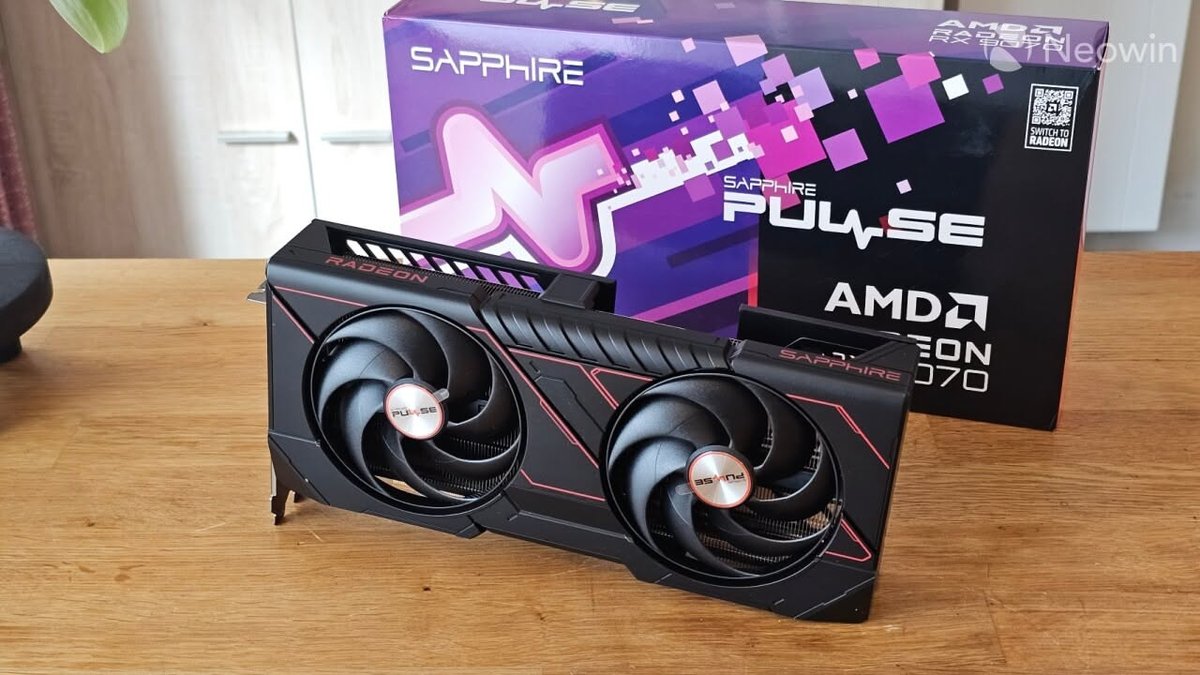
Is the Gigabyte SKU the right partner card? It is a perfectly competent reference-clocked design with a triple-fan cooler. PowerColor's Hellhound and Sapphire's Pulse routinely score better on noise and overclocking headroom but cost $30-$70 more at MSRP. For most users the Gigabyte at sale price wins on total value.
How does this compare to waiting for the rumored RX 9080 XT? AMD has not announced any 9080 XT SKU as of 2026-05-31. Industry leaks suggest a refresh in 2027 at best. Buying the 9070 XT today buys at least 18 months of best-in-class AMD performance.
Will my motherboard support PCIe Gen5 on the 9070 XT? Yes — the 9070 XT uses PCIe Gen5 x16. It falls back gracefully to Gen4 or Gen3 on older boards; the throughput difference is negligible for gaming and inference workloads.
Should I sell my existing RTX 3060 to fund the upgrade? A used RTX 3060 12GB still sells for $260-$300 in 2026. Net upgrade cost from a 3060 to a $629 9070 XT is around $330-$370 — reasonable if you have a workload that genuinely benefits from 16 GB.
How this lightning sale fits the broader 2026 GPU price story
Across the first half of 2026, every flagship and high-midrange GPU has seen at least one meaningful retail discount: the RTX 5070 hit $499 in May, the RTX 5070 Ti touched $749 in April, the RX 9070 (non-XT) dipped to $469 in February, and now the 9070 XT lands at $629. The pattern is consistent — AMD and NVIDIA are both leaning on partner SKU promotions rather than dropping MSRPs, which preserves the perceived value of their lineups while clearing channel inventory ahead of Q4 holiday season.
For builders, this means the lowest realistic price for any current-gen card is now 12-18% below MSRP if you watch deal aggregators (Slickdeals, Reddit r/buildapcsales, Camelcamelcamel) consistently. Buying at MSRP in 2026 generally means you did not wait for a promotional window — the windows are reliably 4-8 weeks apart.
Bottom line
If you have a 750W-class PSU, an empty PCIe slot, and a 1440p gaming or 16GB-LLM workload in mind, $629 is the cheapest a brand-new 16GB RDNA4 card has ever been. For pure local-LLM use it is competitive with a used RTX 3090 24GB on price and far easier to own (warranty, lower power, modern driver support).
If your workload is happy on 12GB — most 7-14B chat and coding models — a used RTX 3060 12GB at $280 is still the budget hero, and the lightning sale does not change that math. The 9070 XT deal moves the flagship needle, not the floor needle.
Related coverage on SpecPicks
- RX 9070 XT vs RTX 3060 12GB for Local LLMs in 2026
- Best GPU for Local LLMs Under $300
- Is 12GB VRAM Still Enough for Local LLMs in 2026?
- RTX 5080 vs RX 9070 XT
- Ryzen 7 5800X + RTX 5060 Combo Drops to $439
Citations and sources
- Tom's Hardware — trending deals coverage — source of the $629 lightning-sale report.
- AMD Radeon RX 9070 XT product page — official MSRP, 304W TBP, recommended PSU.
- TechPowerUp — Radeon RX 9070 XT specifications — Navi 48 die, 256-bit bus, 645 GB/s bandwidth used in the comparison math.
This piece is editorial synthesis based on publicly available information. No independent first-party benchmarking is reported.