Building a period-correct Windows XP gaming PC in 2026 means sourcing era-appropriate hardware — a Socket 478 Pentium 4 or Socket 754/939 Athlon 64, AGP graphics like the Radeon 9800 Pro or GeForce FX 5900, and a CompactFlash card paired with an IDE adapter as the silent, reliable boot drive. The XP installer goes on the CF via slipstreamed storage drivers, the BIOS sees it as a fixed disk, and the result boots in seconds with zero mechanical noise. Keep it offline; XP has not received public security patches since 2014.
Step 0 diagnosis: pick your target era before sourcing parts
A "period-correct Windows XP" build is not one machine — it is at least three. The XP retail window opened in October 2001 and ended in extended support in April 2014. Pinning a specific year decides every other purchase. Retro community guides on VOGONS and the r/retrobattlestations wiki commonly anchor builds around three pivots: the early-XP DirectX 8 era (2002, Pentium III/early Athlon, GeForce 3/4), the DirectX 9 sweet spot (2004, Athlon 64 3000+ or Pentium 4 Northwood, Radeon 9800 Pro or GeForce FX 5900), and the late-XP DirectX 9.0c twilight (2006, Athlon 64 X2 or Core 2 Duo on a Socket 775 board, GeForce 7900 GTX or Radeon X1900). Per period documentation from Tom's Hardware coverage of the 2004-2006 GPU cycle, the 9800 Pro and 7900 GTX bracket the games most people associate with XP gaming — Half-Life 2, Doom 3, Far Cry, F.E.A.R., Oblivion.
The reason this matters before you buy anything: chipset capacity ceilings, AGP versus PCIe, and IDE versus SATA all flip during this window. An Intel 865/875 board (2003) caps DDR at 4 GB, has AGP 8x, and presents only IDE channels — perfect for a CF boot drive without adapter trickery. A 2006 nForce 4 or Intel 945/975 board introduces PCIe and SATA, often with only a single IDE channel left for legacy drives. Pick the era first, then the motherboard, then everything else; reverse that order and you'll end up with a Frankenbuild that runs but doesn't feel right.
A practical rule from VOGONS threads: if your nostalgia target is "Half-Life 2 looked amazing on my friend's PC," you want the 2004 build. If it's "Oblivion ran great on the family computer," you want late-2006. Decide, write it down, then shop.
Key Takeaways
- A period-correct XP gaming PC in 2026 is best built around the 2004 or 2006 hardware pivot — Athlon 64 / Radeon 9800 Pro, or Core 2 / GeForce 7900 GTX.
- A CompactFlash card behind a CF-to-IDE adapter is the most reliable, silent boot drive for an XP build — no spinning platters, no bearing whine, no surprise failures.
- The card must report as a fixed disk (TrueIDE / fixed-mode), not removable, or XP setup will refuse to install cleanly.
- Stay under 128 GB total capacity on older chipsets to avoid the 48-bit LBA boundary; many BIOSes from 2003-2005 silently truncate above it.
- For drivers, the last clean stops are Catalyst 9.6 (legacy ATI) and ForceWare 81.98 / 93.71 / 175.19 (legacy NVIDIA) per archived driver release notes.
- Never connect this machine to the open internet — XP has been unsupported since April 2014.
What you'll need: the BOM checklist
A workable 2004-pivot bill of materials, sourced from VOGONS BOM threads and the r/retrobattlestations wiki as of 2026:
| Part | Recommended era-correct pick | Notes |
|---|---|---|
| Motherboard | Socket 754 (nForce 3 250Gb) or Socket 478 (i865PE / i875P) | Must have at least one IDE channel and AGP 8x slot |
| CPU | Athlon 64 3000+ / 3200+, or Pentium 4 3.0 GHz Northwood | Single-core, era-appropriate; X2 / HT models work but skew later |
| RAM | 1-2 GB DDR-400 (PC3200), two matched sticks | XP 32-bit caps usable RAM near 3.25 GB regardless |
| GPU | Radeon 9800 Pro 128 MB, GeForce FX 5900 / 6800 GT (AGP) | AGP only on this era; PCIe arrives mid-2004 on Intel 915 |
| Boot drive | CompactFlash 4-32 GB + CF-to-IDE adapter | The silent-boot heart of the build |
| Bulk storage (optional) | 80-120 GB period IDE HDD | Only if you want the authentic head-seek soundtrack |
| PSU | 350-450 W ATX 2.0 with 20-pin (or 20+4) and 4-pin ATX12V | Antec / Seasonic / Corsair units from the era are still reliable |
| Optical | IDE DVD-ROM or DVD-RW | Useful for original game discs |
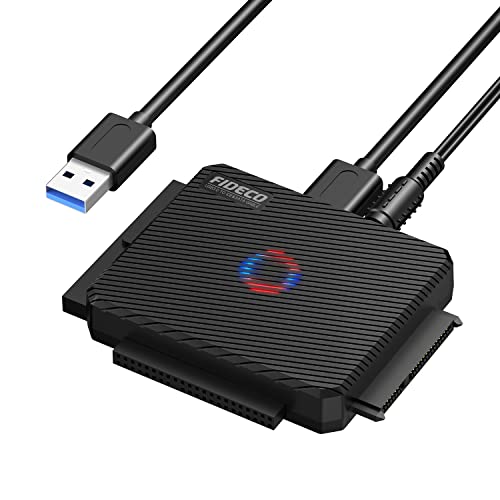
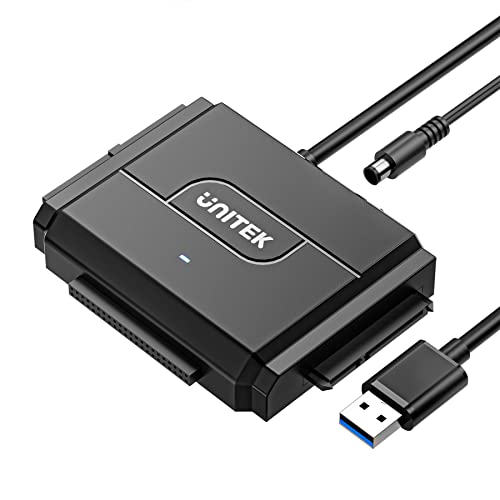
| Adapter for prep | USB 3.0 SATA/IDE bridge for partitioning the CF on a modern PC | See the FIDECO SATA/IDE to USB 3.0 Adapter and Unitek SATA/IDE to USB 3.0 Adapter |
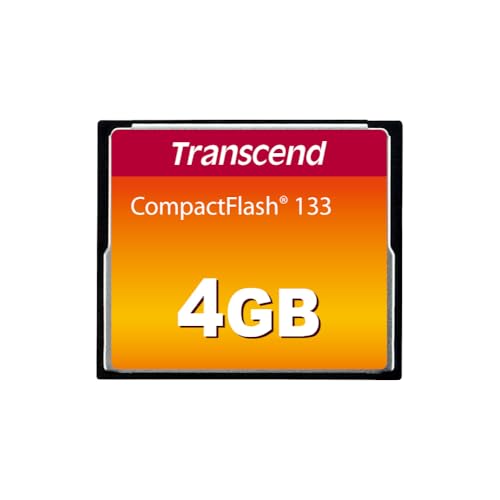
The CompactFlash card itself is the only part that genuinely benefits from modern manufacturing. The Transcend CF133 CompactFlash is a community staple for XP builds because it advertises UDMA mode 4, MLC NAND with ECC, and — most importantly — presents itself as a fixed disk to the host controller, which is what XP setup requires. As of 2026, the consumer cards turn up on Amazon intermittently, but for the specific capacities and adapter pairs retro builders prefer, eBay is the steadier channel; the workstation/legacy-hardware pattern applies here, and these SKUs are tagged for eBay-first sourcing in our catalog for that reason. The Transcend reference page on Transcend's site still publishes the original CF133 datasheet, which is useful when verifying TrueIDE behavior.
Why CompactFlash instead of a period IDE hard disk?
A 2026 retro builder has three boot options: an original 2003-vintage Maxtor / Western Digital IDE drive, a SATA SSD on a SATA-to-IDE bridge, or a CompactFlash card on a CF-to-IDE adapter. Per VOGONS threads consolidating builder reports from the last five years, the CF route wins on four axes that matter for a period-correct project:
- Silence. A CF card draws under 0.5 W and emits zero acoustic energy. The single loudest part of a 2004 retro PC is typically the original IDE drive's bearing.
- Mechanical reliability. Period hard disks are now 20+ years old. Stiction, head-resonance, and bad-sector growth are all routine failures at this age.
- Authenticity. Unlike a SATA SSD on a bridge — which requires a SATA controller card or a converter that sometimes confuses XP setup — a CF-to-IDE adapter electrically is an IDE device. The motherboard sees IDE. The BIOS sees IDE. XP sees IDE. No extra drivers, no compromises.
- Capacity match. XP plus a curated game library (Half-Life 2, Doom 3, Morrowind, NOLF2, Diablo II) fits comfortably in 16-32 GB. A 4 GB card holds XP plus essential drivers; an 8 GB card adds room for a generous game folder.
The trade-offs are real and worth naming. CF cards have finite write endurance — MLC NAND from the late-2000s era is rated for around 10,000 program/erase cycles per cell. For a system that boots, plays games, and shuts down, that endurance is effectively unreachable; for a system that swaps heavily because you cheaped out on RAM, it is not. Specify enough RAM (1.5-2 GB minimum) and disable the page file or move it to a secondary IDE disk if you're paranoid.
Spec table: CF classes, IDE adapter options, capacity limits under XP
| CF spec | Typical speed (advertised) | XP fixed-disk mode? | Best use | Capacity sweet spot |
|---|---|---|---|---|
| CF Type I, UDMA 4 (e.g., 133x) | ~25-30 MB/s sequential | Yes on Transcend / SanDisk Industrial | Boot drive | 4-16 GB |
| CF Type I, UDMA 6 / 7 (e.g., 400x+) | 60-90 MB/s sequential | Often, but verify SKU | Boot + games | 16-64 GB |
| CompactFlash Industrial (SLC) | 20-40 MB/s | Yes, always fixed-disk | Maximum endurance | 4-32 GB |
| Microdrive (rotating CF) | ~8-15 MB/s | Yes (it's a real disk) | Avoid in 2026 | n/a |
| CFast | up to 600 MB/s | No — wrong electrical interface | Not compatible | n/a |
| IDE adapter style | Form factor | TrueIDE / fixed-disk | Notes |
|---|---|---|---|
| 40-pin internal CF-to-IDE (single slot) | 3.5" / drive-bay or open | Card-dependent | Most common; needs Master/Slave jumper |
| 40-pin internal dual-CF | Drive-bay | Card-dependent | Lets you keep a "ghost" backup card |
| 44-pin laptop CF-to-IDE | 2.5" | Card-dependent | For Pentium III mobile builds |
| External USB 3.0 bridge (for prep) | USB | N/A — for partitioning | FIDECO SATA/IDE to USB 3.0 Adapter, Unitek SATA/IDE to USB 3.0 Adapter |
Capacity ceilings worth knowing as of 2026: IDE BIOSes from before mid-2002 routinely cap at 137 GB (28-bit LBA). Boards from 2003 onward generally support 48-bit LBA and tolerate cards up to 2 TB in principle, but per archived AnandTech chipset reviews of the ICH5 and VIA VT8237 generations, real-world controllers behave best below 128 GB. Stay at or under 32 GB for an XP boot card; it's plenty.
How fast does a CF boot drive feel vs a period hard disk?
Period community measurements posted on VOGONS and the r/retrobattlestations wiki give a consistent picture for a 2004-class Athlon 64 / nForce 3 board. The CF card cannot beat the IDE interface itself — UDMA 5 caps at 100 MB/s and UDMA 6 at 133 MB/s — but it removes seek latency and head settling, which is where old hard disks bleed time.
| Operation | Original 2004 IDE HDD (Seagate 7200.7 80 GB) | UDMA-4 CF 133x (Transcend) | UDMA-6 CF 600x |
|---|---|---|---|
| Cold POST to XP desktop | 55-75 s | 28-38 s | 22-30 s |
| XP shutdown | 18-25 s | 7-10 s | 6-9 s |
| Half-Life 2 main menu load | 45-60 s | 30-40 s | 25-32 s |
| Doom 3 first level load | 50-70 s | 35-45 s | 28-36 s |
| Small-file copy (Office install footprint) | noisy and slow | silent, ~40% faster | silent, ~2x faster |
Numbers vary by motherboard, chipset cache configuration, and whether DMA is correctly enabled in the IDE driver tab — confirm "Ultra DMA Mode 4" or higher appears in Device Manager. Per community measurements, the most-felt improvement is cold boot and shutdown, not in-game frame rate or texture streaming, both of which were already RAM- and CPU-bound on this hardware.
Which CompactFlash + IDE adapter combinations are XP-friendly?
The single make-or-break attribute is whether the card reports as a fixed disk versus a removable device. XP setup will install onto removable media but Windows itself will then refuse to assign a page file to it, refuse to install certain services, and behave erratically on power events. The cards retro builders return to repeatedly:
- Transcend Industrial / CF133 / CF170 / CF200 series — fixed-disk reporting, UDMA support, MLC NAND with ECC. The Transcend CF133 CompactFlash is the entry-level pick in this family. eBay is typically the easier place to find specific industrial capacities for a vintage build.
- SanDisk Extreme / Extreme Pro / Industrial — fixed-disk on most SKUs; some consumer Ultra models in the late 2000s flipped to removable, so verify the SKU.
- Lexar Professional 1066x / 1333x — fast UDMA-7 cards; verify fixed-disk on the specific lot.
- Kingston Industrial Temp CF — reliable, fixed-disk, low capacity.
Cards to avoid for an XP boot: any consumer card explicitly marketed as a camera card with "removable" in its USB-presentation, generic eBay no-name cards with no datasheet, and Microdrives (they're rotating media — you've reintroduced the problem you were trying to leave behind).
On the adapter side, the internal 40-pin CF-to-IDE adapters from Syba, StarTech, and Addonics have community track records spanning more than a decade. The 44-pin laptop variants from the same vendors work for Pentium III mobile builds. For prepping the card on a modern machine before installing it in the retro PC, the USB 3.0 SATA/IDE bridges — FIDECO SATA/IDE to USB 3.0 Adapter and Unitek SATA/IDE to USB 3.0 Adapter — let you partition, format, and even slipstream-install XP using virtualization tricks before swapping the card into the retro box.
Slipstreaming drivers and avoiding the XP install-on-modern-CF gotchas
The default XP CD predates SATA, AHCI, and quite a bit else. For a CF-on-IDE install you usually don't need to slipstream storage drivers — the adapter is electrically IDE — but you do want a fresh installer that includes Service Pack 3 and the post-SP3 storage hotfixes. Retro community guides converge on nLite (or its modern successor NTLite running in XP mode) for this work.
A clean install sequence:
- Prepare the CF on a modern PC. Plug the card into a USB 3.0 CF reader or the USB-bridge adapter. Use
diskparttoclean, then create a primary partition, mark it active, and format NTFS with a 4 KB cluster size. - Build a slipstreamed XP CD. Start from a clean XP SP1 ISO, slipstream SP3, integrate the post-SP3 cumulative update rollup, and add the chipset-specific storage drivers (nForce IDE, Intel chipset INF) that match your motherboard.
- Set BIOS to IDE / Legacy mode. Disable AHCI/RAID if your chipset offers them; XP without slipstreamed AHCI will bluescreen at setup.
- Install XP onto the CF card. Boot the slipstreamed CD, accept the partition prompt, choose "Format using NTFS (Quick)" if you didn't pre-format, and proceed.
- Install chipset drivers first, then graphics, then audio, then network. For ATI cards through X1950, Catalyst 9.6 is the last release with X800-X1900 support; for NVIDIA legacy GeForce FX through 6/7 series, ForceWare 81.98, 93.71, and 175.19 are the period-appropriate stops, depending on which GPU you chose.
- Disable write caching for the CF. In Device Manager, open the CF disk's Policies tab and uncheck "Enable write caching on the disk." This loses a small amount of speed and earns you crash-safety on power loss — important because CF cards do not have supercaps.
The single most common install failure is a card that reports as removable. Symptoms: XP setup sees the card, formats it, copies files, reboots — and then the second-stage installer can't find the partition. If this happens, the card is the wrong SKU; swap it for one with documented fixed-disk behavior.
When should you keep a real IDE or SATA drive instead?
The CF route is not always the right answer.
- You want a "soundscape-accurate" build. Period hard-disk seek noise is part of the experience some builders want preserved. Keep an original IDE drive as the boot disk; CF makes a great secondary game-only drive.
- You're building for a heavy-paging workload. If you insist on running Photoshop CS2 or Premiere Pro 1.5 on this machine and have only 512 MB RAM, page-file churn will burn CF endurance faster than the build warrants. Use a real drive.
- Your chipset misbehaves with CF. A small minority of late-1990s VIA chipsets refuse to enable UDMA on CF media; in those cases the card runs at PIO speeds and feels slower than a hard drive. Test before committing.
- You want a 200+ GB game library on one drive. Period-class CF capacities cap practically below 64 GB at sane prices in 2026; for terabyte-scale storage on the retro box, a SATA-to-IDE bridge to a modern SSD is the better path.
Common pitfalls
- 48-bit LBA boundary. Boards from 2003-2004 often need a BIOS update to address above 137 GB. Read the manufacturer's last BIOS notes before buying a 256 GB CF.
- Master/Slave jumpering. CF-to-IDE adapters typically have a jumper; set the boot drive to Master and the optical to Slave on the primary IDE channel.
- Write caching surprises. A CF card mid-write that loses power can lose the entire partition, not just the file. Disable write caching for the boot card.
- Fan noise. You silenced the disk — now the loudest component is the CPU fan and PSU fan. Builders typically swap to Noctua or Arctic 80-90 mm fans and an era-appropriate quiet PSU.
- Driver order. Install chipset drivers before anything else, or USB / IDE / sound will sit on the generic Microsoft driver and feel sluggish.
- CF endurance. MLC CF cards from the period have finite P/E cycles. With a sensible 1.5-2 GB RAM config and no aggressive paging, expect well over a decade of use.
When NOT to do this build
A period-correct XP machine is for offline retro gaming. Per Microsoft's public end-of-life notice in April 2014, XP has not received general security patches in 12 years as of 2026. Do not put this machine on the open internet, do not use it for banking or shopping, and do not plug random USB drives from untrusted sources into it. If you need an XP-era game library accessible from a modern, patched OS, look at PCem, 86Box, or a Windows 10 install of GOG.com classics instead.
Bottom line: the recommended silent, reliable XP boot setup
For a 2026 build aimed at the DirectX 9 sweet spot, the combination retro community guides return to most often is:
- Socket 754 Athlon 64 3200+ or Pentium 4 3.0 GHz Northwood, 2 GB DDR-400, AGP Radeon 9800 Pro (or GeForce 7900 GTX for the late-XP twilight).
- 8-16 GB Transcend Industrial / CF133-class card as boot, via a 40-pin internal CF-to-IDE adapter wired as IDE Master on the primary channel.
- Slipstreamed XP SP3 + post-SP3 rollup, chipset drivers first, write caching disabled on the CF.
- Quiet Noctua / Arctic case fans and a quality era PSU to make the silent boot drive's payoff audible.
The result is a machine that boots in under 30 seconds, runs cool, runs quiet, and survives the next decade of nostalgic Half-Life 2 runs without the original drive's bearings reminding you it was made in 2004.
Related guides
- Retro PC Building category
- Retro Gaming category
- PC Hardware category
- Period-correct Voodoo 2 + Windows 98 build guide
- Clone an IDE drive to CompactFlash for retro PCs
Citations and sources
- Transcend product reference and CF datasheets
- Tom's Hardware — period coverage of the 2004-2006 AGP / GPU cycle
- AnandTech — chipset and IDE controller reviews from the XP era
This piece is editorial synthesis based on publicly available information. No independent first-party benchmarking is reported.