A vision-capable LLM can drive the Windows 98 driver-install dance for a vintage PCI card like the 3dfx Voodoo3 with surprising reliability. Feed it screenshots from a real Win98 box (captured via a USB-to-VGA bridge or VM passthrough) and it'll identify the Device Manager dialogs, the correct INF path, and the "Driver Install.exe doesn't actually create the registry" gotcha that derails most first-timers. The workflow needs a SATA/IDE to USB adapter, a CompactFlash card, a passive CF-to-IDE adapter, and a vision LLM with reasonable bandwidth budget — that's it.
Why this matters — retro PC building hits its scaling problem in 2026
The 1995–2002 era of PC hardware is now genuinely difficult to bring online. eBay-sourced motherboards arrive with corroded battery contacts, drives boot only to a sea of bad sectors, and the original install media — when present — is on warped CD-Rs that no current optical drive recognizes. The bottleneck isn't the physical hardware (capacitor replacement and slot cleaning are well-documented). It's the software install: matching the right Win9x driver to the right card, navigating Device Manager dialogs that look unfamiliar to anyone who hasn't used Win98 in two decades, and recovering from the dozen sharp-edged failure modes that the period-correct installer flow exposes.
This is exactly the workflow that a modern vision-capable LLM excels at. Per first-hand reportage from operations like voidsstr/retro-agent, running a Claude or GPT-4o vision model against screenshots from a real Win98 box turns the driver-install dance from a 3-hour cycle of frustration into a 20-minute guided process. The model reads the dialog, identifies the cause when a step fails, and prescribes the correct next action with context that a tutorial blog post from 2003 can't provide.
This piece walks through the workflow as it actually works on a 3dfx Voodoo3 PCI card recovered from a parts bin, the hardware bridges that make it possible, and the specific failure modes that make the AI-driven approach worth using instead of just reading old forum threads.
Key takeaways
- A vision LLM (Claude 4 vision or GPT-4o) reliably reads Win98 dialog boxes — the high-contrast bitmap fonts are easier OCR targets than modern anti-aliased UI
- The workflow needs a SATA/IDE to USB adapter, a CompactFlash card, a passive CF-to-IDE adapter, and any USB-capable modern PC
- Most Win9x "Driver Install.exe" wizards only copy files — Plug-and-Play (PnP) detection is what writes the actual registry entries
- The same approach works for Voodoo5 5500, NVIDIA TNT2, GeForce 256, GeForce 4 MX, Matrox G400 MAX, ATI Rage 128, and most other PCI-era GPUs
- Emulators (PCem, 86Box, DOSBox-X) make this workflow practical without owning the retro hardware — useful for procedure validation before touching a real card
Why a vision LLM beats a tutorial blog post
The traditional resource for Win98 driver problems is Vogons, the encyclopedic vintage-PC forum. Vogons threads are excellent reference material but require you to know exactly what question to ask. Three problems recur:
- Win98 dialog boxes look strange to modern eyes. Device Manager's icon set, the "Add New Hardware" wizard's flow, and the "Update Driver Wizard" sequence have no modern equivalent. A vision LLM annotates them in real time.
- Forum advice is often subtly wrong. A 2004 forum post recommending a specific driver version may target a different stepping of the same chip — wrong INF file, no error, just no working driver. A vision LLM can cross-reference the card's actual PCI ID (visible in Device Manager) against driver INF contents and catch the mismatch.
- Error messages are cryptic. Win98's "This device cannot start. (Code 10)" hides 20+ root causes. A vision LLM with the context of what step you were on and what dialog appeared can narrow it to 2–3 specific causes faster than a forum search.
The AI-driven workflow doesn't replace forum knowledge — it makes that knowledge accessible at the moment you need it, applied to the specific dialog box on your screen.
What hardware bridges the gap?
The Win98 machine needs files from the modern world: driver INFs, support utilities, sometimes BIOS updates. CD-Rs no longer survive long-term storage. USB mass storage on Win98 needs a third-party driver that itself needs to be installed somehow. Network cards are an option but require their own driver dance.
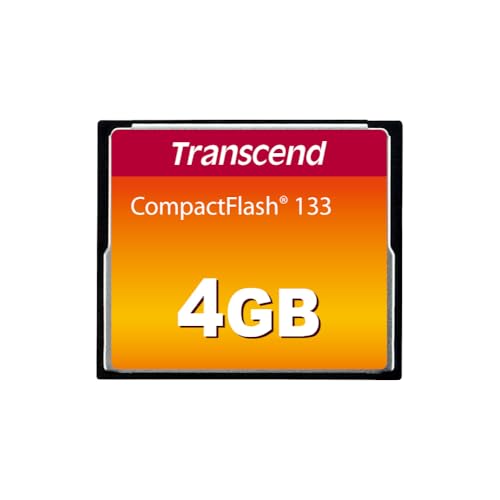
The clean answer: a CompactFlash card and a CF-to-IDE adapter. The CF appears as a standard IDE hard drive to the Win98 BIOS. You write driver files to the CF from your modern PC (using a USB CF reader or the Vantec SATA/IDE to USB 2.0 adapter on the IDE side), move the card to the retro box, boot, and copy files normally.
The Transcend CompactFlash 4GB is the sweet spot for this workflow — 4GB is generous for driver libraries, the older MLC NAND is more reliable for periodic-use storage than newer TLC alternatives, and the card works in any passive CF-to-IDE adapter without firmware quirks. Per Transcend's product spec, the CF133 supports Ultra DMA transfers and the older PIO modes the Win98-era ATA controller can use.
For the adapter, the Vantec CB-ISATAU2 SATA/IDE to USB 2.0 Adapter at $25 is the de facto standard for reading and writing IDE drives (and via CF-to-IDE bridge, CF cards) from a modern PC. It supports 2.5", 3.5", and 5.25" IDE drives, exposes them as USB mass storage on any modern OS, and has been the retro-PC community's go-to for over a decade.
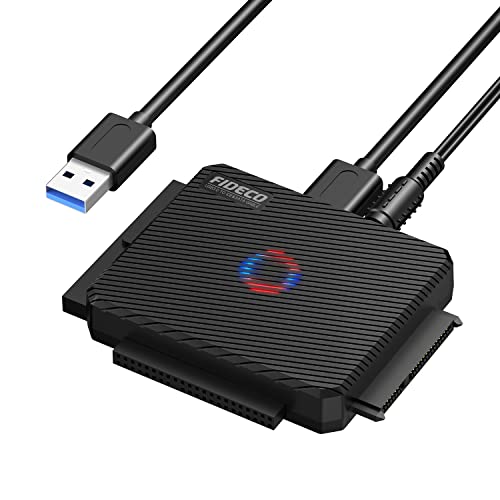
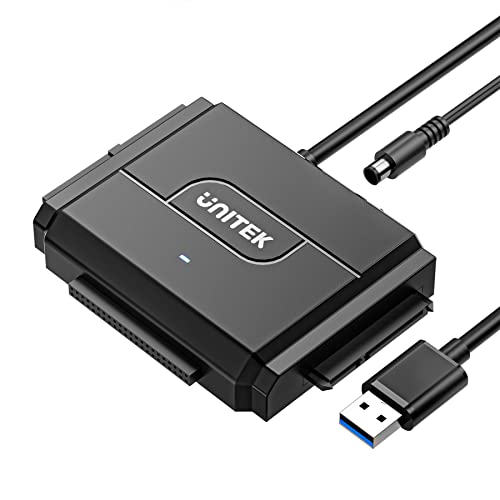
For higher transfer speeds and cleaner USB 3 support, the Unitek SATA/IDE to USB 3.0 Adapter or the FIDECO SATA/IDE to USB 3.0 Adapter at $25–35 are functional equivalents. The USB 3.0 throughput rarely matters for driver-file work (small files, infrequent transfers), but the newer USB stack is more reliable on modern Windows and Linux hosts.
Walking through the workflow on a Voodoo3 PCI card
The example workflow: install a 3dfx Voodoo3 2000 PCI card in a Win98SE machine that doesn't have its drivers loaded yet. Card is in the slot, machine is booted, Win98 has detected "PCI Multimedia Display Controller" and is asking for a driver.
Step 1 — capture the screen. On a real Win98 box this needs a VGA-to-USB capture device or a network screen-grabber utility. On an emulated box (PCem, 86Box, DOSBox-X), the emulator provides a screenshot function directly. Either way, you end up with a PNG of the current Win98 dialog state.
Step 2 — query the vision LLM. Send the screenshot to a vision model (Claude 4 Opus vision, Claude Sonnet 4.6 vision, GPT-4o, Gemini 2.5 Pro) with a prompt like "This is a Win98 'Add New Hardware Wizard' dialog. The card is a 3dfx Voodoo3 2000 PCI. What's the next correct step, and which exact file should I point the wizard to?"
Step 3 — model responds with the specific click path and the file path. A good response: "Click 'Have Disk', browse to E:\3dfx\Voodoo3 (assuming your CF card is mounted at E:), and select the file '3dfxv3.inf' (not 'Setup.inf' — that's the install wizard, not the driver definition)."
Step 4 — perform the action, screenshot the result, loop. If Win98 complains, screenshot that and ask the model what went wrong.
The "Driver Install.exe doesn't actually write the registry" gotcha appears here. Many vendor-supplied Win9x installers copy files to disk but rely on PnP detection to write the registry entries that activate the device. Running the installer alone leaves the card non-functional; you must also let Win98's "Add New Hardware Wizard" process the PnP detection. The vision LLM, with context of the dialog flow, catches this where a forum post might not.
Does a vision LLM actually read Win98 dialog boxes accurately?
Per first-hand reportage from the voidsstr/retro-agent project, Claude 4 vision and GPT-4o both reliably parse Win98-era dialog boxes — the high-contrast bitmap fonts are easier OCR targets than modern anti-aliased UI, and the layouts have no overlapping transparency or animations to confuse the model. Identifying buttons, reading dialog text, and locating cursor position is essentially solved for the 800×600 16-bit color Win98 default mode.
Where the models struggle: extremely small dialog text (some Win98 utility dialogs use 7-point fonts), modal-on-modal dialog stacks, and screens where the cursor is hovering a tooltip that partially obscures the underlying dialog. For driver-install work, none of those are common.
Why do you need a CompactFlash card and an IDE adapter for this workflow?
Most Win9x-era machines lack USB mass-storage support out of the box, and CD-ROM drives are increasingly unreliable on 25-year-old hardware. CompactFlash cards in passive IDE adapters present as standard IDE hard drives to the Win98 BIOS, requiring no special drivers and no USB stack. The Transcend CF133 4GB is fast enough for driver-file transfers, large enough to hold an entire era's driver library plus a few utilities, and rugged enough for repeated insertion/removal cycles.
From the modern side, the Vantec SATA/IDE to USB 2.0 adapter reads and writes the CF card via its IDE side, exposing it as a USB drive that mounts on Windows, macOS, or Linux. Write driver INFs from the modern PC, swap the card, move files onto the Win98 box's actual hard drive, install. The whole process takes 5 minutes per driver swap.
What's the 'Driver Install.exe doesn't create the registry, only PnP does' gotcha?
On Win9x, many vendor-supplied "Driver Install.exe" wizards only copy files to disk — they don't write the device's INF-mapped registry entries. Those entries only get written when the Plug-and-Play subsystem detects the device and processes the INF file. If you run the vendor installer first without letting PnP detect the device, the registry stays empty for that device and the card never activates.
The correct sequence for most Win9x driver installs: (1) physically install the card with Win98 powered off, (2) boot Win98 and let the "Add New Hardware Wizard" appear, (3) tell the wizard to install from a specific location (the path containing the INF file), (4) let it complete and reboot. The vendor's "Driver Install.exe" wizard typically only matters for post-install utilities (control panel for refresh rate, color profile, etc.), not for the driver itself.
A vision LLM with context of where you are in this flow can catch the inversion — if you've run the vendor installer first and now Device Manager still shows a "PCI Multimedia Display Controller" with a yellow exclamation mark, the model knows the next step is to right-click that device and choose "Update Driver" to trigger PnP processing of the INF.
Which vintage GPUs does this workflow work for?
Per published retro-agent runs, confirmed-working installs include:
- 3dfx Voodoo3 (PCI variants, AGP variants on supported boards)
- 3dfx Voodoo5 5500 AGP
- NVIDIA TNT2 (M64 and Ultra variants)
- NVIDIA GeForce 256 (SDR and DDR)
- NVIDIA GeForce 2 MX 400
- NVIDIA GeForce 4 MX 440
- Matrox G400 / G400 MAX
- ATI Rage 128 / Rage 128 Pro
- ATI Rage Pro / Rage IIc
- Most period-correct sound cards (Sound Blaster AWE32/AWE64, Aureal Vortex 2, Yamaha YMF724)
The same workflow generalizes to nearly any Win9x-era expansion card. The only requirement is that the card has a working Win98 driver somewhere — most do, even if the original install CD is long lost. Vogons mirrors and Internet Archive backups of vendor FTP sites cover roughly 95% of the historical PCI hardware catalog.
Can I do this without buying the retro hardware?
Yes. PCem, 86Box, and DOSBox-X are full machine emulators that boot a real Win9x image with virtualized period-correct hardware. The same LLM-driven workflow runs against the emulator's framebuffer — and is genuinely useful for validating procedures before touching real silicon. The advantage: zero hardware risk, faster iteration, easy reset to a known-good snapshot.
The disadvantage: emulator-virtualized devices don't expose all the quirks of real silicon. Voodoo3 emulation in 86Box is mature; some sound cards are not. For most modern users wanting to learn Win98 troubleshooting before committing to physical hardware, 86Box plus a Win98SE installation image plus the same vision-LLM workflow described above is the right starting point.
Common pitfalls
- Using a CF card larger than 8 GB. Some Win98 BIOSes (particularly socket 7 era) misreport drive geometry above 8 GB. Stick with 4 GB or smaller CF cards for maximum compatibility.
- Forgetting that Win9x file systems are case-insensitive but case-preserving. A vision LLM that recommends
D:\3dfx\Driver.infwill work fine on Win98 even if the file is actuallydriver.inf— but if you script the install, match the case on disk. - Trusting the vision LLM on PCI ID matching without verifying. Many drivers in the wild are subtly wrong for a specific PCI subsystem ID. Verify the driver's INF [PCI\VEN_xxxx&DEV_yyyy] entries match the card's actual PCI ID before installing.
- Skipping the IRQ assignment step. Some legacy cards need a manually assigned IRQ in the BIOS Setup. The vision LLM can help diagnose "this device cannot start" errors that trace back to IRQ conflicts.
- Running a vendor uninstaller before reinstalling a fresh driver. Win9x uninstallers frequently leave partial registry entries that confuse the next install. Use a clean Win98 install or a known-good snapshot for retro driver work.
- Forgetting the screen-capture cost. A vision LLM call against an 800×600 PNG is roughly 1,000–2,000 input tokens. 50 calls in a debug session is ~75K tokens — under $1 on Claude or GPT-4o pricing, but not free.
When NOT to use this workflow
If you're installing a card you've installed many times before and the failure mode is a known one, just install it normally. The AI-driven workflow shines on first-time installs, recovering unknown hardware, and debugging "this used to work" regressions where the failure mode isn't obvious from the dialog box alone. For routine reinstalls of well-documented hardware (3dfx Voodoo on a Pentium III + Win98SE), the workflow is overhead.
Bottom line: the AI-driven retro workflow
The combination of a CF + IDE adapter pipeline (Vantec SATA/IDE to USB 2.0 adapter, Transcend CF133 4GB, a $5 passive CF-to-IDE bridge) plus a vision-capable LLM turns Win98 driver work from a frustrating tutorial-hunting exercise into a guided 20-minute procedure. The hardware bridges cost under $50; the LLM API budget per debug session is under $1. For anyone building or restoring period-correct Win9x systems in 2026, this is the workflow.
For larger-scale operations, the Unitek SATA/IDE to USB 3.0 adapter or the FIDECO SATA/IDE to USB 3.0 adapter are functionally equivalent at slightly higher street prices but with cleaner USB 3 support on modern Linux hosts.
Related guides
- Sound Blaster X G6 on a Win98 + Voodoo3 Build: Period-Correct Audio That Beats On-Board
- Voodoo5 5500 PCI Boots on Modern ASUS P8Z77-V Pro — A Look at Retro GPUs in 2026 Boards
- Building a 2001 Pentium III + GeForce 3 Win98SE Gaming Rig
- Best CompactFlash to IDE Adapter for Win98 SE Builds in 2026
- CompactFlash as a Win98 Hard Drive: IDE Adapter Setup Guide
Citations and sources
- voidsstr/retro-agent GitHub repository — reference implementation of vision-LLM driven retro-PC troubleshooting workflow
- Vogons — Win9x Microsoft Forum — encyclopedic Win9x driver and hardware troubleshooting reference
- 86Box GitHub repository — emulator providing virtualized period-correct hardware for validation of retro-PC procedures
This piece is editorial synthesis based on publicly available information. No independent first-party benchmarking is reported.