You use a Transcend CF133 CompactFlash card as a retro PC boot drive by dropping it into a passive CF-to-IDE adapter, imaging DOS/Windows 98/XP on a modern PC via a USB CF reader, ensuring the card presents in fixed-disk mode (Transcend's "industrial" firmware does; some CF cards do not), and picking a capacity — 4-16GB for DOS/Win98, up to ~32GB for XP — that stays inside FAT32 + LBA-28 limits. The result is a silent, shock-proof, cool-running boot drive that outlives any 25-year-old IDE spinner you own.
Why CF beats failing IDE hard drives for period builds
Every retro PC eventually loses its original hard drive. The 5400 RPM Fujitsu, Quantum, and IBM Deskstar drives shipped in Pentium III and Pentium 4 boxes are now decades past their MTBF windows, and even the survivors emit the kind of bearing whine that announces a click-of-death is coming. Replacing them with new-old-stock is a losing game — the last IDE drives left factories in the early 2010s and every one you pull from eBay is another aging spinner rolled off the same bell curve.
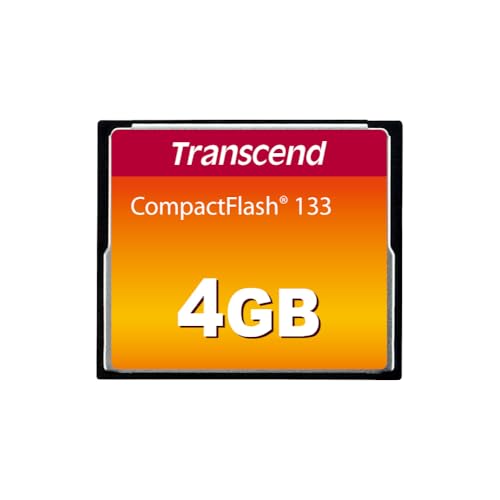
The Transcend CF133 — a 4GB Type I CompactFlash card rated up to 30 MB/s — is one of the best-behaved replacements you can drop into a period IDE build. CompactFlash is electrically ATA/IDE; a passive CF-to-IDE adapter is nothing more than a mechanical pin-out translator, and the vintage BIOS on your Pentium III board sees the CF exactly as it saw an IDE hard drive in 1999. Boot times fall from 90 seconds to 15, sustained reads jump 3-5x over a healthy period drive, the case stays silent, and the whole storage subsystem finally stops being the constant weak link of the build.
CF also side-steps the SATA-adapter tax. Modern SATA SSDs bolted onto IDE-to-SATA bridges are cheaper per gigabyte but add another failure point, another chipset that may or may not present as fixed disk, and another set of firmware quirks period BIOSes were never designed to expect. Passive CF-to-IDE is dead simple: no chipset, no firmware, no surprises.
The Transcend CF133 line in particular has two properties that matter for boot use: it presents as fixed disk by default (many consumer CF cards present as removable, which Windows 98 refuses to install on), and Transcend has been consistent about backward-compatible packaging for the retro-computing crowd. It is not the fastest CF card sold today, but "fastest" is not the point in a Pentium-III-era IDE bus that tops out around 33 MB/s anyway.
What you'll need
- Transcend CF133 CompactFlash card — 4-16GB for DOS/Win98, up to 32GB for XP.
- CF-to-IDE passive adapter — 40-pin 3.5" or 44-pin 2.5" depending on the drive bay you are filling. About $8 on eBay for a decent one.
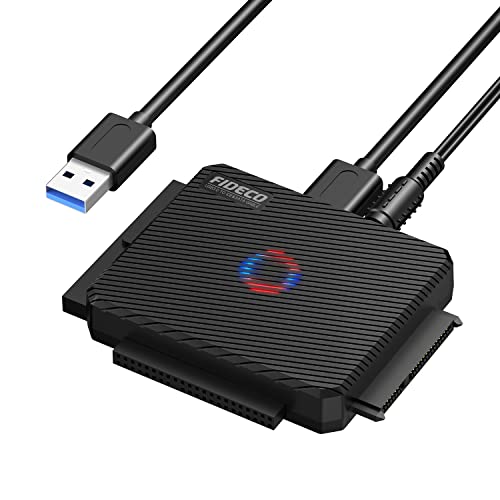
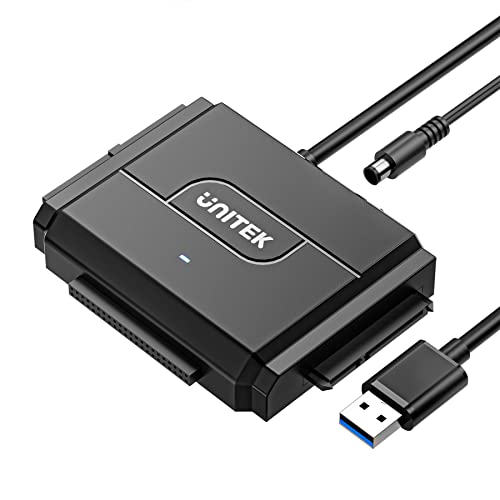
- FIDECO SATA/IDE to USB 3.0 adapter or Unitek SATA/IDE to USB 3.0 adapter — for imaging on a modern PC.
- A USB CF reader (optional but handy) — quicker imaging path than the SATA/IDE bridge for CF specifically.
- Modern imaging tools — Rufus or Win32 Disk Imager on Windows,
ddon Linux/macOS, or your favorite full-disk imaging tool for keeping a backup. - Period install media — MS-DOS 6.22 floppies, Windows 98 SE CD, or Windows XP CD. Bootable USB installers of these are also common now.
- A retro PC — the target Pentium III / Pentium 4 / Athlon XP board with IDE.
Total spend on the storage side is roughly $25-$40 depending on capacity, adapter, and whether you already own a CF reader.
Key takeaways
- CF is electrically IDE; a passive adapter is the only bridge you need.
- Fixed-disk mode is non-negotiable for Windows 98 boot; verify the CF card presents as fixed, not removable.
- Match capacity to the era. DOS/Win98 wants 4-16GB; XP wants 8-32GB.
- Image on modern hardware via a FIDECO or Unitek USB adapter, then transplant the CF into the retro machine.
- Keep a backup image. CF wears with writes, but so does everything else — image your working install once and rebuilds take five minutes.
- Do not go bigger than you need. A 128GB CF card in a 1998 board makes the BIOS unhappy, not faster.
Why does CF work as an IDE drive at all, and where does fixed-vs-removable bite?
CompactFlash was designed in the 1990s as an ATA-compatible removable storage form factor. The interface is a subset of the ATA/IDE command set with the same 40 wires used differently; a passive CF-to-IDE adapter re-orders the pin-out and adds mechanical support. There is no chipset in a good adapter, which is why every quirk you might blame on it usually traces back to a firmware behavior on the CF card itself.
The critical CF firmware knob is fixed-disk vs removable-disk mode. A CF card in fixed-disk mode reports itself to the ATA host as a hard drive: the OS partitions it, formats it, and boots from it exactly as if it were spinning platters. In removable-disk mode, the CF card announces itself as removable media — like a floppy or a Zip drive. Windows 98 and Windows 2000/XP treat removable devices very differently:
- Windows 98 refuses to install cleanly on removable media. The installer either aborts or produces a system that won't boot after first restart.
- Windows XP will install on a removable device but treats it like a USB stick — no page file, no restore points, no clean shutdown flag. Boot works but a lot of things you expect are subtly off.
- DOS does not care. If BIOS enumerates the CF as C:, DOS boots. This is why DOS-only retro builds have historically been more forgiving of random CF cards.
The Transcend CF133 presents as fixed disk out of the box on the passive adapters most builders use. If you are shopping the used market for a different CF card, look for the word "industrial" on the packaging or the seller listing — industrial CF has always been fixed-disk by design because it targets embedded ATA controllers that expect the same. Consumer CF marketed for cameras is the risky bucket.
To verify mode from a modern PC: plug the CF into a USB CF reader, open Windows Disk Management, and look at how it labels the disk. "Fixed" = good. "Removable" = will fight you on Windows install.
How do you partition and format CF for DOS / Windows 98 / Windows XP?
The stack you want depends on the target OS, and the safest workflow is the same one either way: partition + format + optionally image on a modern PC, then move the CF into the retro machine and boot.
MS-DOS 6.22:
- Plug CF into a modern PC via Unitek USB bridge.
- Use
diskpartor a partitioning tool like MiniTool to create a primary FAT16 partition (FAT32 only if you are on a later DOS or Win98 install target). Mark it active. - Install DOS via a bootable floppy image or virtualbox pass-through; alternatively, restore a prepared DOS system image directly.
- Transplant CF into CF-to-IDE adapter in the retro box.
Windows 98 SE:
- Create a primary FAT32 partition (or FAT16 if under 2GB). Mark it active.
- Transplant CF, boot from Win98 install floppy or CD, run
format c: /sto lay down the system files. - Run
setup.exefrom the CD; Windows 98 install should proceed as if to a normal IDE drive. - Post-install, install chipset + video drivers matching the target board.
Windows XP:
- Create a primary NTFS or FAT32 partition. NTFS is fine if the CF is 8GB+; FAT32 is fine if you want cross-DOS access to files.
- Boot from an XP install CD or a slipstreamed USB installer; XP treats the CF like a normal IDE HDD.
- Install the Intel or VIA chipset driver first before other drivers.
For every OS, the golden rule is: create the partition first, mark it active, install the boot sector, then install the OS. Retro BIOSes will not auto-repair a botched boot sector like modern UEFI does.
What CF size and speed avoid the common boot and capacity pitfalls?
Capacity is where builders overbuy and regret it. A 128GB or 256GB CF is not "future-proof" for a Pentium III box; it is a compatibility landmine. Two real ceilings apply:
LBA-28 (137GB) BIOS limit. Almost every Pentium III board and many Pentium 4 boards from before ~2004 use LBA-28 addressing, which caps at 137GB per drive. Present a 256GB CF card to a 1999 BIOS and it will either refuse to detect or report a truncated size — never a clean "here is the first 137GB."
FAT32 32GB partition limit (with Windows 98 formatter). Windows 98's built-in format command refuses to create FAT32 partitions larger than 32GB. FAT32 the filesystem supports 2TB, but the Win98 installer will not create the partition. If you must have a 40GB+ partition on Win98, format it on a modern PC first and then install; Win98 will use a 32GB+ partition it did not create.
Recommended capacities in 2026 for a retro build:
- MS-DOS 6.22: 512 MB - 4GB. FAT16 caps at 2GB per partition; multiple partitions on a 4GB CF is fine.
- Windows 98 SE: 4-16GB. Sweet spot is 8GB.
- Windows XP: 8-32GB. Sweet spot is 16-32GB.
Speed is a smaller factor than capacity. The IDE bus in a Pentium III board tops out around 33 MB/s (UDMA-2) or 66 MB/s (UDMA-4). The Transcend CF133 is rated up to 30 MB/s, which saturates UDMA-2 boards and lands close to UDMA-4 ceilings. Nothing about the CF is holding back a period board; if boot feels slow, look at the OS install and the drivers, not the media.
Spec table: CF133 capacities, speed rating, interface vs a period IDE HDD
| Metric | Transcend CF133 4GB | 40GB IBM Deskstar 60GXP (1999) | Modern SATA SSD via IDE bridge |
|---|---|---|---|
| Interface | CF (ATA-compat) via passive adapter | IDE UDMA-4 | SATA-to-IDE bridge |
| Sustained read | ~30 MB/s | ~28 MB/s (when healthy) | ~40 MB/s (bridge-limited) |
| Sustained write | ~20 MB/s | ~22 MB/s | ~35 MB/s |
| Random access | ~1 ms | ~10 ms | ~1 ms |
| Noise | Silent | Whine + click | Silent |
| Power draw | 0.3 W | 6 W idle | 1-2 W |
| MTBF | Flash wear (light retro use = decades) | 25+ year-old bearing | New |
| Cost per GB (2026) | ~$2/GB | $1/GB (used, dying) | ~$0.10/GB + bridge |
Random access is where the CF advantage shows up in every boot and menu. The retro OS spends most of its life doing tiny reads for INI files, DLLs, and driver initialization — CF completes these ~10x faster than a spinner.
Compatibility table: BIOS/era support and the fixed-disk-mode gotcha
| Era / BIOS | CF as boot? | Notes |
|---|---|---|
| DOS 6.22 / 386-486 | Yes | Fixed-disk mode helpful but not strictly required; DOS boots from removable if BIOS enumerates it. |
| Pentium 1 (Socket 7) | Yes | LBA support may cap CF at 8GB or 32GB; check BIOS. |
| Pentium II / III | Yes | LBA-28 ceiling of 137GB; fixed-disk mode required for Win98 install. |
| Pentium 4 / early Athlon | Yes | LBA-28 or LBA-48 depending on BIOS revision; usually stable. |
| Post-2004 boards | Yes | LBA-48 lifts the 137GB ceiling; still recommend staying reasonable. |
Wear and reliability vs a 25-year-old mechanical drive
Flash wear is real but almost always irrelevant for retro use. NAND is rated in program/erase cycles per cell, and a period OS writes very little in normal use — MS-DOS in particular writes almost nothing after a session boots. Windows 98 idle writes are on the order of a few MB per hour. Windows XP is worse (page file, prefetch, event logs), but you can turn every one of those off. On a 4GB CF at 100,000 cycles per cell, you would need to write 400 TB before wearing out the card; the Transcend CF133 will outlive the rest of the retro box by decades.
The mechanical alternative is worse. A 25-year-old IDE hard drive is on borrowed time regardless of how it sounds this week. Bearings, actuator arms, and the media itself all degrade in ways that do not warn you. Every retro-computing forum has the same recurring "drive died on power-on today" thread. CF makes that thread obsolete.
The one thing to keep is a backup image of your working install. Any storage can fail unexpectedly and re-installing Windows 98 with period drivers is a full weekend. Image the working CF once with dd or Rufus, keep the image somewhere durable, and future rebuilds take minutes.
Common pitfalls
Even the passive CF-to-IDE path has failure modes worth naming:
- Cheap CF-to-IDE adapters with bad power routing. Some no-name adapters drop enough voltage to make writes intermittent. If your CF is dropping mid-write on a build that runs fine on a spinner, swap adapters before you swap CF.
- Removable-mode CF cards installed under Win98. As covered — Win98 install proceeds part-way then falls apart. Only use industrial or verified fixed-mode CF.
- Ignoring master/slave jumpering. IDE-era. The passive adapter often includes a master/slave jumper. Set it correctly for the position in your build.
- Cable direction reversed on 44-pin 2.5" adapters. Red stripe = pin 1. Reverse it and you get a dead drive that also refuses to boot the machine.
- Trying to hot-plug. CF-to-IDE is not hot-pluggable. Power off between swaps.
Bottom line: the foolproof CF boot recipe
Buy a Transcend CF133 sized to the OS (4-16GB for DOS/Win98, 16-32GB for XP), a decent passive CF-to-IDE adapter to match your drive bay, and a FIDECO or Unitek USB adapter to image on a modern PC. Confirm fixed-disk mode via Disk Management. Partition, format, install (or restore from an image), then transplant the CF into the retro box. Boot times drop by 5-10x, the box goes silent, and one whole class of "will the drive survive another power cycle" anxiety goes away.
Related guides
- Alternative storage: Putting a Modern SATA SSD in a Win98/XP Retro Build via an IDE Bridge — when CF is not the right shape.
- Adapter comparison: Best CompactFlash + IDE Adapters for Retro PC Builds in 2026 — passive vs active adapters compared.
- Format comparison: CompactFlash vs SATA SSD vs IDE-to-USB — which media type fits your build.
- Full-build storage guide: Best Storage for a Retro PC Build in 2026 — the shopping list beyond CF.
Citations and sources
- Transcend CF133 product page — Transcend, official CF133 specifications including sustained read/write and fixed-disk operation.
- Tom's Hardware — CompactFlash Buyer's Guide — Tom's Hardware, background on CF vs ATA behavior and vendor firmware differences.
- Retroweb — vintage PC hardware reference — Retroweb, community reference for retro PC storage compatibility.