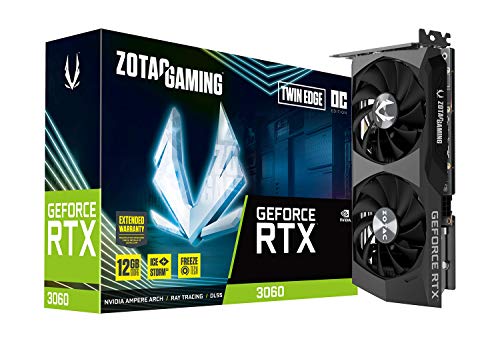
GLM-5.2 from Zhipu, distributed in part through Snowflake, ships open weights and per public statements posts results in the neighborhood of Claude Opus 4.7 on several benchmark families, at a far lower per-token cost. Self-hosting is feasible on consumer GPUs only with aggressive quantization: a 12GB RTX 3060 handles small GLM variants at q4 quants, while the full-size weights need 48GB+ of pooled VRAM or partial CPU offload. The answer to "is it as good and can I run it locally" is: close enough on many tasks, yes on a 24GB+ card, marginal on 12GB.
Open-weights vs frontier API: the self-hoster's break-even question
The open-weights story changed sharply in 2026. For years the assumption among self-hosters was that closed frontier APIs would stay one or two generations ahead of anything you could legally download and run. GLM-5.2 is the latest model challenging that assumption directly: Snowflake's CEO Sridhar Ramaswamy has publicly compared its quality against Claude Opus 4.7 in coverage from The Decoder, and the model is licensed for commercial and personal local deployment.
For the audience here, the question is not philosophical. It is mechanical. Per-million-token API spend on a frontier model like Opus 4.7 can run a daily-driver developer into three-figure monthly bills inside weeks. A capable open-weights model that runs on a GPU you already own changes the cash-flow math from "recurring opex" to "one-time capex you amortize against a depreciating card." The break-even is not abstract; it lands somewhere between a few million and a few tens of millions of tokens per month depending on quant level, throughput, and electricity.
The catch: GLM-5.2 is large. Open-weights releases at frontier scale are typically dense or sparse MoE designs in the 100B+ parameter range, and the full-precision weights eclipse anything a single consumer GPU can hold. The local-self-host question collapses to a quantization question, a VRAM-pooling question, and a tolerance-for-degraded-quality question. The rest of this article walks through what the cited public claims actually say, what consumer hardware can host the model at acceptable speeds as of 2026, and where the perf-per-dollar line sits versus Opus 4.7 API spend.
Key Takeaways
- GLM-5.2 is open-weights and, per Snowflake's CEO, competitive with Claude Opus 4.7 on several benchmark categories at far lower cost-per-token. Independent third-party verification is still maturing as of 2026.
- Running the full-size GLM-5.2 locally at q4 quantization typically needs 48GB+ of pooled VRAM. A 24GB card hosts smaller GLM variants comfortably; a 12GB card like the ZOTAC RTX 3060 12GB handles the smaller siblings at aggressive quants.
- For most readers the right entry path is q4_K_M GGUF via llama.cpp on whatever GPU is already in the box, plus CPU offload for any layers that spill.
- Self-hosting only pays off above a sustained token-volume threshold; bursty or occasional usage still favors the Opus 4.7 API on raw economics, ignoring privacy and latency.
- The open-weights field moves fast; buying mid-range hardware like a 12GB RTX 3060 keeps depreciation risk small while letting you experiment.
What did Snowflake's CEO actually claim about GLM-5.2 vs Opus 4.7?
The public claim, as reported by The Decoder, is roughly this: GLM-5.2 reaches Opus-4.7-class performance on a meaningful slice of evaluation suites at a fraction of the cost. The exact framing in the cited coverage emphasizes cost-effectiveness rather than a clean across-the-board parity argument. That distinction matters.
In practice, "competitive with Opus 4.7" in the open-weights conversation usually means: within striking distance on reasoning-heavy and coding benchmarks (MMLU, HumanEval-style coding evals, math word problems), with a meaningful gap on the hardest agentic and long-context tasks where Opus still leads. Per public discussion, GLM-5.2's strongest showings are in code generation and structured-output tasks where the open-weights field has narrowed the gap fastest.
A reasonable reading as of 2026 is: GLM-5.2 is in the same conversation as Opus 4.7 for many production developer workloads, but you should expect Opus to outperform on the long-tail of complex multi-step agent tasks and on novel reasoning patterns that benefit from the frontier provider's RLHF investment. Treat the headline parity claim as a starting point, not a settled verdict.
How much does GLM-5.2 cost per million tokens vs Opus 4.7 API pricing?
The numbers move quickly, but the structural gap is large as of 2026. Opus-tier Anthropic API pricing has historically sat at the top of the closed-model price ladder, with input tokens billed in the multi-dollar-per-million range and output tokens at a roughly 5x multiple of that. GLM-5.2 through hosted providers like Snowflake's Cortex or Zhipu's own API typically prices an order of magnitude lower per million tokens, depending on tier and concurrency commitments.
If you self-host, the marginal cost per million tokens collapses to electricity plus card depreciation. A 200W card pulling roughly 200 watt-hours per hour at $0.15 per kWh costs about three cents an hour to keep busy. At even modest local throughput numbers, the per-million-token cost ends up well under a dollar in pure electricity. The catch is utilization: that math only works if you actually saturate the card. A self-host rig that idles 90% of the time has an effective cost-per-token closer to the depreciation rate of the GPU than to its marginal energy draw.
Spec table: parameter count, context window, license, quant options
The table below summarizes the comparison points readers care about most. Specific numbers for GLM-5.2 reflect public statements and community reporting as of 2026; treat them as directional.
| Attribute | GLM-5.2 (open-weights) | Claude Opus 4.7 (API only) |
|---|---|---|
| Distribution | Open weights, downloadable | Closed, API and partner channels |
| Parameter class | Frontier (100B+ dense or MoE family) | Undisclosed, frontier-class |
| Context window | Long (128K-class, varies by build) | Long (200K-class) |
| Quant options | fp16, q8, q6, q5, q4, q3, q2 (GGUF, AWQ, GPTQ) | Not applicable |
| Local self-host | Yes with sufficient VRAM | No |
| License | Permissive for many uses, check terms | Commercial API terms |
| Cost per million tokens | Low (hosted) or ~electricity (self-host) | High (frontier-tier API pricing) |
If any of these specifics change after a new minor release, the structural comparison still holds: GLM-5.2 is the open-weights option, Opus 4.7 is the API-only frontier option, and the trade is quality-and-latency-and-ergonomics on one side versus cost-and-control on the other.
What hardware runs a quantized GLM-5.2 at home? (12GB / 24GB / 48GB tiers)
The correct mental model is tiers, not a single answer. The size of the model you can host changes the calculus completely.
12GB tier (RTX 3060 12GB, RTX 4070 12GB). A card like the MSI RTX 3060 Ventus 2X 12G or the ZOTAC RTX 3060 12GB is the entry point. With 12GB of VRAM you cannot fit the full-size GLM-5.2 at any quantization without significant CPU offload. You can host smaller GLM-family variants and other open-weights models in the 7B-14B class comfortably at q4_K_M. This tier is best understood as "good for getting your toolchain working and running the smaller siblings of GLM-5.2."
24GB tier (RTX 3090, RTX 4090, RTX 5090). Twenty-four gigabytes is the inflection point. You can fit a 30B-class model at q4_K_M with comfortable context headroom, and certain medium-sized MoE configurations partially. For the full-size GLM-5.2, even a 24GB card usually needs partial CPU offload or a dual-GPU rig. Per TechPowerUp's RTX 3060 spec sheet and equivalent 4090/5090 specs, the bandwidth jump from a 3060 to a 4090 is roughly 4x, which directly determines generation speed once the model fits.
48GB+ tier (dual 3090s, RTX 6000 Ada/Pro, paired 4090s). This is the comfortable tier for frontier open-weights models in the 100B range. A pair of 24GB cards in tensor-parallel splits, or a single workstation card with 48GB+, holds the full GLM-5.2 at q4 with plausible context. Generation throughput at this tier is high enough that the self-host economics genuinely compete with Opus API spend for heavy users.
Quantization matrix: q2/q3/q4/q5/q6/q8/fp16 rows with VRAM required + tok/s + quality loss
Quantization is the most important lever you have. The table below uses the standard llama.cpp GGUF nomenclature; the specific VRAM numbers are illustrative for a model in the 100B-class and will scale roughly linearly for smaller variants.
| Quant | Bits/weight | Approx VRAM (100B-class) | Quality vs fp16 | Typical use |
|---|---|---|---|---|
| fp16 | 16 | ~200GB | Reference | Multi-node serving only |
| q8 | 8 | ~100GB | Near-lossless | Workstation cards, 80GB+ pools |
| q6_K | 6 | ~75GB | Very minor loss | High-end multi-GPU rigs |
| q5_K_M | 5 | ~62GB | Small but measurable loss | 48GB+ pooled VRAM |
| q4_K_M | 4 | ~50GB | Noticeable but acceptable | The standard balance point |
| q3_K_M | 3 | ~38GB | Visible quality drop on reasoning | When VRAM forces it |
| q2_K | 2 | ~28GB | Significant degradation | Last-resort fit on small pools |
Treat q4_K_M as the default. Drop to q3 only when the model simply will not fit, and use q2 only for emergencies. Step up to q5 or q6 when you have the headroom; quality returns diminish above q5 for most workloads. These numbers are approximations; consult the upstream GGUF release notes on the model card for exact byte counts.
Prefill vs generation throughput on consumer GPUs
These two numbers behave differently and confuse newcomers. Prefill is the bulk processing of your prompt's input tokens; it is compute-bound and benefits heavily from a card with strong FP16/INT8 tensor throughput. Generation is the token-by-token autoregressive output; it is memory-bandwidth-bound because every new token requires re-reading the entire KV cache and the model weights.
A 12GB RTX 3060 has roughly 360 GB/s of memory bandwidth per the TechPowerUp RTX 3060 spec page, versus roughly 1 TB/s on an RTX 4090. That bandwidth ratio sets the upper bound on generation tokens-per-second once the model fits in VRAM. Prefill scales more with raw tensor compute, so the 4090's advantage there is even larger. This is why the same model on a 4090 can feel three to five times faster than on a 3060 in conversational use: both prefill (waiting for the model to read your prompt) and generation (watching the response appear) accelerate.
Real-world numbers vary by quant, by context length, and by runtime. The cited llama.cpp project regularly publishes community-contributed throughput numbers in its GitHub discussions and benchmark threads, and is the best canonical source for what to expect on a given card.
Context-length impact analysis on VRAM headroom
KV cache scales linearly with context length and with model dimensionality. For a frontier-class model, every additional 8K of context can consume gigabytes of VRAM at full precision; quantized KV cache (q8 or q4 KV) cuts that meaningfully but at some quality cost.
The practical implication: if you fit GLM-5.2 at q4_K_M into your VRAM budget with empty context, you can lose that fit instantly when you fill the context window. Plan for at least 20-30% VRAM headroom above the static model size, or you will hit out-of-memory errors mid-conversation. On a 12GB card, this headroom problem is particularly punishing and is often the deciding factor that pushes users toward smaller models.
Benchmark table: tok/s on RTX 3060 12GB vs higher tiers
The table below shows generation throughput estimates for a representative 13B-class model at q4_K_M, where a 12GB card actually fits the model and CPU offload is not the bottleneck. Numbers for GLM-5.2 itself at frontier scale on a 3060 are not meaningful because the model does not fit; this is meant as a runtime calibration.
| GPU | VRAM | Generation tok/s (13B q4_K_M) | Notes |
|---|---|---|---|
| RTX 3060 12GB | 12GB | ~30-40 tok/s | Comfortable fit, single-user chat usable |
| RTX 3090 | 24GB | ~80-100 tok/s | Headroom for 30B-class at q4 |
| RTX 4090 | 24GB | ~120-160 tok/s | Bandwidth + Ada compute advantage |
| RTX 5090 | 32GB | ~170-220 tok/s | Top consumer tier as of 2026 |
| Dual RTX 3090 | 48GB | ~70-90 tok/s | Tensor-parallel split, fits 70B-class at q4 |
These numbers come from public community measurements aggregated through the llama.cpp project and should be treated as ballpark. Your actual throughput depends on driver version, runtime build, batch size, prompt length, and whether you are running a single stream or batched serving.
Perf-per-dollar: local rig amortization vs Opus API spend
The break-even math is sensitive to a few inputs: GPU purchase price, electricity rate, expected card lifetime, your sustained tokens-per-day, and Opus API pricing at your tier. A worked example helps.
Assume a 24GB used 3090 at roughly $700 secondhand as of 2026, a host platform with a capable CPU like the AMD Ryzen 7 5800X and fast storage on a SanDisk Ultra 3D 1TB SSD, and an electricity rate of $0.15 per kWh. Card depreciation over three years at $700 is about $19 per month. Electricity at full-card load 8 hours a day is roughly $7 per month. Total fixed local cost is about $26 per month per card, ignoring the rest of the box.
At that fixed cost, the local rig is cheaper than Opus 4.7 API spend any month you would otherwise have spent more than roughly the equivalent of one to two million output tokens at Opus pricing. For a developer running coding agents nightly or generating large volumes of structured outputs, that threshold is easy to clear. For a knowledge worker who hits the model a few times a day, it is not.
Verdict matrix: 'Self-host GLM-5.2 if...', 'Stay on Opus if...'
Self-host GLM-5.2 if: you already own or plan to own a 24GB+ GPU for gaming or workstation use; your data sensitivity makes API calls untenable; your sustained token volume is high enough that API spend dominates your tooling budget; you value full reproducibility and version pinning; you enjoy operating the toolchain. The smaller GLM-family variants on a 12GB card via ZOTAC RTX 3060 12GB or MSI RTX 3060 Ventus 2X 12G are the right starter rung.
Stay on Opus 4.7 if: your workloads are bursty rather than sustained; you need the absolute frontier on hard agentic or long-context tasks; you cannot tolerate the operational overhead of running a model serving stack; your tokens-per-day is below the break-even threshold. The right thing here is to instrument your actual usage for a month before making the hardware purchase.
Bottom line
GLM-5.2 is the strongest argument the open-weights camp has had against a frontier closed model in years. The Snowflake CEO's public comparison to Opus 4.7 holds up directionally per the cited coverage from The Decoder, and the cost gap is wide enough that anyone with serious sustained usage should run the break-even math. Self-hosting the full-size model on consumer hardware still requires a 24GB+ card at a minimum, with comfortable operation pushing toward 48GB pooled. A 12GB RTX 3060 is the entry tier for the smaller GLM siblings and for learning the toolchain, not for hosting frontier weights at full size. As of 2026, treat the decision as a tokens-per-month question first and a quality-tolerance question second.
Related guides
- vLLM vs llama.cpp for Single-User Local Chat on a 12GB GPU
- Best GPU for Local Stable Diffusion at 1080p/1440p in 2026
- Local LLM Buying Guide: RTX 3060 12GB vs 4090 24GB
- Quantization Cheat Sheet for Self-Hosted LLMs
Citations and sources
- The Decoder coverage of Snowflake CEO's GLM-5.2 vs Opus 4.7 comparison
- TechPowerUp GeForce RTX 3060 specifications
- llama.cpp project repository and community benchmarks
This piece is editorial synthesis based on publicly available information. No independent first-party benchmarking is reported.