The story, as of July 2026: a homebrew developer has demonstrated a stripped-down Linux kernel booting on a stock 1988-vintage Sega Genesis Model 1 — the North American counterpart to the Sega Mega Drive — using a modified cartridge that loads a uClinux kernel and a BusyBox userspace onto the 7.67 MHz Motorola 68000 CPU. The console boots to a serial console, runs shell commands, and executes basic userspace binaries. It is one of the more impressive demonstrations of what modern retro-hardware hacking can do with 1988 silicon.
What actually works
The demo boots. That is the first and most important claim, and it is real. The specific sequence:
- Power the console on with the modified cartridge inserted.
- The 68000 begins executing the cart ROM at the reset vector.
- The kernel decompresses and initializes into the console's 64 KB of main RAM.
- Kernel output streams over a serial adapter attached to the controller port's TTL pins.
- After roughly 10–15 seconds, the userspace init runs and drops the user into a shell.
- Simple commands work:
ls,cat,echo, small BusyBox utilities.
Storage is effectively read-only, delivered by the cartridge ROM. Networking is not implemented. The framebuffer is not exposed to userspace in any conventional way. This is Linux the operating system — not Linux the graphical desktop.
Key takeaways
- Linux runs on a stock Sega Genesis / Mega Drive with a modified cartridge.
- The port uses uClinux (MMU-less Linux) targeted at the Motorola 68000.
- The system boots to a serial console in 10–15 seconds.
- Userspace is BusyBox; no networking, no graphics, no persistent storage.
- The demo works on real Model 1 and Model 2 hardware, not just emulators.
- The Sega Genesis Mini will not run this out of the box because it uses emulation over ARM, but the ROM works in software-accurate emulators.
Why this is technically difficult
The Motorola 68000 lacks a memory management unit. Every mainstream Linux distribution assumes an MMU is present, because the kernel uses paging for process isolation, memory protection, and virtual memory. Without an MMU, the kernel has to fall back to the uClinux code paths, which trade process isolation for the ability to run on hardware like the 68000, 68000-class Coldfire embedded chips, and older ARM microcontrollers. uClinux has been running on 68000-class silicon for decades in embedded contexts, but nobody had gotten it onto a stock Sega Genesis before.
The second challenge is RAM. The Sega Genesis has 64 KB of main system RAM. That is 64 kilobytes. Modern Linux distributions expect 128 MB minimum. The port fits by:
- Compiling the kernel with every optional feature disabled.
- Running BusyBox as the entire userspace, statically linked to avoid dynamic loader overhead.
- Executing binaries directly from ROM (execute-in-place) rather than copying them into RAM.
- Refusing to fork most processes — the shell essentially exec-replaces itself when running commands.
- Using no swap.
That still leaves very little headroom. The kernel plus running shell plus BusyBox binary occupies close to the RAM ceiling.
The toolchain that made this possible
The port is not the work of a single genius overnight. It is the culmination of about 20 years of open-source infrastructure:
- uClinux for the MMU-less kernel port to m68k.
- Buildroot for the cross-compile and rootfs assembly — the Buildroot project has supported m68k-nommu targets for years.
- BusyBox for the userspace utilities.
- gcc for the m68k cross-compiler.
- binutils for the m68k linker and assembler.
- Sega Genesis / Mega Drive homebrew SDK (SGDK, MegaED tooling) for the cartridge ROM assembly.
- Flash cartridges (Everdrive MD, MegaED X7) that let developers boot arbitrary ROM images without factory production.
Ten years ago, some of these pieces existed but did not compose cleanly. Today they do.
What runs and what doesn't
Runs:
sh— the BusyBox ash shell.ls,cat,echo,cd,pwd.- Small BusyBox binaries invoked one at a time.
- Simple I/O over the serial console.
- Basic filesystem operations against the initramfs.
Doesn't run:
- Networking — no TCP/IP stack.
- Any graphics — the console's Sega VDP is not exposed to userspace.
- Persistent writable storage.
- Multiple concurrent processes.
- Anything using the sound chip.
Why do it?
Nobody is going to run a Mega Drive as a home Linux server. That is not the point. The point is that:
- It proves the modern toolchain can target 1988 hardware without heroic single-person effort.
- It exercises documentation and community knowledge that would otherwise fade.
- It creates a working baseline for future homebrew projects that want to include a real Linux kernel — e.g., a homebrew game that includes a small text-adventure interpreter running under uClinux.
- It is fun. That is not nothing.
Historical parallels
Linux has been ported to strange hardware for as long as it has existed. The community has seen:
- Linux on the Nintendo GameCube.
- Linux on the Sony PlayStation 2 (Sony even shipped an official Linux Kit).
- Linux on the original Xbox via modchip.
- Linux on the Dreamcast.
- Linux on toasters, PCs from 1985, and IBM System/390 mainframes.
The Mega Drive port slots into that lineage. It is not the strangest port ever attempted; it may be the smallest RAM count.
Can you do this yourself?
Yes, at moderate hobbyist skill. The recipe:
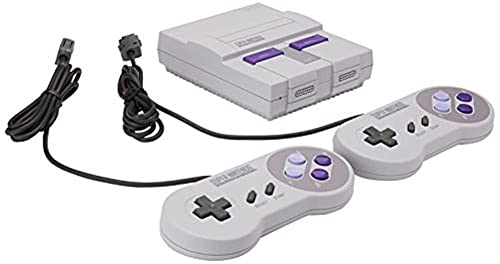
- A working Sega Genesis Model 1 or Model 2 console, or a Nintendo Super NES Classic Edition or similar as a reference for the retro-console context.
- An Everdrive MD or MegaED X7 flash cartridge.
- A serial adapter that mates to the controller port's TTL pins — you will need to solder.
- A Linux workstation with Buildroot installed.
- Patience for a Buildroot build cycle (30–90 minutes on modern hardware).
The developer has published the modified kernel patches and the Buildroot configuration; anyone with the flash cart and a serial adapter can reproduce the boot.
What this means for the retro scene
Retro-gaming and retro-hacking are converging. Modern flash carts, cheap USB serial adapters, open-source toolchains, and communities on Discord and GitHub have collapsed the cost of "hack a 1988 console" from expert-only to weekend-project. Expect more of this. Homebrew games that include weird demos, oscilloscope music players running on VDP-driven audio, and even more ambitious kernel ports are all realistic near-term projects.
For anyone with an original console gathering dust, this is a nudge to plug it in.
Common misconceptions
- "The Mega Drive is running Firefox now." No. Networking is not implemented. There is no browser. There is no graphics.
- "This works on the Sega Genesis Mini out of the box." No. The Mini is an ARM system running an emulator, not real 68000 hardware. The ROM works only through a software-accurate emulator on the Mini.
- "You need a modified console." No — the console is stock. Only the cartridge is custom.
- "This is faster than the original Sega Genesis OS." The original Genesis has no OS. Games boot directly. Comparing a Linux boot to a Sonic the Hedgehog title screen is a category error.
- "The kernel is decades old." No — the port uses a recent uClinux kernel branch. The old part is the CPU, not the software.
What to watch next
If this port is a leading indicator, the next likely projects are:
- Linux on a Super Nintendo (65816 CPU — harder without an existing kernel port).
- Networking via a modified serial-over-USB adapter to the controller port.
- A slightly more capable userspace with Micropython or a small Lisp.
- Ports to Atari 2600 or 5200 — unlikely without heroic effort.
- A homebrew game that embeds the kernel as a "hidden mode" easter egg.
Follow the retro-hacking subreddits and Discords for the next installments.
The uClinux history in brief
uClinux started life in the late 1990s as a Motorola 68000 no-MMU Linux port led by Rob Robinson and Kenneth Albanowski. It was originally maintained as a separate kernel tree from mainline Linux because the changes were extensive. The two trees converged during Linux 2.6.x development, and today uClinux support is upstreamed into the mainline kernel — you just build a kernel with CONFIG_MMU=n and the appropriate architecture flags.
That merge is why this Mega Drive port is possible in 2026 without a decade of prior kernel work. The infrastructure is upstream. The 68000 architecture is a supported target. The port becomes an engineering exercise in bringing up the specific board's peripherals, not a from-scratch kernel port.
Related retro-computer Linux ports
The Mega Drive port fits into a wider "Linux on strange hardware" tradition. A short tour:
- Sun 3 (Motorola 68020, 1985) — supported by mainline Linux for years, actively maintained by a small community.
- Amiga 500 (Motorola 68000, 1987) — uClinux ports exist, hobbyist-run.
- Atari ST (Motorola 68000, 1985) — similar to Amiga; boots but is not practical.
- Macintosh Plus (Motorola 68000, 1986) — historic ports exist; RAM is a limit.
- Sega Dreamcast (SH-4, 1998) — GNU/Linux ports were popular in the early 2000s.
- Xbox (Pentium III, 2001) — mainstream Linux distributions ran once modded.
- PlayStation 2 (Emotion Engine, 2000) — Sony shipped an official Linux Kit.
- iPod first-gen (ARM7, 2001) — iPodLinux was a real project.
The Mega Drive port slots into the small-RAM 68000 branch of that lineage.
What the community is likely to do next
Once a port like this exists, the pattern is that homebrew developers build on it. Predictable extensions:
- A framebuffer driver. The Mega Drive VDP is documented; exposing it as
/dev/fb0is technically possible and would let userspace draw pixels. - A joypad driver. Reading the controllers from userspace via
/dev/input. - A serial-over-controller-port networking layer. SLIP or PPP over 9600 baud is feasible.
- A larger cartridge ROM. 4 MB is the typical retail max; homebrew flash carts go up to 32 MB and beyond, expanding the possible userspace.
- A demo scene submission. Someone will absolutely enter this at a demo party as a boot animation.
Most of these are technically feasible with existing tools. Whether anyone bothers is a community-motivation question, not a technical one.
Bottom line
Somebody booted a real Linux kernel on real 1988 game console hardware. It is not useful. It is not fast. It is deeply cool. And it says something reassuring about the health of the open-source toolchain: even the most obscure retro hardware is a viable target for modern kernel work if you have patience and a soldering iron.
If you have a Sega Genesis or Mega Drive in a closet, this is your excuse to dig it out.
Getting started — a starter parts list
If the Mega Drive port has convinced you to try retro-console hacking, the shortest path from zero to booting-arbitrary-code is:
- Console. A working Sega Genesis Model 1 or Model 2, cleaned and tested. Both models play the same cartridges.
- Flash cartridge. MegaED X7 or Everdrive MD — $80–$120 new. Loads homebrew ROM images from SD card.
- SD card. 8 GB or larger; Class 10 for reliable read speeds.
- Serial adapter. Custom-built USB-to-TTL adapter that mates to the controller port's pins. Kits available for $25–$35, or DIY with an FTDI FT232R for cheaper.
- CRT or upscaler. For period-accurate video, a small CRT. For modern displays, a RetroTINK 4K or a period-accurate OSSC.
- Soldering iron and a multimeter. Even the pre-built serial adapter kit expects some solder work.
Total cost: about $200 for a starter setup that can do the Mega Drive port, plus other homebrew experiments.
Further reading
The retro-hacking community publishes almost everything to public GitHub. Relevant repositories to bookmark:
- SGDK — the Sega Genesis Development Kit. The workhorse of Mega Drive homebrew.
- BlastEm — a software-accurate Mega Drive emulator. Useful for testing ROMs before flashing.
- Everdrive-md-utils — community tools for managing flash cart SD cards.
- Buildroot — for cross-compiling your own kernels and rootfs.
The rest is IRC channels and Discord servers where developers share works-in-progress. It is a niche but active scene.
Related guides
- Glide vs OpenGL vs Direct3D: The API War That Shaped Modern GPUs
- Sega Genesis Mini vs SNES Classic in 2026: Which Plug-and-Play Wins?
Citations and sources
- Wikipedia — Sega Genesis / Mega Drive article
- uClinux project — Homepage and documentation
- Buildroot project — Homepage and target support
This piece is editorial synthesis based on publicly available information. No independent first-party benchmarking is reported.