In brief — July 7, 2026. Cloudflare replaced its single "block AI bots" toggle with a set of granular per-purpose controls that separate search-indexing crawlers, model-training scrapers, and real-time AI agent fetches. Site owners can now allow the crawlers they want traffic from while blocking the ones that only take content without giving anything back. The move directly affects publishers, but it also reinforces the case for self-hosting inference on hardware you own.
What Cloudflare changed
For most of the last two years, Cloudflare's AI-bot control was one setting: on or off. Turning it on blocked a large list of user agents identified as AI training or agent traffic. Turning it off allowed everything. The blanket toggle was easy to reason about but crude — it treated a search-indexing crawler that could drive human visitors the same as a training scraper that took content and gave nothing back.
The new controls, as covered by The Decoder this week, split AI bot traffic into three distinct categories:
- Search crawlers that index content to serve human search queries.
- Training scrapers that pull content into machine learning training datasets.
- Agent fetchers that make real-time requests on behalf of a user asking an AI product a question.
Each category gets its own allow, block, or per-token rate control at the edge. Publishers can now grant search-indexing crawlers wide access while denying training scrapers and rate-limiting agent fetchers to protect origin capacity.
Why the distinction between crawler types matters
The three purposes have very different value trade-offs, and the blanket block obscured them.
- Search crawlers can drive real human traffic. If a big AI-powered search product wants to index a site to serve it in results, blocking the crawler forfeits potential visitors.
- Training scrapers consume content with no direct return. Unless a publisher has a licensing deal in place, allowing training scrapers is content donation.
- Agent fetches serve real-time queries from human users. They convert to traffic — often high-value traffic — but they can also arrive in bursts that hammer origin servers.
Under the old toggle, allowing the good and blocking the bad meant either accepting all three or losing all three. The granular controls end that trade-off.
Why it matters for self-hosters and local-first builders
The shift is a publisher story on the surface, but it reinforces a trend that matters to anyone running local inference. As the edge providers give publishers more tools to lock down agent access to their content, self-hosted retrieval over your own data becomes more attractive.
Concretely, a hobbyist running a local knowledge base on top of an RTX 3060 12GB rig is not affected by any change Cloudflare rolls out at the edge — the retrieval targets are on-disk documents, not third-party sites. A team building an internal assistant that pulls from the open web, on the other hand, will increasingly find publisher policies harder to work with. The rational response is a hybrid: local models for reasoning, local retrieval for anything sensitive or high-frequency, and open-web fetches only when the target genuinely allows it.
There is also a defensive posture worth mentioning. If your own project runs an agent that fetches URLs, the new controls give you a fighting chance of not being lumped into the training-scraper bucket. Identify your user agent clearly, respect crawler rate limits, and provide a way for publishers to reach you. That is the shape of the responsible-agent-fetcher category the new Cloudflare controls define.
What the controls look like in practice
The specific implementation details ship through the Cloudflare dashboard, but the shape of the policy is straightforward. Site owners can:
| Bot category | Typical policy | Notes |
|---|---|---|
| Search crawlers | Allow | Trades content access for potential traffic |
| Training scrapers | Block or license | Content-donation risk without a deal |
| Agent fetchers | Allow with rate limits | Preserves user experience without letting bursts hurt origin |
Robots.txt still exists as a signal, but Cloudflare's edge-level controls operate underneath it. Publishers who want to enforce a policy set it at the edge; robots.txt becomes a courtesy for well-behaved crawlers that the edge does not need to distinguish.
Small self-hosted rigs benefit either way
For anyone running or contemplating a local AI stack, the reality is that the ecosystem around web content is getting more fragmented, not less. That fragmentation makes any workload that runs entirely on hardware you own more attractive — no upstream policy changes, no rate limits, no per-request billing.
The specific hardware picture in 2026 has not moved much:
- Cheapest entry: Raspberry Pi 4 8GB for lightweight always-on services and small model hosting.
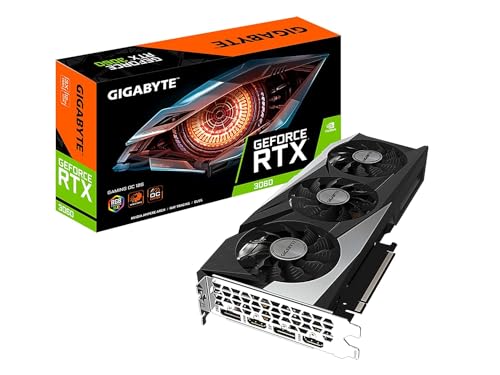
- Budget desktop tier: MSI RTX 3060 12GB or GIGABYTE RTX 3060 Gaming OC for 7B-13B open-weight inference at usable speeds.
- Both host retrieval indexes and small chat models without touching a hosted API.
If your workload does not require the frontier — and most workloads do not — the local stack keeps getting more of the story. Cloudflare's move is one data point along that arc.
Key takeaways
- Cloudflare split its blanket AI-bot block into three purpose-based controls this month.
- The three categories are search crawlers, training scrapers, and agent fetches.
- Publishers can now allow one and block the others rather than take an all-or-nothing decision.
- Self-hosters are largely insulated but should identify agents clearly to avoid the training bucket.
- Local AI hardware remains the cleanest way to build workloads independent of edge policy shifts.
Common questions publishers are asking
The rollout has surfaced a few recurring questions in the Cloudflare Community and related discussions:
- Do the new controls replace robots.txt? No — they operate at the edge and complement it. Robots.txt still signals intent to any bot that respects it.
- How does Cloudflare identify the category? A combination of user-agent parsing, published bot allowlists, and behavioral heuristics. The categorization is not perfect but is transparent enough that operators can inspect and appeal.
- What about custom internal crawlers? Bots that identify themselves clearly and stay under rate limits generally end up in the agent-fetcher bucket, which is more likely to be allowed than the training-scraper bucket.
- Does this affect crawl budget for search? Not directly. Search crawlers remain their own category and are the least likely to be blocked by default.
When to care about this as a builder
- If you run a public content site, review the new controls this week and set an explicit policy. Silence defaults to the least favorable interpretation over time.
- If you build agents that fetch URLs, make sure you have a documented policy and a user-agent that identifies your project.
- If you run a purely local rig on an RTX 3060 12GB plus a small Pi service on a Raspberry Pi 4 8GB, the direct impact is minimal — but the market context still matters when you plan future features.
Related guides
- Best GPU for Local Llama 3-8B Under $350
- Raspberry Pi 4 8GB Run Local LLM Ollama Benchmarks
- Microsoft Copilot Super App vs Local Ollama RTX 3060
- Local Security Scanner LLM RTX 3060 12GB
Bottom line
Cloudflare's shift from blanket AI-bot blocking to granular per-purpose controls is a smart product move for publishers who have been forced into all-or-nothing decisions. It is also a quiet reminder that the terms of engagement with public web content are getting more granular, more negotiated, and more edge-enforced. For anyone building on that content, that is the signal. For anyone running local inference on their own hardware, it is one more reason the RTX 3060 12GB and Raspberry Pi 4 8GB remain such durable picks — no policy shift at any edge provider changes what a local model on a local rig can do.
Citations and sources
- Cloudflare official blog — canonical source for edge policy changes.
- Raspberry Pi 4 Model B product page — reference hardware for lightweight self-hosting.
- TechPowerUp — GeForce RTX 3060 specs — Ampere card reference used above.
- Cloudflare Community forum — operator discussion referenced for practical questions.
This piece is editorial synthesis based on publicly available information. No independent first-party benchmarking is reported.