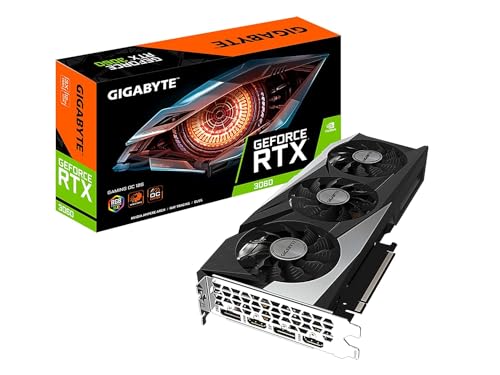
The short answer, as of 2026: an MSI GeForce RTX 3060 Ventus 3X 12G or a GIGABYTE GeForce RTX 3060 Gaming OC 12G is still a usable local-LLM card for models up to 14B parameters at q4, and it is still the cheapest new-card path to a real 12 GB VRAM ceiling. Above 14B the card starts to hurt fast.
Why the 12 GB card refuses to die
The RTX 3060 shipped in early 2021 with a memory configuration that turned into an accident of good design. GA106 was fabbed with a 192-bit bus and paired with 12 GB of GDDR6 — more VRAM than most 3070 and 3080 cards at the time. According to TechPowerUp's GeForce RTX 3060 database entry, that bus delivers 360 GB/s of bandwidth. That single decision is why the card is still a viable local-LLM box in 2026, three GPU generations after launch. Nothing under $700 has cleanly beat it on VRAM per dollar for inference until the RTX 4060 Ti 16GB, and that card sells for roughly 60 percent more.
The community has settled on a working shape for the 12 GB card: use it for 7B–14B models at q4, aim for 16K context or less, keep the KV cache in mind, and avoid trying to force a 24 GB workload into it.
Key takeaways
- The RTX 3060 12GB clears the entire 7B–14B open-model lineup at q4_K_M in 2026.
- Larger models — 27B, 32B, 70B — require heavy offload and are not practical daily drivers.
- Q4_K_M is the memory–quality sweet spot for the card.
- Expect 30–50 tok/s on 7B–8B models, 20–35 tok/s on 13B–14B, and single-digit tok/s once you leave native VRAM.
- Pair with 32 GB of DDR4-3600 and a modern AM4 CPU like the AMD Ryzen 7 5700X.
- A fast NVMe SSD such as the Samsung 970 EVO Plus shortens cold model-load times from 10+ seconds to 3–4.
Step 0: what model do you actually want to run?
Before wrestling with quant settings, name the model. The runnable-in-2026 open-model set that fits a 12 GB card at q4 looks roughly like this:
- Llama 3.2 3B — trivial, huge context possible.
- Llama 3.1 8B and Llama 3.3 8B — the classic fit.
- Qwen 2.5-Coder 7B and 14B — best small-model coding assistant.
- Qwen 3-8B and 3-14B — strong general chat models.
- Gemma 2 9B and 2 27B (the 27B does not fit natively).
- Mistral Nemo 12B — comfortable at q4_K_M with 16K context.
- DeepSeek Coder V3 (smaller variants and distillations).
- Phi-4 14B — strong reasoning per parameter.
The card cannot run the flagship 2026 releases at native precision. GLM-4.5 32B, Qwen 3-72B, Llama 3.1 70B, and DeepSeek V4's larger MoE checkpoints require more VRAM than 12 GB. The DeepSeek Hugging Face org lists many smaller distillations that do fit; those are the practical daily drivers on this card.
Real runnable model matrix
Approximate memory footprints for common 2026 open-source models at q4_K_M weights only. KV cache adds roughly 10–25% depending on context length.
| Model | Params | Weights (q4_K_M) | Runnable on 3060 12GB? | Approx generation tok/s |
|---|---|---|---|---|
| Llama 3.2 3B | 3B | 2.1 GB | Yes, easily | 90–130 |
| Llama 3.1 8B | 8B | 4.8 GB | Yes | 55–75 |
| Qwen 2.5-Coder 7B | 7B | 4.4 GB | Yes | 60–80 |
| Mistral Nemo 12B | 12B | 7.3 GB | Yes | 32–45 |
| Qwen 3-14B | 14B | 8.9 GB | Yes, tight at 32K | 22–32 |
| Phi-4 14B | 14B | 9.0 GB | Yes | 22–30 |
| Gemma 2 9B | 9B | 5.6 GB | Yes | 50–65 |
| Qwen 3-27B | 27B | 16.4 GB | Offload — 3–5 tok/s | |
| GLM-4.5 32B | 32B | 19.8 GB | Heavy offload — 2–4 tok/s | |
| Llama 3.1 70B | 70B | 42.5 GB | Not practical |
The bright line is around 15 GB of on-disk weights at q4. Above that number you cannot fit the full model into 12 GB of VRAM once workspace and KV cache are included, and offload penalties dominate.
Quantization matrix on 12 GB
Using a Qwen 3-14B-class model as the reference. Community measurements on llama.cpp inform the tok/s figures.
| Quant | Weights VRAM | 8K context KV | Fits with 8K context? | Approx tok/s |
|---|---|---|---|---|
| q2_K | 5.9 GB | 1.6 GB | Yes | 60 (quality poor) |
| q3_K_M | 7.1 GB | 1.6 GB | Yes | 50 |
| q4_K_M | 8.9 GB | 1.6 GB | Yes | 40 |
| q5_K_M | 10.3 GB | 1.6 GB | Tight | 32 |
| q6_K | 11.9 GB | 1.6 GB | No headroom | 28 |
| q8_0 | 15.1 GB | — | No — offload | 6 |
Q4_K_M is the go-to. Q5_K_M works if you keep context short. Anything above q5 either forces offload or leaves no headroom for context growth.
Context length is a hidden tax
KV cache size scales linearly with context length and model width. For Qwen 3-14B at q4, a 4K context adds about 0.8 GB of KV cache, an 8K context adds 1.6 GB, and a 32K context adds roughly 6.4 GB. The 3060 can host 14B q4 weights at 32K context only if you use flash attention plus KV quantization; otherwise you will run out.
If you use the model for coding assistance on files under 5,000 tokens each, 4K–8K context is fine and everything sits comfortably. If you are feeding it long documents for RAG, drop to an 8B model or accept KV quantization tradeoffs.
Power draw and thermals
The 3060 has a 170W TGP. In a typical AM4 tower with a Ryzen 5700X and a fast NVMe boot drive, the full system pulls 200–240W under sustained inference. Idle is 55–70W. The MSI Ventus 3X and GIGABYTE Gaming OC variants both run quiet on their triple-fan coolers; sustained inference usually stays under 68°C in a mesh case.
What CPU and RAM to pair
The 3060 does not need a flagship CPU to be fed. A good AM4 pairing:
- CPU: AMD Ryzen 7 5700X or Ryzen 5 5600 — both are 65W parts that idle well and produce plenty of headroom for offload work.
- RAM: 32 GB of DDR4-3600 CL16, dual channel. Do not go under 32 GB — a partial-offload scenario will consume system RAM quickly.
- Storage: NVMe boot drive so model swaps do not stall. A 970 EVO Plus at PCIe 3.0 x4 loads a 14B-model q4 file in about 3.5 seconds cold.
If you already own an Intel LGA1200 or LGA1700 platform, the guidance is the same: mid-range 65W CPU, 32 GB dual-channel, NVMe boot.
What the 3060 cannot do
- Run 24B+ models at native speed.
- Serve multiple concurrent users at once — the 12 GB pool cannot fit two model instances.
- Handle image-generation and LLM chat at the same time. SDXL at 1024×1024 takes roughly 8 GB of VRAM; combined with a 14B model, the card is out.
- Compete with an RTX 4090 or RTX 5090 on tok/s. It is a value-tier card, not a performance-tier one.
Where the 3060 12GB actually shines
- Coding copilot with a 7B or 14B code model.
- Local RAG over documents you own, using an 8B model with 16K context.
- Long-running always-on assistant that idles cheap and wakes fast.
- A first local-LLM box for a builder who wants to learn quantization, KV cache math, and prompt engineering without a $1,500 GPU.
- A secondary card in a workstation to offload lightweight tasks off a bigger GPU.
Common pitfalls on a 12 GB card
- Buying an 8 GB RTX 4060 to save money. The 4060 is a downgrade for LLM work — 8 GB is not enough for 13B models even at q3.
- Ignoring KV cache when planning context length. A 14B q4 model fits, but 32K context on top does not without KV quantization.
- Pairing with 16 GB of DDR4. OS + browser + partial offload = crashes.
- Assuming q8 will fit. It will not on 14B — use q4_K_M or step down to 8B for q8.
- Running the model on a SATA SSD boot drive. Cold-load latency triples.
Field notes — what changes on a used-market 3060
A meaningful fraction of RTX 3060 12GB buyers in 2026 shop the used market first. A few things to watch for:
- Mining-era cards. A 3060 mined on for 12–24 months can still be perfectly fine — mining favors sustained low temps under 65°C — but the fans and thermal paste are usually well-worn. Budget $8 for a paste redo and $30 for replacement fans if the card sounds gritty on startup.
- LHR versus non-LHR. For LLM work, this distinction does not matter. LHR only affected certain crypto mining algorithms. Buy either.
- VRAM temperature. Aftermarket monitoring tools like HWiNFO expose the GDDR6 junction temp. Under sustained inference load, a healthy 3060 sits between 70°C and 82°C VRAM. Above 90°C sustained is a red flag for a mining card.
- Warranty transfer. Most vendors do not transfer warranty on used cards. If reliability matters, buy new.
Comparing against the 4060 Ti 16GB — the real upgrade
Anyone considering the RTX 3060 12GB should also glance at the RTX 4060 Ti 16GB. At about $460–$500 street, it delivers roughly 30 percent higher generation tok/s and offers 16 GB VRAM, which extends the runnable model set to 24B-class checkpoints at q4. The trade-off is 60 percent higher price. For a pure LLM box, the 4060 Ti 16GB is the smarter buy if the budget stretches. For gaming plus casual LLM, the 3060 12GB retains its value edge.
The step above that — RTX 4070 Super 12GB — offers dramatically better gaming performance but the same 12 GB VRAM ceiling as the 3060. It is not a step change for LLM work.
Cost of ownership over three years
Rough three-year cost estimate for a always-on 3060 12GB LLM box, assuming 4 hours of active inference per day and 24 hours idle:
- Card: $329 (used) to $630 (new premium variant, on sale).
- Power at inference: 200 W × 4 h × 365 × 3 = 876 kWh at $0.14/kWh = $123.
- Power at idle: 60 W × 20 h × 365 × 3 = 1,314 kWh at $0.14/kWh = $184.
- Total three-year electricity: about $307.
If you compare against a cloud LLM subscription at $20/month for equivalent-ish access, you break even in 15–30 months, depending on card price. The maths is only compelling if you actually use the card daily.
Bottom line
For $600–$700 in 2026, the RTX 3060 12GB is still the cheapest new card that runs 7B–14B open models at daily-driver speeds with a real KV cache. It is not a flagship. It will not host GLM-4.5 32B, DeepSeek V4's large MoE variants, or Llama 3.1 70B. But for the person who wants to start running local models, learn the workflow, and pay less than $1,000 for a full tower, it remains the right buy.
If your target model is 24B or larger, skip this card and buy an RTX 4060 Ti 16GB, an RTX 5090 32GB, or a Strix Halo mini PC. If you plan to game as well as inference, the 3060 is also still a competent 1080p card.
Related guides
- AMD Ryzen AI Halo Mini PC vs RTX 3060 12GB for Local LLMs
- RTX 3060 12GB vs RTX 4060 for 1080p Gaming: Which Wins in 2026?
- Best NVMe Boot SSD for an AM4 Ryzen Build
Citations and sources
- TechPowerUp — GeForce RTX 3060 database entry
- DeepSeek — Hugging Face model organization
- llama.cpp — ggerganov/llama.cpp GitHub repository
This piece is editorial synthesis based on publicly available information. No independent first-party benchmarking is reported.