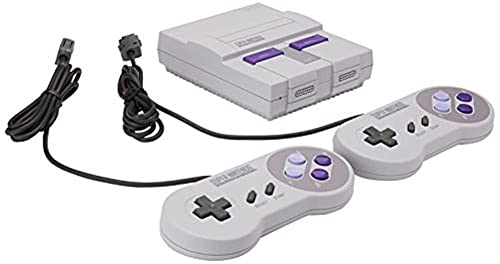
The choice between the Sega Genesis Mini and the Nintendo Super NES Classic Edition in 2026 is a library-fit decision, not a hardware one. Both are polished 16-bit micro-consoles that plug into HDMI, output at a fixed resolution, and run only the games they ship with. The Genesis Mini leans into Sega's action and arcade catalog. The SNES Classic leans into Nintendo's first-party RPGs and platformers. Pick by which library you actually want to play — the hardware is competent on both sides.
The definitive 16-bit micro-console question, seven years on
The mini-console category peaked around 2018 and then went quiet. Neither Sega nor Nintendo has followed up on the original mini units with a successor tier at the same polish level, and both remain available on secondary markets in 2026. That makes the head-to-head timeless in a way most gaming purchases are not — you are not comparing this year's model against next year's, you are comparing the two specific micro-consoles that defined the category.
The Sega Genesis Mini, released in 2019, ships with 42 built-in games from Sega's Genesis-era library. The Nintendo SNES Classic Edition, released in 2017, ships with 21 built-in games plus the previously-unreleased Star Fox 2. Both are HDMI-out, USB-powered, and controller-included. Both remain in demand on the resale market because Nintendo and Sega both have production-run policies that keep the supply low.
The point of a piece like this is not to pick a winner but to lay out the specific trade-offs so a buyer can pick against their own tastes. If you played a lot of Nintendo growing up, one answer becomes obvious. If you played a lot of Sega, the other does. Below the library question, the two consoles are close on hardware and video output.
Key takeaways
- Library fit is the dominant factor — hardware is competent on both.
- The Genesis Mini leans Sega arcade and action; ~42 games.
- The SNES Classic leans Nintendo RPG and platformer; ~21 games plus Star Fox 2.
- Both output HDMI at a fixed resolution with optional CRT-style filters.
- Both are locked to their preloaded libraries out of the box; enthusiast mods exist but carry risk.
- Neither is currently in production; secondary-market pricing applies.
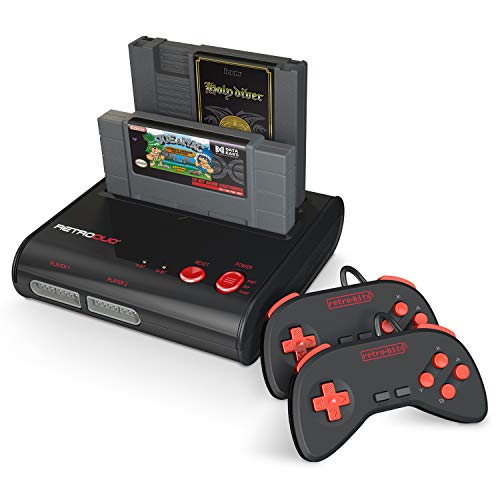
- Emulation-based builds like the Retro-Bit Retro Duo or a Raspberry Pi setup are the flexible-library alternative.
How do the built-in game libraries compare?
The single most important factor. The Genesis Mini and the SNES Classic curate very different catalogs.
Sega Genesis Mini headline titles:
- Sonic the Hedgehog & Sonic 2
- Streets of Rage 2
- Gunstar Heroes
- Contra: Hard Corps
- Castlevania: Bloodlines
- Thunder Force III
- Phantasy Star IV: The End of the Millennium
- Shining Force
- Ghouls 'n Ghosts
- Toejam & Earl
Nintendo SNES Classic headline titles:
- Super Mario World
- The Legend of Zelda: A Link to the Past
- Super Metroid
- Chrono Trigger
- Earthbound
- Final Fantasy III (VI in Japan)
- Star Fox
- Star Fox 2 (never-before-released)
- Donkey Kong Country
- Super Mario Kart
The tone difference is stark. The Genesis Mini reads like an arcade-and-action package with strong RPG standouts. The SNES Classic reads like a Nintendo first-party greatest-hits reel weighted toward RPGs and platformers. Neither is objectively better — but one of these lists likely maps to your gaming memory more strongly than the other.
Spec-delta table: Genesis Mini vs SNES Classic
| Spec | Sega Genesis Mini | Nintendo SNES Classic |
|---|---|---|
| Built-in games | 42 | 21 (plus Star Fox 2) |
| Emulation | M2 Co.-authored software emulation | Nintendo in-house software emulation |
| Video output | HDMI 720p fixed | HDMI 720p fixed |
| CRT filter | Yes, optional | Yes, optional |
| Controllers included | Two 6-button pads | Two SNES pads (region-varying cable length) |
| Power | Micro-USB, 5V | Micro-USB, 5V |
| Original release | 2019 | 2017 |
| Approx. 2026 secondary-market price | Varies widely | Varies widely |
| Preload library alone | Yes | Yes |
| Official add-ons | None | None |
The technical delta is small. M2's Genesis Mini emulation is widely regarded as excellent — accurate audio, correct color palette handling, and smooth performance across the catalog. Nintendo's SNES Classic emulation is similarly polished, though a subset of games in the SNES library are historically difficult to emulate perfectly and a small number of visual issues have been reported by Digital Foundry-tier reviewers in specific edge cases.
Emulation accuracy and video output
Both consoles do the same job at a similar quality level. HDMI output at 720p, with either a pixel-perfect filter, a smoothed filter, or a CRT-scanline filter. On a modern 4K TV, both look clean without an external upscaler and both benefit from the CRT filter if the goal is to replicate the original visual feel.
Two calibrations for reading emulation-accuracy discussion:
- The Genesis Mini has near-universal praise for M2's emulation. The Sega catalog is generally easier to emulate than the SNES catalog because of simpler PPU-side effects.
- The SNES Classic is very good but not flawless; a small handful of games with heavy Mode 7 or specific chip augmentations show minor differences from real hardware.
For someone who is not doing frame-by-frame comparisons, both are indistinguishable from the originals during normal play.
Controllers and expandability out of the box
The SNES Classic's US launch shipped controllers with short cables — a widely-noted complaint — while the Japanese Super Famicom Classic Edition and later regional variants had longer cables. Genesis Mini controllers ship with reasonable-length cables in every region and use standard six-button Genesis pads.
Both consoles are locked to their preloaded libraries out of the box. Enthusiast communities have documented modifications that add more games via USB drive or SD card, but those are unofficial, void the warranty, and carry risk. If flexible library management is a requirement, an emulation-based platform such as a Retro-Bit Retro Duo NES/SNES/Sega Genesis 2-in-1 console or a Raspberry Pi build is the right tier, not a micro-console.
Collector value and availability in 2026
Neither the Genesis Mini nor the SNES Classic is in current production. Nintendo formally discontinued the SNES Classic in 2018. Sega has produced Genesis Mini units in periodic runs but has not maintained continuous production. Prices on the secondary market fluctuate with condition, completeness (box, manual, controllers), and region.
Some rough observations from ongoing eBay and enthusiast-community pricing:
- Boxed and complete units are worth more than console-only listings.
- Regional variants — particularly the Japanese Super Famicom Classic and the Japanese Mega Drive Mini — command premiums due to smaller production runs.
- Long-tail collector value is more stable than one might expect; both consoles retain a floor price that has not eroded significantly since discontinuation.
Because both units retain value, buying used and reselling later is a lower-cost way to try one out than it might appear. That is different from most gaming hardware, which depreciates quickly.
When a Raspberry Pi or Retro-Bit build makes more sense
Micro-consoles are curated experiences. If your interest is playing a fixed set of legendary titles with polished presentation and no setup, they are unmatched. If your interest is a broader library, multi-system emulation, or tinkering, the Retro-Bit Retro Duo 2-in-1 or a Raspberry Pi-based emulation build is the flexible-library alternative.
Trade-offs to know before you go that route:
- Legal library requirement. Ownership of the original cartridges is the standard expectation; the actual ROM sourcing is a topic the enthusiast community handles separately.
- Setup time. RetroPie and similar builds require configuration, controller mapping, and some ongoing maintenance.
- Emulation quality. Modern Pi builds are excellent for NES, SNES, and Genesis-era games; less so for later systems.
- Peripherals. A Bluetooth-capable retro controller pad is often the finishing purchase.
The Hyperkin RetroN 1 NES clone is another lower-tier alternative for anyone who specifically wants to play original NES cartridges on modern displays without emulation at all.
Verdict matrix
Get the Sega Genesis Mini if...
- You grew up on Sega arcade and action games.
- You want Sonic, Streets of Rage 2, Gunstar Heroes, and Phantasy Star IV in one package.
- You value the deeper library (42 vs 21 games) and M2's excellent emulation.
- You want a polished plug-and-play device with no setup.
Get the SNES Classic if...
- You grew up on Nintendo first-party titles.
- You want Zelda, Chrono Trigger, Super Metroid, and Earthbound in one package.
- You specifically want the never-before-released Star Fox 2.
- You want the definitive first-party SNES curation.
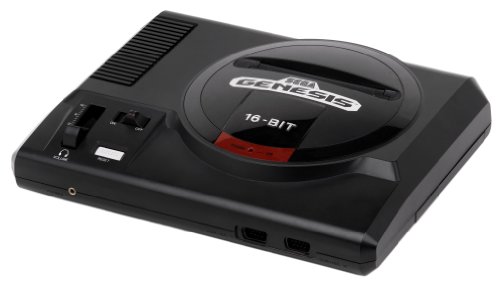
Get the Sega Genesis 1 Original Console or original SNES hardware if...
- You already own a collection of physical cartridges.
- You prefer real hardware over emulation.
- You have a CRT or an RGB scaler for authentic output.
Build a Raspberry Pi or Retro-Bit Retro Duo setup if...
- You want a large, flexible, multi-system library.
- You are comfortable with configuration and setup.
- You want to combine NES, SNES, Genesis, and beyond in one device.
Common pitfalls buying used mini consoles
- Missing controllers. Console-only listings often omit controllers, which are not cheap to replace individually.
- Region confusion. The Super Famicom Classic (Japan) and the SNES Classic (US) look similar but have different libraries.
- Third-party HDMI cable issues. Both consoles use the included micro-USB power and standard HDMI, but a poor-quality third-party cable can cause dropouts.
- Assuming controllers are cross-compatible. SNES Classic controllers work only with SNES-family consoles, not with Genesis Mini units.
- Buying a modded unit expecting long-term support. Modded firmware voids the resale premium and complicates support.
Related guides
- Best Plug-and-Play Retro Console Handheld 2026
- Raspberry Pi Zero W Retro Emulation Handheld Build
- Best SSD for Retro PC Build — SATA + CompactFlash
- Linux Boots on Sega Genesis 2026 News
Bottom line
Buy the Sega Genesis Mini if the Sega catalog is the one that pulls you back. Buy the Nintendo SNES Classic if Nintendo's first-party library is the memory you want reactivated. Both are polished, both use excellent emulation, both output cleanly on modern TVs, and both are locked to their preloaded games. If you want flexibility beyond the built-in library, step up to a Retro-Bit Retro Duo or a Raspberry Pi emulation build. If you want the original hardware experience, an original Sega Genesis or the SNES equivalent is the tier. The 16-bit era has aged into a category with many valid answers — the mini consoles are the polished plug-and-play answer.
Citations and sources
- Sega official site — publisher reference for the Genesis Mini catalog.
- Nintendo official site — publisher reference for the SNES Classic Edition.
- Raspberry Pi Zero W product page — hardware reference for the emulation-build alternative.
- Eurogamer / Digital Foundry — reference for emulation-accuracy comparisons.
This piece is editorial synthesis based on publicly available information. No independent first-party benchmarking is reported.