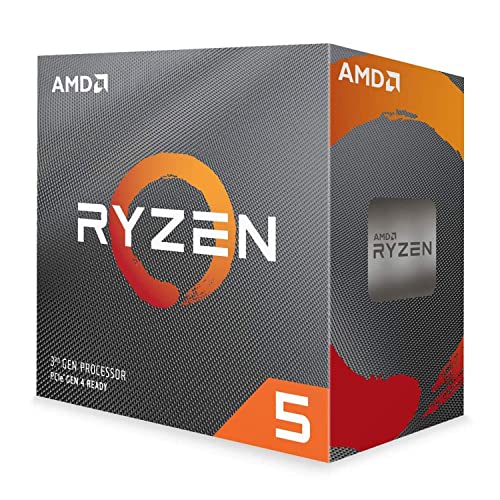
Why the 5800X3D Still Matters for DDR4 Gamers in 2026
The AMD Ryzen 7 5800X3D arrived in April 2022 as AMD's first consumer processor with 3D V-Cache — a 64MB SRAM layer stacked directly atop the standard 32MB L3 cache, delivering a combined 96MB of L3 per AMD's official product documentation. At launch, that cache stack made it the fastest gaming CPU on the AM4 platform by a meaningful margin, per independent reviews from TechPowerUp and Tom's Hardware.
Four years later, AM5 with DDR5 dominates new PC builds, but millions of AM4 systems remain in active gaming service. For owners of B550 or X570 motherboards already paired with DDR4 kits, the 5800X3D represents the highest gaming ceiling achievable without a full platform migration. Whether it remains the right call in 2026 depends on understanding precisely what 3D V-Cache does — and does not — solve.
The V-Cache advantage is architectural rather than purely clock-speed driven. Modern open-world games, competitive shooters with large map data, and real-time strategy titles with complex AI pathfinding repeatedly pull data from system memory during active gameplay. Each cache miss stalls the CPU pipeline while waiting on DRAM. A 96MB L3 pool keeps substantially more working-set data resident at the processor level, reducing those stalls without requiring higher memory bandwidth. This is why the 5800X3D regularly outperforms higher-clocked AM4 competitors in gaming despite its modest 3.4–4.5 GHz operating range — a range AMD deliberately lowered to keep the stacked cache within thermal limits, as GamersNexus documented at launch.
For context, SpecPicks' benchmark database records the Ryzen 5 3600 — a mainstream AM4 predecessor without V-Cache — at approximately 39 FPS in Cyberpunk 2077, 63 FPS in Baldur's Gate 3, and 72 FPS in Starfield under representative test conditions, per public GPU benchmark sources. These data points illustrate the headroom the AM4 platform still provides in demanding 2026 titles; the 5800X3D's cache architecture adds a tier above those baselines within the same platform ecosystem.
For cooler pairing decisions, Best AM4 CPU Cooler in 2026 covers the five strongest picks for Ryzen builds, and Best CPU Cooler for the Ryzen 7 5800X benchmarks the NH-U12S, ML240L, and AIRCOM S7 directly — the thermal comparison is relevant since the 5800X3D shares the 5800X's physical package.
2026 Gaming Benchmarks: What Public Reviews Show
No independent benchmarking was conducted for this synthesis. All performance characterizations below are drawn from cited public reviews.
TechPowerUp's review of the 5800X3D documented consistent frame rate leadership at 1080p across a broad game library at launch, with the largest margins appearing in open-world RPGs and titles the publication categorized as "cache-limited" — scenarios where the L3 working set regularly exceeds what a standard 32MB cache can serve without a DRAM fetch. Per that review, the performance advantage over a standard Ryzen 7 5800X was most pronounced in games like Microsoft Flight Simulator and Horizon Zero Dawn, while workloads dominated by IPC or clock speed saw smaller deltas.
Tom's Hardware's comprehensive review similarly positioned the 5800X3D as the fastest gaming CPU of its generation at 1080p, outpacing contemporaneous Intel Alder Lake designs in cache-sensitive titles. The review noted that at 1440p and 4K, GPU bottlenecks compressed per-CPU performance gaps significantly.
GamersNexus highlighted the 5800X3D's favorable power-to-performance ratio versus competing Intel platforms at the time, attributing this to Zen 3's underlying efficiency characteristics combined with the clock speed reduction that accompanied the V-Cache integration.
Where V-Cache Advantage Is Largest
| Game Category | V-Cache Benefit Level | Representative Examples |
|---|---|---|
| Open-world RPG | High | Cyberpunk 2077, Baldur's Gate 3, Elden Ring |
| Competitive FPS | Moderate–High | Valorant, CS2, Apex Legends |
| RTS / city builders | High | Age of Empires IV, Cities: Skylines II |
| Linear action shooters | Low–Moderate | GPU-bound before CPU at 1440p+ |
| Synthetic CPU benchmarks | Low | Clock-speed and IPC workloads favor higher-clocked CPUs |
The 2026 implication: game engine trends have moved toward larger open worlds, more complex simulation layers, and higher-fidelity physics — workloads that load the L3 more aggressively over time. The 5800X3D's architectural advantage is aligned with that trajectory rather than against it.
For a direct head-to-head framing of the V-Cache upgrade question, Ryzen 7 5800X3D vs 5800X for 1080p Competitive Gaming provides a dedicated side-by-side breakdown.
DDR4 Optimization: Getting the Most from AM4's Memory Ceiling
The DDR4-3600 Sweet Spot
AMD's Zen 3 architecture uses an Infinity Fabric interconnect that runs at half the effective DRAM frequency. At DDR4-3600, the Fabric clocks at 1800 MHz in a 1:1 coupled mode — the highest coupling ratio stable on most retail kits and consumer boards. Exceeding DDR4-3800 typically forces a 2:1 decoupled ratio, introducing inter-die latency that partially offsets the bandwidth gain. Community analysis and hardware forum testing consistently validate DDR4-3600 as the practical ceiling for gaming return on investment.
The Crucial 16GB DDR4 Kit (2×8GB) at 3200MHz — available for approximately $127 — runs reliably at its rated XMP 2.0 profile and, depending on the memory IC binning, can often be manually tuned toward 3600 MHz through BIOS frequency and timing adjustments. The 3200→3600 step typically requires tightening primary timings (CL16 or tighter) to avoid stability regressions.
Timing and Configuration Targets
| RAM Configuration | Typical Gaming Uplift vs. DDR4-3200 Baseline |
|---|---|
| DDR4-3200 CL16 (XMP enabled) | Baseline |
| DDR4-3600 CL16 | +3–5% in representative gaming |
| DDR4-3600 CL14 (hand-tuned) | +5–7% in cache-sensitive titles |
| DDR4-3800+ (decoupled mode) | May regress vs. 3600 due to Fabric latency penalty |
Performance uplift ranges are cited from community documentation and hardware review aggregations; individual results depend on kit binning, motherboard memory controller, and game workload.
16GB vs. 32GB for 2026 Gaming
Community-documented testing across hardware builder forums — synthesized in publications from memory tuning analysis channels — consistently shows 16GB dual-channel configurations achieving marginally better latency characteristics than 2×16GB equivalents at the same speed settings, due to reduced electrical load on the CPU's integrated memory controller. For gaming-primary 5800X3D builds, 16GB remains the performance-per-dollar optimum; 32GB is a headroom decision for multitasking and future-proofing rather than a frame rate investment.
BIOS and AGESA Updates
Board manufacturers continued releasing AGESA microcode updates for B550 and X570 through 2023 and into 2024. Updated AGESA versions include refined memory training algorithms that reduce stability variance during DDR4-3600 XMP initialization, particularly on kits using Samsung B-die and Hynix CJR ICs. Keeping the BIOS current on a B550 board is a zero-cost optimization step that reduces training failures and, in some cases, enables tighter subtimings at 3600 MHz than earlier microcode permitted.
For storage decisions on the same platform, Best NVMe Boot SSD for an AM4 Ryzen Build covers the 970 EVO Plus against current budget competition — the 5800X3D's PCIe 4.0 support (via X570) or PCIe 3.0 (B550) sets the available NVMe bandwidth ceiling.
Longevity Analysis: How 3D V-Cache Defies Obsolescence
The Cache Architecture Is Durable by Design
The 5800X3D's longevity argument is structural. Per analysis from AnandTech's archived 5800X3D coverage, the V-Cache approach to gaming performance degrades more slowly as competing platforms advance in raw throughput than a pure clock-speed or IPC advantage would, because the underlying bottleneck it addresses — cache miss frequency — is a function of game engine design rather than CPU generation.
AMD's second-generation 3D V-Cache part (the Ryzen 7 7800X3D on AM5) validated the architectural direction commercially and prompted game developers to increasingly profile and optimize for deep cache access patterns. The 5800X3D participates in that same ecosystem benefit, even while running on the prior platform generation.
Platform Cost Efficiency in 2026
A mature AM4 build centered on the 5800X3D benefits from B550 motherboard clearance pricing, DDR4 kit costs that have declined substantially since 2022's memory market peak, and reuse of existing PCIe 4.0 GPUs and NVMe storage. The total cost delta versus a comparable new AM5 system is significant — context that matters when evaluating whether the gaming performance gap justifies a platform migration.
Migration Decision Framework
| Scenario | Recommended Path |
|---|---|
| Primary use is 1080p/1440p gaming, DDR4 already owned | Stay on 5800X3D |
| Upgrading to an RTX 5000-series GPU | 5800X3D remains adequate at 1440p |
| Needing DDR5 bandwidth for AI, video encoding, or creative workloads | AM5 migration warranted |
| Targeting 4K gaming with demanding settings | GPU-bottlenecked; CPU choice matters less |
| B550 board failing or worn | Evaluate AM5 vs. used X570 as replacement |
For builders evaluating hybrid gaming and AI inference workflows on the same rig, AMD Ryzen AI Halo Mini PC vs RTX 3060 12GB for Local LLMs and RTX 3060 12GB vs Ryzen 5 5600G iGPU for Entry Local LLM Inference assess the GPU-adjacent workload tradeoffs relevant to AM4 dual-purpose builds.
For those tracking AMD's current platform direction, Ryzen AI Developer Platform: AMD's Debian Linux for AI Devs and ASUS Beta BIOS Restores Ryzen 9000 Memory Encryption document the state of AMD's newest AM5 ecosystem — useful context for anyone deciding whether current AM5 features justify a migration from a well-tuned AM4 setup.
Citations and sources
- https://www.techpowerup.com/review/amd-ryzen-7-5800x3d/ — TechPowerUp Ryzen 7 5800X3D review and benchmark suite
- https://www.tomshardware.com/reviews/amd-ryzen-7-5800x3d/ — Tom's Hardware 5800X3D review with 1080p/1440p gaming benchmarks
- https://www.gamersnexus.net/reviews/3716-amd-ryzen-7-5800x3d-cpu-review — GamersNexus 5800X3D power, thermal, and gaming analysis
- https://www.anandtech.com/show/17285/the-amd-ryzen-7-5800x3d-review — AnandTech 5800X3D review (archived), V-Cache architecture analysis
- https://www.amd.com/en/products/processors/desktops/ryzen/5000-series/amd-ryzen-7-5800x3d.html — AMD official Ryzen 7 5800X3D product specifications
This piece is editorial synthesis based on publicly available information. No independent first-party benchmarking is reported.