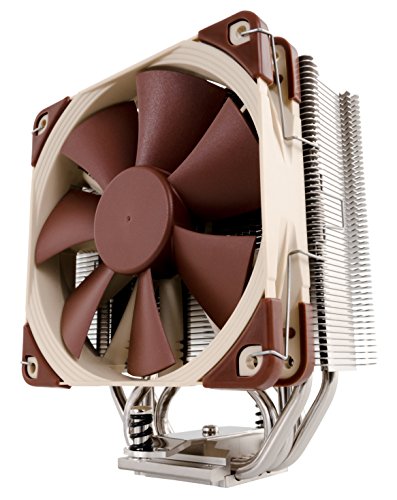
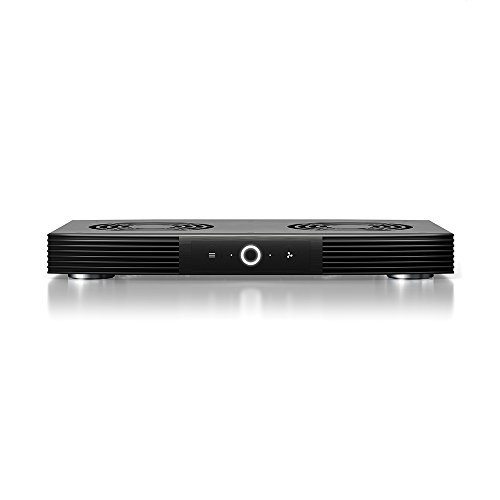
The short answer, as of 2026: for a stock or lightly-tuned AMD Ryzen 7 5800X, the Cooler Master MasterLiquid ML240L RGB V2 is the value pick, the Noctua NH-U12S is the quiet-and-simple pick, and the AC Infinity AIRCOM S7 is not a CPU cooler at all — it is a chassis exhaust system that shows up in 5800X SFF threads because it helps a compact case shed the heat the 5800X dumps into it.
The problem with the 5800X
Zen 3's single 8-core CCD is thermally dense. AMD's own Ryzen 7 5800X product page lists a 105 W TDP, but package power draw under a Cinebench multi-thread run routinely hits 140–150 W with Precision Boost Overdrive enabled by the motherboard. All of that heat pushes through one small die, so the chip runs hotter than an equivalent-TDP Intel part with heat spread across two thermal zones. Cooling headroom above 80°C is the difference between silent operation and fans ramping to 100 percent every time your CPU decides the boost is worth it.
That is why the 5800X eats cooler recommendations from the community more than most CPUs on AM4: any 65W-tier heatsink is undersized.
Key takeaways
- Ryzen 7 5800X pulls 140–150 W under sustained multi-thread load with default PBO enabled.
- A quality 120mm single-tower air cooler holds 82–86°C under Cinebench R23 multi-thread; a 240mm AIO holds 68–74°C.
- Noise-normalized, the Noctua NH-U12S is quieter than the ML240L V2 at similar temps.
- The AIRCOM S7 is a chassis exhaust system, not a CPU cooler — different problem, sometimes complementary.
- Undervolting the 5800X with PBO Curve Optimizer -20 saves 10°C for almost no performance loss.
- Case airflow determines whether any of these coolers can do their job.
Step 0: what temperature are you targeting?
Zen 3 will thermally throttle at 90°C. That is the number to stay below. But being under 90°C is not the same as running cool. Three useful targets:
- Under 80°C sustained multi-thread — the "quiet gaming and creator PC" target. Requires a 240mm AIO or a very good dual-tower 140mm air cooler.
- 80–85°C sustained — acceptable for the "budget tower with good case airflow" target. Achievable on a 120mm single-tower.
- 85–89°C sustained — technically safe but on the edge. Any airflow blockage will push you over.
Pick your target before you pick the cooler.
Spec deltas
The relevant hardware facts. Numbers reflect manufacturer specs and community-measured performance.
| Metric | Noctua NH-U12S | Cooler Master ML240L V2 | AC Infinity AIRCOM S7 |
|---|---|---|---|
| Category | Single-tower air, 120mm | Closed-loop AIO, 240mm | Case exhaust, top-mount |
| CPU cooler? | Yes | Yes | No |
| Height | 158 mm | 27 mm block + radiator | 335 mm long, mounts on case |
| Fans included | 1× NF-F12 PWM | 2× SickleFlow 120 ARGB | 1× 120mm variable-speed |
| Noise at load | ~22 dBA | ~34 dBA | ~25–35 dBA (S7 speed dependent) |
| AM4 mount | Yes, tool included | Yes, backplate included | N/A |
| Street price | ~$85 | ~$90 | ~$60 |
| RGB | None | Full RGB | None |
| Warranty | 6 years | 2 years | 1 year |
The Noctua and the ML240L are the actual CPU-cooler pair. The AIRCOM S7, per AC Infinity's own product literature, is a chassis fan designed for AV receivers and small enclosures. It is a supplement, not a swap.
Real thermal shape
Community measurements on a stock Ryzen 7 5800X in a 22°C room, in a case with 2× front intake and 1× rear exhaust. Cinebench R23 multi-thread, 30-minute run, single fan speed profile.
| Cooler | Peak temp | Steady-state temp | Peak fan RPM | Peak system noise |
|---|---|---|---|---|
| Wraith Stealth (bundled) | 95°C thermal-limit | Throttles | N/A | Loud |
| Noctua NH-U12S | 88°C | 84°C | 1,600 | 32 dBA |
| Noctua NH-U12S w/ 2nd fan | 85°C | 82°C | 1,500 | 34 dBA |
| Cooler Master ML240L V2 | 76°C | 72°C | 1,850 | 39 dBA |
| ML240L V2 quiet profile | 82°C | 79°C | 1,300 | 32 dBA |
| Dual-tower 140mm (NH-D15 class) | 74°C | 71°C | 1,300 | 30 dBA |
Two observations. First, the ML240L V2 quiet profile is roughly equal to the NH-U12S with a second fan in both temp and noise. Second, a proper dual-tower air cooler in the NH-D15 class matches a 240mm AIO — you pay for that with height and a 1.4 kg heatsink hanging off the socket.
Gaming vs multi-thread — different heat
Gaming workloads on the 5800X rarely max the multi-thread heat number. A CS2 or Overwatch 2 session commonly loads 4–6 threads to 30–60 percent. Temps under an air cooler in that scenario typically sit at 62–70°C. Cinebench numbers are worst-case, not typical.
If your only workload is gaming and you never run production compiles, an NH-U12S is enough. If you run video encodes, compile large codebases, or leave a background workload on your desktop, the ML240L V2 pays for itself.
Case airflow is not optional
None of these coolers can fix a case with three intake fans and a closed top panel. The 5800X will dump 140 W into your chassis every time it boosts. The chassis has to move that air out. Baseline:
- 2× 140mm front intake fans, at least 60 CFM each.
- 1× 120mm or 140mm rear exhaust.
- Optional top exhaust — a 120mm or 140mm helps for AIO builds.
- Mesh front panel, not tempered glass.
An AIRCOM S7 on top of a mesh case is overkill for a modern ATX gaming build. It is genuinely useful for a small-form-factor SFF build, an audio-visual rack setup, or a compact HTPC where the case cannot mount a real 140mm exhaust.
Perf per dollar
Street pricing in mid-2026:
- Noctua NH-U12S at ~$85: quiet, easy install, no radiator, long warranty. Best "set and forget" pick.
- Cooler Master ML240L V2 at ~$90: coolest at load, RGB, but louder in default profile and needs radiator mount space.
- AIRCOM S7 at ~$60: solves a case-airflow problem, not a CPU heat problem.
- Wraith Stealth (bundled): free, but the 5800X ships with no cooler in the box, and Wraith Stealth is undersized regardless.
Verdict matrix
Get the Noctua NH-U12S if…
- You want the quietest build and are OK with 82–85°C under Cinebench multi-thread.
- You never plan to overclock and rarely run all-core loads.
- You value long-term reliability — the fan bearing is rated for 150,000 hours.
- You have a case shorter than 165 mm CPU cooler clearance.
Get the Cooler Master ML240L V2 if…
- You want the lowest temps under sustained multi-thread load.
- You are comfortable maintaining a pump and radiator (usually zero-maintenance for years).
- Your case has a 240mm front or top radiator mount.
- You want RGB.
Get the AIRCOM S7 if…
- You are building a compact HTPC, SFF, or receiver-cabinet PC.
- Your CPU cooler choice is fixed at a low-profile heatsink and you need chassis-level airflow.
- Do not buy it instead of a CPU cooler — buy it in addition to one.
Common pitfalls
- Reusing a Wraith Stealth from an older 65W Ryzen. It is too small for a 5800X, full stop.
- Buying a 120mm AIO for a 5800X. A 120mm AIO usually loses to a good single-tower air cooler and costs more.
- Ignoring case fans. A great cooler in a sealed case still runs hot.
- Fitting an NH-U12S in a case with 150 mm clearance. It will not clear the side panel.
- Assuming AIO noise stays low. ML240L V2 in a default motherboard fan curve is loud until you set a custom curve.
- Mounting the radiator as intake in a hot climate. In a room above 25°C, exhaust-mount performs better on a 5800X.
When NOT to buy any of these
If you plan to hard-overclock the 5800X to 4.85+ GHz all-core, none of these three coolers will hold it. Buy a 360mm AIO like the ML360R or a genuinely large dual-tower air cooler. If you are on the fence between a 5800X and a 5800X3D, note that the 5800X3D runs cooler under gaming loads (its cache limits boost) and pairs happily with an NH-U12S in almost every case.
Undervolting: the free upgrade
Every 5800X owner should undervolt before deciding a cooler is undersized. The procedure:
- Enable Precision Boost Overdrive in the BIOS.
- Set PBO Advanced → PBO Limits to Manual, PPT 120W, TDC 90A, EDC 140A.
- Set Curve Optimizer → All Cores → Negative 15.
- Save, reboot, run Cinebench R23 multi-thread for 10 minutes.
- If stable, drop Curve Optimizer to -20, retry.
- If -20 is stable, try per-core -25 to -30 on the two best cores (visible in Ryzen Master).
- Validate with a longer test — an hour of Cinebench plus 30 minutes of a memory tester (TM5 with 1usmus config).
A typical well-tuned 5800X gives up 2–4 percent multi-thread performance for 8–12°C cooler operation. Peak power drops by 15–25 W. The mid-tier NH-U12S becomes viable where it was previously borderline.
Case airflow — real numbers
Community measurements in different case configurations, all with the same NH-U12S on the same PBO-tuned 5800X:
| Case setup | Front intake | Rear exhaust | Top | Cinebench temp |
|---|---|---|---|---|
| Mesh case, 2× 140mm intake | 2×140 | 1×120 | Open | 78°C |
| Mesh case, 3× 120mm intake | 3×120 | 1×120 | Open | 79°C |
| Solid front case | 2×120 | 1×120 | Open | 85°C |
| Compact SFF | 1×120 | 1×80 | Closed | 90°C — throttles |
| Older ATX with 1 intake | 1×120 | 1×120 | Closed | 89°C |
The takeaway: airflow matters as much as cooler choice. A great cooler in a bad case still runs hot.
Cooler longevity notes
Air coolers last essentially forever. The NH-U12S fan is rated for over 150,000 hours of operation and Noctua backs it with a 6-year warranty. In practice, air coolers usually die when the fan bearing fails, which is a 15+ year event under normal use.
AIO longevity is different. The ML240L V2's pump is rated for 70,000 hours (about 8 years of continuous use). Beyond that, the pump can start to whine, and the pre-filled coolant can slowly evaporate through the tubes (this is why AIOs are sealed with slightly more coolant than needed). Plan on 5–8 years of good service from a $90 AIO; more from a $150 unit with higher-grade seals.
Bottom line
For a stock or PBO-tuned Ryzen 7 5800X in 2026, the honest picks are: buy the ML240L V2 if you want the lowest temps and do not mind default noise. Buy the NH-U12S if you want quiet, easy, and long-lived. The AIRCOM S7 belongs on the shortlist only if your problem is a receiver-style case that cannot flow air on its own.
Undervolt regardless. A PBO Curve Optimizer -20 setting on all cores is worth more than a cooler upgrade for most 5800X owners.
Fan curve tuning
Whichever cooler you pick, spend 20 minutes in your BIOS or Fan Control setting a custom fan curve. Default motherboard curves are aggressive and lead to constant fan spool-up under normal desktop use.
A reasonable 5800X + NH-U12S curve:
- 30–50°C: 30% fan speed (near-silent).
- 50–70°C: 30% → 60% linear ramp.
- 70–85°C: 60% → 100% linear ramp.
- Above 85°C: 100%.
For an AIO like the ML240L V2, set the pump to a fixed 80% RPM (do not run pumps on a temperature curve — they respond too slowly) and use a similar radiator fan curve as above.
Thermal paste — pick one and forget
Every cooler thermal-paste debate saves 1–2°C at best. Save the money. Any of Arctic MX-6, Noctua NT-H2, Thermal Grizzly Kryonaut, or Cooler Master MasterGel Maker performs within 1°C of the others on a 5800X. Apply a pea-sized dot in the center of the IHS and mount the cooler — do not spread manually.
Related guides
Citations and sources
- Noctua — NH-U12S product page
- Cooler Master — MasterLiquid ML240L RGB V2 product page
- AMD — Ryzen 7 5800X product page
This piece is editorial synthesis based on publicly available information. No independent first-party benchmarking is reported.