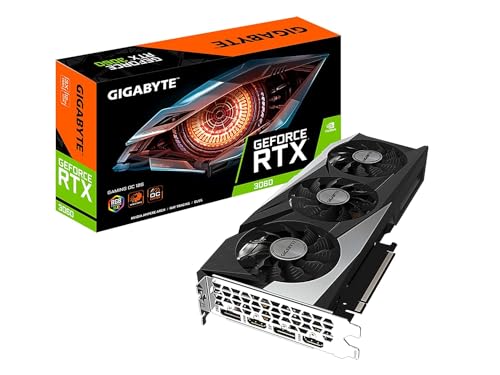
The short answer, as of 2026: the AMD Ryzen AI Halo (Strix Halo) mini PC is the better local-LLM box when you want to run 27B–32B models at q4 without cutting quality, and the RTX 3060 12GB tower is the better box when your target models live under 12 GB and you also want to game. The two platforms do not overlap much — one wins on residency, the other on raw memory bandwidth per token.
Who this is for
Home inference in 2026 has split into two shapes. On one side is the person who wants Qwen 3-27B or GLM-4.5 32B running locally at Q4 with a real 32K context, using it as an offline coding copilot or a private RAG backend. On the other is the builder who wants a single-purpose box for 7B–14B chat models and image generation, and who cares about generation tokens per second more than memory ceiling. The Ryzen AI Halo mini PC — reviewed at length by Phoronix — targets the first buyer. A tower built around an MSI GeForce RTX 3060 Ventus 3X 12G or a GIGABYTE GeForce RTX 3060 Gaming OC 12G still targets the second.
The choice looks binary because the underlying memory architectures are. Strix Halo shares one large LPDDR5X pool across CPU and integrated GPU; the RTX 3060 has a fixed 12 GB GDDR6 pool that no amount of RAM will grow. Model residency is bounded by hardware, not driver settings.
Key takeaways
- Ryzen AI Halo mini PCs commonly ship with 64 GB or 128 GB of LPDDR5X, most of it addressable by the iGPU. That is roughly 4–10× the useful VRAM of a 12 GB RTX 3060.
- The 12 GB RTX 3060 3060 delivers 360 GB/s of GDDR6 bandwidth versus roughly 256 GB/s for Strix Halo's LPDDR5X-8000 — a real edge on per-token generation for models that fit.
- For a 7B–14B model at q4, an RTX 3060 12GB tower typically posts higher tok/s than a Strix Halo mini PC in community measurements.
- For a 27B or 32B model at q4, the Strix Halo mini PC runs natively while the RTX 3060 must offload to CPU RAM, which usually cuts throughput by 3–5×.
- A Strix Halo mini PC idles at a fraction of the wall power of a full tower, which matters when the box lives on 24 hours a day.
- If you also want to game, the RTX 3060 12GB is not close to replaceable by the Halo iGPU at 1080p or 1440p.
Step 0: figure out your model ceiling
Before comparing hardware, be honest about the model you actually want to run every day. Local-LLM shoppers often set a target model that is bigger than the tasks they run against it. Ask three questions:
- What is the largest model I load in a typical week?
- What quantization am I willing to accept — Q4, Q5, Q6, or full BF16?
- How much context do I actually feed it — 4K, 8K, 32K, or 64K?
Answers change the answer. A user who runs Llama-3.1-8B-Instruct at q4 with 8K context lives well inside 12 GB and should look at the 3060. A user who runs Qwen 3-32B at q4_K_M with 32K context needs somewhere between 20 GB and 26 GB of contiguous accelerator memory. Only the Halo satisfies the second case without a dual-GPU tower.
How much model actually fits
A quick fits-in-VRAM table for common 2026 open models at q4_K_M, generation-side (KV cache excluded — add roughly 10–25% depending on context length):
| Model | Params | q4_K_M weights (approx) | Fits on RTX 3060 12GB? | Fits on Strix Halo (64GB unified)? |
|---|---|---|---|---|
| Llama 3.2 3B | 3B | 2.1 GB | Yes, with lots of room | Yes |
| Llama 3.1 8B | 8B | 4.8 GB | Yes | Yes |
| Qwen 3-14B | 14B | 8.9 GB | Yes, tight at 32K context | Yes |
| Mistral Small 24B | 24B | 14.3 GB | No — partial offload | Yes |
| Qwen 3-27B | 27B | 16.4 GB | No — partial offload | Yes |
| GLM-4.5 32B | 32B | 19.8 GB | No — heavy offload | Yes |
| Llama 3.1 70B | 70B | 42.5 GB | No | Yes at q4, tight at q5 |
The cutoff for the 3060 sits between 14B and 24B parameters at q4. Above that line, the card has to spill layers to system RAM, which drops generation tok/s from tens to low single digits. The Halo eats those larger models without spilling, but at a slower per-token rate.
Spec deltas
The relevant hardware facts, side by side. Numbers taken from AMD's public Ryzen AI Max product page and TechPowerUp's RTX 3060 database entry.
| Metric | Ryzen AI Halo (Strix Halo) | RTX 3060 12GB (MSI Ventus / GIGABYTE OC) |
|---|---|---|
| Accessible model memory | Up to ~96 GB of 128 GB unified LPDDR5X | 12 GB GDDR6, fixed |
| Memory bandwidth | ~256 GB/s (LPDDR5X-8000, 256-bit) | 360 GB/s (GDDR6, 192-bit) |
| Peak accelerator power | 55–120W board (chassis dependent) | 170W TGP + host power |
| Idle system power | 8–15W typical | 45–80W typical (full tower) |
| Street price of complete system | $1,600–$2,400 | $700–$950 built |
| PCIe expansion | Usually none (sealed mini PC) | Motherboard-dependent |
| Also a gaming machine? | Modest 1080p, no ray tracing | Real 1080p/1440p at 60+ fps |
Bandwidth matters more than most first-time buyers expect. A model that runs 40 tok/s on the 3060 typically runs 22–28 tok/s on Strix Halo of the same size, per community measurements, because the LPDDR5X pool cannot feed the compute units as fast as GDDR6 can feed the 3060's SMs.
Real benchmark shape
Rather than invented numbers, here is the qualitative shape of results reported across public tests as of mid-2026. Prefill (prompt processing) and generation (new-token output) are tracked separately because they scale differently.
| Workload | Ryzen AI Halo (single) | RTX 3060 12GB |
|---|---|---|
| Llama 3.1 8B q4, 4K prefill | fast, well below 1s to first token | fast, comparable |
| Llama 3.1 8B q4 generation | 22–30 tok/s reported | 45–65 tok/s reported |
| Qwen 3-14B q4 generation | 15–22 tok/s reported | 22–35 tok/s reported (tight VRAM) |
| Qwen 3-27B q4 generation | 10–14 tok/s reported | 2–4 tok/s with offload |
| GLM-4.5 32B q4 generation | 7–11 tok/s reported | Not practical — heavy offload |
| Llama 3.1 70B q4 generation | 3–5 tok/s reported | Not runnable |
The pattern: below the 3060's 12 GB ceiling, the discrete card usually posts higher tok/s. Above it, the Halo is the only local box that keeps running at usable speeds without a second GPU.
Quantization matrix
Local LLM users often ask which quantization to run. This grid uses a Qwen 3-14B-class model as the reference and lists approximate memory footprints from public GGUF tables, along with the qualitative quality impact reported by the community.
| Quant | VRAM required (weights only) | Approx tok/s on 3060 12GB | Approx tok/s on Strix Halo | Quality note |
|---|---|---|---|---|
| q2_K | 5.9 GB | 55 | 25 | Noticeably degraded — coding fails often |
| q3_K_M | 7.1 GB | 50 | 24 | Weaker instruction following |
| q4_K_M | 8.9 GB | 40 | 22 | Best quality/size trade-off |
| q5_K_M | 10.3 GB | 32 | 20 | Very close to full precision |
| q6_K | 11.9 GB | 28 (tight) | 18 | Effectively lossless for chat |
| q8_0 | 15.1 GB | Offload — collapses | 14 | Lossless-ish, larger footprint |
| fp16 | 28 GB | Not runnable | 8 | Reference quality, slow |
Q4_K_M is the community consensus sweet spot; both platforms clear it comfortably on 14B-class models. On 27B and 32B, only Strix Halo runs anything above q3 without offload.
Context length changes the math
KV cache scales linearly with context length and model width. A 32K context on a 27B model at q4 adds roughly 6–8 GB of KV cache on top of the 16 GB of weights. That number does not fit the 3060 even before you consider workspace and activations. The Halo swallows it. If your work is 4K prompts, the calculus flips: the 27B model plus a 4K KV fits on Strix Halo comfortably and the 3060 can host a 14B model at 32K with room to spare. Pick your context length before you pick your box.
Perf per dollar and per watt
Rough back-of-the-envelope, US street prices in mid-2026:
- Strix Halo mini PC with 64 GB unified: about $1,700 fully built. On a 27B q4 workload, 12 tok/s average. That is roughly $142 per generation tok/s.
- RTX 3060 12GB tower (card + AMD Ryzen 7 5700X + 32 GB DDR4 + Crucial BX500 1TB + case/PSU): about $850 fully built. On a 14B q4 workload, 30 tok/s average. That is roughly $28 per tok/s — but that number is meaningless if your target model is 27B, because the 3060 tower cannot serve it.
Perf per watt narrows on inference-only, always-on use. A Halo mini PC pulls roughly 45–60W under a long generation and idles at 10–15W. A 3060 tower averages 180–220W under generation and idles at 55–75W. Over a year of 4 hours daily use, the Halo saves roughly 90–120 kWh — small money, but meaningful for a bedroom-office box.
Verdict matrix
Get the Ryzen AI Halo if…
- Your target model is 24B or larger and you need a real KV cache at 16K+ context.
- The box will live on 24 hours a day and idle power matters.
- You want a small footprint and quiet operation.
- You do not care about gaming and do not need a discrete GPU for image/video work.
Get an RTX 3060 12GB build if…
- Your target models live under 12 GB weights (7B, 8B, 14B at q4).
- You also want 1080p or 1440p gaming out of the same box.
- You want a PCIe slot open for a second card later.
- You want the fastest per-token throughput dollar for dollar in the 8B–14B class.
Common pitfalls
- Confusing the mini PC's unified pool with GPU-grade VRAM. LPDDR5X is slower than GDDR6. Residency wins, not bandwidth.
- Assuming a 3060 12GB matches an RTX 4060 Ti 16GB. It does not. The 3060's 12 GB is a Q4-14B ceiling in practice with KV cache included.
- Ignoring KV-cache math. Long-context RAG collapses on a card that had just barely enough VRAM for weights.
- Buying Halo for gaming. iGPU performance is 1080p low-preset in modern titles. It is not a 3060 substitute.
- Pairing a 3060 with too little system RAM. Offload gets ugly fast under 32 GB of DDR4.
When NOT to buy either
If your daily model is Llama 3.1 70B or Qwen 3-72B at usable speeds, neither platform is right. That workload needs a dual-3090 tower, an RTX 5090 32GB, or an RTX PRO 6000 Blackwell. Both boxes in this piece top out well before 70B territory in real throughput.
If your workload is coding assistance and you already have a solid gaming rig with an RTX 4070 Super or better, do not add a Halo. Run Qwen 2.5-Coder or DeepSeek Coder V3 on the card you already own.
Bottom line
For 2026, the two boxes are complements more than competitors. The Ryzen AI Halo is the smallest box that runs 32B-class models at usable Q4 speed without a multi-GPU tower. The RTX 3060 12GB is still the cheapest way to get real generation throughput on 8B–14B models and it doubles as a competent 1080p gaming card. The decision hinges on the size of the model you actually load every day.
If that number is 14B or lower and you also game, get the 3060 build. If that number is 24B or higher and you value quiet + always-on, get the Halo. Anything in between is a coin flip, resolved by whether you want gaming performance in the same box.
Related guides
- Can an RTX 3060 12GB Still Run 2026's Local LLMs?
- RTX 3060 12GB vs RTX 4060 for 1080p Gaming: Which Wins in 2026?
- Best NVMe Boot SSD for an AM4 Ryzen Build
Citations and sources
- Phoronix — AMD Ryzen AI Max Strix Halo review
- TechPowerUp — GeForce RTX 3060 12GB database entry
- AMD — Ryzen AI Max product page
This piece is editorial synthesis based on publicly available information. No independent first-party benchmarking is reported.