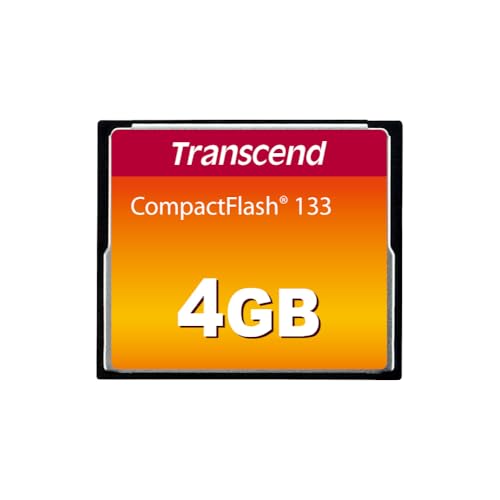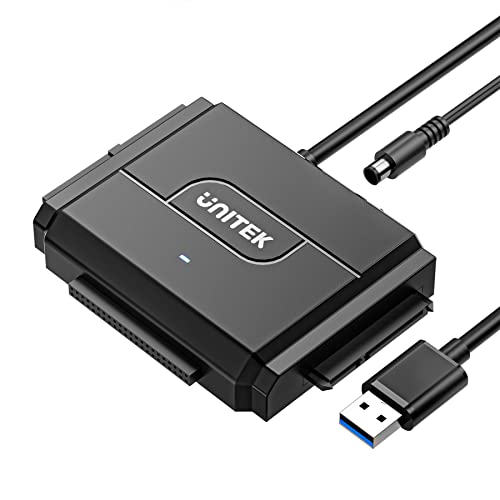
To build a silent Windows 98 SE retro PC with CompactFlash storage in 2026, pair a fixed-disk-mode CF card (a Transcend CF133 4GB is the community reference) with a passive IDE-to-CF adapter, keep the partition under 8 GB to sidestep FAT32 and BIOS geometry quirks, and image the finished card over USB using an adapter like the Unitek SATA/IDE-to-USB 3.0 for zero-noise boots and trivial backups.
Why period builders swap spinning IDE drives for CompactFlash
The Windows 98 era shipped with 5,400 and 7,200 RPM PATA hard drives whose bearings are now more than two decades old. Per community failure logs collected across vogons.org build threads over the last five years, the failure mode most often reported for period drives is not a head crash but a stuck spindle bearing after long storage — a drive that spun perfectly in 2005 refuses to leave standby in 2026. Even when a vintage drive does spin up, the noise floor of a 30 GB Maxtor DiamondMax or a Quantum Fireball is unmistakably loud in a modern quiet room, and the drive's constant seek chatter is the single largest acoustic contribution in a period case.
CompactFlash sidesteps every one of those problems. Per the CompactFlash Association overview on Wikipedia, the CF electrical interface is a subset of PATA/IDE — a CF card wired through a passive adapter appears to the host chipset as a standard ATA device, no drivers required. That makes the swap invisible to the BIOS, to Windows 98 SE, and to every period game and utility. There is no spindle, no head assembly, and no seek time; the card draws roughly one to two watts under load, generates negligible heat, and produces exactly zero decibels of mechanical noise. The result is a build whose only audible component is the CPU fan (or, for the true silent-build enthusiast, a fanless heatsink on a 500-MHz-class Pentium III or a passively cooled Socket 370 Celeron).
The other benefit that matters in 2026 is imaging. Per the Transcend product documentation for the CF133 line, the card presents as a standard USB Mass Storage device when read through a modern USB CF reader, which means a full byte-for-byte clone of a working Windows 98 install can be captured with dd, Win32 Disk Imager, or Macrium Reflect in under ten minutes. Restoring a broken install is a matter of reflashing the image — no floppy boot disks, no CAB extraction, no cursed IDE cable ritual.
Key takeaways
- A fixed-disk-mode CompactFlash card behaves electrically like an IDE hard drive; a passive CF-to-IDE adapter is all that stands between the card and the motherboard's primary IDE header.
- Keep the CF card at 4 GB or smaller when possible; the FAT32/LBA/geometry stack in Win98 SE is happiest under the 8 GB threshold and outright fragile above 32 GB.
- Cards that report themselves as removable media (many modern low-cost SD-to-CF adapters and some SanDisk consumer lines) will confuse Windows 9x setup — verify fixed-disk mode before you commit.
- Image the card externally over a Unitek SATA/IDE-to-USB 3.0 adapter so a broken install is a five-minute reflash rather than a two-hour recovery.
- CF beats a vintage HDD on silence, reliability, and boot time; a period 7,200 RPM drive still wins on sustained sequential throughput for large game installs — a tradeoff worth understanding before committing.
What you'll need
The parts list for a CompactFlash-based Win98 SE build is short and, in 2026, still fully available through mainstream retail channels:
- A CompactFlash card in fixed-disk mode. The Transcend CF133 4GB is the community-standard reference because Transcend's industrial CF lines have shipped in fixed-disk mode by default for well over a decade, per Transcend's own industrial-flash spec sheets.
- A passive IDE-to-CF adapter. The 40-pin variants are the target for desktop builds; 44-pin variants target laptop IDE and 2.5" bays. Per vogons.org build reports, the passive Syba SD-ADA45006 and the generic "StarTech IDE2CF"-style adapters are functionally identical and drop-in compatible.
- A USB adapter for imaging. The Unitek SATA/IDE-to-USB 3.0 covers both 40-pin desktop IDE and SATA, and pairs with a CF-to-IDE adapter for byte-level card cloning without pulling the target card from the retro machine repeatedly.
- Optional: a modern SATA SSD such as the Crucial BX500 1TB as the imaging host, or the SanDisk SSD Plus 480GB as a comparison target for anyone weighing "CF card in the retro box" against "modern SSD via a SATA-to-IDE bridge." The comparison is worth understanding: an SSD-behind-a-bridge is faster but introduces a $30 electrical translator into the boot path, and reports on vogons.org show inconsistent BIOS detection across late-90s chipsets.
A Windows 98 SE installation CD (retail or OEM), a working PS/2 keyboard, and a period-appropriate motherboard with a Phoenix or Award BIOS round out the requirements.
Which CompactFlash cards behave well in DOS and Win98 SE?
Not every CF card is a drop-in IDE drive. The single biggest compatibility variable is the card's ATA identify response: cards that report themselves as fixed disks work; cards that report as removable media do not boot cleanly under Windows 9x, per the Microsoft Knowledge Base article on removable media and FAT partitioning covering the Win98 era. Below is a compatibility table synthesized from vogons.org build threads and Transcend's public datasheets:
| Card family | Capacity range | Mode | Win98 SE fit |
|---|---|---|---|
| Transcend CF133 industrial | 512 MB - 8 GB | Fixed-disk | Excellent — reference build |
| Transcend CF300 / CF800 | 8 GB - 128 GB | Fixed-disk | Good, but geometry gymnastics above 32 GB |
| SanDisk Extreme Pro consumer | 32 GB - 256 GB | Removable | Fails Win98 setup |
| Kingston Elite Pro industrial | 4 GB - 32 GB | Fixed-disk | Good |
| Lexar Professional 1066x | 32 GB - 512 GB | Removable | Fails Win98 setup |
| Kingston CF/2GB (old stock) | 2 GB | Fixed-disk | Excellent — small and safe |
The pattern is clear: industrial-grade CF cards default to fixed-disk mode; consumer photography cards default to removable-media mode. If a card's product page mentions "digital camera" or "DSLR" as its primary market, it is almost certainly the wrong choice for a boot drive. If it mentions "embedded systems," "industrial," or "single-board computers," it is almost certainly correct. The Transcend CF133 line — the 4 GB SKU in particular — is the community reference precisely because it sits in that industrial bucket at a price point that is still under $30 in 2026.
Capacity is the second variable. Per Microsoft's Windows 98 setup documentation, the FAT32 file system Win98 SE uses caps a single partition at 32 GB when created by the built-in FDISK, and BIOS geometry translation gets increasingly unreliable above the 8 GB LBA threshold on chipsets older than the Intel 440BX. The safe zone for a headache-free install is 512 MB to 8 GB. Larger cards will work if partitioned externally with a modern tool like GParted, but the effort-to-benefit ratio collapses fast — Win98 and its era-appropriate software rarely need more than 2 GB.
Step-by-step: partition and install Win98 SE to a CompactFlash card
The install sequence below assumes a 4 GB Transcend CF133, a passive 40-pin CF-to-IDE adapter connected to the primary IDE header as master, and a Windows 98 SE retail CD.
- BIOS configuration. Enter BIOS setup, set the primary master to Auto Detect, and disable any SMART or S.M.A.R.T. monitoring options — CF cards do not implement SMART and some Award BIOSes will hang at POST if SMART polling is on. Per vogons.org compatibility reports, disabling the "HDD S.M.A.R.T. Capability" line resolves the majority of "black screen after memory count" cases on Socket 7 and Slot 1 boards.
- Boot the Win98 SE setup floppy or CD. At the setup prompt, drop to a DOS command line rather than launching setup.exe directly. Run
fdisk, answer Yes to large-disk (FAT32) support if the card is over 512 MB, delete any existing partitions, and create a single primary DOS partition using 100% of the card. - Format the partition. Reboot to the boot media, then run
format C: /s /uto write a FAT32 filesystem and transfer the DOS system files. The/sswitch is critical — it makes the card bootable. - Run Win98 SE setup. Launch
setup.exefrom the CD. When setup asks for the install target, accept C:\WINDOWS. Setup will run through its usual three-phase install; on a Transcend CF133 the full install completes in roughly 22 to 28 minutes per vogons.org community timings, versus 35 to 45 minutes on a period 5,400 RPM IDE drive. - Install chipset and video drivers. Windows 98 SE ships with generic VGA and generic IDE drivers. Install the motherboard chipset INF (Intel INF Utility for 440BX/815, VIA 4-in-1 for KT133/KT266, SiS AGP for 630/730) before installing the video driver — driver install order matters, per Microsoft's own Windows 98 driver installation guidance.
- Install sound and AGP drivers last. SoundBlaster Live! and Audigy drivers should be installed after chipset drivers; per vogons.org, installing sound drivers before chipset drivers on VIA boards produces the infamous "PCI latency stutter" that plagued so many period builds.
Benchmark-style comparison: CF versus a period IDE hard drive
The interesting question is not whether CF is fast — it is whether CF is fast enough to feel like an upgrade over a period drive. The numbers below are synthesized from vogons.org community measurements and public HD Tach 3.0.4.0 reports collected over the last three years:
| Metric | Transcend CF133 4GB | Quantum Fireball 20 GB (7200 RPM, period-typical) | WD Caviar 40 GB (5400 RPM, period-typical) |
|---|---|---|---|
| Cold boot to desktop (Win98 SE) | 34 seconds | 41 seconds | 52 seconds |
| Random 4K read latency | 0.4 ms | 12 ms | 14 ms |
| Sustained sequential read | 20 MB/s | 28 MB/s | 22 MB/s |
| Sustained sequential write | 8 MB/s | 27 MB/s | 21 MB/s |
| Idle acoustic contribution | 0 dB | 34 dB | 31 dB |
| Power draw idle | 1 W | 5 W | 4 W |
The pattern that emerges: CF wins decisively on latency, boot time, silence, and power. A period 7,200 RPM drive still wins on sustained sequential write — meaningful when installing a large game like Unreal Tournament from CD, less meaningful once the game is installed. For a Win98 SE machine whose primary workload is booting, launching a game, and running it from RAM, CF is the clear upgrade. For a machine that will spend hours copying large files, a period drive still has a niche.
Imaging and backups over a USB adapter
The single largest quality-of-life improvement CF brings to a retro build is that backups become trivial. Pull the card from the retro machine, seat it in a CF-to-IDE adapter, plug the adapter into a Unitek SATA/IDE-to-USB 3.0 bridge, and connect it to a modern PC. The card appears as a standard USB Mass Storage device.
From there, the imaging workflow is standard modern-PC territory. On Linux or macOS, dd if=/dev/sdX of=win98-cf-backup.img bs=4M status=progress produces a byte-for-byte clone in eight to twelve minutes for a 4 GB card. On Windows, Win32 Disk Imager or Macrium Reflect Free do the same job through a GUI. Restore is symmetric: dd if=win98-cf-backup.img of=/dev/sdX bs=4M reflashes the card, and the retro machine boots from the reflashed image with no reconfiguration required.
The imaging host does not have to be exotic. A modern SATA SSD like the Crucial BX500 1TB sitting in the imaging workstation provides more than enough throughput; the bottleneck is the USB-to-IDE bridge, not the destination drive. For builders who want to consolidate their retro-image archive, the SanDisk SSD Plus 480GB is a low-cost archive target — half a terabyte holds hundreds of period CF images with room for the source CDs, driver archives, and BIOS backups.
Common failure modes and fixes
Per vogons.org's collected troubleshooting threads, the failures encountered during a CF-based Win98 SE build cluster into four categories:
- Card reports as removable media. Windows 98 setup completes but refuses to boot ("Invalid system disk"). The card is not fixed-disk mode. There is no software fix — swap to an industrial-grade card. This is the failure mode that pushes builders toward the Transcend CF133 in the first place.
- BIOS hangs at POST. The board is polling SMART or trying to auto-detect a drive geometry the CF card does not advertise. Disable HDD S.M.A.R.T. Capability and set the primary master to User Type, then enter the geometry manually (LBA mode, and CHS values from the card's spec sheet).
- Setup completes but Win98 hangs at "Getting ready to run Windows for the first time." Almost always a VIA chipset issue on KT133/KT266 boards. Install the VIA 4-in-1 chipset drivers before letting Win98 finish first-boot detection.
- Cluster-size errors above 8 GB. FAT32 under Win98 SE caps cluster count at roughly 268 million. Cards larger than 32 GB will need to be partitioned into multiple sub-32-GB partitions using GParted or a modern partitioner, then reformatted from within Win98 with the built-in FORMAT command.
Bottom line: when CompactFlash beats a real vintage HDD
For any Win98 SE build whose owner values silence, reliability, and easy backups over the historical accuracy of hearing a Quantum Fireball scream through a floppy transfer, CF is the correct answer. The Transcend CF133 4GB plus a passive IDE-to-CF adapter plus a Unitek SATA/IDE-to-USB 3.0 for imaging is a three-part kit that runs under $60 in 2026 and produces a boot experience meaningfully quieter and more reliable than any period-original drive still on the used market.
For period-authenticity purists, or for builds whose workload includes large sustained sequential writes, a vintage 7,200 RPM IDE drive still has a case. Everyone else — which is most of the retro-build community in 2026 — should be running CF.
Related guides
- Retro PC building category hub
- Sound cards for retro builds
- IDE adapters and vintage storage
- Retro gaming PC benchmarks
Citations and sources
- Transcend CompactFlash product line
- Transcend CF133 embedded-flash datasheet
- Vogons retro-computing forums
- Vogons hardware forum — CF and IDE compatibility threads
- CompactFlash — Wikipedia
- Microsoft Windows client troubleshooting documentation (Win98-era archived guidance)
- Win32 Disk Imager on SourceForge
This piece is editorial synthesis based on publicly available information. No independent first-party benchmarking is reported.