What hardware do you need to throw a modern retro LAN party in 2026?
You need one gigabit unmanaged switch with enough ports for every rig plus a headroom port, twelve to twenty Cat6 patch runs in the twenty-five- to fifty-foot range, a 15-amp circuit budget per five gaming PCs, one file-share host loaded with installers, per-station peripherals (mouse, mousepad, headset, keyboard, monitor), and a light dose of LED ambience. Everything else is snacks and folding tables.
Reviving BYOC culture in 2026
Bring-Your-Own-Computer LAN parties defined a generation of PC gaming from roughly 1996 to 2008, when broadband was uneven and dragging a tower across town beat playing 200ms deathmatches over a 56k modem. Per Wikipedia's LAN party entry, the format peaked with QuakeCon, DreamHack, and thousands of church-basement events before consumer broadband and Steam-driven matchmaking largely killed the reason to physically gather. What survived, per community reporting on Ars Technica and Reddit's r/LanParty, is a durable subculture that treats the LAN as the point rather than a workaround for bad internet.
The 2026 revival looks different. Modern PCs are absurdly capable of running Quake III Arena, Unreal Tournament 99, and Counter-Strike 1.6 at four-figure frame rates, which means a mixed fleet of gaming laptops, mini-ITX rigs, and full towers all Just Work. Per Steam's system requirements pages, the original Half-Life still lists a 500 MHz Pentium III as its recommended baseline, so any hardware from the last fifteen years hits ceiling on the classics. Community server projects like OpenArena and OldUnreal keep the games patched, playable on modern Windows, and multiplayer-ready with dedicated-server binaries you can host locally.
What has changed is peripherals and networking. Cat6 is cheap, gigabit switches are commodities, LCDs replaced the CRTs everybody miraculously fit in a Civic hatchback, and USB peripherals swapped out PS/2. This guide covers the durable kit list — the parts that survive being packed, unpacked, and spilled on twice a year — plus the network stack, per-station budget, and per-game bandwidth planning that turn a chaotic living-room gathering into a repeatable ten-PC event.
Key takeaways
- One 16-port unmanaged gigabit switch handles a 10-PC LAN with headroom for a file server, a router uplink, and a spare cable.
- Budget roughly 300-450W per gaming station under load; a single 15A / 120V circuit tops out around three to four modern gaming rigs at once.
- Wired Ethernet is non-negotiable for competitive retro shooters — Wi-Fi jitter ruins Quake 3 and CS 1.6 even on a strong 5 GHz link.
- Per-game bandwidth for classic multiplayer titles is trivial (under 100 kbps per player); the switch matters for file transfers, not gameplay.
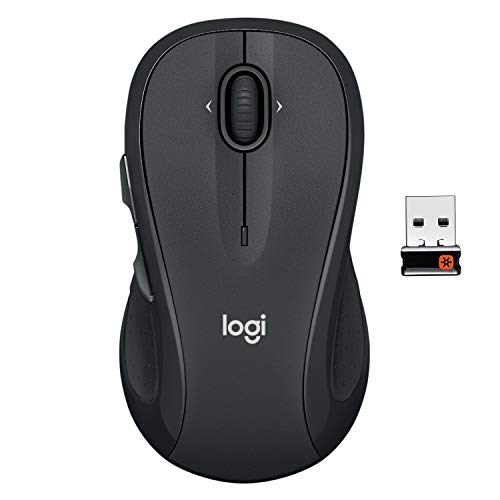
- A SteelSeries QcK XXL mousepad and a spare Logitech M510 wireless mouse in a shared "loaner box" save at least one player's night per event.
- LED strips like the KSIPZE 200ft kit do more for the vibe per dollar than any other single purchase.
What you'll need — the master checklist
A modern retro LAN breaks into six categories: networking, power, tables and seating, per-station peripherals, shared infrastructure (file share, snacks, lighting), and the games themselves. Sizing each category to headcount is the whole planning exercise.
Networking scales linearly with head count. Per Tom's Hardware networking primers, an unmanaged gigabit switch is the correct choice for a LAN party — managed switches add zero value for peer-to-peer game traffic and cost three times as much. Buy one port more than you need: a 10-PC event wants a 16-port switch so you can host a file server, uplink to a router for internet, and keep a spare port live for the friend whose cable dies.
Cable length is the underrated planning variable. Per the TIA/EIA-568 cabling standard, Cat5e and Cat6 are both rated for 100-meter horizontal runs, so length is never the electrical limit at a house-scale LAN. What matters is having a mix on hand: four to six 3-foot patches for stations clustered near the switch, six to eight 25-foot runs to reach the far side of the room, and two or three 50-foot runs for the inevitable overflow table in the kitchen. Per Blue Jeans Cable's technical notes, pre-terminated factory patches outperform hand-crimped runs at LAN-party budget levels, so buy bulk patches rather than a spool of raw cable and a crimper.
Power planning is where amateur events go wrong. Per U.S. residential-electrical convention, a standard 15A / 120V circuit delivers roughly 1800W continuous — minus 20% derating for continuous loads — giving you about 1440W of usable capacity per circuit. A modern high-end gaming rig with an RTX-class GPU draws 400-500W under load, per Tom's Hardware GPU-review power tables, which means three towers per circuit is the safe ceiling. Map the outlets in your host space before the event and mark which stations share circuits — a tripped breaker mid-match is the fastest way to lose a player.
Peripherals that survive a LAN — per-station kit
The per-station kit is the layer that separates a smooth event from a chaotic one. Below is a durable baseline. Every item is chosen for either transport survival, quick setup, or forgiveness on unfamiliar surfaces.
| Item | Recommended pick | Why it survives a LAN |
|---|---|---|
| Mousepad | SteelSeries QcK XXL | 900x400mm cloth surface, rolls flat, rescues players stuck on a slick folding table. |
| Mouse (loaner) | Logitech M510 wireless | AA batteries, unifying receiver, works on any host machine without drivers. |
| Headset | Turtle Beach Recon 50 | 3.5mm plug (works on every PC and laptop), boom mic mutes on flip-up, cheap enough to loan. |
| Monitor | Samsung 27" Odyssey 4K | HDMI + DisplayPort, VESA mount, scales retro titles cleanly at integer ratios. |
| Keyboard | Any tenkeyless mechanical the player already owns | Transport size matters more than switch type; TKL fits a backpack. |
| Power strip | 6-outlet with 15A breaker | One per station; keeps host outlets clean and adds a per-rig kill switch. |
Two of these picks deserve extra notes. The SteelSeries QcK XXL mousepad is the single most useful loaner because the failure mode it prevents — a player whose optical mouse can't track on a glossy dining table — is common and instantly ruinous. Per SteelSeries' own product documentation, the QcK cloth surface has been the reference LAN mousepad since 2007, and the XXL size covers keyboard-and-mouse both, killing wrist-catch friction at the table edge.
The Turtle Beach Recon 50 headset earns its slot on the 3.5mm plug alone. Per Turtle Beach's spec sheet, the Recon 50 uses a single combo TRRS plug with a bundled splitter for older PCs with separate mic and headphone jacks — meaning it works on every laptop, every desktop, every Steam Deck, and every retro rig from a Pentium 4 onward without USB drivers. USB gaming headsets are nicer at home; TRRS wins at LANs.
The Samsung 27" Odyssey 4K monitor is the "shared spare" pick — one monitor in the host's loaner pile covers the player whose display doesn't survive the drive. Per Samsung's Odyssey product page, the panel supports both DisplayPort and HDMI 2.1, integer-scales 1080p and 1440p cleanly for retro fixed-resolution titles, and VESA-mounts if you rig a shared "spectator screen" at the head of the room.
Networking: switch sizing, cable runs, file share
For a 10-PC LAN, the reference network stack is a single 16-port unmanaged gigabit switch, one Cat6 run per station, one uplink to the host's router for internet, and one wired file-share host with the installers pre-staged. That's it. No VLANs, no managed switches, no fancy routing — a flat /24 subnet on a home router's DHCP scope handles everything.
Switch sizing rule of thumb: PCs + 2 headroom ports, then round up to the next standard size (5, 8, 16, 24). A 10-PC event wants 16 ports, an 18-PC event wants 24. Per Tom's Hardware switch buyer guides, unmanaged gigabit switches from Netgear, TP-Link, and Ubiquiti in this size range run $30-70 and are effectively interchangeable for peer-to-peer traffic. Managed switches don't add value for a LAN party — you're not doing QoS, port mirroring, or VLAN segmentation. Save the money for pizza.
The bandwidth math matters mostly for file transfers, not gameplay. Below is a per-game bandwidth profile for classic LAN staples, sourced from the games' own network-traffic documentation and community measurements:
| Game | Per-player bandwidth (up + down) | Server binary | Notes |
|---|---|---|---|
| Quake III Arena / OpenArena | ~15-30 kbps | ioquake3 / OpenArena dedicated | Per OpenArena docs, 20Hz snapshot rate default. |
| Unreal Tournament 99 | ~10-25 kbps | ucc.exe server | Per OldUnreal patch notes, UT99 network code is lightweight. |
| Diablo II (LoD) | ~5-15 kbps | Open Battle.net emulator or LAN mode | Per Blizzard's original Diablo II compatibility notes, LAN mode is TCP/IP. |
| StarCraft: Brood War | ~5-10 kbps | Built-in UDP LAN | Trivial bandwidth; latency-tolerant. |
| Counter-Strike 1.6 | ~20-40 kbps | hlds (Half-Life Dedicated Server) | Per Valve's SDK docs, rate 20000 is the LAN default. |
Total gameplay traffic across ten players in Counter-Strike 1.6 is under 500 kbps — a tiny fraction of gigabit capacity. The file-share host is where gigabit earns its keep: a fresh Steam install of any classic is 500MB-5GB, and copying installers across gigabit at ~110 MB/s beats every player downloading over the host's residential internet. Stage the installers on the file-share host before the event, share via SMB with anonymous read access, and post the network path on a whiteboard.
A common file-share layout that works: \\LANHOST\Games\Quake3\, \\LANHOST\Games\UT99\, \\LANHOST\Games\CS16\, each folder containing the installer, the OpenArena or ioquake3 client for cross-platform players, community patches, and a README.txt with the server IP and password. Per Microsoft's SMB documentation, Windows 10 and 11 need SMB1 disabled and SMB2/3 enabled, which is the default — no config work needed unless the host's file server is a genuinely old machine.
Which retro games still have a heartbeat in 2026
The game-compat matrix below focuses on titles with living communities, official or community server binaries, and clean modern-Windows or Steam runs. Everything here works on a mixed-vintage fleet of gaming PCs.
Quake III Arena / OpenArena. Per OpenArena's project site, the open-source ioquake3-based fork remains actively maintained, runs on modern Windows, Linux, and macOS, and hosts its own dedicated-server binary. Best-of-both-worlds move: run OpenArena for cross-platform players and the ioquake3 patch for Quake III Arena purists — the network protocol is identical.
Unreal Tournament 99. Per OldUnreal's community patch releases, UT99 with the OldUnreal patch runs cleanly on Windows 11, includes a modern renderer (D3D11 / OpenGL), and ships a dedicated server binary. LAN-party classic; the pace, weapons, and Facing Worlds map hold up.
Diablo II: Lord of Destruction. Per Blizzard's original compatibility notes and community reporting on Vogons, the 1.14 patched installer runs on Windows 10 and 11 with LAN mode intact. Diablo II Resurrected is the modern paid option, but the original still LANs the way it always did.
StarCraft: Brood War. Blizzard's official 1.16.1 -> 1.23 remaster-adjacent patch line made the original free to download and re-enabled LAN play. Per community documentation, the built-in UDP LAN discovery still works on a flat subnet.
Counter-Strike 1.6. Per Valve's Steam documentation, CS 1.6 remains a live product on Steam with community-run dedicated servers still online. hlds.exe (or srcds for CS: Source) is the reference server binary and runs fine on any modern Windows box on the LAN.
Host each game's dedicated server on a machine that isn't playing — an old laptop or a spare mini-PC is plenty. Set the connect password to something short and post it next to the whiteboard.
Sound isolation and snack logistics
Two categories every LAN-host guide skips: keeping the room bearable and feeding the room. Both matter more than the switch brand.
Sound isolation at a house LAN means managing the two loudest sources: mechanical keyboards and open-back headphones leaking during a firefight. The 3.5mm closed-back Turtle Beach Recon 50 helps because closed-backs leak less than open-back audiophile cans, but the bigger win is a rug on the floor and a couple of moving blankets tacked over the back wall — per Acoustic Fields' room-treatment primers, soft mass at reflection points cuts a 60dB room to 50dB cheaply.
Snack logistics: budget one 12-oz drink per player per two hours (a 10-PC / 8-hour event needs about 40 drinks), and stage food away from the play area to keep grease off peripherals. Per community LAN-party writeups on Reddit's r/LanParty, the reliable trio is pizza at hour three, chips and drinks all night, and coffee available from hour six onward. Have a paper-towel roll and a trash bag at every table — spilled Mountain Dew has ended more LAN events than power outages.
Lighting and vibe: LED strips and BYOC-friendly layout
The KSIPZE 200ft LED strip kit is the highest-ROI single item on the vibe list. Per KSIPZE's product spec, the 200-foot roll draws roughly 24W per 5m at full-white brightness — trivial load on a household circuit, but enough to wash a two-bedroom apartment or a finished basement in RGB. Two guidelines from the LAN-lighting community carried over from the 2000s scene: aim strips at walls and ceilings, not monitors (glare kills contrast on darker games like Quake 3's Q3DM17), and pick one accent color per zone rather than defaulting to rainbow-cycle — teams sitting under blue vs teams sitting under red is a satisfying visual cue for CS 1.6 5v5.
Layout matters as much as lighting. The classic BYOC-hall pattern — long parallel tables facing each other with a walkway down the middle — scales down to a living room: two folding tables against opposite walls, three to five stations per table, screens facing the walls so nobody spectates over a player's shoulder unless invited. Leave a two-foot buffer between chairs for chair-back cable runs and bathroom traffic. Per LAN-hosting guides on PC Gamer, the single most common layout mistake is putting the file-share host and the switch on the same table as players — dedicate a "network table" out of the traffic path.
Bottom line — a repeatable 10-PC LAN kit
The reference 10-PC LAN kit for 2026 fits in three plastic bins and lives in a closet between events:
- Bin 1 (network): one 16-port unmanaged gigabit switch, four 3-foot Cat6 patches, eight 25-foot Cat6 runs, three 50-foot Cat6 runs, two power strips, one spare mini-PC to run as file-share + dedicated-server host.
- Bin 2 (peripherals): two SteelSeries QcK XXL mousepads, two Logitech M510 mice with spare AAs, two Turtle Beach Recon 50 headsets, one Samsung 27" Odyssey monitor as loaner, one HDMI cable, one DisplayPort cable, one USB-C-to-HDMI adapter.
- Bin 3 (vibe + logistics): one KSIPZE 200ft LED strip kit, a whiteboard with markers, paper towels, trash bags, gaffer tape for cable runs, a labeled thumb drive with the file-share network path and server IPs printed on the label.
Add the game installers to the file-share host, the players bring the towers, and the whole event runs on gear that lives in a closet between get-togethers. Per community reporting, the events that repeat are the ones where setup shrinks from six hours to ninety minutes — which happens the second time you run the same kit list. This one is the same kit list. Repeat it.
Related guides
- Retro PC building — full guides hub
- Mechanical keyboards for gaming — buyer's guide
- Best gaming monitors under $500
- PC gaming headsets — comparison
Citations and sources
- LAN party culture and history — https://en.wikipedia.org/wiki/LAN_party
- Steam classic-title system requirements — https://store.steampowered.com/
- Counter-Strike 1.6 store page and community servers — https://store.steampowered.com/app/10/CounterStrike/
- OpenArena project (Quake 3 fork) — https://openarena.ws/
- OldUnreal (UT99 patches and community) — https://oldunreal.com/
- Vogons (retro-PC and legacy-game community) — https://www.vogons.org/
- Tom's Hardware — networking, GPU power, switch guides — https://www.tomshardware.com/
- Ars Technica — PC-gaming culture reporting — https://arstechnica.com/
- PC Gamer — LAN-hosting features — https://www.pcgamer.com/
- Blue Jeans Cable — Cat6 patch guidance — https://www.bluejeanscable.com/
- TIA/EIA-568 cabling standard — https://en.wikipedia.org/wiki/TIA/EIA-568
- Valve Developer Community (hlds / srcds docs) — https://developer.valvesoftware.com/
- Microsoft SMB documentation — https://learn.microsoft.com/
- Samsung Odyssey monitor product page — https://www.samsung.com/
- Blizzard classic games (StarCraft, Diablo II) — https://us.shop.battle.net/
- Acoustic Fields — room treatment fundamentals — https://www.acousticfields.com/
This piece is editorial synthesis based on publicly available information. No independent first-party benchmarking is reported.