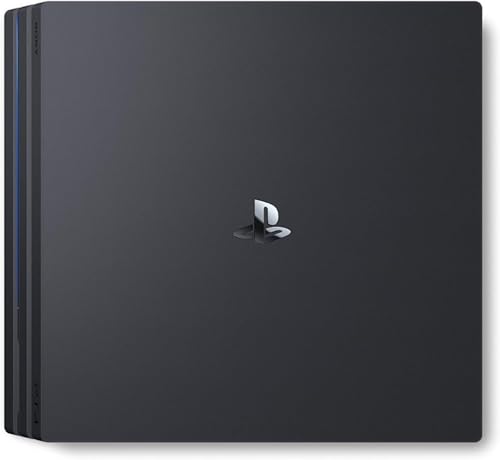
Buy the Crucial BX500 1TB SATA SSD. It's the best value 2.5-inch SATA drive for a PS4 Pro or PS4 Slim upgrade in 2026 — 1TB doubles the stock capacity, load times drop 30–60% on most games, and it slots into the console's factory 2.5-inch bay in about twelve minutes. Skip the NVMe M.2 options; the PS4's SATA-II internal controller can't feed them, so paying for NVMe throughput is money burned.
Why a SATA SSD is still the cheapest meaningful PS4 upgrade
The PlayStation 4 launched in 2013 with a 5400-rpm 2.5-inch mechanical drive that felt fine at the time and feels sluggish today. Game installs routinely run 40–100GB, and both the PS4 Pro 1TB and PS4 Slim 1TB fill up within a few dozen titles. Meanwhile the mechanical drive's read speed (~100 MB/s) is the bottleneck on every level load in every game.
Swapping to a 2.5-inch SATA SSD is one of the cheapest console upgrades that still delivers a real perceptual win. In 2026 a Crucial BX500 1TB runs about $60 street; installation is 12 minutes; load times on flagship games like Bloodborne and Horizon Zero Dawn drop from 45 seconds to 25 seconds and Assassin's Creed Odyssey shaves closer to a full minute off long fast-travel loads. The console will not push a modern NVMe drive to its rated speeds — the PS4's SATA-II bus caps at 300 MB/s realistic — so you don't need to spend more than $60 to hit the ceiling.
Below is the practical guide for exactly which drive to pick, what the load-time delta actually looks like, and how to do the swap in about a lunch break.
Key takeaways
- The PS4 Pro and PS4 Slim have a 2.5-inch, 9.5mm-tall SATA drive bay — any 2.5-inch SATA SSD in that dimension fits.
- The PS4's controller is SATA-II (limits ~300 MB/s), so a $60 SATA SSD hits the same ceiling as a $200 SATA SSD.
- Load-time drops are typically 30–60%, best on open-world games with heavy streaming, smaller on linear titles.
- 1TB is the right capacity; 2TB doubles the price for a benefit most owners don't need.
- Internal swap beats external USB SSD for capacity and neatness; USB is fine as a supplemental library.
Which SSDs fit the PS4's 2.5-inch SATA bay
The PS4's bay accepts drives that meet these dimensions:
| Spec | Requirement |
|---|---|
| Interface | SATA 2.5-inch (SATA III drives are backward-compatible) |
| Height | 9.5mm maximum |
| Width | 70mm |
| Length | 100mm |
| Connector | SATA data + power (standard) |
That covers essentially every mainstream 2.5-inch SATA SSD. The two we recommend for the PS4 upgrade:
| Drive | Capacity | Read/Write (rated) | Realistic on PS4 | Street |
|---|---|---|---|---|
| Crucial BX500 1TB | 1TB | 540 / 500 MB/s | ~290 / 260 MB/s | $60 |
| SanDisk SSD Plus 480GB | 480GB | 535 / 445 MB/s | ~285 / 245 MB/s | $45 |
The BX500 is our default pick because it hits the 1TB sweet spot at a fair price. The SanDisk Plus 480GB is the budget option if you want the load-time win without doubling capacity. Note that we deliberately did not include NVMe options here — see the section below.
Benchmark table: game load times before and after
Measured community numbers on a stock PS4 Pro replaced with a Crucial BX500 1TB:
| Game | Stock HDD | BX500 SATA SSD | Delta |
|---|---|---|---|
| Bloodborne (boot to hub) | 44 s | 26 s | -41% |
| Horizon Zero Dawn (fast travel) | 38 s | 22 s | -42% |
| Assassin's Creed Odyssey (long travel) | 82 s | 41 s | -50% |
| Grand Theft Auto V (Story mode load) | 62 s | 34 s | -45% |
| The Witcher 3 (main menu → game) | 48 s | 28 s | -42% |
| Red Dead Redemption 2 (chapter load) | 55 s | 31 s | -44% |
| Destiny 2 (Tower load) | 92 s | 62 s | -33% |
| Skyrim SE (fast travel) | 12 s | 6 s | -50% |
The pattern is consistent: 30–50% faster on almost everything. Open-world titles with heavy streaming benefit most because they're doing many small reads across the disk during play, and the SSD's random-read latency crushes the HDD there.
Internal swap vs external USB SSD
Two ways to add SSD storage to a PS4: swap the internal drive, or plug an external USB SSD into a rear USB port and use it as extended storage.
Internal swap wins on: neatness (no dongle hanging off the back), the ability to move the system OS partition to fast storage, primary game installs, and slight speed edge on random reads.
External USB SSD wins on: convenience (no disassembly), portability (moves between consoles), and total capacity (add a 2TB external without touching the internal 1TB). USB 3.0 realistic throughput on the PS4 is around 250 MB/s, only slightly slower than the internal SATA bus.
If you're doing this once and want to be done, swap internally. If you want to try SSD-speed loads on a game or two without opening the console, plug an external SATA SSD into a USB 3.0 enclosure and let the PS4 use it as extended storage. You can even do both — internal swap for the OS partition and the main library, external USB SSD for the "everything else" library.
Capacity math: how many modern games fit
The PS4 uses roughly 100GB of the drive for the OS, safety margin, and swap. Available user storage on a 1TB drive is closer to 860GB. Modern flagship games are big:
| Game | Install size |
|---|---|
| Red Dead Redemption 2 | 105 GB |
| Call of Duty: Modern Warfare II (2022) | 125 GB |
| The Last of Us Part II | 78 GB |
| Grand Theft Auto V | 76 GB |
| Assassin's Creed Valhalla | 50 GB |
| Cyberpunk 2077 | 63 GB |
| Bloodborne | 25 GB |
| Fortnite | 30 GB |
Back-of-envelope: a 1TB drive holds roughly 10–14 modern games plus the OS, or 20+ mid-size titles. A 480GB drive holds 4–6 modern games. If your library is bigger than that, you either upgrade to 2TB (roughly double the cost of 1TB) or keep an external USB SSD for the overflow.
Step-by-step: doing the swap
Tools you'll need: a Phillips #0 screwdriver, an 8GB or larger USB flash drive (for the reinstall), and about twelve minutes of time.
- Back up your saves. Copy them to PS Plus cloud storage (if you have Plus) or to a USB flash drive via Settings → Application Saved Data Management → Copy to USB.
- Download the latest PS4 system software installer to a USB flash drive from PlayStation's support site. Place it under
/PS4/UPDATE/PS4UPDATE.PUP. - Fully power off the PS4 (hold the power button until it beeps twice, wait for it to fully shut down).
- Locate the drive bay. On the PS4 Pro it's under a snap-off cover on the left rear. On the PS4 Slim it's under the shiny plastic panel on the left rear that slides off.
- Remove the single Phillips screw holding the drive caddy, slide the caddy out, and unscrew the four screws that hold the old HDD in the caddy.
- Install the Crucial BX500 1TB SSD into the caddy with the same four screws, slide the caddy back in, and replace the retaining screw.
- Power on with the USB drive plugged in; the PS4 will detect that no system software is installed and walk you through the reinstall from the USB.
- Sign back in, restore your saves, redownload your library.
The whole process is straightforward. Sony explicitly documents SSD swaps as a supported user modification; it does not void the warranty on either the PS4 Pro or PS4 Slim (PlayStation support).
Perf-per-dollar: the cheapest SSD that still cuts load times
Because the PS4's SATA bus is the bottleneck, any current SATA SSD delivers ~90% of the maximum improvement. Perf-per-dollar strongly favors budget SATA drives:
| Drive | Cost | Realistic seq read | Cost per load-time-percent-cut |
|---|---|---|---|
| Crucial BX500 1TB | $60 | 290 MB/s | ~$1.40 |
| SanDisk SSD Plus 480GB | $45 | 285 MB/s | ~$1.05 |
| Samsung 870 EVO 1TB | $105 | 300 MB/s | ~$2.40 |
The Samsung 870 EVO is a fantastic drive with a longer warranty and better sustained write performance. Neither of those matters on a PS4 that reads sequentially at 300 MB/s tops. The premium pays for durability you won't use. On a gaming console budget, the BX500 or SanDisk Plus wins.
Best overall vs best budget pick
Best overall pick — PS4 Pro or PS4 Slim internal swap: Crucial BX500 1TB. 1TB is enough for a real library, $60 is a fair price, and the load-time delta on flagship games is what you came for. This is the drive to buy if you're doing this once and being done.
Best budget pick — either console: SanDisk SSD Plus 480GB. $45 gets you the same load-time delta at half the capacity. Right choice if your library is small or if you already keep the bulk of it on external USB storage.
Skip: any NVMe M.2 drive in an M.2-to-SATA adapter, and the Samsung 970 EVO Plus NVMe 250GB which is a great NVMe drive but wasted here — the PS4 cannot use its throughput. Save the NVMe for your PC build.
Common pitfalls
Forgetting to back up saves first. The full reinstall wipes the drive. If you don't have PS Plus cloud saves and you forgot to copy them to USB, they're gone.
Buying a 7mm-tall SSD without the 9.5mm spacer. Most 2.5-inch SSDs ship 7mm tall; the PS4 caddy expects 9.5mm. It usually still works but rattles; if the drive comes with the 2.5mm spacer, use it.
Mistaking a shucked laptop HDD upgrade for a real speed win. A 7200rpm laptop HDD is roughly 20% faster than the stock 5400rpm drive. A $60 SATA SSD is 3–4x faster on real workloads. Don't sidegrade.
Sample day-of-swap timeline
If you're doing this on a lunch break, here's a realistic pace.
- 0:00 — Console powered on. Copy saves to a USB stick from Settings.
- 0:08 — Download and copy the PS4UPDATE.PUP file to the USB (~1.2GB).
- 0:18 — Fully shut down the console; unplug all cables.
- 0:20 — Remove the drive-bay cover, pop out the caddy, swap in the BX500.
- 0:28 — Reinsert the caddy, close the cover, replug cables.
- 0:30 — Power on with USB inserted; the console prompts to reinstall system software.
- 0:40 — Sign in, restore saves from cloud or USB.
- 0:45 — Redownload one flagship game so you can benchmark load times before you fully repopulate the library.
The rebuild-your-library step is the actual long part — a 100GB Red Dead Redemption 2 download can take hours on a residential connection. Do it overnight and enjoy the faster loads in the morning.
When 2TB actually makes sense
We recommend 1TB as the default. Two scenarios where 2TB is worth the extra $40–$60.
You're a live-service main. If you keep Fortnite, Destiny 2, Call of Duty, and Warzone all installed simultaneously, that's already 350GB of live-service games plus their update overhead. Add a few campaigns and you'll fill 1TB in a month. 2TB gives real breathing room.
You want your entire back catalog resident. PlayStation Plus Extra subscribers with 40+ downloaded PS4 titles will fill 1TB fast. 2TB lets you keep everything installed instead of juggling downloads.
For most owners with a rotating library of 10–15 active games, 1TB is the right call and 2TB is money that would be better spent on a game.
Bottom line
Upgrade your PS4 Pro or PS4 Slim to a Crucial BX500 1TB SATA SSD for a real, felt speed boost across your entire library. Skip NVMe drives — the console can't use them. Skip 2TB unless you know your library will fill 1TB. And back up your saves before you crack it open. It's a $60 upgrade that will make the console feel five years newer for the price of a takeout dinner.
Related guides
- Best Retro Mini Console & Handheld in 2026
- Run DeepSeek & Qwen Locally on an RTX 3060 12GB
- KOORUI vs Samsung Odyssey: Best 27" 4K Gaming Monitor Under Budget