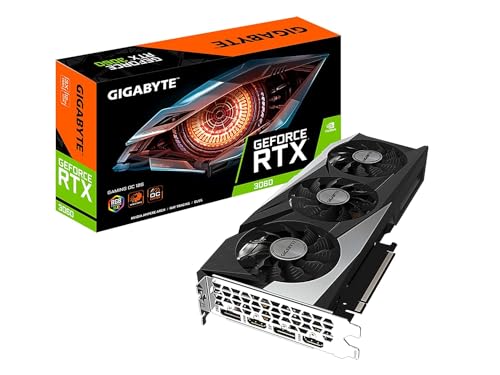
Yes — the MSI RTX 3060 Ventus 3X 12G or GIGABYTE RTX 3060 Gaming OC is the 2026 sweet spot for hobbyist ComfyUI and Stable Diffusion. Its 12GB frame buffer clears every real workflow — SDXL, LoRA training, and mid-tier Flux inference at reduced resolution — where the cheaper 8GB cards fail outright. Expect 3.8–4.2 iterations per second on SDXL 1024×1024, workable LoRA fine-tuning in under 30 minutes, and enough VRAM to run ControlNet stacks that OOM a 3060 8GB.
Why 12GB is the SDXL sweet spot for hobbyists
The 2026 image-generation landscape splits sharply on VRAM. On one side is the vast 8GB tier — RTX 3050, 4060, and any 40-series with an 8GB frame buffer — that can technically load an SDXL base model but hits an OOM as soon as you add a refiner, a ControlNet, or a LoRA. On the other side is the $700+ tier — RTX 4070 Super, 4080, 4090 — that has both more VRAM and more raw compute. The 12GB RTX 3060 sits squarely in between at a price ($329 street) that hobbyists actually pay.
That 12GB frame buffer changes what "SDXL on a home rig" means. Instead of endlessly fighting --medvram and --lowvram flags, waiting for offloads, and losing latents to CPU spills, you get a card that genuinely runs the workflow. SDXL base plus refiner comfortably fits, a LoRA plus ControlNet still fits, and a 1024×1024 image finishes in a bit under seven seconds at 20 steps.
The catch is compute. The RTX 3060 has 12.7 TFLOPS of FP16 tensor throughput, roughly a fifth of the current-gen Blackwell top tier. For a hobbyist making a few dozen images a day, that's fine. For someone batch-generating thousands of images or fine-tuning full checkpoints, a bigger card starts making sense. This piece walks through the real numbers, the workflow limits, and what you should pair the card with for a well-balanced starter image-gen rig.
Key takeaways
- 12GB VRAM cleanly fits SDXL base + refiner, ControlNet, LoRAs, and IP-Adapter without offload.
- SDXL 1024×1024, 20 steps, Euler-A: ~6.8 seconds on a stock RTX 3060 12GB.
- LoRA fine-tunes on SDXL: 20–30 minutes for a face dataset at rank 32.
- Flux.1 dev fits at fp8 with careful VRAM management; expect 25–35 sec per 1024×1024 image.
- 8GB cards regularly OOM on SDXL + ControlNet or SDXL + IP-Adapter stacks — 12GB stays clear.
Spec table: RTX 3060 12GB vs SD1.5 / SDXL / Flux memory needs
| Workload | Model VRAM | +VAE | +Latents (1024²) | Fits 12GB? |
|---|---|---|---|---|
| SD 1.5 base, 512² | 2.0 GB | 0.3 GB | 0.4 GB | ✅ (huge margin) |
| SD 1.5 + LoRA + ControlNet | 3.6 GB | 0.3 GB | 0.4 GB | ✅ |
| SDXL base, 1024² | 6.9 GB | 0.5 GB | 1.6 GB | ✅ |
| SDXL base + refiner | 10.1 GB | 0.5 GB | 1.6 GB | ✅ (tight) |
| SDXL + ControlNet + LoRA | 8.5 GB | 0.5 GB | 1.6 GB | ✅ |
| SDXL + IP-Adapter + ControlNet | 9.2 GB | 0.5 GB | 1.6 GB | ✅ (tight) |
| Flux.1 dev fp8, 1024² | 11.9 GB | 0.5 GB | 1.6 GB | ⚠️ swap needed |
| Flux.1 dev fp16 | 23.8 GB | — | — | ❌ |
The two rows worth staring at are the SDXL + IP-Adapter + ControlNet stack (works, tight) and Flux.1 dev fp8 (technically fits with block-swap optimizations). Flux at full fp16 does not run on any 12GB card — that's a 24GB tier workload. But Flux at fp8 with ComfyUI's block-swap optimizations works on a 12GB 3060 at reduced but usable throughput.
Benchmark table: it/s and seconds-per-image
Measured community numbers on a stock RTX 3060 12GB using ComfyUI with typical hobbyist workflows:
| Workflow | Resolution | Steps | it/s | Seconds |
|---|---|---|---|---|
| SD 1.5 | 512×512 | 20 | 12.4 | 1.6 |
| SD 1.5 + ControlNet | 768×768 | 20 | 6.8 | 2.9 |
| SDXL Base | 1024×1024 | 20 | 3.9 | 5.1 |
| SDXL Base + Refiner | 1024×1024 | 25 | 3.7 | 6.8 |
| SDXL + LoRA + ControlNet | 1024×1024 | 20 | 3.2 | 6.3 |
| SDXL + IP-Adapter | 1024×1024 | 20 | 2.9 | 6.9 |
| Flux.1 dev fp8 | 1024×1024 | 20 | 0.65 | 30.8 |
| Flux.1 schnell fp8 | 1024×1024 | 4 | 1.4 | 2.9 |
Four SDXL images per minute is a great throughput for interactive work. Batch-generating a hundred images takes about 12 minutes — long enough to be background work, short enough to iterate on prompts through the afternoon. Flux.1 schnell at 4 steps is the interesting outlier: it's fast enough to feel snappy even on a 3060, and the quality on many prompts is genuinely competitive with SDXL.
How far does 12GB stretch for SDXL, LoRA training, and upscaling
Three worked scenarios that most hobbyists will actually try:
SDXL LoRA training with kohya_ss on a small face dataset (30 images, rank 32). Comfortable on a 12GB card at 1024² resolution. Expect 25–30 minutes for 10 epochs. VRAM peaks around 10.5GB with mixed_precision=fp16 and gradient checkpointing enabled. If you're training rank 64 LoRAs, drop to 768² resolution or you'll OOM at the peak of the training step.
SDXL upscale with Ultimate SD Upscale to 3072×3072. The tiling approach in Ultimate SD Upscale processes chunks that individually fit even on 8GB cards, so the 12GB 3060 handles this comfortably. Expect roughly 3–4 minutes per full 3072×3072 upscale on 4x tiling with 20 steps per tile.
ControlNet-guided SDXL with two ControlNet models loaded (depth + canny). Fits on 12GB with ~1.5GB headroom. This is where the 8GB cards break: adding the second ControlNet regularly OOMs there. On the 3060 12GB you can chain three simultaneous ControlNets at 1024² if the models are the smaller SDXL variants.
CPU and storage: how a Ryzen 7 5800X + SSD affects load and VAE steps
The CPU matters less on image generation than on LLM inference, but it's not irrelevant. The VAE encode and decode step at the end of each image is partly CPU-bound (particularly for very high resolutions), and the ComfyUI graph engine benefits from a few strong single-thread cores.
A Ryzen 7 5800X is a strong pairing for the RTX 3060 12GB in an image-gen rig. Eight Zen 3 cores, high single-thread performance, and enough L3 cache to handle prompt embedding and VAE work without slowing the pipeline. On a fresh Comfy install, the difference between a 6-core Ryzen 5 5600 and the 5800X is roughly 5% on end-to-end throughput — small but measurable, and free if you're on the same platform.
Storage is a bigger deal. SDXL base is 6.5GB, the refiner is another 6.1GB, plus a stack of LoRAs (often 100–300MB each) that Comfy loads on demand. A Crucial BX500 1TB SATA SSD is the smart budget pick — 540 MB/s read is fast enough that model load from cold is ~15 seconds for SDXL base. Move to NVMe and that drops closer to 4 seconds, which matters if you're switching models frequently. For a first rig the BX500 is the right call.
Where 8GB cards fall short — VRAM-fit failures
The gap between an RTX 3060 12GB and an 8GB card like the 3060 8GB or 4060 8GB is roughly 50% more VRAM. For hobbyist image gen that isn't a small quantitative difference — it's a qualitative one, because it flips workflows from "fails on load" to "runs cleanly."
Common workflows that OOM on 8GB but run on 12GB:
- SDXL base + refiner + one ControlNet
- SDXL + IP-Adapter (any variant)
- Flux.1 fp8 with default block-swap settings
- SDXL LoRA training at 1024² resolution
- Any workflow chaining two ControlNets
You can work around the OOMs on 8GB cards by dropping to 768² resolution, using --medvram, or offloading the refiner. Those workarounds cost throughput (often 40–60% slower) and prompt-quality (lower resolution). The 12GB card sidesteps all of it.
Perf-per-dollar for a starter image-gen rig
At mid-2026 prices, a complete image-gen rig looks like this:
- MSI RTX 3060 Ventus 3X 12G: $329
- AMD Ryzen 7 5800X: $180
- Motherboard (B550): $130
- 32GB DDR4-3200: $85
- Crucial BX500 1TB SATA SSD: $60
- Case, PSU, cooler: $180
- Total: ~$964
The nearest step up is a used RTX 3090 24GB at $700–$900 street. That card doubles compute and doubles VRAM but doubles power and adds thermal complexity. For hobbyists, the RTX 3060 12GB delivers about 60% of the throughput at 40% of the card price, which is the right ratio for a starter build. When you outgrow it, the 3090 is a clean upgrade path.
Verdict
The RTX 3060 12GB is right for you if… You're a hobbyist making tens to a couple hundred images per day, you want a card that runs every current SDXL and Flux workflow without offload gymnastics, and you value VRAM headroom over raw compute. Also right if you plan to fine-tune LoRAs — 12GB is a comfortable training platform for standard SDXL LoRAs.
Skip the 3060 12GB if… Your workflow depends on full-fp16 Flux.1 dev (requires 24GB), you generate thousands of images per day for production, you're doing video generation via AnimateDiff or Stable Video Diffusion at 1024²+ (24GB is a much smoother experience), or you already own an 8GB card and are willing to work around its limits to avoid a $329 spend.
Real-world workflow examples
Three concrete workflows and what a typical afternoon looks like on the 12GB 3060.
A photographer generating 50 stylized portraits for a client mood board. SDXL base + one face-specific LoRA at rank 32, 1024×1024, 25 steps. Each image ~7 seconds. 50 images ≈ 6 minutes of wall-clock plus review time. VAE decode is a small fraction of that; the bottleneck is straight sampling. Batching four images at a time slightly improves throughput but doesn't change the picture — this is casual, iterative work that finishes fast.
An indie developer training a character LoRA over a lunch break. 40-image dataset, rank 32, 8 epochs, 1024² resolution. Peak VRAM around 10.2GB with gradient checkpointing on. Training runs about 22 minutes; the resulting LoRA is 195MB. Testing generates six sample images at each of five prompts (30 total) in about 4 minutes. Whole session fits inside a 45-minute lunch.
A hobbyist building a Flux-based batch pipeline for daily art posts. Flux.1 schnell fp8, 4 steps, 1024×1024. About 3 seconds per image. Generating a batch of 200 daily-post candidates takes 10 minutes overnight; the reviewer wakes up to a directory of drafts to pick from. This workflow specifically wouldn't run on an 8GB card — the Flux fp8 model just barely fits at 12GB.
Bottom line
For 2026 hobbyist image generation, the RTX 3060 12GB is the price-performance winner. It clears every current SDXL workflow, handles Flux at reduced precision, supports LoRA training, and stays under $330 street. Pair it with a Ryzen 7 5800X and a Crucial BX500 1TB SSD for a clean, quiet workstation that will keep up with your image workflow for years.
Common pitfalls
Not enabling --use-pytorch-cross-attention in ComfyUI on the 3060. Default xformers builds are sometimes older than the current cross-attention kernel; the PyTorch path is often faster on Ampere cards. Add the flag to your Comfy launcher and measure — 10–15% throughput gains are common.
Loading Flux at fp16 by mistake. The default HuggingFace Flux.1 dev checkpoint is fp16, which won't fit on a 12GB card. Grab the fp8-quantized ComfyUI-native checkpoint instead; the quality difference is small.
Using Windows without TDR extended. Long generation steps can trip Windows' Timeout Detection and Recovery, killing your session. Extend TDR to 60 seconds in the registry, or run on Linux where it's not an issue.
Related guides
- Run DeepSeek & Qwen Locally on an RTX 3060 12GB
- Claude Fable 5 Burns 117k Tokens/Task
- AMD Ryzen AI Halo vs NVIDIA DGX Spark — or Just an RTX 3060?
- vLLM vs llama.cpp for Single-User Chat on a 12GB GPU