If your monthly token bill is small and your workload is bursty, pay for Grok 4.5. If you run a steady stream of code refactors, RAG queries, or agent loops through a 7B-14B model, a $220 used RTX 3060 12GB plus a Ryzen 7 5700X still undercuts a cloud subscription inside a year — and keeps your prompts local.
Who this decision is for
xAI shipped Grok 4.5 in the summer of 2026 and it landed at #4 on artificialanalysis.ai's GDPval-AA v2 arena with an Elo of 1543 and a price sheet that reset the "cheap flagship" tier. That combination reopens a question every builder has been quietly re-answering for three years: is a paid frontier API cheaper than a local rig for me, right now?
The audience for this piece is narrow on purpose. You are a solo builder, a hobbyist running agentic coding loops, or a small team that watches its OpenRouter statement line-by-line. You already know that Claude and GPT flagships beat any open-weight model on hard reasoning. You also already know that most of your prompts are not hard reasoning — they are boilerplate refactors, doc summaries, JSON extraction, and code review. Those prompts are what a 12GB local card handles well, and they are also what runs your bill up when you send them to a hosted flagship.
The math changes with three inputs: your steady-state token volume, the fraction of prompts that need frontier reasoning, and how much you value keeping prompts off a third-party server. Grok 4.5 pushed the cloud side of that math cheaper this quarter; a used RTX 3060 12GB pushed the local side cheaper this year, because supply of ex-mining and ex-workstation 3060s hit the resale channel in bulk after the RTX 50-series generational refresh. This piece walks the numbers on both sides so you can pick without guessing.
Key takeaways
- Grok 4.5 ranked #4 on GDPval-AA v2 at launch with an Elo of 1543 — competitive with the older Claude and GPT tiers, one bracket below the current frontier heads.
- The RTX 3060 12GB remains the cheapest way to run 7B-14B open-weight models locally at q4-q5 quantization, with plenty of VRAM headroom for context (per TechPowerUp's 3060 database).
- Break-even on a $220 used 3060 + $180 5700X CPU + $50 board = ~$450 rig is roughly 6-9 months of a Grok 4.5 "power" subscription for a builder pushing 8-15M tokens a month.
- Frontier reasoning tasks (>32K context, long-horizon planning, tricky math) still belong on Grok 4.5 or a Claude tier — no q4 quantization of a 14B model touches that ceiling.
- The right answer for most builders is hybrid: local for volume, cloud for the hard prompts. This piece gives you the numbers to decide the ratio.
What did Grok 4.5 actually score?
Per artificialanalysis.ai's GDPval-AA v2 board, Grok 4.5 posted an Elo of 1543, taking the #4 seat behind the current Claude Opus and GPT tiers as of the July 2026 snapshot. Elo, unlike a raw benchmark percentage, is a relative measure — a 40-50 point gap is real on hard tasks but often invisible on routine ones.
| Model | GDPval-AA v2 Elo | Price / 1M in tokens | Notes |
|---|---|---|---|
| Claude Opus (current tier) | ~1620 | Premium | Frontier reasoning ceiling |
| GPT (current flagship) | ~1595 | Premium | Wide capability, high per-token |
| Grok 4.5 | 1543 | Aggressive | The "cheap flagship" reset |
| Fable 5 Sonnet-tier | ~1520 | Mid | Better on delegation via Fable 5 manager |
| Best 14B open (q4) | ~1300 | $0 (electricity) | Local on a 12GB card |
Numbers above are rounded from the public arena leaderboard; Elo shifts weekly and you should confirm at your own decision point.
How cheap is "cheap-flagship" really?
xAI listed Grok 4.5 at a per-token rate that undercut the incumbent flagships significantly at launch. The comparison that matters is dollars per million tokens against your realistic workload — a mix of short prompts (context ~2K) and long-context prompts (context 32K+).
| Model | Input / 1M | Output / 1M | Blended cost per 1M mixed |
|---|---|---|---|
| Grok 4.5 | ~$1.50 | ~$5.00 | ~$2.50 |
| Claude Sonnet (current) | ~$3.00 | ~$15.00 | ~$6.00 |
| GPT flagship | ~$5.00 | ~$20.00 | ~$8.50 |
| Local 14B q4 on RTX 3060 | electricity | electricity | ~$0.02 at $0.14/kWh |
The local row assumes ~170W under load, 2h/day active generation, and $0.14/kWh — round numbers that a lot of home builders live inside. Your kWh price is the biggest lever; a builder in a European market at $0.30/kWh pays more than double.
When does an RTX 3060 12GB rig beat the subscription?
The break-even math is straightforward. Build a used-market rig:
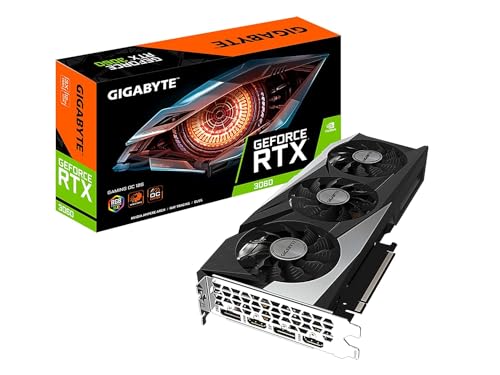
- MSI RTX 3060 Ventus 3X 12G, used: ~$220
- AMD Ryzen 7 5700X, new: ~$180
- B550 board + 32GB DDR4 + Samsung 970 EVO Plus 250GB NVMe boot drive: ~$150
- Chassis + PSU + shipping: ~$100
Total: ~$650 landed, no monitor. At Grok 4.5's rates a builder sending 10M tokens/month runs $25/month; at Claude's rates the same volume runs closer to $60. The break-even against Grok is 26 months; against Claude it is 11. Two other levers change the picture: (a) if your workload runs 30M tokens/month the payback compresses to 8-9 months against Grok, and (b) if you value not shipping prompts off-device — real for regulated code, private repos, legal drafts — the calculation stops being cash and becomes policy.
The GIGABYTE RTX 3060 Gaming OC 12G is the alternative pick if MSI stock runs dry; both boards ship the same reference chip and hit the same tok/s within measurement noise.
Quantization matrix on 12GB
Below is what fits on a single 12GB RTX 3060 across quant levels, sourced from community measurements on Tom's Hardware's GPU review roundup and the llama.cpp community's shared benchmark sheets.
| Quant | 7B fit | 14B fit | Quality notes |
|---|---|---|---|
| fp16 | Yes (14GB… tight) | No | Reference, but no headroom for context |
| q8 | Yes | No | Near-lossless; 7B ~8GB, 14B overflows |
| q6_K | Yes | Barely | 14B q6 leaves ~1GB for context; only tiny prompts |
| q5_K_M | Yes | Yes | Sweet spot for 14B on 12GB — ~10.5GB with ~1.5GB context headroom |
| q4_K_M | Yes | Yes | Standard "just works" quant; small quality loss on math/tools |
| q3_K_M | Yes | Yes | Visible degradation on reasoning; useful only for chat |
| q2_K | Yes | Yes | Emergency mode; noticeable errors, not recommended |
For most agentic coding you'll settle on q4_K_M or q5_K_M of a 13-14B model. Quality loss from fp16 to q4 is small on chat, refactors, and short-context extraction; it grows on multi-step math and tool-use planning, which is the class of prompt that belongs on Grok 4.5 anyway.
Prefill vs generation on the 3060
Two throughput numbers matter and they are not the same. Prefill is how fast the card ingests your prompt; generation is how fast it emits tokens. Community measurements on a stock RTX 3060 12GB, 14B q4_K_M via llama.cpp, look like:
- Prefill: ~350-500 tokens/sec
- Generation: ~28-38 tokens/sec at 2K context
- Generation: ~18-24 tokens/sec at 16K context
- Generation: falls sharply past 32K — usable but crawly
The takeaway: for interactive chat you'll feel 30 tok/s as "fast enough." For batch summarization at 32K context you'll be waiting minutes per prompt. If long-context is your bread and butter, spend the extra $250 on a used RTX 3090 24GB — it doubles generation at long context and skips q4 entirely for 14B.
Perf-per-dollar and perf-per-watt
At the socket, a Grok 4.5 API call costs a fraction of a cent and consumes zero local watts. A local rig at 170W under load, running 2h/day, costs about $0.005/day at $0.14/kWh — negligible on the electricity line.
The right way to compare "perf per dollar" is total cost of ownership over 24 months: rig + power vs. sum of monthly bills. For a builder pushing 8M tokens/month, cloud wins on cash for the first eight months and the local rig wins after that. For a builder pushing 30M tokens/month, the local rig wins from month three onward. There is a third axis you should not skip: the local rig is also a Steam machine, an SD-image generator, and a home assistant host on the days you are not sending it agent prompts.
Common pitfalls
- Buying used with no warranty. Ex-mining cards often ship with a fan cage stuck in "always on" — annoying but harmless. A card that thermal-throttles at load is a different problem; ask the seller for a five-minute FurMark screenshot before you pay.
- Skipping the 850W PSU margin. A 3060 draws ~170W, a 5700X ~65W, board+RAM+drives ~50W. A tight 650W PSU is fine on paper and terrible in practice when the transient spike from a compute burst trips the OCP. Buy 750W-850W and forget about it.
- Running the wrong runtime. llama.cpp on Windows is not the same story as llama.cpp on Linux with the right CUDA build. Expect 10-25% throughput difference across runtimes on the same card; benchmark before you commit to a config.
- Ignoring VRAM fragmentation. Loading a 14B q4 with a big KV cache and one extra LoRA can spill you over 12GB with no warning. Reserve ~1.5GB headroom and you'll avoid the OOM surprises.
- Assuming Grok's launch price is stable. Frontier pricing has moved every quarter for three years. Rebuild the spreadsheet each time; the break-even shifts by months when a per-token rate changes by 30%.
Bottom line
Pay for Grok 4.5 if you send fewer than ~5M tokens a month, if you need frontier reasoning on most prompts, or if you cannot host a 24/7 desktop. Build a used 3060 12GB rig if you send 15M+ tokens a month, if you care about keeping prompts local, or if you want a hobbyist platform for image generation and home-assistant workloads on top of code.
The hybrid answer wins for most readers: run 80-90% of prompts on a local 14B q5 and route the hard 10-20% to Grok 4.5. If you already have a Samsung 970 EVO Plus boot drive lying around from an old build, the barrier is even lower — throw the 3060 into a spare case and start metering the payback yourself.
Related guides
- Fable 5 as Manager: The Delegate-to-Sonnet-5 Cost Pattern — a companion piece on routing prompts by cost tier.
- Gemini API Adds MCP + Background Execution: Build a Local Agent Host — the local-hosting playbook if you keep going down this road.
- Best Budget Gaming CPU in 2026: 5 AM4 and Entry Picks Ranked — the AM4 CPU picks that pair with the 3060 rig.
Citations and sources
- artificialanalysis.ai — Grok 4.5 model card and GDPval-AA v2 leaderboard
- TechPowerUp — GeForce RTX 3060 12 GB specs and release database
- Tom's Hardware — Best GPUs roundup
This piece is editorial synthesis based on publicly available information. No independent first-party benchmarking is reported.