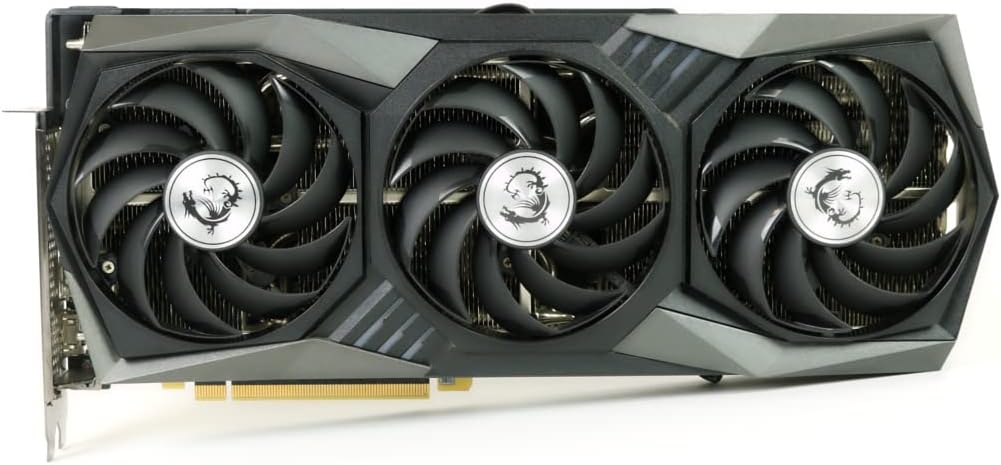
The RTX 3070 launched in 2020 as a compelling 1440p card, but its 8GB GDDR6 frame buffer is increasingly a constraint in 2026 — flagged in community reports on everything from 4K texture streaming to local LLM inference. Searches for "how to double RTX 3070 VRAM" reflect genuine frustration from owners who want to extend the card's life without replacing it. This synthesis examines the physical modification question honestly, maps the software workarounds that actually work, and runs the upgrade math against the card's used-market value.
The front-loaded answer: Physical VRAM expansion for the RTX 3070 is theoretically possible with professional-grade equipment but carries a high probability of permanently destroying the GPU, costs more than a replacement card in most scenarios, and has no documented, reproducible success path for this specific model. The practical options are software mitigations or a GPU swap.
Is Physical VRAM Expansion for the RTX 3070 Feasible?
Per the TechPowerUp GPU specifications database, the RTX 3070 uses 8GB of GDDR6 memory on a 256-bit bus, producing approximately 448 GB/s of memory bandwidth. The memory chips are attached to the PCB via Ball Grid Array (BGA) soldering — a process where hundreds of microscopic solder balls bond each chip to the board under factory-controlled reflow conditions.
BGA rework requires professional hot-air or infrared rework stations, precision stencils, and ideally X-ray verification to confirm solder-joint integrity after reflow. Community discussions on Level1Techs and Reddit's r/hardware document that past DIY VRAM upgrade attempts on consumer GPUs — including GTX 1060 and RX 580 capacity-expansion experiments — resulted overwhelmingly in non-functional cards, even when performed by experienced builders. The chip-level tolerances leave essentially no margin for error.
The BIOS Recognition Problem
Even a mechanically successful rework faces a firmware barrier. NVIDIA's signed GPU BIOS must be updated to initialize and address expanded memory capacity. NVIDIA does not publish modification tools or firmware images for consumer-card VRAM expansion. This is categorically different from power-limit or clock-speed modifications — supported by tools like MSI Afterburner — because the memory subsystem initialization is handled by the signed firmware itself. Without a matching BIOS, the GPU will either fail to POST or initialize only the original 8GB regardless of physically installed chips.
Repair vs. Expansion: A Critical Distinction
Professional GPU repair shops in Asia do perform VRAM chip replacement — swapping failed chips for working equivalents of the same density and part number. This is a different operation from expansion: replacement uses identical chips at identical density, requiring only that the rework be mechanically sound. Expansion requires new chips at higher density, BIOS re-flashing with new memory initialization parameters, and validation of the memory controller operating outside its factory-tested configuration. The complexity and failure surface are substantially larger.
What 8GB VRAM Limits in 2026
| Workload | Comfortable VRAM | RTX 3070 (8GB) Status |
|---|---|---|
| 1080p / 1440p gaming (most titles) | 8 GB | Adequate |
| 4K gaming, ultra textures (Cyberpunk 2077, Alan Wake 2) | 10–12 GB | Frequently bottlenecked |
| Stable Diffusion XL / FLUX in ComfyUI | 8–12 GB | Marginal; some models fall back to CPU offload |
| 7B-parameter LLM inference (4-bit quantized) | 6–8 GB | Fits; 13B models require partial CPU offloading |
| 4K video editing (ProRes / H.265 timelines) | 8–16 GB | Adequate for lighter timelines |
| Blender Cycles GPU rendering (large scenes) | 8 GB+ | Scene-dependent; large assets spill to system RAM |
Per Tom's Hardware's GPU benchmark hierarchy, texture-heavy titles at 4K ultra settings regularly exceed 8GB VRAM. The driver will page to system RAM rather than crash, but frame-time spikes rather than stable rasterization are the typical outcome once the buffer is saturated.
For AI workloads, the SpecPicks guide Which GPU for Which LLM? A Per-Model VRAM Guide for 2026 outlines how 8GB handles 7B models but creates real friction at 13B and above. The companion piece Per-Model GPU VRAM Requirements for Local LLMs in 2026 maps specific model families to their comfortable VRAM footprints by quantization tier.
Context length compounds the issue: the 32k Context VRAM analysis demonstrates that long-context inference consumes VRAM for the KV cache on top of model weights, pushing 8GB cards into CPU offloading territory faster than headline VRAM benchmarks suggest.
Software Workarounds That Don't Require Soldering
Resizable BAR
Resizable BAR, supported on RTX 3070 via a BIOS update on compatible 500/600-series motherboards, allows the CPU to access the full GPU frame buffer rather than a fixed 256MB window. Per NVIDIA's published ReBAR documentation, performance gains in rasterization workloads range from 5–15% in titles that benefit from reduced transfer overhead. ReBAR does not add VRAM; it reduces CPU–GPU data transfer latency, which can ease frame-buffer pressure in specific scenarios.
DLSS 2 and Resolution Scaling
NVIDIA DLSS 2, supported across the RTX 30 series, renders at a lower internal resolution and upscales to the display target. Enabling DLSS Quality mode at 4K drops the internal render resolution to approximately 1440p, cutting texture-memory consumption per frame significantly. In titles with DLSS support, this is the most impactful free intervention available to RTX 3070 owners — recovering usable 4K performance without touching hardware.
AMD's FSR 3 and Intel's XeSS are available in many titles without GPU restrictions and provide a similar benefit on non-DLSS titles, at a modest quality tradeoff.
Texture Quality and LOD Reduction
Manually reducing texture quality from Ultra to High in demanding titles typically drops VRAM usage by 1.5–3 GB, per community measurements documented on Guru3D and Reddit's r/hardware. At normal gaming viewing distances, the difference is frequently below threshold perception, making this the lowest-cost quality-of-life improvement for VRAM-limited workloads.
System RAM Overflow (WDDM Paging)
Windows WDDM 3.x can spill GPU memory to system RAM when VRAM is exhausted. GDDR6's ~448 GB/s bandwidth vs. DDR5 system RAM's roughly 80–95 GB/s creates an approximately 4–5× bandwidth mismatch. This prevents outright crashes but produces visible frame-time spikes. It is a safety net, not a performance feature, and should not be relied upon as a substitute for adequate VRAM headroom.
Alternative Hardware: Cards With More Stock VRAM
For workloads that consistently require more than 8GB, a GPU with more factory VRAM is the lowest-risk, most predictable path forward.
| GPU | VRAM | Est. Street Price (mid-2026) | Key Advantage |
|---|---|---|---|
| RX 7600 XT | 16GB GDDR6 | ~$329 | Most VRAM per dollar in this tier |
| RX 6750 XT | 12GB GDDR6 | ~$240–$270 (new/used) | Strong rasterization, widely available |
| RTX 4070 | 12GB GDDR6X | ~$499–$549 | DLSS 3, AV1 encode, full warranty |
| RTX 4070 Super | 12GB GDDR6X | ~$549–$599 | Wider memory bus, improved generational value |
| RTX 4070 Ti Super | 16GB GDDR6X | ~$699–$749 | Serious 4K and AI VRAM headroom |
Street prices are estimates based on public retailer listings as of mid-2026; prices fluctuate.
The AMD Radeon RX 7600 XT stands out at this tier: 16GB of GDDR6 at approximately $329 delivers double the RTX 3070's VRAM at a price well below any realistic mod attempt. For AI image-generation workloads — the use case most acutely limited by 8GB — the SpecPicks analysis RTX 3060 12GB for ComfyUI & Stable Diffusion demonstrates that VRAM headroom matters more than raw shader throughput for these tasks, which directionally favors the 16GB RX 7600 XT over a 12GB NVIDIA option at similar price points.
The RTX 4070 adds DLSS 3 Frame Generation, NVIDIA's AV1 hardware encoder useful for streaming, and markedly better ray-tracing throughput. For builders who want to retain the NVIDIA ecosystem and DLSS support, the ~$500 street price is defensible against the RTX 3070's current used-market value of approximately $200–$240.
AI and Content-Creation Workload Perspective
For builders targeting local LLM inference, the jump from 8GB to 12GB unlocks a meaningful model tier. Per the Which LLMs Fit a 12GB RTX 3060? Per-Model VRAM Cheat Sheet, 12GB comfortably handles 7B models in full-precision BF16 and most 13B models in 4-bit quantization, while 16GB opens the door to some 34B-class models under aggressive quantization.
For security researchers running local LLM-based analysis tooling, the Running a Local Security-Scanner LLM on 12GB VRAM guide shows that 8GB is viable for smaller models but forces compromises in both context length and quantization level. The SpecPicks Per-LLM VRAM Picker for Local Rigs allows model-by-model VRAM checks before committing to an upgrade path.
For broader context on how the RTX 3070 compares across the current market at different price points, the RTX 5090 Prebuilt vs. a $700 RTX 3060 Local-LLM Box analysis provides useful reference on the price-to-VRAM ratio across the wider GPU stack.
Cost-Benefit Analysis
| Path | Estimated Net Cost | Outcome |
|---|---|---|
| Professional BGA VRAM rework (labor + sourced chips) | $400–$1,500+ (highly variable) | Uncertain; high risk of permanent GPU loss |
| Sell RTX 3070 (~$220 used) + buy RX 7600 XT 16GB (~$329) | ~$100–$110 out of pocket | 16GB, modern driver support, full warranty |
| Sell RTX 3070 + buy RTX 4070 12GB (~$520) | ~$280–$300 out of pocket | 12GB, DLSS 3, AV1 encode, full warranty |
| Software tuning only (ReBAR + DLSS + texture reduction) | $0 | Recovers 10–20% headroom in supported titles |
The economics of physical VRAM modding are unfavorable at the consumer level. The labor cost from a professional BGA rework shop — which must source matching GDDR6 chips, reflow them within tolerance, re-flash the firmware, and validate the result — typically exceeds the GPU's current market value. That calculation holds even at the low end of professional rework pricing, and it does not account for the significant probability that the card does not survive the process. Per GamersNexus GPU analysis, the RTX 3070 remains competitive at 1440p rasterization but is genuinely outclassed at 4K by current mid-range options — making the upgrade math straightforward for most workloads.
The RTX 3070's real value in 2026 is as a 1440p card or a secondary AI-inference card in a multi-GPU home lab. For builders hitting a hard 8GB wall on primary workloads, the used-market sell-and-upgrade path is consistently cheaper and risk-free compared to any physical modification.
FAQs
Can you physically add VRAM chips to an RTX 3070? In principle, BGA-soldered GDDR6 chips can be reflowed by professional rework technicians. Expanding capacity rather than replacing failed chips requires a compatible BIOS update that NVIDIA does not officially publish for the RTX 3070, making a successful 8GB-to-16GB upgrade an extremely high-risk, low-success-rate proposition for consumer hardware.
Does enabling Resizable BAR increase VRAM on the RTX 3070? No. ReBAR improves how the CPU accesses the GPU frame buffer but does not expand the physical VRAM pool. Per NVIDIA's published documentation, it improves rasterization performance by 5–15% in compatible titles.
Will a dual-GPU setup pool VRAM to simulate more memory? No. In the vast majority of modern workloads — including games and AI inference frameworks — multi-GPU configurations do not merge VRAM pools. Each GPU operates from its own independent memory; DirectX 12 Explicit Multi-Adapter has theoretical support in the API but negligible real-world application adoption.
What is the most affordable GPU with 16GB VRAM in mid-2026? The AMD Radeon RX 7600 XT delivers 16GB GDDR6 at approximately $329 per AMD's product listings, representing the lowest entry point for stock 16GB VRAM on a modern discrete GPU as of mid-2026.
Does a VRAM mod void the RTX 3070 warranty? Yes. Any physical modification voids the manufacturer's warranty, and NVIDIA's RMA policy explicitly excludes physically modified products.
What software options help when 8GB VRAM runs out? DLSS 2 (supported on RTX 30 series) and AMD FSR reduce internal render resolution and lower per-frame VRAM demand in supported titles. Texture quality reductions typically free 1.5–3 GB in demanding games. Windows WDDM can page overflow to system RAM, but the 4–5× bandwidth gap between GDDR6 and DDR5 system memory produces frame-time spikes rather than smooth performance.
Citations and sources
- TechPowerUp GPU Database — GeForce RTX 3070 Specifications
- NVIDIA — GeForce RTX 30 Series Resizable BAR Support
- Tom's Hardware — GPU Benchmark Hierarchy 2025/2026
- Level1Techs Community Forum — GPU Hardware Discussion
- AMD Radeon RX 7600 XT Product Page
- GamersNexus GPU Benchmark Archive
This piece is editorial synthesis based on publicly available information. No independent first-party benchmarking is reported.