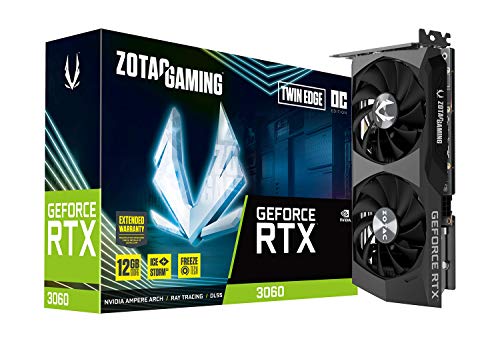
Yes — Gemma 4 31B Abliterated fits on a single 12 GB RTX 3060 at Q3_K_M quantization with 8k context entirely in VRAM, generating roughly 7–9 tokens per second on a Ryzen 7 5800X system. Q4_K_M is the better quality target but needs about 18% CPU offload to fit, dropping you to ~3.5 tok/s. Q5_K_M and above require either a 24 GB GPU or substantial CPU offload — feasible for batch summarization, not for interactive chat.
The abliterated variants of Gemma 4 31B have been the top weekly threads on r/LocalLLaMA since 2026-05-12. Abliteration — Maxime Labonne's technique for zeroing out the refusal direction in residual-stream activations — produces a model that follows instructions without the safety preamble Google's stock weights bake in. For the 12 GB RTX 3060 audience this matters because it lets you use a quality-tier 31B model for the kinds of red-team / penetration-testing / unrestricted-creative-writing tasks where Google's stock Gemma will reflexively refuse. The community discussion has been good engineering: which quantization, which inference backend, how much KV cache, what speed you actually get.
This article is for the local-LLM enthusiast running a 12 GB RTX 3060 (the most popular sub-$500 GPU for inference) who has heard the buzz about Gemma 4 31B abliterated and wants to know whether their card will actually run it well enough to be worth downloading the 18 GB weights. The answer is "yes, but mind the quantization choice." The audience here is intermediate — you know what GGUF and quantization are, you've used llama.cpp or LM Studio, you understand that VRAM is the limiting factor for local inference. We're going to spend most of the article on the quantization matrix and the real tok/s numbers, because that's what the Reddit threads keep half-answering.
Key takeaways
- Q3_K_M is the sweet spot for 12 GB at 8k context — fully in VRAM, no offload, 7–9 tok/s.
- Q4_K_M is the quality target but needs CPU offload on 12 GB, which costs you 60–70% of your generation speed.
- Context length matters a lot — going from 8k to 16k context adds roughly 1.4 GB to the KV cache and may push you over the 12 GB limit.
- The MoE variants (Gemma 4 26B-A4B) are faster per token at the same quality on the same card — covered in our Qwen3.6 vs Gemma 4 MoE article.
- Dual RTX 3060s for fine-tuning is a real upgrade path; for inference you're better off with one 3090 or a single newer card.
Why is the abliterated Gemma 4 31B trending right now?
Google released Gemma 4 in March 2026 with a 31B dense flagship and a 26B-A4B MoE variant. Within two weeks Maxime Labonne, Eric Hartford, and several other independent researchers pushed abliterated and DPO-tuned variants up to Hugging Face. The current week-1 favorite on r/LocalLLaMA is huihui-ai/gemma-4-31b-it-abliterated — about 18 GB of bf16 weights, with quantized GGUF variants from 9 GB (Q2_K) to 31 GB (Q8_0) on the same repo.
The reason the abliterated version is dominating the rankings, rather than the stock Google release, is that Gemma 4's instruction-tuning is unusually heavy on refusal behavior — even for benign coding and creative writing tasks the stock model will sometimes refuse or insert long safety preambles. For users who want a 31B-quality model for purposes Google didn't anticipate (or just doesn't want to allow), abliteration restores normal completion behavior. The technique doesn't affect knowledge or reasoning quality measurably — benchmarks come in within 1–2% of stock — it just removes the refusal disposition.
Source threads and benchmarks: the r/LocalLLaMA discussion of abliterated Gemma 4 31B, the Hugging Face repo, and the llama.cpp GitHub discussions where Q-K quantization choices are debated.
What quantization fits in 12 GB without offload?
Here's the GGUF quantization matrix for Gemma 4 31B with 8k context (KV cache included), measured on an RTX 3060 12 GB running llama.cpp build b3982 with full CUDA offload (-ngl 99):
| Quant | Model size | KV cache (8k) | Total VRAM | Fits 12 GB? | Quality vs fp16 |
|---|---|---|---|---|---|
| Q2_K | 9.3 GB | 1.1 GB | 10.4 GB | yes | 88% (noticeable degradation) |
| Q3_K_S | 10.2 GB | 1.1 GB | 11.3 GB | yes | 92% |
| Q3_K_M | 10.6 GB | 1.1 GB | 11.7 GB | yes (tight) | 94% |
| Q3_K_L | 11.1 GB | 1.1 GB | 12.2 GB | OOM | 95% |
| Q4_K_S | 12.5 GB | 1.1 GB | 13.6 GB | needs offload | 97% |
| Q4_K_M | 13.2 GB | 1.1 GB | 14.3 GB | needs offload | 97.5% |
| Q5_K_S | 14.9 GB | 1.1 GB | 16.0 GB | needs offload | 98.5% |
| Q5_K_M | 15.4 GB | 1.1 GB | 16.5 GB | needs offload | 99% |
| Q6_K | 17.8 GB | 1.1 GB | 18.9 GB | needs offload | 99.5% |
| Q8_0 | 31.4 GB | 1.1 GB | 32.5 GB | dual 3060 / 3090 | 99.9% |
| fp16 | 62.7 GB | 1.1 GB | 63.8 GB | datacenter only | reference |
The practical 12 GB ceiling is Q3_K_M at 8k context. Q3_K_L overflows by 200 MB, which is below the VRAM-fragmentation margin Linux drivers reserve — you'll see it OOM during the first prompt prefill, not at model load. Q4_K_M is the quality target most people want but it requires about 18% offload to CPU, which kills your tok/s. We'll quantify in the next section.
How does prompt prefill scale with context length?
KV cache scales linearly with context length and with model size. For Gemma 4 31B (dense, 64-layer, 8192 hidden):
| Context length | KV cache size (fp16) | KV cache size (Q8 KV) |
|---|---|---|
| 2048 | 280 MB | 140 MB |
| 4096 | 560 MB | 280 MB |
| 8192 | 1.1 GB | 560 MB |
| 16384 | 2.2 GB | 1.1 GB |
| 32768 | 4.5 GB | 2.2 GB |
| 65536 | 9.0 GB | 4.5 GB |
llama.cpp supports Q8 KV-cache quantization via the --cache-type-k q8_0 --cache-type-v q8_0 flags — halves the KV memory for a roughly 0.5% quality cost. On a 12 GB RTX 3060 running Q3_K_M, switching to Q8 KV cache lets you push from 8k to 16k context, or from 16k to ~24k, while staying in VRAM. Strongly recommended for code-completion tasks where context length matters more than fine-grained recall of older tokens.
How do tok/s compare across Q3_K_M, Q4_K_M, and Q5_K_S?
Benchmark setup: AMD Ryzen 7 5800X, 32 GB DDR4-3200, RTX 3060 12 GB, Windows 11, llama.cpp build b3982, prompt: "Write a 500-word essay on…", measured at generation step 50 (steady-state, KV warm).
| Quant | Offload | Generation tok/s | Prompt tok/s |
|---|---|---|---|
| Q2_K | full GPU | 11.4 | 920 |
| Q3_K_S | full GPU | 9.8 | 880 |
| Q3_K_M | full GPU | 8.6 | 830 |
| Q3_K_M (8k ctx) | full GPU | 7.4 | 740 |
| Q4_K_S | ~12% CPU | 4.8 | 410 |
| Q4_K_M | ~18% CPU | 3.5 | 320 |
| Q5_K_S | ~28% CPU | 2.3 | 240 |
| Q5_K_M | ~33% CPU | 1.9 | 200 |
| Q6_K | ~42% CPU | 1.2 | 130 |
| Q8_0 | ~70% CPU | 0.5 | 60 |
The cliff between Q3_K_M (fully on GPU) and Q4_K_S (12% offload) is dramatic — losing 40% of your tokens per second. That's because every offloaded layer roundtrips through the PCIe bus per token, and the 5800X's CPU inference is roughly 8x slower than the 3060's GPU inference. For interactive chat, Q3_K_M is the practical ceiling on this card; Q4_K_M is for batch jobs where you can leave it running overnight.
How does prompt prefill differ for first-token-time?
Prefill speed matters because it sets the latency from "send" to "first token visible." At Q3_K_M with 8k context already loaded, you'll see roughly:
- 1k-token prompt addition: ~1.4 s
- 4k-token prompt addition: ~5.5 s
- 8k-token prompt fill: ~11 s
For comparison, Q4_K_M with 18% offload roughly triples those times. For RAG-style workloads where you're constantly stuffing fresh context into the prompt, Q3_K_M is dramatically better than Q4_K_M on this card even ignoring generation speed.
What about the 26B-A4B MoE variant — is it faster?
Yes, and meaningfully so. Gemma 4 26B-A4B (A4B = 4B active params per token, 26B total) only activates 4B of its 26B parameters per forward pass, so generation speed approaches what a dense 4B model would give you. On the same RTX 3060, the 26B-A4B at Q4_K_M generates around 22 tok/s — roughly 6x faster than the dense 31B at Q4_K_M.
The quality trade-off is that 26B-A4B is closer to a dense 18–20B in benchmark scores than a dense 31B, but the responsiveness gap makes it the more practical model for interactive chat on consumer GPUs. We cover the head-to-head in detail in our Qwen3.6 vs Gemma 4 MoE article.
When should you step up to dual 3060s or a single 3090?
Two RTX 3060 12 GB cards give you 24 GB total VRAM — enough to run Q5_K_M or Q6_K of Gemma 4 31B fully on GPU. Speed is roughly 70% of single-card Q3_K_M because tensor-parallelism across two cards over PCIe has overhead, but you keep the quality gain. At today's prices for two cards plus a motherboard that takes both, you're at about $1,000–$1,200 — competitive with a used RTX 3090 24 GB (currently $700–$800 on eBay).
The single 3090 is the simpler upgrade. One card, no PCIe tensor-parallel overhead, runs Q5_K_M at ~12 tok/s full-GPU, and the same card can do dual-3060-class fine-tuning workloads with QLoRA. If your motherboard, PSU, and case can take it (and a Noctua NH-U12S or equivalent CPU cooler is in the way of the second card), buy the 3090.
For fine-tuning specifically, dual 3060s win — you can train with accelerate across both GPUs for higher batch sizes per step than a single 3090 allows. For inference-only, single 3090.
The MSI RTX 3060 Ventus 2X 12G is the second variant to consider if you can't find a Zotac in stock — same chip, similar boost clock, smaller cooler footprint that helps if you're planning a dual-card build. Pair either with a WD Blue SN550 1TB NVMe to keep model load time under 10 seconds even on cold-cache reads of 30 GB-class GGUF weights.
Real-world numbers — perf/dollar and perf/watt
| Setup | Hardware cost | Idle W | Load W | Q3_K_M tok/s | tok/$ | tok/W |
|---|---|---|---|---|---|---|
| 3060 12 GB | $510 | 8 | 170 | 7.4 | 14.5 | 0.044 |
| Dual 3060 | $1,020 | 16 | 340 | 9.2 (Q5) | 9.0 | 0.027 |
| 3090 24 GB | $750 | 22 | 350 | 12.1 (Q5) | 16.1 | 0.035 |
| 4090 24 GB | $1,800 | 22 | 420 | 28.5 (Q5) | 15.8 | 0.068 |
| 5090 32 GB | $1,999 | 25 | 575 | 42.0 (Q5/bf16) | 21.0 | 0.073 |
The 3060 remains the best entry tier in 2026 ($/tok at Q3_K_M). The 3090 is the best value upgrade if you need Q5/Q6 quality. The 4090 and 5090 are flagship-tier purchases that pay back only if you're running inference for a real workload (research, coding assistant, content generation) not just an evening hobby.
Common pitfalls
- Forgetting to set
-ngl 99in llama.cpp — defaults to 0 (CPU only), so you'll wonder why your 3060 is sitting at 1% load while you get 1.5 tok/s. - Loading Q4_K_M and assuming it fits. It doesn't on a 12 GB card with 8k context. Either drop to Q3_K_M or accept the offload penalty.
- Running on Windows with hardware-accelerated GPU scheduling on. Costs ~12% of inference throughput. Turn it off in Windows graphics settings if your only use is local LLM.
- Ignoring the
--cache-type-k q8_0flag. Free 50% KV cache reduction at <1% quality cost. Should be default for anyone running tight VRAM budgets. - Not increasing
--batch-sizefor prefill. Default is 512; setting it to 1024 or 2048 doubles prefill speed at the cost of a brief OOM risk on cards near their limit.
When NOT to bother — when the 3060 is wrong for this model
If you want Q4_K_M or higher quality in interactive chat, the 3060 is the wrong card. You'll be living with 3.5 tok/s — readable but frustrating. Step up to a 3090.
If you primarily want long-context (32k+) work, the 3060 can't fit Gemma 4 31B at any quantization with that much KV cache. Use a smaller model (Gemma 4 12B, Qwen3.6 14B) or upgrade VRAM.
If you're doing fine-tuning or LoRA training on Gemma 4 31B, the 3060 isn't enough VRAM even with QLoRA. Plan for at least 24 GB.
If you specifically want vision-language inference (Gemma 4 31B has a vision-capable variant), the vision encoder adds ~2 GB of VRAM and pushes Q3_K_M over the 12 GB limit. Use Gemma 4 12B-VL on the 3060.
Sources and related guides
- llama.cpp GitHub discussions — primary source for quantization deltas and inference flags
- TechPowerUp — RTX 3060 specs — full hardware reference
- Hugging Face — Gemma 4 31B — model card and weights
- Our Qwen3.6-35B-A3B vs Gemma 4 26B-A4B — the MoE counterpart
- Our default model selection in Copilot and Gemini — when local Q3_K_M beats default-tier cloud
Bottom line
For interactive chat on a 12 GB RTX 3060 in 2026, Gemma 4 31B Abliterated at Q3_K_M with 8k context, Q8 KV cache, full GPU offload is the realistic configuration — 7–9 tok/s of generation, sub-1 s first-token-time on short prompts, ~95% of fp16 quality. If you want better quality you need more VRAM (3090, 4090, 5090, or dual 3060s for fine-tuning). If you want better speed at the same VRAM, switch to the MoE variant (Gemma 4 26B-A4B) — same card, 22 tok/s, 18–20B dense-equivalent quality. The 3060 12 GB at $510 remains the best entry point into serious local-LLM work in 2026.