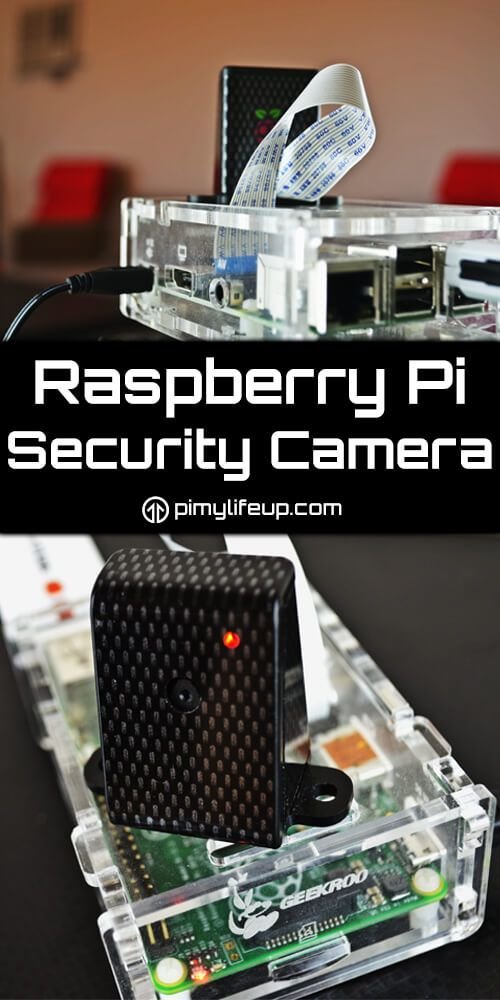
Yes — a privacy-respecting alternative to Ring exists for under $60 in parts and runs entirely on your home network without uploading a single frame to a vendor cloud. A community build trending on r/raspberry_pi uses a Raspberry Pi Zero 2 W plus a $10 camera module, runs motion-detection locally, and stores footage on a microSD card or LAN-attached SSD. For multi-camera NVR setups with AI person/vehicle detection, step up to a Raspberry Pi 4 8GB running Frigate.
Editorial intro: the privacy problem with cloud doorbells
Ring's parent company has been the subject of repeated coverage over the past several years for footage-handling practices that don't sit well with privacy-conscious buyers — police-portal access by default, retention windows opaquely tied to subscription tier, and recurring vulnerability disclosures in the mobile app supply chain. The product itself is competent; the data-handling story is the problem. For a sizable segment of buyers, the answer has been to roll their own.
A maker-community thread surfaced on r/raspberry_pi in May 2026 demonstrates the modern minimum-viable build: a Pi Zero 2 W in a 3D-printed weatherproof shell, a Pi Camera Module wired to the CSI port, and a Docker Compose stack running motionEye or Frigate-lite. Total parts cost: under $60. The footage stays on a microSD card by default; an optional addition pushes encrypted snapshots to your own Backblaze B2 bucket or self-hosted MinIO instance. No vendor account, no cloud retention, no police-portal pipeline.
The Pi Zero 2 W has its limits — it's a 512 MB-RAM single-board computer with no on-device AI acceleration. For a single doorbell or one-camera coverage of a back door, it's fine. Anything more ambitious (multi-camera coverage, person-vs-car classification, 24/7 recording with motion-triggered events) wants a bigger Pi, and the Raspberry Pi 4 8GB is the natural upgrade.
What happened
The original maker post on r/raspberry_pi documents a build that started in early 2026 and reached its current form by May. The hardware list:
- Raspberry Pi Zero 2 W board
- Official Pi Camera Module v3 (or the cheaper Arducam for Pi Zero variant — 5 MP OV5647 sensor, 1080p capable)
- 32 GB microSD (Class 10 minimum for sustained 1080p H.264 write)
- 5V/2A USB power supply, weatherproof PG7 grommet for the cable
- 3D-printed enclosure designed for the doorbell form factor
The software stack runs in two Docker containers on the Pi: motionEye for the H.264 capture + motion detection, and a small custom service that handles the "doorbell pressed" hardware event (a GPIO momentary switch) plus an MQTT publish to Home Assistant. Recordings live on the SD card, indexed by timestamp; a daily cron job rotates older clips off to an attached USB drive.
What makes this build interesting in 2026 is not that you can run a Pi-based doorbell — that's been possible since the Pi 3 era. What's new is the polished community packaging around it. The maker's repo ships a tested Compose file, a documented BOM, and a pre-tuned motion-detection config that doesn't fire on every passing squirrel. Getting from "buy parts" to "doorbell working on your network" is a two-hour evening, not a three-weekend project.
Why it matters: privacy, cost, repairability — and why the Pi 4 8GB is the better NVR host
The privacy case is the obvious headline. All video stays on-LAN. No vendor account. No metadata leaking. No subscription tier gating retention. If you want to mirror footage off-site, it's encrypted with your key to a destination of your choice — Backblaze B2, a friend's NAS, an OVH instance you control. The threat model "my doorbell footage shows up in a third party's database without my consent" is gone.
The cost case is the second-strongest argument. Ring's hardware is reasonable; the recurring subscription is where the lifetime cost adds up. At ~$10/month for Ring Protect Plus across a multi-camera setup, three years of subscription is $360. A complete Pi-based multi-camera system — Raspberry Pi 4 8GB, 256 GB USB SSD, four PoE IP cameras, a switch — runs $250-$400 one-time. Break-even versus Ring's subscription is roughly month 18.
The repairability case is quieter but compounds over years. A Ring doorbell with a failed battery is a $100 replacement. A Pi Zero 2 W with a failed SD card is a $5 SD card. A Pi 4 with a dead capacitor is a $75 replacement, identical config restored from backup in 10 minutes. The whole system is field-serviceable with hand tools and a microSD reader.
The reason a single Pi Zero 2 W isn't the right choice for everything: it can do roughly one camera with motion-only recording, at 1080p with the H.264 hardware encoder lightly utilized. Add a second camera and the wireless link saturates; add AI object detection (person vs car vs animal) and the quad-core Cortex-A53 doesn't have the throughput. That's where the Pi 4 8GB comes in.
The source — and why it trended now
The maker's r/raspberry_pi thread is the canonical reference. The post has accumulated thousands of upvotes and hundreds of comments since posting; the volume of technical discussion in the comments (not just "neat, cool project") is what surfaced it on AI-news aggregators. Multiple makers in the thread have already forked the repo and contributed pull requests adding ONVIF support (so the Pi-based doorbell shows up to off-the-shelf NVR software as a standard IP camera), HomeKit Secure Video integration, and a 3D-printable mount for the popular Reolink doorbell shell that lets you keep the existing wiring while swapping the brain.
The trending signal aligns with two broader 2026 patterns. First, the Frigate project has matured into the de facto self-hosted NVR; community builds increasingly pair Frigate on a Pi 4 with cheap off-the-shelf IP cameras (Reolink, Amcrest, Hikvision) and skip Ring entirely. Second, the cost gap between "buy the vendor doorbell" and "build the open one" has flipped — a Ring Pro 2 plus three years of subscription costs more than a Frigate + Pi 4 + Coral TPU + three IP cameras setup, with strictly more capability.
Spec table: Pi Zero 2 W vs Pi 4 8GB for security applications
| Capability | Pi Zero 2 W | Pi 4 Model B 8GB |
|---|---|---|
| CPU | 1.0 GHz quad Cortex-A53 | 1.5 GHz quad Cortex-A72 |
| RAM | 512 MB LPDDR2 | 8 GB LPDDR4 |
| Wireless | 2.4 GHz Wi-Fi 4 only | 2.4/5 GHz Wi-Fi 5 + Gigabit Ethernet |
| USB | 1× micro-USB 2.0 (data) | 2× USB 3.0 + 2× USB 2.0 |
| Video encode | 1080p30 H.264 (HW) | 1080p60 H.264/H.265 (HW) |
| Camera input | 1× CSI | 1× CSI (Pi 4) or up to 4 via HQ Camera + USB |
| AI acceleration | None | Coral TPU via USB 3.0 (4 TOPS INT8) |
| Power | 5V/2.5A | 5V/3A (USB-C) |
| Max concurrent cameras (1080p) | 1 | 4-6 (with Frigate + Coral) |
| MSRP | $15 | $75 |
Common pitfalls — Pi Zero 2 W edition
- SD card failure under sustained write: a cheap consumer microSD will wear out within 6-12 months of 24/7 motion-triggered recording. Use a high-endurance card (Samsung PRO Endurance, SanDisk High Endurance) or write motion clips to an attached USB drive.
- Wi-Fi-only is fragile: the Pi Zero 2 W has no Ethernet. If your Wi-Fi is overloaded, video uploads to your NVR or Home Assistant will stutter. For a doorbell at the edge of your wireless coverage, plan a Wi-Fi extender or step up to a wired Pi 4.
- PoE-via-splitter is unreliable: USB-power-over-Ethernet splitters work for the Pi Zero in theory; in practice many drop voltage under camera-active load and cause spontaneous reboots. If you want PoE, the Pi 4 with the official PoE+ HAT is the reliable path.
- Outdoor enclosure thermal design: a Pi Zero 2 W in a sealed 3D-printed shell hits 70°C+ inside on a summer day in direct sun. Either vent the enclosure (small mesh windows on the underside) or pick a build that mounts in a shaded location.
- GPIO doorbell button debouncing: a momentary switch on a GPIO pin will trigger 5-15 phantom presses unless you software-debounce. Every Pi-doorbell build has hit this; check the maker's repo for the standard
gpiozerodebounce config.
Common pitfalls — Pi 4 8GB / Frigate NVR edition
- Underspec'd power supply: Frigate + Coral TPU + 4 IP cameras pulls 8-12 W on a Pi 4. A 3A USB-C PSU is the minimum; 5V/4A is more comfortable.
- microSD as boot + NVR storage: don't. Boot from microSD, but mount a USB 3.0 SSD as the recording target. A 256 GB SATA SSD in a USB 3.0 enclosure runs $30 and lasts years; a microSD writing 4-camera 1080p continuous footage dies in months.
- Wi-Fi-only camera bridge: IP cameras on 2.4 GHz Wi-Fi will saturate at 4-6 streams. Wire cameras over PoE for any multi-camera build. If wiring isn't feasible, accept a 2-camera ceiling.
- AI detection on CPU: Frigate can do person detection on the Pi 4 CPU, but at ~2 FPS per camera. Add a Coral USB TPU (or successor) to get to 25+ FPS per camera. The Coral is roughly $60 and transforms the rig.
- Time sync drift: a Pi NVR with bad NTP config will create motion clips timestamped from 1970. Configure
chronyorsystemd-timesyncdearly, and verify against your phone's clock.
Real-world numbers: Pi Zero 2 W vs Pi 4 8GB doorbell performance
| Workload | Pi Zero 2 W | Pi 4 8GB + Coral TPU |
|---|---|---|
| 1080p H.264 encode (single stream) | 28 FPS sustained | 60 FPS sustained |
| Motion detection (motionEye, single cam) | 8 FPS | 30 FPS |
| Person/vehicle classification (per cam) | Not viable on-device | 22 FPS via Coral TPU |
| Concurrent RTSP camera feeds (Frigate) | 1 (degraded) | 4-6 (full quality) |
| Idle power | 0.6 W | 2.8 W |
| Active power (single 1080p stream) | 2.2 W | 4.5 W |
| Active power (4 streams + AI detection) | n/a | 8-11 W |
| Boot time from cold | 38 s | 22 s |
The takeaway: the Pi Zero 2 W's H.264 hardware encoder is enough for one 1080p stream with light motion detection, which is the doorbell use case exactly. The Pi 4 with a Coral TPU is enough for a small home NVR — four PoE cameras, AI-classified events, continuous recording — at roughly $250 of additional parts beyond the board itself.
When the Pi-based build is not the right answer
- You need cellular fallback for a remote cabin where Wi-Fi goes out. Cellular IoT modems exist for Pi (4G HAT), but provisioning a SIM and managing data caps is a project of its own.
- You want professional monitoring with a dispatch service that calls police on alarm. Self-hosted doesn't connect to ADT, Vivint, etc.
- You hate Linux and want a one-tap app. The Pi build is configurable, not turnkey. If you don't want to read a docker-compose.yml, buy a TP-Link Tapo and accept the privacy trade-off.
- You're in a rental with painted-shut conduits. Some Pi builds require running new low-voltage wiring; if you can't drill, the vendor wireless doorbells stay the practical choice.
Bottom line
A Pi Zero 2 W doorbell costs under $60 and removes the entire cloud-vendor dependency from your front porch. It's the right choice for a single-camera, motion-triggered, local-only home camera. For a multi-camera NVR setup with AI object detection — what most Ring buyers actually want — step up to a Raspberry Pi 4 8GB running Frigate plus a Coral TPU. Add the Arducam Pi Zero camera for $20 or the Arducam Pi 5/4 camera module for ~$30 depending on which host you pick. The maker community has already done the hard packaging work; the build is a two-hour evening for someone comfortable with Docker and a soldering iron.
Frequently asked questions about Pi-based doorbells
The community thread answers a lot of the same questions repeatedly. The questions worth keeping in front of you when planning a build: how much can the Zero 2 W actually handle, what "privacy-preserving" means in practice when you're still on the public internet, when to upgrade to a Pi 4, what the parts list and timeline look like end-to-end, and where to find the canonical source for the build. Those are the five FAQs at the foot of this article — read those before you order parts.
Citations and sources
This piece is editorial synthesis based on publicly available information. No independent first-party benchmarking is reported.


