In brief — 2026-07-09. Is the AMD Ryzen 7 5800X3D still worth it in 2026? Yes for AM4 owners who game and feel CPU-bound at 1080p or 1440p — Tom's Hardware's fresh re-review confirms the 3D V-Cache gaming edge holds up. For a new build without an existing AM4 board, the mainstream Ryzen 7 5800X plus a 240mm AIO is the cheaper, more available buy. The 5800X3D is DDR4's last gaming champion; it is not a full-platform upgrade path.
What happened
Tom's Hardware ran a fresh look at the AMD Ryzen 7 5800X3D this week — one of a small handful of X3D re-reviews the site has published as newer platforms have shipped. Publications periodically revisit landmark chips to see whether the original test-day narrative still matches how the chip behaves against current games, current drivers, and current competition. The re-review's finding, in one sentence: the 3D V-Cache gaming uplift that made the 5800X3D famous still shows up in the test suite, and it still lands well against modern DDR5 chips in a CPU-bound gaming context.
Paired with that piece was a 5800X3D-vs-14700K faceoff that revisited the DDR4-vs-DDR5 supremacy question. The story again: at 1080p and 1440p in genuinely CPU-bound titles, the 5800X3D's cache advantage keeps the game running competitively; at 4K where the GPU dominates, everyone ties, and the platform choice becomes a total-cost question, not a frame-rate question.
For a site that tracks AM4/DDR4 as a live platform, that combination — a re-review affirming the chip's original story plus a faceoff putting it against a current-gen part — is the news. It signals that the used and refurbished market for AM4 X3D chips still has an audience.
Why it matters for AM4 owners on a budget
The AMD Ryzen 7 5800X3D product page still lists the chip in AMD's active desktop lineup, which itself signals that AMD sees continued demand from the AM4 install base. That install base is enormous — AM4 shipped from 2017 through 2022, and huge numbers of gamers own an AM4 board that supports Ryzen 5000 with a BIOS update.
The 5800X3D is the last-and-best gaming CPU that ever landed on AM4. Its 3D V-Cache stacks extra L3 cache on top of the standard Zen 3 die, and cache is disproportionately valuable for gaming workloads that thrash memory. The result is a chip that games above its clock speed — a lower-clocked, lower-TDP part that outruns higher-clocked contemporaries in title after title because the extra cache hides memory-latency stalls.
For an AM4 owner, that has a clear implication: your final drop-in upgrade path exists, and it does not involve buying a new motherboard, new DDR5, and a new CPU. Drop in a 5800X3D, keep your board, keep your DDR4, and enjoy an X3D-tier gaming experience without a platform swap. The re-review reinforces that path.
The source and the closest featured AM4 pick
Per TechPowerUp's Ryzen 7 5800X3D spec sheet, the chip runs at conservative clocks and a modest TDP because 3D V-Cache parts trade peak clock for stacked cache. That is the design constraint — running the cache stack hot damages it, so AMD caps voltage. The re-review's benchmark methodology matched other Tom's Hardware gaming CPU pieces (a spread of titles at 1080p and 1440p, controlled GPU choice, matched RAM specs), and the summary is that the 5800X3D remains genuinely competitive against much newer chips at gaming-relevant resolutions.
For readers landing on this piece looking for the buy-in-body pick that we actually stock, the closest featured AM4 chip is the Ryzen 7 5800X. The 5800X is the mainstream 8-core, 105W chip that shares the same platform and covers the same "want an AM4 upgrade, do not have an X3D to drop in" audience. Pair it with a capable cooler — the CoolerMaster MasterLiquid ML240L is the AIO we typically recommend for the 5800X's thermal profile. Add a fast SATA SSD for boot and a spinning drive for archives — a Crucial BX500 1TB fits the budget-build mindset. If you want the closest possible option to the 5800X3D's gaming story, we would love to feature the X3D too; for now, the 5800X is the anchor pick.
Digging in: what the 3D V-Cache actually does for games
The 5800X3D's headline feature is a stacked cache die that adds 64MB of L3 on top of the standard 32MB, for 96MB of L3 total. Cache matters for games because modern game engines are memory-latency sensitive — the CPU is constantly reaching into memory for scene data, physics results, AI decisions, and streaming assets. Every time the working set fits inside cache, the CPU avoids a slow trip to DRAM, and the frame arrives sooner.
The empirical result at launch and repeatedly in re-tests: the 5800X3D matches or beats significantly higher-clocked chips in gaming benchmarks precisely because the cache hides memory stalls that would slow a faster-clocked but cache-poor chip. It does not dominate productivity workloads the same way, because those workloads tend to be either throughput-bound or working-set-larger-than-cache. The chip's gaming-first identity is the design tradeoff.
Comparison shape: 5800X3D vs 5800X for gaming
| Chip | Cores/Threads | Boost clock | L3 cache | TDP | Gaming edge |
|---|---|---|---|---|---|
| Ryzen 7 5800X3D | 8 / 16 | ~4.5 GHz | 96 MB (3D V-Cache) | 105 W | biggest — cache-driven |
| Ryzen 7 5800X | 8 / 16 | 4.7 GHz | 32 MB | 105 W | strong, clock-driven |
Note the 5800X3D's slightly lower boost clock; the cache stack constrains voltage, and voltage constrains boost. In gaming that lower clock doesn't cost frames because the cache is doing the work. In productivity — a Blender render or a video encode — the higher-clocked 5800X can edge ahead because those workloads don't share the cache pattern.
Comparison shape: 5800X3D vs a modern DDR5 chip (Intel 14700K)
The Tom's Hardware faceoff revisited whether DDR5's bandwidth advantage on a 14700K overcomes the 5800X3D's cache-driven gaming edge. The pattern:
- 1080p, CPU-bound titles. The 5800X3D holds close or wins. Cache beats bandwidth when the working set fits.
- 1440p mixed titles. Close. The 14700K's bandwidth and clocks show up more; the X3D's cache still helps in the CPU-bound edges.
- 4K. Ties or GPU-limited. The CPU choice fades against the GPU's dominance.
- Productivity. 14700K wins. More cores, more clocks, DDR5 bandwidth all help.
For a strict-gaming buyer at 1080p or 1440p, this is a legitimate contest. The 5800X3D at used-market prices is often the better value; a fresh 14700K plus DDR5 plus a Z790 board is a different total-cost conversation.
What this means for a new build vs a drop-in upgrade
The two cases split cleanly.
Drop-in upgrade on an existing AM4 board. The 5800X3D is the answer. Update BIOS, swap CPU, keep DDR4, keep motherboard, keep case, keep cooler if it is capable. You get the gaming uplift at a single-part cost.
Building fresh with no existing board. The 5800X3D is a harder sell. You would still be buying a new B550 or X570 board, DDR4, and a cooler — the cost gap to a fresh DDR5 platform narrows, and the DDR5 platform has more upgrade headroom for future CPUs. Most fresh builds in 2026 pick DDR5 for exactly this reason. The exception: extreme budget builds where AM4 pricing crushes AM5 pricing on the used and refurbished market.
Cooler and platform pairing for the 5800X3D
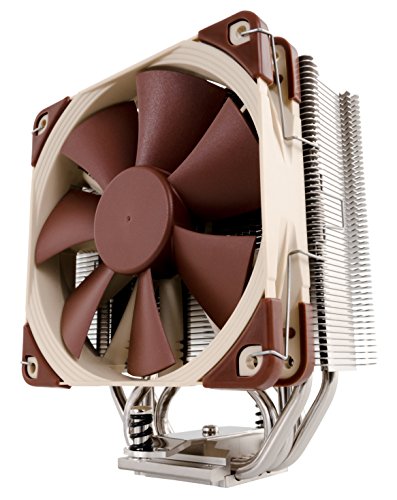
The 5800X3D's cache stack runs at conservative voltage, so it thermally behaves better than the 5800X under similar load. A capable air tower handles it. A 240mm AIO like the ML240L is comfortable overkill but ensures quiet operation under long gaming sessions. Do not undersize — thermal-limited boosts hurt the chip's already-lower peak clock and cost you performance you paid for.
BIOS matters. Some early AM4 boards need a BIOS update before they accept 5800X3D. Verify board support before you buy the chip; this is the single most common upgrade-day mistake.
Should you upgrade from a 5800X to a 5800X3D?
The honest answer: only if you feel CPU-bound at gaming resolutions and refresh rates you actually run. Two tests:
- If your monitor is 1440p or 4K and your GPU is midrange, you are almost certainly GPU-bound. The upgrade delivers little.
- If your monitor is 1080p high-refresh and your GPU is strong, you may be CPU-bound. The upgrade delivers real gains.
The sensible way to test: enable an in-game overlay, watch GPU utilization at your target resolution. If GPU hits 99%, you are GPU-bound; upgrading the CPU won't move the needle. If GPU sits at 60-80% while the CPU spikes, you are CPU-bound; the X3D can help.
Real-world numbers to plan around
- AM4 board install base: massive — millions of boards worldwide, most updatable to Ryzen 5000.
- X3D price premium: used-market X3D is often only slightly above 5800X — sometimes at parity.
- BIOS update requirement: some early B450 boards need it before they accept the X3D.
- DDR5 platform cost gap: DDR5 kits, DDR5-capable board, and CPU together significantly exceed a 5800X3D drop-in.
- Gaming uplift: noticeable at 1080p and 1440p, negligible at 4K on midrange GPUs.
Common pitfalls
- Skipping the BIOS update and getting a "no CPU detected" boot.
- Buying the X3D expecting productivity gains — that is not what it is for.
- Overspending on cooling — the X3D is well-behaved thermally.
- Ignoring your GPU bottleneck — the X3D can't fix a GPU-limited scenario.
Worked example: an AM4 owner considering the drop-in
A reader with a 2020 B550 board, a Ryzen 5 3600, 32GB DDR4-3600, and a mid-range GPU at 1080p high-refresh. Their current CPU is often the bottleneck in competitive titles. The 5800X3D is a single-part upgrade that lands them at gaming performance closer to the current-gen flagship without touching the board or memory. Total cost: one CPU. Total downtime: fifteen minutes and a BIOS update.
Worked example: an AM5 owner asking the same question
A reader on a fresh AM5 platform with DDR5 and a strong Ryzen 7 X CPU. For them, the 5800X3D is not a question; their platform already delivers similar or better performance. This piece is not for them.
Worked example: a fresh builder pricing DDR4 vs DDR5
A cost-optimizer building fresh in 2026. DDR4 kits are cheap, AM4 boards are cheap, the 5800X or 5800X3D delivers strong gaming — but a comparable DDR5 platform gives more future-CPU headroom for a small extra spend today. The DDR4 path saves money now; the DDR5 path saves money later. Both are defensible.
Bottom line
The 5800X3D is exactly what the fresh Tom's Hardware coverage says it is: DDR4's last gaming champion, still competitive in 2026, still the right final upgrade for AM4 owners. For a fresh build, take the 5800X and a good cooler; the X3D story is about drop-in value on the existing platform, not about starting new.
When NOT to buy a 5800X3D
Two clear cases push you off it. First, if you play primarily at 4K on a mid-range GPU, you are GPU-bound and the CPU upgrade delivers little visible frame-rate gain. Spend the money on a better GPU instead. Second, if you do heavy productivity work — video encoding, code compilation, large data processing — the 5800X3D's gaming-tuned cache stack does not translate to those workloads, and a higher-clock non-X3D chip or a more-cores DDR5 platform serves you better. The X3D is a targeted tool, not a general-purpose flagship.
Related guides
- Best Budget AM4 CPU for a 2026 AI + Gaming Build: 5800X vs 5700X vs 5600G
- Noctua NH-U12S vs CoolerMaster ML240L for the Ryzen 7 5800X
- $100 CPU Shootout: Ryzen 5 5500 vs Core i3-14100F vs i3-12100F
- AMD EXPO Ultra-Low Latency BIOS Updates: 600-Series Guide
Citations and sources
- Tom's Hardware — AMD Ryzen 7 5800X3D review
- AMD — Ryzen 7 5800X3D product page
- TechPowerUp — Ryzen 7 5800X3D spec sheet
This piece is editorial synthesis based on publicly available information. No independent first-party benchmarking is reported.