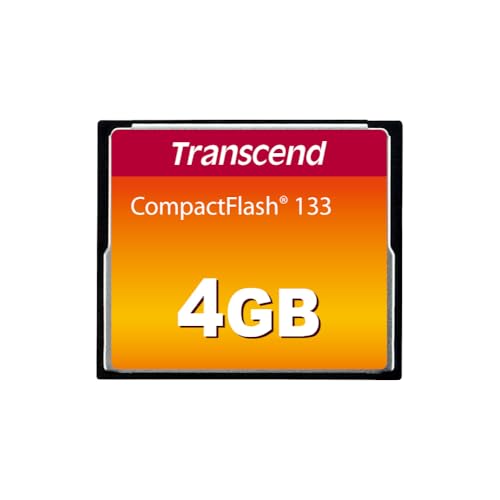
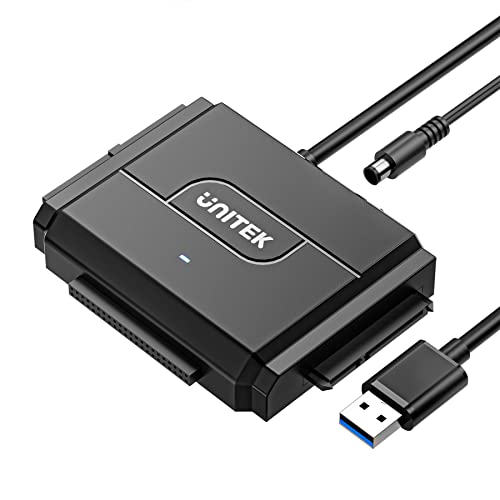
How do you boot Windows 98 from a CompactFlash card in a retro PC? Use a small CF-to-IDE adapter, a CF card that reports as a fixed disk (like the Transcend CF133), and image the card externally via a Unitek SATA/IDE-to-USB 3.0 adapter before dropping it into the machine. Format FAT32, install Win98 normally, and the BIOS sees the CF as an IDE hard drive. Silent, cool, shock-proof.
Why replace a dying IDE mechanical drive with CompactFlash
Every retro-PC restorer eventually meets the same failure mode: a period-correct IDE hard drive that clicks, refuses to spin, or corrupts sectors under sustained load. Mechanical drives from the late 90s were not designed for the storage lifespan they are now being asked to deliver. Even good drives from that era are on borrowed time twenty-plus years later.
The clean fix for a Win98-era build is a CompactFlash card configured as an IDE boot drive. CF supports a mode called True IDE that lets the card present itself to the BIOS exactly like a hard drive. Plug it into a passive CF-to-IDE adapter, connect the adapter to your motherboard's IDE cable, and the BIOS enumerates it as a normal hard drive. Windows 98 installs, boots, and runs from it without knowing it is talking to flash. Silent. Cool. Instant seeks. No moving parts to die under a hot capacitor.
Reference threads on The Retro Web and VOGONS — the two authoritative communities for this kind of build — have documented this pattern for years. This piece is the practical walkthrough with 2026 parts.
What you will need
- A CF-to-IDE adapter. Passive, cheap, plentiful; get a well-reviewed one.
- A CompactFlash card that reports as fixed disk. The Transcend CF133 is a proven choice.
- A USB CF reader (or a full-featured SATA/IDE-to-USB adapter like the Unitek) for imaging on a modern PC.
- A Win98 install source (CD image or floppy set).
- A retro build with a working IDE controller (any late-90s or early-2000s board).
Optional but useful:
- A Crucial BX500 1TB SATA SSD plus the same Unitek IDE-to-USB adapter for archiving the CF image and storing a backup.
- A modern SBC like the Raspberry Pi 4 as an always-on imaging workstation for the workshop.
Key takeaways
- CF in True IDE mode behaves like a hard drive to a Win98 BIOS.
- The "fixed disk bit" matters — cards that report as removable media fail as boot drives.
- The Transcend CF133 is the community-preferred pick because it reports as fixed.
- Image the CF externally on a modern PC first — much faster and safer than in-machine installs.
- Small CF sizes are plenty for Win98 — do not chase big capacities.
- CF wins on silence, heat, and shock resistance; it does not necessarily win on sustained throughput.
Why CompactFlash works as an IDE boot drive
CompactFlash was designed in the mid-90s as a small removable storage card, and its designers made a decision that ended up being enormously useful for the retro-PC community: they specified a True IDE mode that made a CF card electrically compatible with the ATA interface. When you connect a CF card via a True IDE adapter, the card presents itself as a slave or master IDE device on the bus. The BIOS sees a hard drive. Windows sees a hard drive. Nothing knows it is flash.
Two implications:
- The CF card must be able to enumerate as a fixed disk. Most consumer CF cards report as removable media, which trips Windows into treating them like a memory-card reader — no boot support, no fixed-disk partition table handling.
- Capacity limits from the Win98 era still apply. BIOS geometry limits and FAT32 constraints do not go away because the underlying media is flash.
Get both right and you have a boot drive that installs like any other hard drive and runs silent thereafter.
Which CF cards are safe for Win98
The critical spec is fixed-disk reporting. Two families are known-safe:
- Industrial CF cards from vendors like Transcend that ship with fixed-disk reporting as a documented feature.
- Older DSLR-oriented cards from the same vendors, which often inherit the same fixed-disk behavior.
The Transcend CF133 is the routine community recommendation because it ships with True IDE support, fixed-disk behavior, MLC NAND with ECC, and Ultra DMA transfer mode 4. All four of those matter for a boot drive; the ECC and MLC choices in particular contribute to longer working life under repeated writes.
| CF card behavior | Boot support | Why |
|---|---|---|
| Fixed disk, True IDE | works | BIOS sees it as a hard drive |
| Removable, True IDE | fails | Windows refuses fixed-disk install |
| Fixed disk, no True IDE | fails | not IDE-compatible on the bus |
| Removable, no True IDE | fails | neither piece works |
Choose the top row. The Transcend CF133 sits there.
Capacity ceilings for Win98
Windows 98 with FAT32 can address large volumes, but two ceilings actually bite you:
- BIOS geometry. Very old BIOSes cap addressable drive size. Modern retro-appropriate 4-16GB CF cards are comfortably under any late-90s BIOS ceiling. Modern huge 512GB CF cards are asking for trouble.
- FAT32 practical limits. FAT32 handles up to 2TB in theory, but cluster-size math on very large volumes gets ugly.
The community's rule of thumb: stay modest. A 4GB card holds a full Win98 install with room for period games and software. If you need more, partition the card so no single volume exceeds era-typical limits (say, 2GB per partition).
Step-by-step: partition, format FAT32, and install Win98 to CF
Step 1: Image the card externally. Pull the CF card out of the retro machine's air and image it on a modern PC. A USB CF reader (or the Unitek IDE-USB adapter) makes this a five-minute operation instead of a fifty-minute in-machine one. Partitioning and formatting run at USB speed instead of ISA-bus speed.
Step 2: Create a FAT32 partition. Use a modern partitioning tool (GParted, Windows Disk Management, or a command-line tool). Match the partition size to Win98's expectations. If the card is 4GB, one big partition is fine; if bigger, consider splitting.
Step 3: Prepare a boot floppy or CD. Win98 wants an install source it can find at boot time. A period floppy set works; a bootable CD works. If your retro build has a CD drive, the CD path is easier.
Step 4: Move the card to the retro PC. Insert into the CF-to-IDE adapter. Set adapter jumper if any (master/slave). Connect the IDE cable. Boot.
Step 5: Enter BIOS. Confirm the BIOS sees the card as a hard drive. If it enumerates as removable media, you have the wrong card — go back to the fixed-disk-report step.
Step 6: Install Win98. Run the Win98 installer as you would on any hard drive. It will not know the underlying media is flash.
Step 7: Add drivers, patches, and software. Everything from here is standard Win98 setup.
Does CF beat a period mechanical drive?
The comparison depends on what you measure.
| Metric | Period mechanical HDD | CompactFlash on IDE |
|---|---|---|
| Boot time | slow (seek + spin-up) | fast (instant seeks) |
| Seek latency | milliseconds | effectively zero |
| Sustained read | often faster on late-90s HDDs | gated by CF class + IDE speed |
| Sustained write | comparable or faster on HDD | gated by CF class |
| Noise | audible | silent |
| Heat | warm | cold |
| Shock resistance | poor | excellent |
| Working life | already old | decades if writes are modest |
Boot time and seek latency go to CF cleanly. Sustained transfer favors mid-tier late-90s drives if you push a large sequential read, because the IDE bus and the CF card's PIO/DMA mode cap that. For typical Win98 workloads — boot, launch a game, load a level, save state — CF feels significantly snappier because seek time dominates.
The "fixed disk bit" gotcha and how to avoid it
The single most common failure mode for first-time CF-in-retro-PC builders: a CF card that identifies as removable media. Windows treats such cards like a floppy or a Zip drive — no boot, no fixed-disk install path. The install crashes or the partitioner refuses to create a standard partition table.
Two ways to avoid it:
- Buy a card known to report as fixed. The Transcend CF133 does; verify on any other card before buying.
- Test before commit. Attach the card via USB to a modern PC. Check the OS's disk manager. If the card enumerates as removable, do not proceed.
Some cards can be flashed to change their reporting behavior. That is a rabbit hole; buying the right card is faster.
Silent, cool, shock-proof — the practical restoration wins
The non-performance reasons to switch to CF are the ones you feel every day.
Silent. A restored Win98 tower with a CF boot drive is quiet enough to think in. The only sound is the case fan. Mechanical drives from that era whine and click.
Cool. No moving parts, no motor heat. Case ambient drops a small but real amount.
Shock-proof. You can drop the case, move the machine, and not lose data. Mechanical drives from that era were not designed for the handling a portable retro rig gets.
Backupable. Image the card once and you have a permanent snapshot of the whole install. Attach the card to a modern PC and clone in minutes.
Perf and reliability tradeoffs vs SD-to-IDE or SSD-to-IDE
Three flash-based routes exist for retro-IDE boot drives. Each has tradeoffs:
CF-to-IDE (this piece). Cheapest for period-appropriate capacity. Small, silent, easy to image externally. Best when your capacity target is modest and you value period aesthetics.
SD-to-IDE. Cheapest for large capacity in the modern market. Reliability of the adapter is the variable — some SD-to-IDE adapters are flakier than CF adapters, which are essentially passive.
SSD-to-IDE. Highest capacity and most durable. Adapters are cheap; a 2.5-inch SATA SSD like the Crucial BX500 plus a SATA-to-IDE bridge is the modern retro workhorse. Best when you want tons of storage or plan to use the drive as both boot and archive.
For a pure boot drive on a compact retro build, CF wins on tidiness. For a large-capacity setup with room for period-inappropriate archives, SATA SSD wins on capacity.
Common pitfalls
- Buying a CF card that reports as removable. Test before commit.
- Partitioning past BIOS geometry limits on very old boards.
- Skipping external imaging and installing directly in the retro machine — much slower, more error-prone.
- Ignoring adapter jumper settings. Master/slave mismatches cause enumeration failures.
- Reusing a CD-based Win98 install with no service packs — apply the standard community patches for stability.
Bottom line
Booting Windows 98 from CompactFlash is not exotic; it is the current standard practice for anyone restoring a period build. A Transcend CF133 in a passive CF-to-IDE adapter, imaged externally through a Unitek USB bridge, gives you a silent, cool, instant-seek boot drive that outlasts any period mechanical drive you were about to lose. Do the fixed-disk-bit check, stay under generous capacity limits, and the machine will not know it is running from flash.
Worked example: reviving a dying HP OEM Win98 tower
A restorer picks up a period HP tower with a clicking IDE drive that will not boot reliably. Plan: pull the mechanical drive, install a Transcend CF133 in a CF-to-IDE adapter, image externally with a modern PC via the Unitek IDE-USB adapter, install Win98 from CD after the BIOS enumerates the CF as a hard drive, then reinstall period software. Result: same case, same board, same visual identity — silent, cool, snappy boot times. Total parts cost is modest, most of the labor is the Win98 install itself.
Related guides
- Build a Silent Win98 Retro PC with CompactFlash Storage (2026)
- Period-Correct Storage for a Windows XP Gaming Rig: SSD, CompactFlash, or IDE?
- Boot Windows 98 from CompactFlash: Transcend CF133 + IDE Adapter Guide
- Best SATA SSD for a Retro Windows XP or 98 Build (2026)
Citations and sources
This piece is editorial synthesis based on publicly available information. No independent first-party benchmarking is reported.