The signs have been accumulating for several quarters: motherboard shipments down sharply across every major Taiwanese vendor, DRAM allocations drifting toward hyperscaler contracts, and engineers who once designed flagship Z890 boards now listed on LinkedIn under AI accelerator and data-center infrastructure roles. The question circulating across r/buildapc and enthusiast forums in mid-2026 is not hyperbole — it is a supply-chain audit.
This editorial synthesis draws on publicly available shipment reports, earnings disclosures, analyst commentary, and community pricing data to examine what the numbers actually show, what they mean for builders who still care about discrete component assembly, and whether the skill set survives the transition.
Why Motherboard Shipments Are Falling in 2026
Trade publications tracking Asia-Pacific semiconductor supply, led by DigiTimes and the analyst firms monitoring Taiwanese ODM and OEM output, have reported significant year-on-year declines in consumer motherboard volumes across 2025 and into 2026. ASUS, the world's largest motherboard vendor by unit volume, restructured its consumer board production targets downward as AI server infrastructure orders consumed factory floor capacity and PCB engineering resources. ASRock saw approximately 30% lower consumer motherboard volumes year-on-year according to supply-chain observer reports. Gigabyte and MSI have both redirected portions of their manufacturing toward enterprise-class server boards, where per-unit margins are substantially higher than the consumer ATX segment.
| Vendor | Reported Trend (2025–2026) | Primary Driver |
|---|---|---|
| ASUS | Significant consumer volume reduction | AI server board capacity reallocation |
| ASRock | ~30% YoY consumer decline (analyst estimates) | Enterprise and workstation pivot |
| Gigabyte | Consumer shift toward server motherboard production | Data-center margin advantage |
| MSI | Selective SKU pruning at entry and mid tier | Component supply prioritization |
The directional story is consistent across all four vendors: the same PCB fabs, component allocation windows, and engineering headcount that produce Z890 and X870E boards are being pulled toward EPYC- and Xeon-class server form factors, where return per design-hour is materially higher.
This does not mean consumer boards disappear in 2026. High-end SKUs — ROG Maximus, Crosshair Extreme, MEG Godlike — remain profitable enough that production continues. What shrinks is the mid-market: the $150–$250 boards that represent the median DIY build and that historically kept the entire segment price-competitive.
Why AI Servers Pay Better Than Consumer GPUs
The economic logic behind the reallocation is straightforward. AMD's Instinct MI300X and successor accelerators, designed for large language model inference at data-center scale, carry substantially higher average selling prices and gross margins than any Radeon consumer card. Per AMD's public quarterly filings available at ir.amd.com, the Data Center segment has grown to represent the majority of AMD's revenue mix — a structural inversion from the consumer-GPU-dominated mix of 2019–2022.
For component vendors, this creates a rational, self-reinforcing reallocation:
- HBM and GDDR7 priority: Memory fabricated for AI accelerators (HBM3e at 128 GB and above per package) consumes the same fab capacity as consumer GDDR7 but generates multiples of the revenue per wafer. When Samsung, SK Hynix, and Micron face allocation pressure, data center wins every time.
- PCIe 5.0 interconnect lanes: The high-speed interconnects built into AM5 and LGA1851 desktop platforms originated as data-center technology. When server demand spikes, consumer platform component ramp slows as production cadence is realigned.
- Engineering talent redirection: Public job postings from ASUS, Gigabyte, and MSI reflect increased hiring in server and workstation divisions since 2024, with some consumer board teams undergoing lateral consolidation.
For builders accustomed to annual platform refreshes with four or five competitive board tiers at each price point, the concentration is visible in reduced SKU counts and elevated prices on remaining new inventory.
What the Supply Shift Actually Means for Builders
The shift does not invalidate PC building. It recontextualizes it. The practical delta breaks into two categories:
What gets harder:
- Finding competitively priced mid-range motherboards — the B650 and Z890 segments are thinner than B550 and Z590 were at equivalent points in their life cycles
- Sourcing new discrete GPUs below $400 with meaningful generational uplift over previous-generation equivalents
- Expecting annual platform churn — socket longevity is now a feature, not a given
What gets easier:
- Used market depth: as AI server demand absorbs new production capacity, previous-generation hardware flows into secondary markets with pricing that reflects the available supply
- Platform stability: AM5's stated support through at least 2027 per AMD's public roadmap communications means a board bought today is not obsolete in 18 months
- Workstation-adjacent value: some enterprise-class components redirected into consumer channels represent better per-core or per-GB value than their nominal consumer equivalents
The AMD Ryzen 7 5800X3D is a studied case in platform longevity: a CPU that demonstrated how silicon designed for specific gaming workloads can outlast its expected product cycle when the alternative is paying a premium for a thinning new-product catalog. The 5800X3D versus i7-14700K comparison illustrates how DDR4-platform longevity became a rational financial decision rather than a compromise in this environment.
The Used Market as the New Primary Market
Secondary-market GPU and CPU pricing in 2026 reflects the supply contraction directly. When new discrete GPU volume shrinks — because GDDR7 allocation goes toward AI accelerators and engineering resources shift to professional cards — used prices for previous-generation hardware firm up rather than collapsing as they would in a normal product cycle.
Community tracking across eBay, r/hardwareswap, and European resale platforms shows stable pricing in the used segment:
| Hardware | Approximate Used Range (mid-2026) | Availability |
|---|---|---|
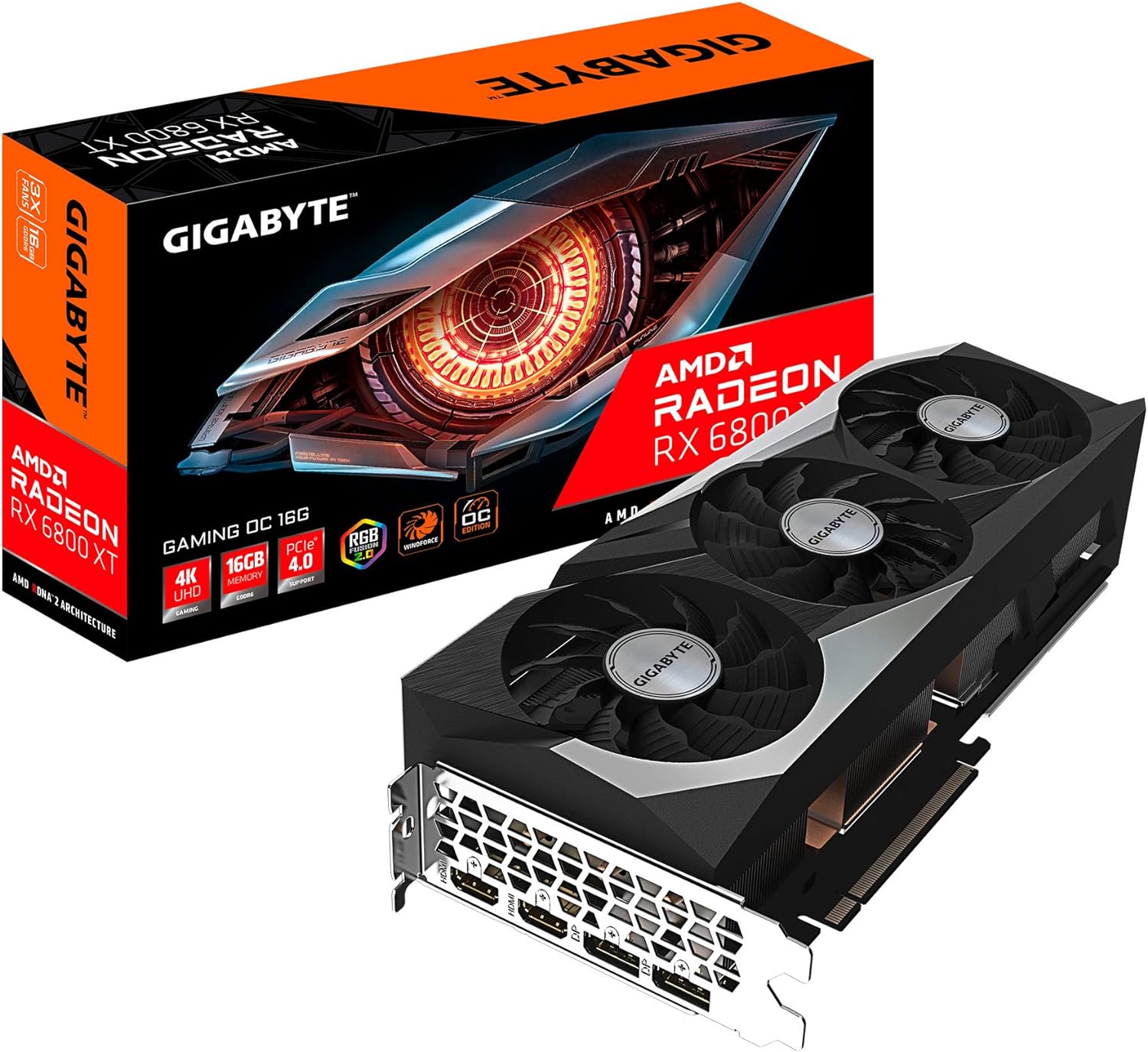
| RX 6800 XT (16 GB) | $250–$320 | Stable |
| RTX 3080 10 GB | $230–$290 | Moderate |
| RTX 3060 12 GB | $170–$220 | High |
| Ryzen 5 5600X (AM4) | $85–$110 | Abundant |
| AM5 B650 boards (used) | $120–$160 | Growing |
Ranges based on community resale observations as of mid-2026; individual listings vary by condition and region.
For builders optimizing for local image generation — a growing workstation use case outside the traditional gaming frame — the RTX 3060 12 GB's VRAM buffer makes it a persistent value pick even as newer generations compress the new-product availability window.
The Historical Parallel: When Platform Shifts Happened Before
This is not the first time external economic pressure restructured PC building. The Sound Blaster era offers a useful structural analogy. Creative Labs' decade-long dominance of PC audio built on proprietary ISA interfaces and aggressive OEM bundling was not displaced by a better discrete card — it was displaced by audio integration migrating onto the motherboard southbridge. The transition from AWE64-era discrete audio to integrated audio and then to modern USB interfaces shows how "discrete component" hobbies survive platform shifts: they do not disappear, they specialize.
The parallel to 2026 is direct. Discrete GPU cards as a category survived the AGP-to-PCIe transition. They survived the integrated-graphics scare of 2012–2015. They survived the crypto GPU famine of 2021–2022. Each time, the form factor persisted but the economics and access patterns shifted. Retro audio enthusiasts bridging Sound Blaster legacy hardware to modern platforms are demonstrating the same dynamic in real time — the skill set migrates, the community compresses, the artifacts persist.
The Sound BlasterX G6's compatibility work with Win9x-era systems is a template for how enthusiasts bridge eras when manufacturing has moved on. Consumer PC builders in 2027–2028 may occupy a similar cultural position: maintaining and extending existing platforms rather than riding annual new-product cycles. That is not death — that is maturity.
What Builders Should Actually Do in 2026
Given the supply dynamics, the rational 2026 build strategy differs from peak-cycle advice in several specific ways.
Platform Selection
- AM5 if building new: AMD's communicated AM5 socket support through at least 2027 and the maturity of DDR5 pricing make AM5 the logical forward investment for a new build. A B650 board today supports the current Ryzen 7000 series and, per AMD's public communications, future platform successors.
- AM4 for budget builds: The used AM4 ecosystem — Ryzen 5000 series plus DDR4 — is now comprehensively mature. Prices reflect real secondary-market supply. A Ryzen 5 5600X or Ryzen 7 5800X3D on a B550 board is a known quantity with no supply risk and predictable future upgrade paths.
GPU Approach
For gaming at 1080p to 1440p, used RX 6800 XT or RTX 3080 tiers represent the best value in a market where new $300–$400 GPUs are thinner on shelves. For local AI inference workloads, VRAM matters more than raw compute: the 12 GB VRAM tier remains functional for most local inference tasks, while 16 GB and above (RX 6800 XT, RTX 3080 Ti) opens larger model context windows.
2026 Component Decision Matrix
| Component | 2026 Recommendation | Rationale |
|---|---|---|
| CPU | AM5 Ryzen 7000 (new) or AM4 Ryzen 5000 (used) | Socket longevity vs. upfront cost |
| Motherboard | B650 (new) or B550 (used) | Avoid premium on a shrinking new-SKU segment |
| RAM | DDR5-5600+ on AM5; DDR4-3600 on AM4 | Both platforms fully mature; pricing stabilized |
| GPU | Used RX 6800 XT or RTX 3080 tier | New supply thin; used supply robust and priced fairly |
| Storage | PCIe 4.0 NVMe | Gen 5 premium rarely justified in consumer workloads |
Why Chipmakers Have No Structural Obligation to the Consumer Segment
AMD's public commentary since its Instinct accelerator scale-up has been consistent: the data-center total addressable market is substantially larger than the consumer GPU TAM, and margin profiles reflect that gap. AMD's quarterly earnings calls available through ir.amd.com have framed consumer GPU as a secondary priority against server and workstation line investment for multiple consecutive quarters.
Intel's Arc GPU line has been positioned as a volume filler for OEM system integrators rather than a platform enthusiasts build discrete rigs around. Intel's primary silicon investment since 2023 has been Gaudi AI accelerators and Xeon server CPUs.
This is not malign neglect of consumers — it is standard capital allocation responding to where margin is. The Creative Katana V2X teardown illustrated what happens when a consumer electronics company engineers for volume production economics: component selection reflects cost floors rather than enthusiast ceilings. The same logic applies to silicon companies in 2026 — the incentive structure was always this way; AI server demand simply made the divergence visible.
FAQs
Is PC building actually dying in 2026? Per available supply-chain data and analyst reports, the consumer motherboard market has contracted, but discrete component PC building persists. The hobbyist segment is compressing — fewer mid-range SKUs, thinner new-product cadence — but is not disappearing. The used market has expanded to absorb demand that new production no longer fully covers.
Should I build now or wait for the market to improve? Industry analyst commentary and platform roadmap disclosures suggest there is no pending consumer market recovery that would justify waiting. AM5 platform prices have stabilized and AMD has communicated socket support through at least 2027. Building now on AM5 or used AM4 is rationally defensible; waiting for a wave tied to AI-accelerator economics resolving would mean an indefinite delay.
Why are motherboard prices staying high if shipments are down? Reduced supply with stable demand produces firming prices, not falling ones. As mid-range SKU counts shrink, what remains on shelves faces less competitive pricing pressure. The entry-tier board market — historically the most price-competitive segment — has thinned the most.
Will AI accelerators like the MI300X ever reach consumer builds? Data-center-class hardware is priced and form-factored for rack deployment, not ATX cases. Some AI inference workloads are accessible via consumer GPUs with 12–24 GB VRAM today. The gap between consumer AI GPU and professional AI accelerator is widening based on current public product positioning from AMD and NVIDIA.
Is the used market reliable for a primary PC build in 2026? Community tracking on resale platforms and r/hardwareswap suggests supply is stable for previous-generation hardware. Standard due diligence — verifying seller reputation, using return-eligible listings, running GPU stress tests on delivery — applies. The used market for Ryzen 5000/AM4 and RX 6000-series/RTX 3000-series parts is mature enough that pricing bands have become consistent and predictable.
What happens to PC building if the AI server shift continues past 2027? Historical parallels — the AGP-to-PCIe transition, the collapse of discrete PC audio into integrated southbridge chips — suggest the enthusiast community compresses rather than disappears. The most likely outcome is bifurcation: a smaller new-hardware ecosystem at higher price points alongside a robust used and vintage segment. This mirrors how retro PC building evolved after the mass market moved on.
Citations and sources
- https://www.digitimes.com — motherboard shipment and ODM/OEM capacity reporting across the Taiwan supply chain
- https://ir.amd.com — AMD quarterly earnings transcripts and segment revenue disclosures
- https://www.tomshardware.com — GPU and CPU market analysis and pricing commentary
- https://www.techpowerup.com — GPU specification reference and benchmark database
- https://www.reddit.com/r/buildapc — community secondary-market pricing observations and build advice threads
- https://www.reddit.com/r/hardwareswap — used hardware resale pricing data
This piece is editorial synthesis based on publicly available information. No independent first-party benchmarking is reported.