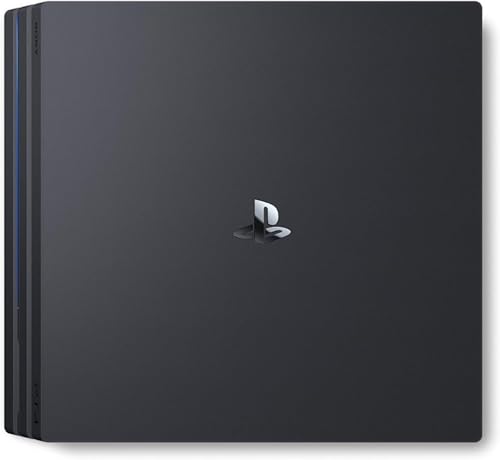
Per a recent Hackaday report, Sony is reportedly targeting 2028 to wind down physical PlayStation disc production. Your existing discs will keep playing on any working disc-drive console — the shift affects new releases, retail distribution, and long-term availability of fresh physical copies. If you rely on a disc library, now is the moment to plan around it.
In brief — 2026-07-09 — Sony is reportedly targeting 2028 to end production of new physical PlayStation game discs. Existing discs continue to work on existing hardware. Disc-drive consoles like the PS4 Pro 1TB and PS4 Slim 1TB become the only guaranteed path to keep using a physical PS4 library after the cutover.
What happened: the reported 2028 timeline
The reporting summarizes industry commentary and internal-source claims that Sony intends to wind down physical PlayStation disc pressing by 2028. That does not mean discs stop playing — it means new releases would ship digital-only, and the retail supply of pressed PS5 and PS4 discs would dwindle to remaining stock and secondary-market copies. Sony has not made an official announcement at the corporate level; the current reporting is second-hand, and the timeline is a target rather than a commitment.
The direction of travel is not surprising. Sony's public messaging has emphasized digital growth for several console generations, the PS5 Digital Edition has been on shelves since launch, and disc drives on PS5 shipped as optional accessories on the newer chassis revisions. What is new here is a concrete year — 2028 — that gives collectors, second-hand buyers, and anyone with a large disc library a specific horizon to plan against.
Why it matters: disc libraries and resale value
Physical PlayStation discs are one of the last consumer categories where you can actually resell a game you finish. Once new-disc production stops, the ceiling on any particular title's supply becomes fixed. Titles that were already limited-print or region-exclusive will appreciate first; mainstream AAA releases with millions of copies pressed will hold value more slowly but will still shift from "commodity used game" to "aging inventory."
If you own a large PS4 disc library and no working PS4, buying a disc-drive console before the news filters through to auction pricing is a defensible move. A refurbished or used PS4 Pro 1TB is the most-flexible pick because it upscales to 4K on modern TVs, matches the fidelity you probably remember from launch, and holds a larger stock of games natively. The PS4 Slim 1TB is the value option — same disc compatibility, smaller footprint, cheaper on the used market.
Storage matters more once you rely on a disc console for a decade of library rotation. Every PS4 model accepts a standard 2.5-inch SATA drive, and swapping in a Crucial BX500 1TB SATA SSD is a screwdriver-level upgrade that shortens load times and doubles the stock storage. That single swap turns a used Slim or Pro into a much more comfortable long-term platform.
Controllers add another wrinkle. A PS5 DualSense Wireless Controller works on PC and forward-supports the PS5 platform, but PS4 compatibility is inconsistent — you should not buy a DualSense expecting native PS4 support in every title. If you are equipping a fresh PS4 setup, hunt for original DualShock 4 pads on the second-hand market and treat DualSense as a forward-looking purchase.
Context: how physical media changed on PlayStation
The disc has never been the only distribution channel on PlayStation, but until the PS5 Digital Edition it was the assumed default. Every PS4 shipped with a disc drive. Every disc release came with a mandatory install to the internal drive, which is why storage upgrades matter — a full PS4 library is measured in hundreds of gigabytes. The disc has functioned mainly as a license token that unlocks the installed copy.
That is why the 2028 timeline matters less than it sounds and more than it looks. Discs already do less work than they did on PS2 — they do not stream game data during play in most modern releases, and they do not gate patches or expansions. But they do gate one thing that digital cannot replicate: the right to resell your copy. A digital PSN license is bound to your account and cannot be transferred. A pressed disc can pass through as many collections as it survives.
The other consequence is preservation. A digital storefront that sunsets removes access to unpurchased backlog titles. A pressed disc, stored in reasonable conditions, plays as long as the console hardware plays. If a title matters to you enough to want a permanent copy, the window for buying it new-pressed is closing.
Resale value and secondary-market pricing
Historical patterns from the Wii U and PS3 disc-market sunset are instructive. Wii U library disc pricing rose sharply in the two years after retail production ended, particularly on titles Nintendo did not re-release digitally. The same pattern showed up in the late PS3 era for niche RPGs and licensed titles.
Expected pattern for PS4 discs after 2028:
- Low-print JRPGs, licensed titles, physical-only releases — sharp appreciation. This is where speculators buy in early.
- Mainstream AAA titles with tens of millions of copies pressed — slow appreciation, driven mostly by the console-collector market.
- Sports titles from prior seasons — often depreciate anyway because rosters are dated. Disc-only sunset does not save them.
- Any title still available digitally at a low price — muted appreciation, because the digital storefront caps effective demand.
The buying-decision math for a modern PS4 disc collector is: pick a disc-drive console now, budget for a storage upgrade, and be selective about which physical copies you chase. Buying every remaining disc "in case it appreciates" is a strategy that ties up more capital than most enthusiasts recover.
What the announcement does not say
Nothing in the reporting suggests Sony will disable existing discs, revoke your ability to play them, or push a firmware update that breaks disc-drive functionality. Those actions would trigger a consumer-protection response that Sony has no reason to invite. The PS4 platform is out of active support already; the disc-drive PS5 revisions will keep playing PS4 discs for as long as their drives function.
Nothing suggests Sony will stop selling remaining stock immediately in 2028. A production sunset usually implies "no new pressings after this date" — retailers will still be draining inventory well past that year, and second-hand supply will continue for the platform's practical lifespan.
Nothing suggests digital replacements will magically appear for physical-only titles. If a game was pressed but never released digitally, the disc remains the only path to that title. That is the specific inventory worth thinking about.
What this means for the used-console market right now
Every prior disc-media sunset has had a similar effect on used-hardware pricing. When the original Xbox 360 ended new production, prices on the last-shipped Xbox 360 S consoles rose about 20% over the following year before stabilizing on the second-hand market. The PS4 Pro and PS4 Slim are already well past new-production, so the pool is fixed at whatever survives on used-market listings.
If you plan to buy a used PS4 for the disc library, the priorities are:
- Confirm the disc drive works. Any unit sold "for parts" or "not tested" is worth about a third of a working one. Listings that show the console booting and reading a disc are worth the premium.
- Match the storage to your library. A stock 500GB drive is uncomfortable in 2026 for anyone with more than a dozen AAA installs. Plan on either a 1TB stock unit or a same-day storage swap to the Crucial BX500 1TB SATA SSD.
- Prefer the Pro over the Slim if you have a 4K TV. The Pro's checkerboard upscaling looks materially better on a 4K panel, and the used-market price gap between the two models has narrowed considerably.
- Buy a spare DualShock 4. Controller sticks drift, and DualShock 4 pricing has already crept up as the platform ages. A DualSense will not always fill the gap.
Storage upgrade specifics
The stock storage on all PS4 revisions is a 2.5-inch SATA drive. Swapping it is documented on Sony's own support pages and takes about ten minutes. The drive bay on the Slim is under a plastic cover on the left side of the console; on the Pro, it is under a removable panel on the back. A Crucial BX500 1TB SATA SSD drops in with a single-cable connection.
The upgrade is worth doing for two reasons. First, load times on install-heavy games drop dramatically — first-party Sony titles that ship with lots of streaming assets benefit the most. Second, the shift to a solid-state drive removes one of the more common mechanical failure modes on aging consoles. A hard drive spinning eight years in a warm plastic shell is a slow-motion failure; an SSD in the same shell is not.
Reinstall of the system software happens automatically when you boot the console with a fresh drive — download the PS4 recovery image from Sony's support site, put it on a FAT32-formatted USB stick, and follow the on-screen prompts. Total time from swap to game-ready is under an hour.
Alternative preservation strategies
The disc-drive console is the primary preservation strategy, but not the only one. Options in rough order of practicality:
- Buy the disc-drive console and store discs carefully. Original cases, no direct sunlight, no automotive storage. Discs stored properly last decades.
- Back up saves to PSN Cloud or a USB drive. Every disc becomes a token; the actual game state lives on your account or your backup drive.
- Accept that some titles will move to digital-only prices. Some games you own physically will be cheaper to re-buy digitally later than to preserve on disc.
- Track prices before you buy. The value of any specific disc after a production sunset is not obvious in advance. Panic-buying rarely rewards you.
The source
The core reporting is a Hackaday summary of industry commentary. As of this writing, the official PlayStation blog has not published an announcement corroborating the 2028 target. Treat the timeline as directional rather than definitive; watch for Sony's next earnings call and any PlayStation platform announcement for a confirmed date.
We will update this piece if Sony publishes an official timeline that revises or contradicts the current reporting.
Common pitfalls when buying a used PS4 now
- Buying "for-parts" units expecting to fix them. Disc-drive laser assemblies fail; replacement lasers cost more than the price gap between a working and non-working unit.
- Skipping the controller check. DualShock 4 stick drift is nearly universal on units with heavy use. Buy from a listing that shows the controller working, or budget for a replacement.
- Assuming digital-buy-later saves you. A number of PS4 titles were pulled from PSN over the years due to licensing lapses. If you own it on disc and it goes off the storefront, the disc keeps working.
- Ignoring the console generation gap. A PS5 disc console plays PS4 discs. A PS5 Digital Edition does not. If long-term disc use matters, buy a disc-drive PS5 revision, not the Digital.
Also worth noting: a PS5 DualSense Wireless Controller is a defensible cross-generation purchase if you plan to add a PS5 to the mix, but do not buy one expecting drop-in PS4 support in every title. A DualSense connects to a PS4 over USB and works in a subset of games as a wired controller. It does not replace a DualShock 4 for daily PS4 use.
Related guides
- Best retro console to buy in 2026
- Sega Genesis Mini vs SNES Classic 2026 showdown
- Best 4K monitor for PS5 and PC under $500
- Steam Deck's Linux Trojan horse for PC gamers
Citations and sources
- Hackaday — primary reporting on the reported 2028 disc-production sunset target.
- PlayStation official site — for confirming platform status and Digital Edition availability.
- PlayStation.Blog — for tracking any official Sony announcement corroborating or revising the reported timeline.
This piece is editorial synthesis based on publicly available information. No independent first-party benchmarking is reported.