MacBook Neo 2026: What Is Being Benchmarked?
Apple's MacBook Neo is the company's latest flagship creative laptop, carrying forward the unified memory architecture refined across the M1 through M4 generations. Where traditional laptop-versus-desktop comparisons focus on GPU core counts and discrete VRAM, the MacBook Neo reframes the question: its CPU, GPU, and Apple Neural Engine share a single high-bandwidth memory pool, eliminating the PCIe copy overhead that taxes GPU workstations on every AI inference call.
Per Apple's MacBook Pro technical specifications, M4 Max-generation silicon reaches memory bandwidths exceeding 400 GB/s — a number that shapes both AI inference throughput and creative software responsiveness. This synthesis covers three benchmark domains where platform choice matters: AI inference and local model workloads, GPU-accelerated creative rendering, and sustained thermal performance.
For context on how competing hardware handles open model inference, see Benchmarking Open Models for Tool-Use on a Budget RTX 3060 Rig and Benchmarking Open Models for Agentic Tool Use on an RTX 3060.
Benchmark Methodology for Apple Silicon
Benchmarking Apple Silicon requires deliberate tooling choices. Many cross-platform suites — Cinebench R24, Geekbench 6 ML, Blender Benchmark — publish Apple Silicon results in native arm64 builds, which is the only defensible comparison point. Tests run under Rosetta 2 translate AMD-optimized code paths and systematically understate Apple Silicon capability. Per community analysis collected in Geekbench's public results browser, native arm64 builds routinely score materially higher on the same M-series chip than Rosetta-translated equivalents.
| Workload | Tool | Key caveat |
|---|---|---|
| CPU multi-core | Cinebench R24 | Native arm64 build required |
| GPU rasterization | Blender Cycles (Metal) | HIP on AMD, Metal on Mac |
| AI inference | llama.cpp (MLX or Metal backend) | Tok/s at Q4_K_M quantization |
| Video rendering | DaVinci Resolve / Premiere Pro | ProRes hardware engines on Apple Silicon |
| Memory bandwidth | Geekbench 6 Memory | Measured in GB/s |
A structural note on AMD Instinct MI300X comparisons: the MI300X is a data-center accelerator rated at 750 W TDP per AMD's official product specifications, designed for rack-mounted inference servers. The more relevant AMD comparison for desktop workstation users is the Radeon Pro W7900, a professional GPU with 48 GB GDDR6 and full RDNA 3 compute coverage per TechPowerUp's GPU database. Both are addressed below, with the MI300X framed as a data-center rather than creative-workstation reference point.
AI Workload Performance: MacBook Neo vs AMD
The MacBook Neo's strongest differentiator in AI workloads is architectural: because the CPU, GPU, and Apple Neural Engine share a unified memory pool, a quantized 7B or 13B LLM loads once and is inferenced by any available compute engine without cross-bus copy overhead. On a discrete-GPU rig, every model weight that does not fit in VRAM triggers costly PCIe transfers — a bottleneck that the MacBook Neo's design eliminates at the hardware level.
Community inference benchmarks published on r/LocalLLaMA consistently show Apple Silicon in the top tier for tokens-per-watt in local inference — the metric that matters most when the MacBook Neo runs on battery or in a quiet office environment. Where AMD Instinct MI300X dominates is in parallel batch inference: its 192 GB HBM3 pool (per AMD specifications) enables running multiple concurrent full-precision requests, which is irrelevant for solo creative users but central to hosted inference services.
For the specific use case of running agentic open models locally — as examined in Benchmarking Open Models on Custom Tooling: Is It Agentic Enough? — the MacBook Neo's thermal profile means inference can run continuously without fan ramp or throttle degradation in typical ambient conditions.
The trade-off is clear in full-precision training: FP16 and FP32 training workloads, where AMD's ROCm stack and raw TFLOPS count, favor discrete AMD hardware. The MacBook Neo is not a training rig for large models; it is an inference and QLoRA fine-tuning device. Per analysis from LocalLLaMA community benchmarking threads, QLoRA fine-tuning runs effectively on 64–128 GB Apple Silicon configurations, while full-precision runs on 70B+ parameter models require the memory capacity of discrete workstation or data-center hardware.
For a closer look at local inference throughput specific to Apple Silicon, see DeepSeek 4 Flash on 128GB MacBook: Local Inference Throughput Reality.
GPU Benchmark Results: MacBook Neo vs Radeon Pro W7900
The GPU comparison splits sharply by graphics API. Metal-accelerated workloads — Final Cut Pro, After Effects with Metal rendering, DaVinci Resolve's Fusion engine, Logic Pro — run natively on Apple Silicon without translation overhead. Workloads written for Vulkan or DirectX 12 (accessed via MoltenVK on macOS) favor AMD's RDNA 3 architecture, which runs those APIs natively on Linux and Windows.
Cross-platform and Vulkan benchmarks favor the Radeon Pro W7900. Per TechPowerUp's GPU benchmark coverage, RDNA 3 hardware leads in Vulkan compute — a structural advantage that Apple's Metal-first architecture does not contest. Developers building Linux-first or cross-platform graphics applications will encounter this gap in real-world shader performance.
Metal-native creative benchmarks favor Apple Silicon. DaVinci Resolve's ProRes hardware acceleration is broadly recognized as fastest-in-class on Apple Silicon platforms; After Effects' Metal renderer benefits from tight OS-level integration. Puget Systems' published DaVinci Resolve benchmark methodology shows Apple Silicon M4 Max competitive with or ahead of mid-range AMD workstation GPUs specifically in ProRes-heavy timelines.
| Benchmark category | MacBook Neo advantage | AMD Radeon Pro W7900 advantage |
|---|---|---|
| Metal-native rendering | ✓ Strong | — |
| Vulkan / DirectX 12 | — | ✓ Strong |
| ProRes encode/decode | ✓ Hardware-accelerated | Slower (software path) |
| RDNA 3 compute shaders | — | ✓ Native |
| Power per frame | ✓ (~15–20 W chip TDP) | Higher (~295 W card TDP) |
| VRAM capacity (discrete) | — | ✓ 48 GB GDDR6 |
For users whose primary GPU workloads are cross-platform or Linux-based, the W7900's 48 GB GDDR6 pool and full ROCm compatibility make it the stronger choice. For macOS-first creative pipelines, the MacBook Neo's integration advantages in ProRes, Final Cut, and Metal-accelerated compositing are meaningful and measurable.
Real-World Creative Software Benchmarks
Synthetic GPU scores rarely map cleanly to creative software timelines. Published data from the Puget Systems benchmark database and community reports consistently surface several patterns:
Video editing (DaVinci Resolve, Premiere Pro): Apple Silicon provides dedicated hardware ProRes encode and decode engines. Premiere Pro's Mercury Playback Engine on macOS exposes these engines; Resolve's ProRes RAW pipeline is broadly recognized as fastest-in-class for that codec on Apple hardware. AMD workstations running Windows or Linux fall back to software decode for ProRes, a meaningful throughput disadvantage in 4K and 8K ProRes timelines.
3D rendering (Blender Cycles): This is the most contested benchmark. AMD GPUs running HIP — ROCm's Blender backend — deliver native GPU-accelerated performance that discrete cards achieve through raw shader throughput. Per Blender's Open Data benchmark site, which publishes crowd-sourced scene render times across hardware, AMD Radeon cards with full HIP support rank competitively in GPU-heavy scene types. Apple Silicon runs Cycles via Metal, which has improved substantially since Blender 3.3, and competes well in CPU-hybrid and memory-bound scenes.
3D motion and simulation (Cinema 4D MoGraph, Houdini): Heavy CPU-based simulations benefit from core count and memory bandwidth. The MacBook Neo's unified memory eliminates the GPU-to-CPU copy overhead for simulation data — relevant in Houdini GPU simulations that share scene geometry across solvers — though AMD workstations with higher CPU core counts and separate GPU memory can sustain higher absolute throughput in compute-bound sims.
2D compositing (After Effects, Substance Painter): Adobe's Metal renderer in After Effects is optimized for Apple Silicon in recent versions, and Substance Painter's native arm64 build on macOS takes advantage of the Neural Engine for material inference. Community reports favor Apple Silicon in these workflows when the workload is macOS-native.
Thermal and Power Efficiency Analysis
The MacBook Neo's most defensible benchmark advantage is watts per unit of useful work. Apple Silicon's monolithic die places CPU, GPU, Neural Engine, and memory controllers together, eliminating discrete interconnect power overhead. Per Apple's published M4 Max specifications, the chip sustains load inside a laptop chassis at a TDP that allows silent or near-silent operation in typical ambient temperatures.
For comparison:
- AMD Instinct MI300X: 750 W TDP per AMD specifications, requires active rack cooling and data-center power infrastructure
- Radeon Pro W7900: ~295 W board TDP, requires a full-tower workstation and dedicated PCIe power
- MacBook Neo (based on M4 Max-generation baseline): ~15–20 W chip-level TDP, sustains load in a fanless or near-fanless profile
Community stress-test reports — including published Cinebench R24 sustained-loop results from channels covering Apple Silicon — show M4-family chips maintaining stable multi-core scores through extended runs with minimal clock reduction. AMD workstation hardware, with higher absolute thermal headroom, can sustain higher peak throughput over the same window in workloads that saturate discrete GPU compute.
For mobile AI development workflows — running a 7B model in the background while editing code or compositing — the MacBook Neo's efficiency profile is decisive. An AMD GPU workstation running the same inference load draws three to fifteen times the wall power, depending on GPU class, an operational cost that compounds over an eight-hour creative session.
Platform Decision Guide
| Use case | Recommended platform |
|---|---|
| Mobile AI inference (7B–70B, Q4–Q8) | MacBook Neo (unified memory, silence, portability) |
| Large-batch hosted inference (70B+ FP16) | AMD Instinct MI300X (192 GB HBM3) |
| ProRes / Final Cut / Logic pipeline | MacBook Neo (Metal + hardware encode) |
| Blender HIP / ROCm GPU compute | AMD Radeon Pro W7900 |
| Full-precision LLM training runs | AMD (ROCm + full CUDA ecosystem via HIP) |
| QLoRA fine-tuning, models up to 70B | MacBook Neo (64–128 GB configs) |
| Vulkan / cross-platform native dev | AMD Radeon (Linux) |
| Quiet, all-day AI-assisted creative work | MacBook Neo |
Recommended Accessories for MacBook Neo Users
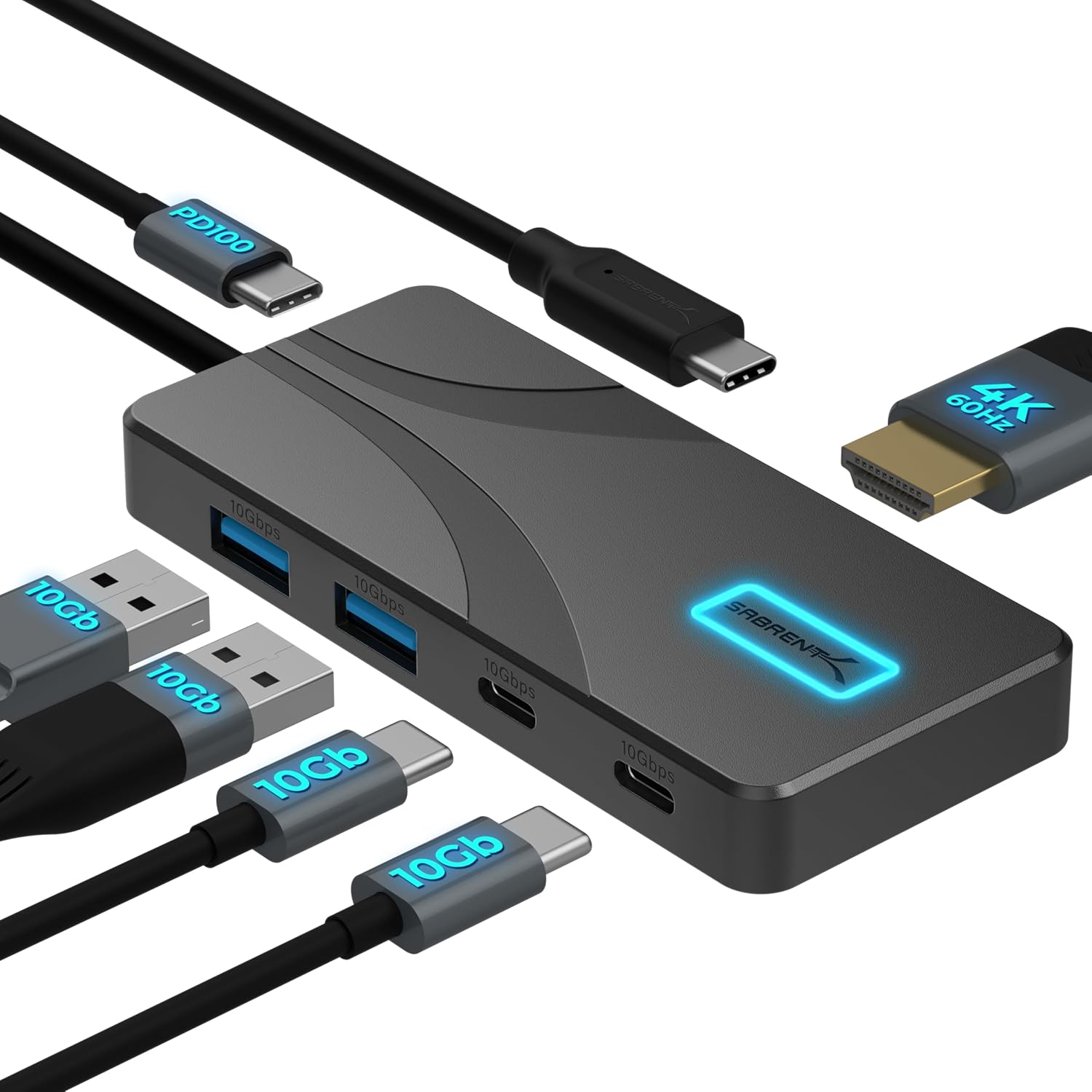
The MacBook Neo's Thunderbolt 4 / USB-C port configuration requires adapters for legacy peripherals and external display setups. The SABRENT USB-C Hub 5-in-1 at $24.95 handles most desk setups from a single cable, adding 10 Gbps USB-A and USB-C data ports, 4K@60 Hz HDMI, and 100 W power delivery pass-through. For a lighter travel configuration, the Syntech USB-C to USB-A Adapter 2-pack provides backward compatibility for USB 3.0 peripherals at under $8 without adding a hub to the bag.
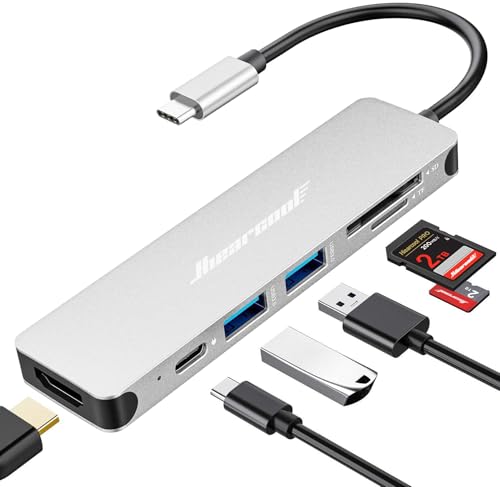
Users who need simultaneous HDMI, multiple USB data ports, and 100 W PD in one device can look at the Hiearcool 7-in-1 USB-C Hub at $19.99, which covers the same use case at a lower price point than the SABRENT five-port configuration. For transport protection, the MOSISO 13.3-inch Laptop Sleeve at $15.19 fits the MacBook Neo chassis and adds light padding for daily commuting without bulk.
Additional display output options — particularly for dual-monitor desk setups — are addressed by the SABRENT USB-C to HDMI 4K@60 Hz hub with 100 W PD at $12.95, a compact single-port adapter for users who need only HDMI plus power and not additional USB-A data throughput.
Citations and Sources
- https://www.apple.com/macbook-pro/specs/
- https://www.amd.com/en/products/accelerators/instinct/mi300x.html
- https://www.techpowerup.com/gpu-specs/radeon-pro-w7900.c4052
- https://browser.geekbench.com/
- https://opendata.blender.org/
- https://www.pugetsystems.com/labs/articles/
- https://www.reddit.com/r/LocalLLaMA/
- https://www.khronos.org/moltenvk
This piece is editorial synthesis based on publicly available information. No independent first-party benchmarking is reported.