Short answer: Installing a GeForce 4 Ti 4600 AGP in a period-correct Win98SE build in 2026 is straightforward if you use ForceWare 45.23 (the last driver that fully supports Win98's memory manager) and pair the card with an Athlon XP / Pentium 4 motherboard with a healthy AGP 4X slot. Total pain points are BIOS AGP aperture, the ancient DirectX 8.1 baseline, and hunting for a working PSU with a proper 4-pin Molex path.
Why this card is still worth building around
The GeForce 4 Ti 4600 is the classic peak of pre-programmable-shader-era gaming. It handles every 1998-2002 title at 1024×768 with AA/AF cranked, has native support for the fixed-function pipeline every era-appropriate game targets, and looks period-perfect in a beige case. In 2026 the AGP hardware supply on eBay has stabilized: a working Ti 4600 lands around $80-150 depending on condition and cooling.
The build is not "easy" the way a modern PC build is easy, but it is well-documented, community-supported, and the software stack is stable. This synthesis walks through the parts choice, the Win98SE install path, driver install, and the tuning steps that matter.
Key takeaways
- ForceWare 45.23 is the sweet spot driver for Win98SE + Ti 4600.
- AGP aperture in BIOS: set to 128 MB or 256 MB (not 64).
- PSU: you need a proper AT/ATX unit with -5V rail for period boards, plus a 4-pin Molex for the card if it needs supplemental power (most Ti 4600 do).
- Chipset drivers first. Install VIA 4-in-1 or Intel INF before nForce/graphics drivers.
- Sound: Sound Blaster Live! or AWE64 for authentic era audio.
Parts list
Not exhaustive; a common builder-friendly config:
| Part | Choice | Approx. eBay cost |
|---|---|---|
| GPU | GeForce 4 Ti 4600 (Leadtek WinFast, PNY Verto, MSI) | $80-150 |
| CPU | Athlon XP 2800+ / P4 3.0 GHz Northwood | $15-30 |
| Motherboard | Abit NF7-S (nForce2) or Asus P4T533-C (i850E RAMBUS) | $40-80 |
| RAM | 1GB DDR-400 (2×512MB matched) | $20-30 |
| Storage | 40GB Compact Flash on IDE adapter (or period IDE HDD) | $15-40 |
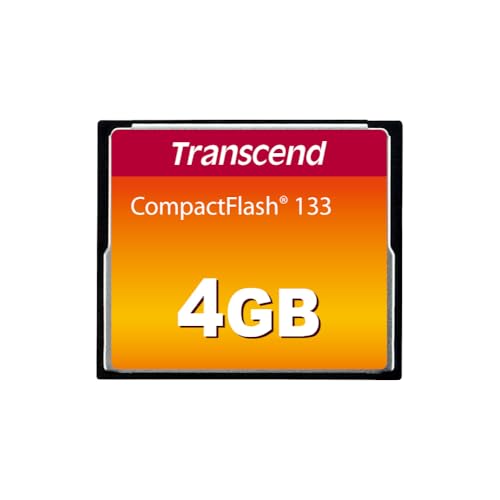
| CF card | Transcend CF133 CompactFlash 4GB as boot device | $12 |
| CD-ROM | Any 48× IDE | $8 |
| Sound | Sound Blaster Live! 5.1 or AWE64 | $15-25 |
| PSU | Antec TruePower 430W (AT/ATX with -5V) | $30-60 |
| Case | Beige AT tower | $25-50 |
| Total | ~$260-500 |
You can trim by using SSDs on modern IDE-to-SATA adapters or by skipping the sound card in favor of onboard audio.
Motherboard notes
For a Ti 4600 build, you want AGP 4X (or 8X in reverse-compatible 4X mode). The two go-to boards:
- Abit NF7-S (nForce2 Ultra 400): best Athlon XP platform. USB 2.0, SATA (rev 2.0+), integrated audio you can disable. Overclocks well.
- Asus P4T533-C (i850E): Pentium 4 Northwood socket 478, RAMBUS RDRAM. Weird but authentic era. Slower for most games than the nForce2 AXP.
Skip cheap nForce2 boards (Chaintech, ECS budget lines) — capacitor plague is real on these vintage boards and Abit's build quality is more reliable.
Storage: CompactFlash boot
The classic modern move: run Win98SE off a CF card on an IDE-to-CF adapter. This gives you silent, low-power, near-solid-state storage in a period-correct interface.
Use a Transcend CF133 4GB CompactFlash card — 30 MB/s sequential read, more than enough for Win98's needs. The card is TruSecureDigital-class TLC with reasonable endurance; a Win98 install writes very little compared to modern OSes.
For a period-correct alternative, a 20-40GB IDE hard drive works. Cough noise included.
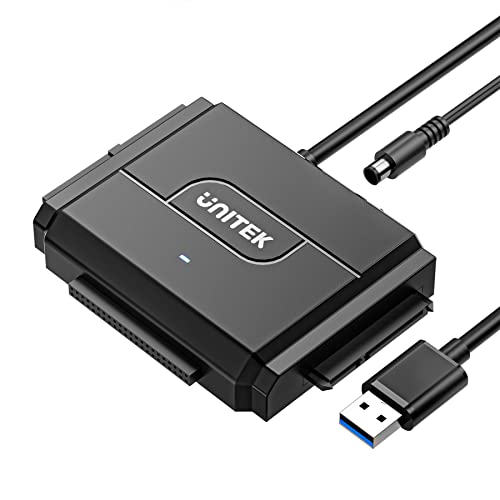
To salvage older SATA/IDE drives from your parts bin for the build, a Unitek SATA/IDE to USB 3.0 adapter is genuinely useful for imaging or backing up.
Win98SE install path
- BIOS setup first. Enable AGP 4X, set AGP aperture 128MB. Turn OFF ACPI (Win98's ACPI implementation is buggy on modern boards). Boot order: CD → HDD.
- Boot Win98SE install CD. Reformat FAT32 (not FAT16). Install to C:\.
- First boot into Windows. Do NOT install any drivers yet. Install DirectX 9.0c redistributable first — it patches the era-appropriate D3D stack.
- Install chipset drivers. For nForce2, install the nForce Unified Driver Package 4.60. For i850E, Intel INF Update Utility.
- Install ForceWare 45.23. This is the last NVIDIA driver that fully supports Win98's memory manager. Newer drivers (5x, 6x) target 2000/XP.
- Install sound drivers. Whatever card you chose.
- Reboot, verify Device Manager clean.
ForceWare 45.23 tuning
Open Display Properties → Advanced → the NVIDIA tab. Key settings:
- AGP 4X mode enabled
- Fast Writes disabled (buggy on some board revisions)
- AA: 2x-4x, AF: 4x-8x
- Vsync: Application-controlled
- Overall performance vs quality slider: middle for the best fps/quality tradeoff
You can lock 4X mode with Coolbits registry hacks if the driver keeps falling back to 1X.
Games worth playing at this tier
- Serious Sam: The Second Encounter — 1024×768 4× AA, glorious.
- Unreal Tournament 2003/2004 — the card was designed for this era.
- Halo: Combat Evolved PC — playable with medium settings.
- Battlefield 1942 — flies at high settings.
- Morrowind — mid-high settings, 1024×768. Iconic pairing.
- Warcraft III: Reign of Chaos — trivial for this card.
- Grand Theft Auto: Vice City — highest settings, smooth.
AGP aperture and BIOS quirks
The AGP aperture is a system memory region reserved for the graphics card's texture cache. Set it to 128 MB or 256 MB (not 64). If your motherboard exposes "AGP driving control" or "SBA (Sideband Address)", leave defaults unless you know your card's expected behavior.
If the card refuses to run at 4X after ForceWare install:
- Check Device Manager for exclamations
- Reinstall chipset driver
- Verify BIOS AGP setting
- Try Fast Writes disabled
Case, cooling, and PSU
The Ti 4600 draws roughly 25-30W. Not much. But its onboard blower fan is 20+ years old and probably rattles. Replace with a modern 40×40×20mm Noctua-style fan. Repaste the heatsink with a fresh thermal compound. This alone extends card life substantially.
PSU choice matters more than it seems. Modern PSUs skipped the -5V rail years ago. Some period motherboards need -5V for ISA slots or serial ports. If your board has ISA, you need a PSU with -5V. Otherwise a modern 80+ Bronze unit works fine.
Common pitfalls
- Installing modern ForceWare (like 61.77 or higher) on Win98. Compatibility breaks silently.
- AGP aperture at 64 MB. Textures thrash into system RAM.
- Skipping the DirectX 9.0c redistributable. D3D games misbehave.
- Modern PSU on old ISA board. No -5V rail = board reboots randomly.
- Assuming the card's stock fan is fine. 20-year-old ball-bearing fans fail. Replace preemptively.
Bottom line
A GeForce 4 Ti 4600 build in 2026 remains one of the most satisfying period-correct projects. Parts are still findable, drivers are still runnable, and the game library is enormous. Pair it with an Abit NF7-S, an Athlon XP 2800+, and a 4GB Transcend CF card on IDE, and you have a silent, reliable, era-perfect gaming rig.
Related guides
- Resident Evil Code: Veronica on a CRT — Why It Still Hits Different
- 3dfx Voodoo2 SLI build guide + Glide + CompactFlash
- Amstrad CPC 464/664 emulator on Raspberry Pi Pico 2
- Best retro console 2026
Citations and sources
This piece is editorial synthesis based on publicly available information. No independent first-party benchmarking is reported.