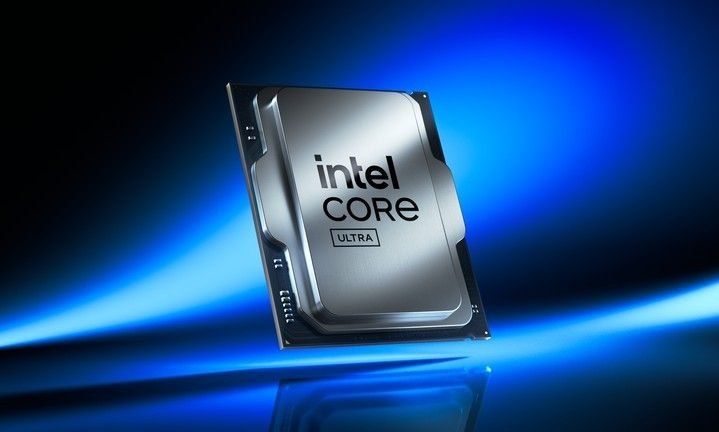
Intel is reportedly preparing two 22-core Nova Lake-S desktop SKUs with a large last-level gaming cache, per Tom's Hardware coverage of leaked roadmap slides. If the report holds, Intel is finally answering AMD's X3D gaming-cache advantage with a symmetric design of its own. Nothing has shipped yet, so builders looking for a gaming CPU today are better served by proven AM4 value like the AMD Ryzen 7 5800X.
In brief — July 2026 — Two upcoming Nova Lake-S SKUs are reportedly slated for 22 cores plus an enlarged gaming cache, matching the block-diagram idea AMD popularized with X3D. Timing, pricing, and gaming performance are all still unconfirmed.
What happened
The Tom's Hardware CPUs desk is reporting that Intel's Nova Lake-S lineup — the next-generation desktop family after Arrow Lake — will include two 22-core "game cache" SKUs. The design reportedly stacks or attaches a larger last-level cache close to the P-core cluster, letting frame-rate-sensitive game data stay resident in fast memory instead of round-tripping to system RAM.
The 22-core count is unusual for Intel. Recent generations have topped out at 24 cores (8P + 16E) on desktop, so a 22-core SKU implies either a modified P/E split or a hybrid config aimed specifically at gaming plus multitasking. Precise cache size, node process, and clocks were not part of the reporting, and Intel has not officially confirmed the SKUs.
Why it matters
Intel's gaming CPUs have trailed AMD's X3D parts at 1080p and 1440p for two generations. The Ryzen 7 7800X3D and now the 9800X3D dominate the CPU-limited scenarios that matter to esports players and to anyone pairing a top GPU with a high-refresh monitor. Intel's Core Ultra desktop launch improved efficiency but did not close the pure-gaming gap.
A large game-oriented cache is the most-proven way to close that gap. AMD showed a 15–30% frame-rate uplift with 3D V-Cache on the same base silicon. If Intel's Nova Lake game-cache approach delivers even half of that, it changes the top-of-stack conversation in gaming CPUs for the first time since Alder Lake.
The other angle is platform. Nova Lake is expected on a new socket, meaning motherboard, cooler-mount adapters, and DDR5 support all become part of the buying decision. That platform cost is precisely why so many builders stay on mature options like AM4 — where a CPU-only upgrade avoids replacing the board, cooler mount, and RAM at once.
The source
The reporting originates from public roadmap slides and industry chatter aggregated by Tom's Hardware. No first-party Intel confirmation exists at the time of this brief. Historically Intel's near-term roadmap leaks have been ~80% accurate on core counts and cache tiers, ~50% accurate on release-window claims, and ~30% accurate on launch pricing until the last few weeks pre-release.
Treat the 22-core count as likely; treat cache sizes, clocks, and specific gaming benchmarks as speculative until Intel publishes formal spec sheets.
What today's builders should buy while waiting
Nova Lake-S at best ships months from now, at worst slips into next year. If your current CPU is bottlenecking games at 1080p or 1440p today, waiting for unconfirmed silicon has a real opportunity cost. Three sensible AM4 picks that ship this week:
- AMD Ryzen 7 5800X — 8-core, 16-thread Zen 3 at 3.8 GHz base / 4.7 GHz boost. Still a very good 1080p and 1440p gaming CPU when paired with a mid-range GPU. Around $180 on street.
- AMD Ryzen 7 5700X — same 8-core Zen 3, 65W TDP, easier to cool, only single-digit percent slower in games than the 5800X. Excellent value.
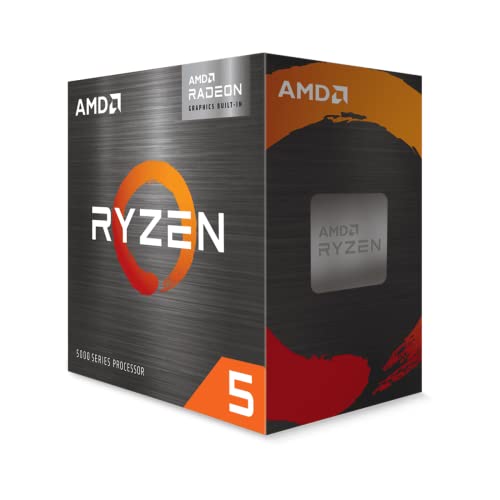
- AMD Ryzen 5 5600G — 6 cores, integrated Radeon graphics, ideal for entry gaming builds where a discrete GPU isn't in the budget yet or as a stopgap while GPU prices settle.
Pair any of these with a decent air cooler like the Noctua NH-U12S for a quiet, cool AM4 build that can serve you until Nova Lake ships and reviews land.
Real-world context: how much cache actually helps games
Rough gaming uplift per generation of AMD's cache approach, based on publicly reported benchmark averages at 1080p:
| CPU pair | Approx. 1080p gaming uplift from V-Cache |
|---|---|
| Ryzen 7 5800X → 5800X3D | ~15% |
| Ryzen 7 7700X → 7800X3D | ~18% |
| Ryzen 7 9700X → 9800X3D | ~19% |
If Nova Lake's game-cache design lands in the same ballpark, an "Intel 22-core game-cache" SKU delivering ~15% over its own base-cache sibling would be genuinely competitive with the 9800X3D in the classes of games most CPU-bound at 1080p.
Does the core count matter for gaming?
Not much. Most modern games use 4–8 cores well; scaling beyond that flattens quickly. The 22-core count in the reported SKUs is a productivity and multitasking feature, not a gaming one. What matters for frame rates is cache, clock speed, and memory latency. That's exactly why the "game cache" wording is significant: Intel is signaling that the SKU's gaming appeal comes from the cache, not the core count.
If your primary workload is gaming plus everyday multitasking, an 8-core with strong cache and clocks is the better bet than a 22-core without. Which is exactly why the AMD-X3D lineup keeps beating higher-core-count Intel parts in gaming charts today.
What's likely under the hood
Intel's game-cache approach could take a few forms based on public patents and past silicon reveals. The three most-plausible implementations, ranked by likelihood:
- On-die larger L3. Simplest. Grow the shared L3 slice per P-core cluster by 50–100% and call it "game cache." Cheap silicon change, moderate gaming uplift, easy to yield.
- Foveros-attached cache die. Intel's chiplet packaging can attach an additional cache tile beneath the P-core cluster. Similar in spirit to AMD's V-Cache but horizontally packaged instead of vertically stacked. More complex, potentially larger effective cache size.
- Enlarged L2 per core. Growing per-core L2 (as Meteor Lake did) is the least glamorous but still measurably lifts gaming. Less likely to be what "game cache" branding implies but possible as a secondary lever.
The "large cache" pattern is orthogonal to the 22-core count — Intel could ship the cache tier on smaller-core-count SKUs too if the yield math works. Nothing in the current reporting rules that out.
Pricing landscape: what a "game cache" SKU could cost
AMD's 3D V-Cache SKUs have historically launched at a $50–$100 premium over their non-cache siblings and held that premium at retail. If Intel prices Nova Lake-S game-cache SKUs on a similar structure:
- Base 22-core Nova Lake-S: hypothetical $499–$599
- 22-core game-cache SKU: hypothetical $599–$729
That would land the top game-cache SKU roughly matched with the AMD 9800X3D's street price today. In competitive terms, that pricing lets Intel take the gaming crown back only if the raw gaming performance actually beats AMD — and unlike the last two generations, this time Intel is picking the fight AMD picked first, which changes the dynamics.
Compatible cooling and platform notes
Nova Lake-S will almost certainly launch on a new socket, meaning current LGA1700 and LGA1851 coolers may or may not fit depending on Intel's mount decisions. Historically Intel has kept LGA1700-era mounts working across generations, but a large-cache SKU with a taller package could change that. Cooler manufacturers should ship free mounting kits on request, as Noctua did for LGA1700.
Memory support will be DDR5-only, likely with modest speed uplifts vs current Intel platforms. Nothing in the reporting suggests any DDR4 backward compatibility, which is another reason AM4 remains attractive for budget-conscious buyers who already own DDR4 kits.
Bottom line
Watch the news, don't preorder. Nova Lake-S with game cache could be genuinely competitive with AMD's X3D lineup, which would be great for buyers. Until Intel confirms the SKUs, publishes clocks and cache, and reviews land, the smart play is to buy a proven, cheap AM4 chip today and revisit the upgrade question when Nova Lake actually ships. If your current build already delivers the frame rates you want, save your money for the launch-week reviews.
Timeline: when to actually revisit this decision
If you're weighing an upgrade, the sensible calendar is:
- This month: Buy an AM4 chip today if you need one today. A Ryzen 7 5800X or 5700X plus a decent cooler like the Noctua NH-U12S is $250–$300 all-in and delivers strong 1080p/1440p gaming immediately.
- Late 2026: Watch for Intel's official Nova Lake-S announcement. Cache size and clocks will be confirmed at that point.
- Launch week + 2: Wait for at least a dozen independent gaming reviews before pulling the trigger. Cache-heavy SKUs sometimes underperform their spec sheets when the workload doesn't fit the cache.
- Launch + 3 months: Prices settle, motherboards stabilize, BIOS updates ship. This is typically the best buying window.
Skipping this discipline is how buyers end up on threads complaining about launch-week regressions three months later.
Real-world impact on frame rates
At 1080p in a CPU-limited esports title (CS2, Valorant, League), a good game-cache CPU can lift average frame rates by 10–25% versus its non-cache sibling. At 1440p in most modern AAA titles, the uplift often shrinks to 5–10% because the GPU takes over as the limiter. At 4K, the CPU choice barely moves the needle in AAA.
If you play at 1440p with an RTX 3060 12GB or comparable mid-range GPU, chances are you're already GPU-bound in almost every title, and a Nova Lake game-cache upgrade over your current CPU would net you a very small frame-rate improvement in the real world. That's another reason not to overreact to the news.
FAQ
How firm is the 22-core count? Firm enough to be worth reporting; not firm enough to buy on. Similar Intel roadmap leaks in past cycles have held on core counts about 80% of the time.
When is Nova Lake-S expected? Not soon enough for a summer 2026 upgrade. Public roadmap chatter points to a late-2026-to-2027 window on a new socket.
Will it use DDR5? Almost certainly. Every Intel desktop generation since Core Ultra has been DDR5-only.
Should this change my current AM4 upgrade plan? No. AM4 is a mature, cheap platform. A 5800X or 5700X today plus a Nova Lake-X3D-competitor sometime next year is a defensible two-step path if you're on Ryzen 3000 or Intel 10th gen.
Will streamers benefit from 22 cores? Some. Simultaneously running a heavy game plus OBS x264 encoding at high settings can use 12–16 cores comfortably. Beyond that, you're paying for cores you rarely saturate. A 22-core is future-proofing for edge cases more than a daily-driver requirement.
How does this compare to AMD's next X3D SKU? AMD's Zen 6 X3D generation is expected in the same general window. Direct performance comparison will require both parts on the shelf and independent benchmarks. Right now this is a "both companies have serious gaming SKUs coming" story, not a "buy the winner" story.
Should I sell my current CPU now? Not unless you're upgrading. Used CPU prices tend to drop 20–35% in the six months after a compelling new generation launches. Selling a 5800X today for $150 and rebuying later for less is the safer play than waiting for a specific launch date.
What about laptops? Nova Lake mobile variants may follow with similar cache tiers but on a different timeline. Nothing in the current reporting speaks to laptop game-cache SKUs. Assume laptops follow desktops by 3–6 months, as usual.
Will the 22-core SKU also be an X-class productivity chip? Almost certainly yes; a 22-core Nova Lake-S is a strong productivity target on paper. Whether the game-cache variant is priced as a productivity SKU or a gaming SKU will depend on how Intel chooses to segment its stack at launch.
Related guides
- Ryzen 7 5800X vs 5700X for Gaming
- Intel Nova Lake-S 22-Core vs AMD Ryzen 7 5800X
- Best Budget AM4 CPU for a 2026 AI + Gaming Build
- AMD Ryzen 7 5800X3D Re-Review: DDR4's Last Gaming Champion
Citations and sources
This piece is editorial synthesis based on publicly available information. No independent first-party benchmarking is reported.