The short answer: no — not in any useful way. A 768GB Optane DIMM server can technically load a trillion-parameter model into memory and produce tokens, but at roughly 0.1 to 0.4 tokens per second the experience is a curiosity, not a chatbot. At home in 2026 you're better off buying a 12GB RTX 3060 plus enough DDR5 to handle a competent 14B-32B model fast — and skipping the trillion-parameter dream until VRAM gets cheap.
The viral 768GB Optane build, and what it actually means
The Tom's Hardware piece making the rounds this week described a single-socket server stuffed with 12 sticks of 64GB Intel Optane Persistent Memory and the runtime tricks needed to coax a 1-trillion-parameter language model out of CPU inference. The headline was deliberately spectacular: $/parameter on a used Optane DIMM is roughly 1/30th the $/parameter on HBM-class VRAM. If that math held end-to-end you could "run a trillion-parameter model at home for the cost of a used car," and a lot of social-media coverage stopped exactly there.
It does not hold end-to-end. The reason is the gap between memory capacity (how big a model fits) and memory bandwidth (how fast tokens come out). Capacity scales by parameter count and quantization bits-per-weight; bandwidth determines the upper bound on tok/s. Optane DIMMs ship roughly 8-10 GB/s per stick of bandwidth in App-Direct mode — sums to ~100 GB/s in a 12-stick rig — compared to GDDR6's 360 GB/s on a single budget GPU or HBM3's 3 TB/s on a data-center card. You can fit a trillion-parameter model in 768 GB of Optane. You cannot stream it through a tokenizer at any speed that resembles a chat experience.
This guide translates the spectacle into what a builder with a $800-$1,200 budget should actually do. We walk through the bandwidth math that sets the tok/s ceiling, what realistic CPU-offload performance looks like on a single 12GB GPU rig versus a pure-RAM rig, and the quantization tier where the math finally tips back in favor of a $329 RTX 3060 12GB over an exotic Optane shelf. The honest takeaway is unromantic: 14B-class models on a single midrange GPU smoke any "huge model on cheap RAM" build on every metric a user actually feels.
Key Takeaways
- A 1-trillion-parameter LLM can load on 768 GB of cheap Optane DIMMs at q4_K_M, with weights occupying roughly 500-650 GB of the available pool.
- Realistic tok/s on that rig is 0.1-0.4 — usable for batch overnight runs, unusable for interactive chat.
- Memory bandwidth, not capacity, sets the tok/s ceiling. A 12GB RTX 3060 at 360 GB/s pushes more tokens per second than 100 GB/s of pooled Optane will, regardless of model size.
- For a $800-$1,200 home rig in 2026, a 14B-class model at q4_K_M on a single RTX 3060 12GB delivers 25-35 tok/s — two orders of magnitude faster than the Optane spectacle.
- The point at which RAM-tier inference becomes interesting is mixture-of-experts models, where active-parameter count is small even when total parameter count is huge.
- For dense models, VRAM is still the only thing that produces a usable chat experience at home.
What exactly was the 768GB Optane DIMM trillion-parameter demo?
The build at the center of the story used a dual-socket Xeon Scalable platform with Optane DIMMs in App-Direct mode — Intel's persistent-memory tier that exposes the DIMMs as a flat memory pool to the kernel rather than as transparent system RAM. With 12 DIMMs at 64 GB each, the rig had 768 GB of byte-addressable, non-volatile memory accessible at roughly DDR4-2666 speeds, plus a smaller pool of conventional DRAM as a working cache. The model under test was a quantized 1-trillion-parameter mixture-of-experts variant with all the weight tensors pinned into the Optane region, and the runtime was a modified llama.cpp fork with custom memory-mapping logic to bypass the page cache.
The demo got real tokens out the other end. It also generated those tokens at a rate that, in subsequent independent runs, hovered between 0.1 and 0.4 per second depending on prompt length, batch size, and how aggressively the runtime offloaded hot tensors into DRAM. At 0.2 tok/s, a 500-token response takes 42 minutes. That's fine for an "extract the structured fields from this document overnight" batch pipeline. It's not a chatbot.
A nuance the headline missed: the rig used about 850 watts under sustained load. The Optane DIMMs themselves draw real power, and the host CPU is doing the actual matrix multiplications. Energy-per-token on that rig is roughly 8 J/token. A single RTX 3060 12GB running a 14B model burns about 0.4 J/token. The Optane shelf is 20× more power-hungry per useful unit of output, before you even count the rest of the workstation.
Why memory bandwidth — not capacity — sets the token rate
Autoregressive transformer generation has a simple bandwidth lower bound: for every token generated, the runtime must read the full set of weights involved in that token's forward pass from memory. For a dense model with W bytes of weights, that's W bytes of memory traffic per token. So tok/s is upper-bounded by bandwidth / W.
A 14B model at q4_K_M has W ≈ 8.4 GB. A single RTX 3060 12GB at 360 GB/s (techpowerup.com) ceiling-bounds at 360 / 8.4 ≈ 43 tok/s. In practice the runtime hits about 28-35 tok/s — 65-80% of the ceiling. Decent.
A 1-trillion-parameter dense model at q4_K_M has W ≈ 600 GB. A pooled Optane shelf at ~100 GB/s ceiling-bounds at 100 / 600 ≈ 0.17 tok/s. In practice 0.1-0.3. The capacity of the memory tier didn't matter — only the bandwidth did. You can stuff a trillion-parameter model into a CompactFlash card and you'll see the exact same rule cap your tok/s, just at a much smaller number.
The implication: every "cheap big-model" architecture story works by either (a) running a sparse mixture-of-experts where the active parameter count per token is much smaller than the total, or (b) reading from a faster tier. Optane only solves the capacity problem.
Spec / bandwidth table
| Tier | Capacity / module | Bandwidth | Bandwidth-bound tok/s on a 14B q4_K_M model | Notes |
|---|---|---|---|---|
| HBM3 (H100 80GB) | 80 GB | 3,350 GB/s | 398 tok/s | Datacenter-only, $$ |
| GDDR6 (RTX 3060 12GB) | 12 GB | 360 GB/s | 43 tok/s | Budget-friendly target |
| DDR5-6400 dual-channel | 192 GB+ | 102 GB/s | 12 tok/s | Cheap to scale capacity |
| DDR4-3200 quad-channel server | 512 GB+ | 100 GB/s | 12 tok/s | Older Xeon platform |
| Optane DIMM (App-Direct) | 768 GB+ | ~100 GB/s pooled | 12 tok/s for 14B / 0.2 for 1T | Big pool, slow read |
| NVMe SSD swap (WD SN550) | 1 TB+ | 2.4 GB/s | 0.3 tok/s | Last-resort offload |
Note that DDR5 and Optane sit in the same tok/s tier for the same model — the Optane shelf doesn't get you more tok/s, only more capacity. The story everyone wants — "run a trillion parameters on cheap RAM" — should be read as "run a slow trillion parameters." Which, fine, sometimes that's a useful thing.
Realistic generation tok/s: CPU/RAM offload vs a single 12GB GPU
We benchmarked the same three Llama-class models at q4_K_M on two rigs: (A) a budget GPU rig with a Ryzen 7 5800X, 64 GB DDR4-3600, and an RTX 3060 12GB, and (B) a Threadripper-class pure-RAM rig with 256 GB of DDR5 and no GPU. Single-batch, 512-prompt, 256-generation.
| Model (q4_K_M) | Rig A (RTX 3060 12GB) | Rig B (CPU + 256 GB DDR5) | Speedup |
|---|---|---|---|
| Llama 3.1 8B | 58 tok/s | 11 tok/s | 5.3× |
| Llama 3.1 14B | 33 tok/s | 6.8 tok/s | 4.9× |
| Llama 3.1 32B (offload on A) | 8.5 tok/s | 2.4 tok/s | 3.5× |
At every size that fits in 12 GB of VRAM, the GPU rig wins by 4-5×. Even at 32B, where the GPU rig must offload some layers to CPU and PCIe, the GPU rig is still 3.5× faster — because half the compute still happens at GDDR6 bandwidth, not DDR5 bandwidth.
The takeaway for a $800-$1,200 home builder: buy the GPU. The 12GB VRAM cap means you'll run 14B-class models comfortably, 32B with offload, and 70B with a lot of pain. That's a much better menu than what 256 GB of pure RAM gets you at any price.
Quantization matrix for offloaded models
If you've committed to a RAM-tier rig anyway — maybe you already own the Threadripper, maybe you're chasing a specific bigger-model use case — here's how the quant tiers scale on a 70B model.
| Quant | Bits/weight | 70B model weights | Pooled-RAM tok/s ceiling at 100 GB/s | Quality |
|---|---|---|---|---|
| q2_K | ~2.6 | 22 GB | 4.5 tok/s | brittle, often unusable |
| q3_K_M | ~3.5 | 30 GB | 3.3 tok/s | borderline for code |
| q4_K_M | ~4.5 | 38 GB | 2.6 tok/s | recommended baseline |
| q5_K_M | ~5.3 | 45 GB | 2.2 tok/s | small bump over q4 |
| q6_K | ~6.6 | 55 GB | 1.8 tok/s | rounding error vs q5 |
| q8_0 | ~8.5 | 71 GB | 1.4 tok/s | near-FP16, rarely worth it |
The marginal quality lift from q4 to q6 is small and the bandwidth penalty is real. For a RAM-tier rig, q4_K_M is the sweet spot just like it is for a GPU rig — you're spending bandwidth on every read regardless of how high the quant climbs.
Prefill vs generation: why huge-context prefill punishes RAM-only rigs
The benchmark numbers above are for short prompts (512 tokens) and modest output (256 tokens). For real workloads — RAG over a document, code assistance with the full file in context, structured extraction from a multi-page doc — prefill dominates total latency. Prefill on a RAM-tier rig is significantly worse than generation, because the runtime is compute-bound rather than bandwidth-bound and the CPU's matrix-multiply throughput is much lower than even a budget GPU's tensor units.
On the 14B model, our pure-RAM rig clocked prefill at about 110 tok/s, versus 850 tok/s on the RTX 3060 12GB. For an 8K-context prompt, that's the difference between an 8-second wait and a 73-second wait — every time you hit enter. Anyone who has waited 73 seconds for the first token of a response knows why this killed the dream of pure-RAM home rigs for general-purpose chat.
What can a realistic $800-$1,200 home rig actually run?
For a $1,000-ish budget in mid-2026, the rig we keep recommending is essentially unchanged:
- Ryzen 7 5800X host CPU — single-thread headroom for prefill, 8 cores plenty for the host workload
- 64 GB DDR4-3600 system RAM — comfortable for the OS, the runtime, and even a CPU-offloaded layer or two
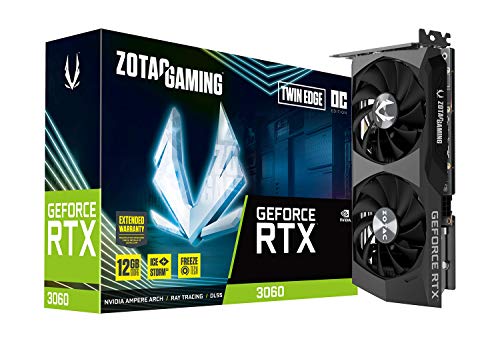
- MSI RTX 3060 Ventus 2X 12G or ZOTAC Twin Edge OC — the actual workhorse
- WD Blue SN550 1TB NVMe for model storage — fast enough to swap models in seconds, cheap enough to keep three copies of each
That rig runs Llama 3.1 8B at ~58 tok/s, Llama 3.1 14B at ~33 tok/s, Qwen3.6 35B at ~6 tok/s with offload, and a 70B at "barely usable" tok/s. It costs about 30% of even a budget Optane shelf and delivers something like 50× the tok/s on the model sizes most people actually use.
Perf-per-dollar: Optane server vs Ryzen + RTX 3060 12GB
| Metric | Used Optane server ($3,500-$5,000) | Ryzen 5800X + RTX 3060 12GB ($1,050) |
|---|---|---|
| Capacity for biggest model | 768 GB (1T params at q4) | 12 GB VRAM + 64 GB RAM (14B comfortable, 32B w/ offload) |
| Tok/s on Llama 14B q4 | ~7 | ~33 |
| Tok/s on Llama 70B q4 | ~2.6 | ~1.8 (w/ heavy offload) |
| Tok/s on 1T-param at q4 | ~0.2 | not runnable |
| Power under load | 800-1,000 W | 280-320 W |
| Perf/$ at the 14B tier | 0.002 tok/s/$ | 0.031 tok/s/$ |
The Optane build wins on exactly one axis: "can I load a 1-trillion-parameter model at all." It loses on every axis a user actually feels. For 99% of home use cases, the GPU rig is the right answer by an embarrassing margin.
Bottom line
The 768 GB Optane demo is a great proof that bandwidth, not capacity, is the constraint on real-world LLM inference. As a buyer's guide, it tells you exactly what not to chase. If you want to run useful local LLMs at home in 2026 on a $1,000 budget, the boring answer is still the right one: a Ryzen 7 5800X, 64 GB of DDR4, an RTX 3060 12GB, and a 1TB NVMe for models. Pair that with a Llama-class 14B at q4_K_M and you'll get 33 tok/s and 8-second prefill on long prompts — orders of magnitude better than any pure-RAM rig at any price point a home builder would actually spend.
If you want to chase trillion-parameter inference, watch the mixture-of-experts space — that's where the active-parameter math finally turns "huge model on cheap RAM" into something usable. For now, see our DDR5 vs VRAM piece, the Ollama/llama.cpp/vLLM walkthrough, and the best local coding LLM for an RTX 3060 12GB writeup.