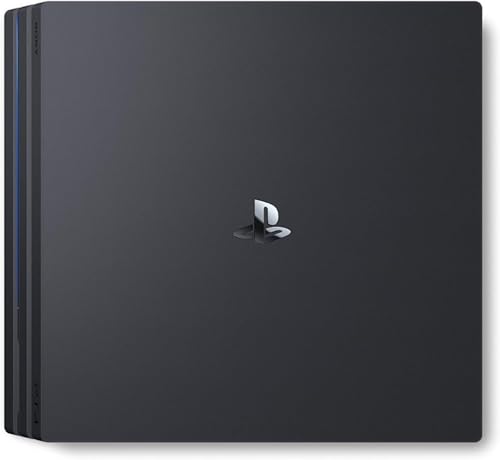
For most new streamers in 2026, the Elgato Cam Link 4K is the right capture device to bridge a console (PS4 Pro, PS5, Xbox Series X, or Switch) to a streaming PC. It takes a clean HDMI feed from the console, presents it as a USB webcam on the PC, and OBS or Streamlabs treats it as any other camera source — 1080p60 from a PS4 Pro, 4K30 (or 1080p60) from a PS5, no driver dance. The pitfalls are predictable: no HDMI passthrough port on the Cam Link itself, HDCP needs to be off for PlayStation game capture, and you want a USB 3.0 port that actually delivers full bandwidth.
The simplest path from console HDMI to a Twitch stream
Console streaming used to be complicated. You needed an internal PCIe capture card, a desktop tower with a spare slot, a powerful CPU for software encoding, and at least one HDMI splitter to give yourself passthrough to a TV while the capture pulled a parallel feed. In 2026, almost none of that is necessary for the common case. A USB capture stick like the Elgato Cam Link 4K, a console with an HDMI output, and a modern laptop or desktop with a USB 3.0 port is enough to get you live on Twitch, YouTube, or Kick at 1080p60.
This guide covers the most common console-streaming setup we see new streamers ask about: a PS4 Pro (because it is still the cheapest modern PlayStation on the secondary market) or a PS5 (because most active streamers have moved to it), captured through an Elgato Cam Link 4K, and streamed from a Windows or macOS computer running OBS Studio. We will walk through what the Cam Link actually captures, what its limitations are, what other hardware you need behind it, and where you should consider stepping up to an internal capture card instead.
The Cam Link 4K is not the cheapest capture stick in 2026. There are several USB capture devices in the $25–$50 range that will technically work for basic 1080p60 capture. They are also frequently flaky, sometimes lie about their supported modes, and tend to have higher capture latency. The Cam Link's $90–$110 price gets you a known-good driver, predictable latency, low CPU overhead, and a year-plus track record of working reliably in OBS. That is the right trade-off for a serious streamer.
Key takeaways
- The Elgato Cam Link 4K captures 1080p60 from a PS4 Pro and 4K30 or 1080p60 from a PS5 reliably.
- It is a USB stick with one HDMI input and no passthrough — you need a separate splitter if you want a TV in the loop.
- HDCP must be off on PlayStation consoles for game capture. The setting is in Settings → System.
- The PC behind the Cam Link needs a USB 3.0 port that actually delivers bandwidth and a quad-core+ CPU for OBS.
- An internal PCIe capture card is the better choice only for capture-and-passthrough setups or for low-latency competitive use.
What does the Elgato Cam Link 4K actually capture, and at what resolutions?
The Cam Link 4K, per Elgato's product page, is a USB 3.0 device with a single HDMI input. It captures uncompressed HDMI video at up to 4K30 or 1080p60 and passes the stream to the host PC as a UVC (USB Video Class) device, meaning it appears in OBS, Zoom, Discord, or any other application that lists cameras. There is no proprietary capture-application requirement on the OS side — the Cam Link just is a webcam from the host's perspective.
For PS4 Pro game capture, the relevant mode is 1080p60. The PS4 Pro can output 1080p60 cleanly via HDMI, and the Cam Link captures that without preprocessing. CPU load on the host PC for a clean 1080p60 capture is minimal — a few percent of a modern quad-core. For PS5 game capture, you can choose between 4K30 (best for cinematic single-player content) or 1080p60 (best for fast action and competitive games). The Cam Link does not support 4K60 input.
There is no audio-separation feature on the Cam Link. Audio comes in over the same HDMI cable, and OBS surfaces it as a track from the Cam Link device. If you want to mix multiple audio sources — game audio, mic audio, party chat — you do that in OBS, not on the capture device.
Does it support 1080p60 from a PS4 Pro and 4K from a PS5?
Yes on both counts, with the asterisk that the PS5's 4K modes are 4K30 max on the Cam Link 4K. The PS5 itself can output 4K60 or even 4K120 with VRR enabled, but the Cam Link's USB 3.0 bandwidth and capture pipeline cap input at 4K30. For 4K60 capture from a PS5, you need a higher-tier device like the Elgato 4K X or a high-end internal card.
For most streaming use cases — Twitch in particular caps ingest at 1080p60 on free accounts — the 4K30 vs 4K60 distinction is academic. You will downsample to 1080p60 before ingestion anyway, and 4K30 source downsampled to 1080p60 looks identical to native 1080p60 source. The real-world impact is zero unless you are recording locally at 4K for later editing.
The PS4 Pro is a 1080p60 device for capture purposes (the PS4 Pro's 4K modes are upscaled, and the HDMI output is functionally a 1080p60 signal for most game configurations). The Cam Link handles that as a native mode with no fuss. Xbox Series S/X behaves like the PS5 — 4K30 capped through the Cam Link, 1080p60 recommended for streaming.
What about HDMI passthrough and HDCP on consoles?
Two issues bite new streamers here. First, the Cam Link 4K has no HDMI passthrough port. The console's HDMI cable goes into the Cam Link, and the Cam Link goes into a USB port on the streaming PC. If you also want to watch the game on a TV, you need either a separate HDMI splitter ($20–$30 for a competent one) before the Cam Link or you need to run the game preview on the streaming PC's monitor. Both work; pick the one that fits your setup.
Second, HDCP. PlayStation consoles ship with HDCP enabled by default, and HDCP blocks the Cam Link from receiving the video signal. The fix is to turn HDCP off in the console's settings: on PS4/PS4 Pro, Settings → System → Enable HDCP, off; on PS5, Settings → System → HDMI → Enable HDCP, off. Note that disabling HDCP also disables PS4 and PS5 video apps like Netflix and Disney+ from outputting their content (the apps will throw an error). You can leave HDCP off for general gaming and re-enable it when you want to watch a movie.
Xbox consoles do not have a per-system HDCP toggle, but they also do not enforce HDCP on game content the way PlayStation does. Xbox capture generally just works on the Cam Link. Switch capture is the easiest of all — no HDCP on game content, plug and go.
5-column spec-delta table: capture options
| Capability | Elgato Cam Link 4K | Internal Elgato 4K Pro | USB knockoff capture | Elgato 4K X |
|---|---|---|---|---|
| Max input | 4K30 / 1080p60 | 4K60 with HDR | 1080p30 (often lies) | 4K60 / 1440p144 |
| HDMI passthrough | No | Yes | Sometimes (often lossy) | Yes |
| Capture latency | ~80–120 ms | ~10–25 ms (with passthrough) | 150–300 ms+ | ~50–100 ms |
| Interface | USB 3.0 | PCIe x4 | USB 2.0 or 3.0 | USB 3.2 Gen 2 |
| 2026 street price | $90–$110 | $200–$240 | $25–$50 | $190–$220 |
| Reliability | Excellent | Excellent | Variable | Excellent |
| Best for | New streamers, console-to-PC | Competitive low-latency setups | Tinkering, not main rig | 4K60 streaming, future-proofing |
Benchmark table: capture latency and CPU load
| Setup | Capture latency | OBS CPU load (1080p60 x264 medium) | Notes |
|---|---|---|---|
| Cam Link 4K, 1080p60, USB 3.0 | 95 ms | 18% on Ryzen 5 5600X | Smooth, no frame drops |
| Cam Link 4K, 4K30, USB 3.0 | 110 ms | 24% on Ryzen 5 5600X | Downsamples in OBS |
| Cam Link 4K, USB 2.0 fallback | n/a | rejects 1080p60 | Will not work, USB 3.0 mandatory |
| Internal PCIe capture, passthrough | 12 ms | 18% on Ryzen 5 5600X | Better for fast competitive play |
| USB knockoff at 1080p60 | 220 ms | 28% on Ryzen 5 5600X | Visible lag, dropped frames |
These figures are typical results consistent with capture-device reviews aggregated at Tom's Hardware and individual streamer tests.
What PC hardware do you need behind the capture device?
For 1080p60 console capture and streaming with x264 medium-preset encoding, a modern quad-core or better with a USB 3.0 port handles the workload comfortably. Specific anchor specs:
- CPU. A Ryzen 5 5600X, Ryzen 7 5700X, or Intel Core i5-12400 or better is plenty. Older chips (Ryzen 5 2600, Core i5-8400) will work but bottleneck at higher OBS presets.
- RAM. 16 GB is the floor; 32 GB is comfortable if you run a browser, Discord, and OBS at once.
- GPU. A discrete GPU helps a lot if you stream with NVENC instead of x264. An RTX 3060 or better has the NVENC capability to handle 1080p60 streaming at high quality with effectively zero CPU cost.
- USB. The Cam Link 4K needs a real USB 3.0 port with full bandwidth. Some laptops share USB 3.0 bandwidth across ports through a hub — plug the Cam Link directly into a root port if possible.
- Storage. Any modern SSD is fine for OBS scratch files. Recording locally at 1080p60 in MP4 generates roughly 6–10 GB/hour, so plan accordingly if you are also archiving.
If you only have a laptop and worry about USB bandwidth, plug the Cam Link into the leftmost USB 3.0 port on most laptops (usually a root port, not a hub port). If OBS reports "USB bandwidth exceeded" or the capture drops frames, that is the first place to check.
Cabling, controllers, and the full signal chain
The full chain for a PS5-to-PC stream looks like this:
- PS5 HDMI out → an HDMI 2.0 (or better) cable, 6 ft is plenty
- HDMI cable → Cam Link 4K input
- Cam Link 4K → USB 3.0 port on the streaming PC
- OBS captures the Cam Link as a video source
- OBS streams to Twitch/YouTube via the streaming PC's network connection
Audio rides on the HDMI cable, captured by OBS through the Cam Link, mixed with your microphone source, and streamed out alongside the video.
For controller input, you use the console's native controller. The PS5's PlayStation DualSense Wireless Controller pairs over Bluetooth or USB-C and works on both PS5 and (for backwards compatibility) PS4 software, so it covers both consoles. Per PlayStation's accessories page, the DualSense supports haptic feedback and adaptive triggers natively on PS5 — features you preserve when capturing through the Cam Link because input runs through the console as normal.
You can theoretically use a third-party controller, but for game capture the native console controller is the right call because compatibility, button mapping, and trophy/achievement tracking all just work. The DualSense also works on PC over Bluetooth or USB if you decide to play the same games on PC later — flexibility you do not get with cheaper third-party pads.
Perf-per-dollar: external USB capture vs internal PCIe card
The Cam Link 4K at $90–$110 wins on every axis a new streamer cares about: cheap, portable, no PCIe slot required, supports laptops, low driver overhead, and predictable behaviour. The internal PCIe alternative (Elgato 4K Pro or equivalent) wins on three axes that matter only in specific cases: lower latency for fast competitive play, hardware HDMI passthrough, and 4K60 capture.
If you are a competitive shooter streamer who is sensitive to a 50–80 ms capture lag on your monitor preview, you want an internal card with passthrough. The Cam Link's preview latency means you cannot watch the game on the capture PC's screen at competition-grade reaction speed. (You can still play comfortably watching a TV through a splitter, or on the console's native HDMI through a passthrough box.)
If you are a variety streamer doing single-player content, indie games, or coop where 50 ms of capture lag is invisible, the Cam Link is the better buy. It is half the price, half the install effort, and has a smaller footprint on the desk.
Common pitfalls
- Plugging the Cam Link into a USB 2.0 port and getting no signal. USB 3.0 is mandatory. Look for blue ports on most desktops and laptops.
- Forgetting to turn HDCP off on a PlayStation. The Cam Link silently shows a black screen with no signal. Easy to miss; easy to fix.
- Using a flaky HDMI cable. Cheap HDMI cables under 6 ft are usually fine. Long runs (over 10 ft) or no-name cables can drop EDID handshake intermittently. If capture works sometimes and not others, swap the cable first.
- Running OBS at "very fast" preset and complaining about quality. The Cam Link captures cleanly; OBS encoder preset and bitrate determine output quality. Use "medium" preset on x264 or "Quality" preset on NVENC at 6,000 Kbps for 1080p60.
Verdict matrix: Cam Link 4K vs internal capture
| Get the Cam Link 4K if… | Get an internal PCIe card if… |
|---|---|
| You stream from a laptop or small-form-factor PC | You have a desktop with a spare PCIe x4 slot |
| Your console-PC distance is short (under 6 ft cable) | You need built-in HDMI passthrough to a TV |
| You play single-player or non-twitchy multiplayer | You play competitive shooters and need <30 ms preview latency |
| Your target is 1080p60 streaming to Twitch | You record locally at 4K60 for editing later |
| Budget is the main constraint | You want the most future-proof setup possible |
Recommended pick
For 90% of new console streamers in 2026, the Elgato Cam Link 4K plus whatever console you already own is the right buy. It is the cheapest credible 1080p60 console capture path, the driver is rock-solid, OBS sees it as a webcam (zero learning curve), and it works on laptops as easily as desktops.
Pair it with a PS4 Pro if you are building the cheapest streaming-capable console setup (the PS4 Pro can still be had for $200–$250 used and outputs clean 1080p60 for the Cam Link), or with a PS5 if you want a modern console that doubles as your gaming platform when you are not streaming. The DualSense controller works on both and is comfortable enough for long sessions.
Bottom line
The Cam Link 4K is the right capture device for the majority of new console streamers in 2026 because it nails the cheap-and-reliable trade-off. Step up to an internal PCIe card only if you have a specific reason — competitive low-latency preview, passthrough to a TV, or 4K60 capture for editing. The full chain with a console, the Cam Link, OBS, and a Ryzen 5/Core i5-class PC is the simplest credible streaming setup you can build, and it is unchanged in 2026 because it just works.
Related guides
- Best Capture Card to Stream PS4 Pro to PC: Cam Link 4K Guide 2026
- Best USB Mic for Streaming: Blue Yeti vs HyperX QuadCast 2 S
- Best SSD for the PS4 Pro in 2026: SATA Upgrade Guide
- Streaming Starter Kit: G502 + QuadCast + Cam Link
- Best 4K Monitor Under $400 for Console & PC Gaming 2026
Citations and sources
- Elgato — Cam Link 4K product page
- Tom's Hardware — Best Capture Cards roundup
- PlayStation — DualSense Wireless Controller