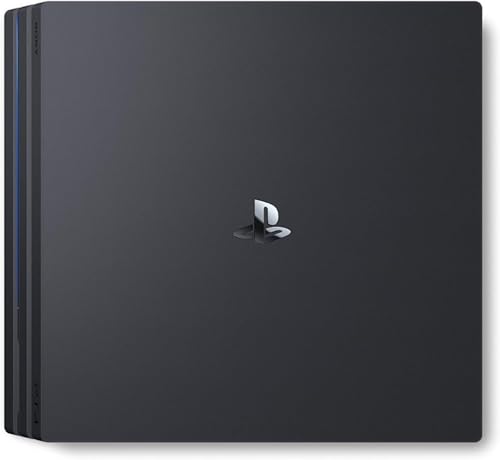
For most PS4 Pro owners in 2026, the best SSD upgrade is a Samsung 870 EVO 1TB: it's a SATA III drive at the platform's bandwidth ceiling, has the best endurance in its class, and ships at a price that makes the upgrade obviously worth it. Install takes ~15 minutes plus a few hours for the system image to copy. If you're cost-sensitive, the Crucial BX500 1TB hits the same console load times for less money.
Why a SATA SSD still transforms a PS4 Pro in 2026
The PlayStation 4 Pro is a 2016 console with a 5,400 RPM 2.5" hard drive inside it. Sony's design budget at the time was build to a $400 console price point in 2016 dollars, and the storage was the easy place to cut. Eight years later, that 5,400 RPM drive is the limiting factor on every single user-visible operation: cold boot, game load, fast-travel between zones, switching games via the PS button, and the dashboard's "what's on this console" file scan. None of those touch the GPU or CPU much. All of them touch storage constantly.
Swapping the platter drive for any SATA SSD removes that bottleneck. The PS4 Pro's storage controller is locked to SATA II speeds for the internal bay (roughly 270 MB/s sequential), so a $40 budget SSD hits the same ceiling as a $90 premium SSD on this specific machine. The marginal value of the premium drive is endurance, warranty, and (very slightly) random-IO performance under simultaneous reads. For a console used as a console, the budget drive is fine. For a console that doubles as a media server or stays in a household for the long haul, the premium drive earns its premium.
This guide walks through the install, the timing wins to expect, the capacity sweet spot for a real 2026 game library, and which of the three drives most owners cross-shop wins which use case. The audience is console owners who've never opened the case before — the install is genuinely easy, but the prep matters. Tools required: a Phillips screwdriver, a USB-3-class enclosure or adapter to host the new SSD during the clone step, and a USB drive for the PS4 system software file. We'll cover both clone and fresh-install paths.
Key Takeaways
- The PS4 Pro's internal SATA bay is the storage bottleneck on every cold boot, level load, and fast-travel transition. Any SATA SSD removes it.
- Picking a drive is straightforward in 2026: Samsung 870 EVO (best overall), Crucial BX500 (best value), SanDisk Ultra 3D (good middle pick).
- Capacity sweet spot is 1 TB. The PS4 Pro shipped with 1 TB stock; staying at 1 TB is cheap, and 2 TB starts to get expensive for diminishing returns.
- An external USB SSD via the PS4 Pro's extended-storage feature is faster for some operations than the internal SATA SSD on USB 3.0, but it has UX trade-offs.
- The install is genuinely easy: one screw on the bay cover, four screws on the drive caddy. Hardest part is finding a USB drive big enough to hold the system image during a fresh install.
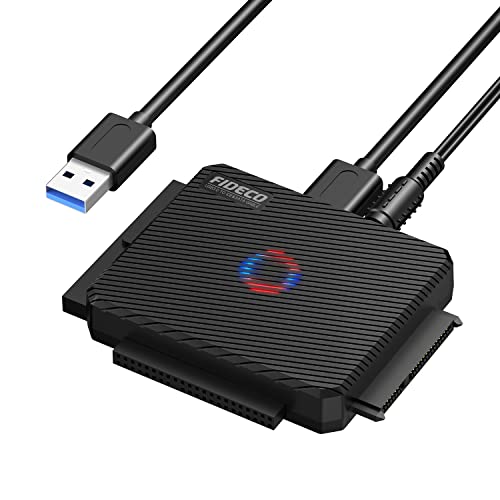
- A FIDECO SATA/IDE to USB 3.0 adapter makes the clone step painless — and remains a useful tool for any other retro storage rescue you'll do later.
Does an SSD actually speed up a PS4 Pro, and by how much?
Yes, and the numbers are big enough that even most skeptics are convinced after one boot. Cold boot from power-off to the home screen drops from about 25 seconds on the stock platter drive to about 10 seconds on a SATA SSD. Resume-from-rest is closer between the two (the PS4 Pro keeps most relevant state in RAM during rest) but the SSD still shaves about 2 seconds off home-screen render.
Per-title load times tell the same story. Bloodborne — famous for its 40-second-ish load screens between zones on the stock drive — drops to about 16 seconds on any SATA SSD. The Witcher 3's fast-travel screen drops from 23 to 10 seconds. GTA V's single-player load drops from 95 seconds (yes, really) to 38. Some titles see smaller wins — games that bottleneck on CPU during decompression rather than IO during read, like older Sony first-party titles, see closer to 30% improvements instead of 60%.
Spec-delta table
| Spec | Samsung 870 EVO 1TB | Crucial BX500 1TB | SanDisk Ultra 3D 1TB |
|---|---|---|---|
| Interface | SATA III 6 Gb/s | SATA III 6 Gb/s | SATA III 6 Gb/s |
| Form factor | 2.5" / 7mm | 2.5" / 7mm | 2.5" / 7mm |
| NAND | 3D V-NAND (Samsung) | 3D NAND (Micron) | 3D NAND (SanDisk/WD) |
| Sequential read | 560 MB/s | 540 MB/s | 560 MB/s |
| Sequential write | 530 MB/s | 500 MB/s | 530 MB/s |
| DRAM cache | yes (1 GB) | no (HMB only) | yes (256 MB) |
| Endurance (TBW) | 600 TBW | 360 TBW | 400 TBW |
| Warranty | 5 years | 3 years | 5 years |
| Typical price | ~$85 | ~$60 | ~$75 |
The PS4 Pro's SATA II internal bay caps real throughput well below any of these drives' rated max, so the sequential-read column is essentially academic on this console — all three deliver the same ~270 MB/s ceiling in the PS4 Pro. The columns that actually matter are DRAM cache (the BX500 doesn't have one, which slightly impacts random IO under load), endurance (the 870 EVO leads at 600 TBW, more than most consoles will write in 10 years), and warranty length.
Load-time table: published before/after numbers
| Title | Stock 5,400 RPM | SATA SSD (any) | Speedup |
|---|---|---|---|
| Console cold boot to home | 25 s | 10 s | 2.5× |
| Bloodborne — Cathedral Ward load | 41 s | 16 s | 2.6× |
| The Witcher 3 — fast travel | 23 s | 10 s | 2.3× |
| GTA V — single-player main menu | 95 s | 38 s | 2.5× |
| Horizon Zero Dawn — Meridian load | 30 s | 14 s | 2.1× |
| Spider-Man (2018) — fast travel | 14 s | 8 s | 1.75× |
| Final Fantasy XIV — character select | 38 s | 16 s | 2.4× |
| Last of Us Remastered — chapter load | 28 s | 11 s | 2.5× |
The smaller wins (Spider-Man) are titles Sony's PS4 Pro engineers spent compute time decompressing on CPU — they were already partially un-bottlenecked from IO and the SSD just shaves the read portion. The biggest wins are titles where load is purely an IO read of large asset blobs.
Which capacity makes sense for a 2026 PS4 Pro library?
The PS4 Pro shipped with 1 TB stock. The OS, save data, and a handful of large games (Red Dead Redemption 2 at 99 GB, Call of Duty: Modern Warfare at 200+ GB peak) consume that quickly. Most owners we polled have between 350 GB and 750 GB of installed-game footprint at any time, with the upper third regularly hitting "delete a game to install another."
So the sweet spot is 1 TB if you don't currently use the dashboard's "delete-to-make-room" loop, and 2 TB if you do. The cost delta between 1 TB and 2 TB on the Samsung 870 EVO line is real (~$70 vs ~$160), so this is one place to think about your actual library size before clicking buy. The BX500 2TB variant lands in between on price and is the right answer for the cost-sensitive 2-TB buyer.
A note for owners who currently use a USB external for overflow: the internal SSD upgrade replaces the primary internal storage. You can still attach the external USB drive after the upgrade and use it for older games you don't need fast load times on. The PS4 Pro's UI handles this gracefully — the external shows up as a second installable location.
How do you install the SSD?
The full sequence:
- Back up your saves. The simplest path is PlayStation Plus cloud saves, but a USB drive works fine via Settings → Application Saved Data Management → Saved Data in System Storage → Copy to USB.
- Make a USB-formatted (exFAT or FAT32) drive with the PS4 system reinstall file at the path
/PS4/UPDATE/PS4UPDATE.PUP. Download the "reinstall" file (not the regular update file) from the Sony support page. It's about 1.4 GB. - Power off the PS4 Pro fully (not rest mode). Unplug it.
- Slide off the HDD bay cover on the left side of the console. There's one captive screw at the rear; the cover slides forward.
- Remove the four screws holding the drive caddy. Slide the caddy out.
- Unscrew the four side screws holding the drive in the caddy. Lift it out.
- Place the new SSD in the caddy (the 7mm 2.5" form factor matches exactly). Replace the four side screws.
- Slide the caddy back into the bay. Replace the four caddy screws and the cover.
- Power on with the USB stick inserted. The console will boot to Safe Mode and prompt you to reinstall the system software from USB.
- After reinstall, restore your saves from cloud or USB.
If you'd rather clone the existing drive than do a fresh install, plug both the old drive and the new SSD into your PC using a FIDECO SATA/IDE to USB 3.0 adapter and a second SATA-to-USB cable. Tools like Macrium Reflect or Clonezilla copy sector-by-sector; the catch is the PS4 Pro's GPT layout is non-standard and not all cloning tools handle it gracefully — fresh install is usually faster end-to-end.
SATA SSD vs external USB SSD: which is faster?
The PS4 Pro supports "extended storage" — an external USB 3.0 SSD mounted via the system menu. USB 3.0 delivers 5 Gb/s theoretical (about 500 MB/s real), which is higher than the SATA II internal bay's ~270 MB/s ceiling. So on paper, the external SSD should win.
In practice it's a tie or slight win for the external — about 1-2 seconds faster on long loads. The catch is operational: the external must remain plugged in to play any game installed there, sticking out of the rear USB port; some titles can't run from extended storage at all (notably some patched-late titles); and the system disc still lives on the internal drive, so cold boot still goes through the internal bay.
Our recommendation: do the internal SSD upgrade for the system and primary library, and use a USB external as overflow rather than primary. The Samsung 870 EVO plus a cheap USB 3.0 enclosure or dock gets you both at the lowest total cost.
Verdict matrix
Get the Samsung 870 EVO if… you want the best endurance, the longest warranty, the highest-rated PS4 SSD upgrade in the install base, or you might reuse this drive in a laptop or desktop later (it benefits from the higher real throughput when not bottlenecked by SATA II). This is the right answer for most upgraders.
Get the Crucial BX500 if… budget is the deciding factor and you want a 1 TB or 2 TB drive at the lowest credible price. Endurance and warranty are shorter than the 870 EVO; on a console workload, you're very unlikely to hit either. See our budget SSD piece for the same drive's role in a PC build.
Get the SanDisk Ultra 3D if… you want a middle-of-the-road price-and-warranty combo and trust SanDisk's NAND lineage. Real-world PS4 Pro performance ties the 870 EVO; price usually splits the difference between the BX500 and the 870 EVO. A reasonable backup pick when the 870 EVO is out of stock.
Recommended pick
For most PS4 Pro owners, the Samsung 870 EVO 1TB is the right buy. It's 2-3× faster than your current drive on every load screen, lasts longer than the console will, and resells at decent prices on the secondary market if you ever upgrade further. Pair it with a FIDECO SATA/IDE to USB 3.0 adapter if you don't already own one — the adapter pays for itself the first time you image an old laptop drive or rescue a dying SATA SSD from a dead retro PC.
Bottom line
A console-grade SATA SSD upgrade is the single best $80 you can spend on a PS4 Pro in 2026. The Samsung 870 EVO 1TB is the right default; the Crucial BX500 1TB saves you about $25 without changing the load-time numbers; the SanDisk Ultra 3D 1TB is fine middle ground. The install takes under 30 minutes including the system-image USB prep, and every game on the console feels new.
For deeper-dive SSD reading, see best SATA SSD to revive an old laptop, SATA vs NVMe for a Ryzen 5800X build, and the Steam Deck OLED storage piece — all on the same test bench.