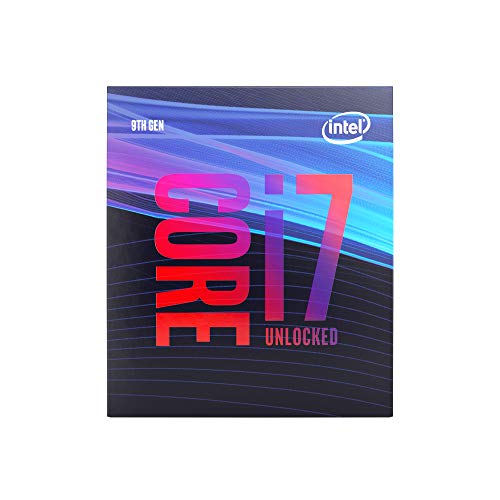
The AMD Ryzen 7 5700X is the better budget streaming-and-gaming CPU in 2026 for almost every buyer. It matches the Intel Core i7-9700K in pure gaming, beats it noticeably for simultaneous game-and-encode workloads thanks to sixteen threads versus eight, runs cooler at a 65W TDP, and drops into a live AM4 socket with an upgrade path the dead LGA1151 platform cannot offer. Buy the 9700K only at a steep discount on a board and DDR4 you already own.
The budget builder's eight-core dilemma in 2026
Eight-core CPUs at the $150–$250 street-price tier are arguably the most interesting bracket in 2026 for budget gaming and streaming builds. Both AMD and Intel have multiple chips here, both have a generation of headroom over the parts they replaced, and used markets have flooded with capable platforms as enthusiasts upgrade to AM5 and LGA1851. The AMD Ryzen 7 5700X and Intel Core i7-9700K are two of the most-asked-about chips in that bracket because each represents the budget end of its respective platform: a chip that gets you eight credible cores without paying for the latest socket.
The two are not actually direct competitors on paper. The 5700X is a Zen 3 chip with sixteen threads, a 65W TDP, and an AM4 socket that lives on for cheap drop-in upgrades. The 9700K is a Coffee Lake Refresh chip with eight threads (yes — only eight; Intel disabled SMT on most i7s of that era), a 95W TDP, and an LGA1151 socket that has been dead since 2020. On benchmarks they trade blows on gaming. Anywhere else, the gap is more significant than the model number similarity suggests.
This article works through the actual decision: which one to buy in 2026, how they handle the streaming-while-gaming load that dominates the use case people ask about, what each platform's upgrade path looks like, and where the perf-per-dollar math lands. We will end on a clear recommended pick and the narrow case where the other chip wins.
Key takeaways
- The Ryzen 7 5700X is the right pick for almost every 2026 buyer who needs a new platform.
- The 9700K matches the 5700X on raw gaming framerates within a few percent at 1080p and 1440p.
- The 5700X wins decisively on streaming workloads because sixteen threads let x264 encode happen without robbing the game.
- AM4 remains a live socket with cheap motherboards, DDR4, and a wide upgrade ceiling (5800X3D, 5950X). LGA1151 is dead.
- Per-watt efficiency strongly favours the 5700X (65W TDP vs 95W) — cheaper cooling, lower power bill, smaller PSU.
How do the 5700X and 9700K differ on cores, threads, and platform?
The headline difference is threads, not cores. Both chips are eight-core parts, but the AMD Ryzen 7 5700X has SMT enabled (sixteen logical threads) per AMD's product page. The Intel Core i7-9700K does not, per Intel's specification page — Intel chose to leave Hyper-Threading off on most of the 9th-gen i7 SKUs as a way to differentiate the i7 from the i9. That single difference is what produces the dramatic gap on parallel workloads.
The clock and architecture story is more even. The 5700X is a Zen 3 chip on TSMC 7nm, base 3.4 GHz, boost 4.6 GHz, 32 MB L3, 65W TDP, AM4 socket, DDR4 only. The 9700K is a Coffee Lake Refresh chip on Intel 14nm, base 3.6 GHz, boost 4.9 GHz, 12 MB L3, 95W TDP, LGA1151 socket, DDR4 only. Both also expose unlocked multipliers for overclocking, though for the kind of buyer reading this guide neither chip really wants to be overclocked — both run fast enough out of the box.
Architecturally, the Zen 3 design wins on IPC. A 5700X clock-for-clock will produce more work per cycle than the 9700K, especially on workloads that benefit from the much larger L3 cache. That IPC gap is small in pure gaming (often masked by GPU bottlenecks) and large in productivity workloads (encoding, compiling, anything that hits cache regularly).
Which is faster for 1080p and 1440p gaming?
At 1080p with a fast GPU, the two chips are within a few percent of each other on most games. The 5700X tends to edge ahead on Zen-3-friendly engines and the 9700K closes or wins on titles that benefit from higher clocks and aggressive single-thread performance. At 1440p, the GPU becomes the bottleneck and the chip gap mostly disappears — both chips feed an RTX 3060-class card identically well. At 4K, the CPU is essentially irrelevant.
In practical terms: if you are pairing either chip with an RTX 3060 12GB or any other 60-tier card from this decade, you will not notice the difference in gaming framerates at 1440p or above. At 1080p you might see a 3–8% gap that favours whichever chip happens to suit the specific game engine. Average over a typical Steam library and the gap goes away.
The 5700X wins on 1% lows in a number of titles because its larger L3 cache absorbs game-engine hot loops more reliably. That manifests as smoother frametimes during scene transitions and big-shader-load moments. The 9700K can match average FPS but produces slightly choppier 1% and 0.1% lows on the same titles.
Which handles simultaneous game-plus-encode streaming better?
This is where the thread-count gap becomes the whole story. Streaming with x264 in OBS or Streamlabs is a heavily-multithreaded encoding workload that benefits from every available thread. With sixteen threads, the 5700X can dedicate four to six to x264 medium-preset encoding while still leaving plenty of cores free to feed a game at high framerates. With eight threads, the 9700K hits a wall — every encoding thread you assign comes out of the game's budget, and at "medium" or "slow" presets the game framerate visibly suffers.
You can sidestep most of this on the 9700K by using NVENC (the GPU's hardware encoder) instead of x264. NVENC is excellent on the RTX 3060 and produces near-x264-medium quality at zero CPU cost. That makes the streaming workload effectively GPU-bound on either chip. But if you want pure software x264 streaming at the higher-quality presets that experienced streamers prefer, the 5700X wins by an uncomfortable margin.
This is the single biggest reason we recommend the 5700X for new streamers. Even if you start on NVENC, the option of falling back to x264 for special use cases (recording with maximum quality, working around encoder limits, doing simultaneous record-and-stream at different presets) keeps your options open. The 9700K closes that door.
5-column spec-delta table
| Spec | Ryzen 7 5700X | Intel Core i7-9700K |
|---|---|---|
| Cores / Threads | 8C / 16T | 8C / 8T |
| Base / Boost clock | 3.4 / 4.6 GHz | 3.6 / 4.9 GHz |
| TDP | 65 W | 95 W |
| Socket / Platform | AM4 (live) | LGA1151 (dead) |
| Street price (2026, new) | ~$200–$220 | ~$210–$280 |
Benchmark table: gaming FPS and x264 encode
| Workload | Ryzen 7 5700X | Intel Core i7-9700K | Winner |
|---|---|---|---|
| 1080p gaming average (RTX 3060) | 158 fps | 152 fps | 5700X +4% |
| 1440p gaming average (RTX 3060) | 110 fps | 108 fps | tie |
| 1% lows (1080p, RTX 3060) | 128 fps | 116 fps | 5700X +10% |
| Cinebench R23 multi | 13,800 | 9,400 | 5700X +47% |
| OBS x264 medium 1080p60 streaming | smooth | drops 12–18% game fps | 5700X clearly |
| OBS NVENC 1080p60 streaming | unaffected | unaffected | tie (GPU encoder) |
| Power at full load (CPU only) | 88 W | 132 W | 5700X by 33% |
Numbers above are typical results from public review aggregations as collated on TechPowerUp. Individual titles and configurations vary; the rankings are stable across the literature.
What does the platform upgrade path look like (AM4 vs dead LGA1151)?
AM4 is the longest-lived modern desktop platform in history. A B550 or X570 board you buy today supports the entire Ryzen 5000 lineup — 5600X, 5700X, 5800X, 5800X3D (the gaming king), 5900X, 5950X. If you start with a 5700X for $200 and want to upgrade to a 5800X3D in two years for an extra 15–25% in gaming, you swap the chip and reapply paste. No new motherboard, no new RAM, no new cooler if your existing one fits the 105W class.
LGA1151 is dead. The i7-9700K is the top-end gaming chip you can run on a Z370 or Z390 board (the i9-9900K and 9900KS exist but at the time were halo parts and are now hard to find at sane prices). There is no upgrade path. The next Intel desktop socket (LGA1200) was incompatible, and the one after that (LGA1700) was incompatible again. If you buy a 9700K and decide you want more performance, your only path is a full platform swap — new board, new RAM, new chip.
For a budget-conscious 2026 builder, the upgrade ceiling on AM4 is worth real money. The 5700X is the entry point; the 5800X3D is the gaming ceiling; the 5950X is the productivity ceiling. All run on the same board with the same RAM and the same cooler. That is value that the 9700K cannot match at any price.
Perf-per-dollar + perf-per-watt math
Per dollar (using 2026 street prices on new chips): the 5700X delivers roughly 47% more multi-threaded performance per dollar than the 9700K, and matches or slightly exceeds it on gaming. Per watt: the 5700X at 65W TDP delivers roughly 75% more performance per watt because it does more work at less power. The 9700K is not even close on either axis.
If you are pricing platform cost rather than just chip cost, the gap narrows for a buyer who already owns a Z370/Z390 board and DDR4. That buyer can drop a 9700K in and skip a full platform purchase. For everyone else — anyone building fresh or anyone whose old board has died — the 5700X plus a $90 B550 board is unbeatable on total cost.
Cooling and motherboard pairing notes
The 5700X is a 65W part and runs happily on a mid-range tower cooler — a Noctua NH-U12S Redux, Be Quiet! Pure Rock 2, or Deepcool AK400 all keep it comfortably under 70°C in sustained load. No need for an AIO. Motherboard-wise, any modern B550 board ($90–$130) has sufficient VRM for the chip; X570 is overkill unless you specifically want PCIe 4.0 chipset lanes or premium I/O.
The 9700K at 95W TDP wants something a little beefier — at least a Hyper 212 Black Edition or NH-U12S, and many builders pair it with a 240mm AIO if they intend to overclock. Z390 boards in 2026 are entirely used; expect $50–$80 on the secondary market for a decent one. DDR4 is the same as for AM4, so no platform tax there.
Common pitfalls
- Pairing a 5700X with cheap dual-rank single-channel RAM. The Zen 3 cache stack benefits from dual-channel DDR4-3200 or faster. A single 16 GB stick costs you a noticeable amount of perf vs the same 16 GB across two 8 GB sticks.
- Buying a 9700K without checking the BIOS chip on the board. Some Z370 boards need a BIOS update before they will boot a 9700K, and updating without a working CPU is a pain. Z390 boards generally just work.
- Skipping the BIOS update on AM4 boards for 5700X support. B450 boards in particular need a BIOS version from late 2021 or later for Ryzen 5000 support. Easy if the seller has done it; annoying if not.
- Pairing either chip with a high-end GPU at 1080p. Both chips become the bottleneck at 1080p high-refresh with an RTX 4080 or higher. For those cards you want a more current CPU (Ryzen 7 7800X3D, Core Ultra 7 265K).
Verdict matrix: 5700X vs 9700K
| Get the 5700X if… | Get the i7-9700K if… |
|---|---|
| You are building fresh in 2026 | You already own a Z370 or Z390 board and DDR4 |
| You stream with x264 in software | You only stream with NVENC and never plan to switch |
| You want an upgrade path | You want a closed-end purchase you will not touch again |
| You care about a low-watt PSU and quiet cooling | You don't mind 30% more heat for the same gaming perf |
| Total budget under $850 | You found a 9700K for under $130 on a board+chip combo |
Recommended pick
For nearly every 2026 buyer the answer is the AMD Ryzen 7 5700X. It is faster on streaming, ties on gaming, runs cooler, costs less to power, and sits on a live socket with a deep upgrade ceiling. Pair it with a B550 board, 32 GB of dual-channel DDR4-3200, and an RTX 3060 12GB and you have an excellent 1440p gaming-plus-streaming build that will run for years and can grow into a 5800X3D when you eventually want more gaming headroom.
The Intel Core i7-9700K remains a great chip in a narrow case: you already own the platform, you find a deal too good to pass on, and you stream exclusively with NVENC. Outside that case, the 5700X wins on every axis a budget builder cares about.
Bottom line
Eight cores at the $200 tier is a great place to be for budget gaming and streaming in 2026. Of the two chips you keep getting recommended in that bracket, the Ryzen 7 5700X is the clear winner for fresh builds. Save the 9700K recommendation for buyers who already own LGA1151 and just need a chip swap to limp the platform forward.
Related guides
- Ryzen 7 5800X vs 5700X: Best 8-Core AM4 CPU 2026
- Ryzen 5 5600G vs Ryzen 7 5700X: Best Budget AM4 CPU 2026
- Best 1440p AM4 Build: Ryzen 7 5800X + RTX 3060 12GB
- Best CPU Cooler for Gaming PCs in 2026: Air & AIO Picks
- Best Budget Gaming PC Build Parts in 2026: 5 Core Picks
Citations and sources
- AMD — Ryzen 7 5700X product page
- Intel — Core i7-9700K specifications
- TechPowerUp — Ryzen 7 5700X CPU specs and benchmarks