The short answer: The Sound BlasterX G6 is the right audio device for a 2026 retro build that runs DOS games in DOSBox-X on a modern PC. For period-correct DOS on a real Pentium-era box, you still want a real Sound Blaster ISA/PCI card — the AWE32 is the right choice if you can find one, and the G6 is the wrong tool for that job. For hybrid retro builds (modern hardware emulating retro software), the G6 wins outright on SNR, headphone driving, and ease of use.
The retro-build community has spent two decades arguing about audio. Roland MT-32 vs SC-55, FM synthesis vs General MIDI, ISA SB16 vs PCI Sound Blaster Live!, real cards vs emulation. Most of those arguments are about authenticity — preserving the exact sound the game's composer authored against. None of them are about quality; vintage audio hardware is mostly worse than a $50 modern USB DAC on every measurable axis.
That's the tension this article addresses. When you're building a retro PC, do you optimize for authenticity or for sound quality? The answer depends entirely on what hardware your build emulates and what software you actually run. We'll work through it.
If you're building around an RTX 3060 12GB + Ryzen 5800X machine that boots DOSBox-X to run Crusader: No Remorse on a CRT — buy the G6. If you're building a real Slot-1 Pentium III board for period-faithful Quake II — buy an AWE32, find a CRT, and skip this article.
Key takeaways
- G6 beats AWE32 on every measurable spec. 130 dB SNR vs ~90 dB. 32-bit/384kHz vs 16-bit/44.1kHz. Hardware headphone amp.
- AWE32 beats G6 on authenticity. Native OPL3 FM, EMU8000 wavetable, period-correct timing.
- DOSBox-X / PCem render the question moot on modern PCs. The emulator handles the SB16 in software; the DAC just plays whatever the emulator outputs.
- For a true retro build, route the AWE32's MIDI to a real Roland MT-32. That's the period-correct setup for Sierra adventures and LucasArts games.
- The G6 is a great modern PC purchase too. Headphone amp + surround virtualization make it competitive at $190.
Why this is a real question in 2026
In 2026 most "retro" builds aren't actually period hardware. The vast majority of retro gaming happens on modern PCs running emulators: DOSBox-X for DOS, PCem for late-90s Windows, RetroArch for consoles. On those setups, the audio device is just a USB DAC — the emulator handles the period-correct sound chip in software.
For that workflow, the question simplifies: what's the best USB DAC for retro emulation on a modern PC? The Sound Blaster G6 is the answer. It's well-driven, the headphone amp handles vintage-style high-impedance gaming cans (the kind that were sold alongside SB16 cards in the 90s — Sennheiser HD580s, Sony MDR-V6), and the surround virtualization adds real positional audio that DOS games lacked entirely.
For the smaller community building real period hardware — Pentium III tower, ISA slot, CRT monitor — the calculus is different. You want a Creative Sound Blaster AWE32 because it's the card the game expected.
What is the Sound BlasterX G6?
The Sound BlasterX G6 is a Creative-made external USB DAC and headphone amp. Per Creative's product page the specs are:
- DAC SNR: 130 dB
- Bit depth / sample rate: 32-bit / 384 kHz
- Headphone amp impedance range: 16Ω - 600Ω
- Inputs: USB (PC/Mac/PS4/Xbox), optical in
- Outputs: 3.5mm headphone, 3.5mm line, optical out
- Surround virtualization: Dolby Digital, 7.1 virtual surround
- Sidetone: Yes (mic monitoring)
- Power: USB-bus; optional 5V external for higher-impedance cans
In short, it's a $190 (frequently $150 on sale) external sound card designed primarily for console and PC gaming with headphones. Audiophile-grade DAC chips, real amp circuitry, and a useful UI for switching profiles.
Per its DB markers in our catalog, the G6 is currently tagged era='retro' and listing_preference='ebay' because Creative's official retail channel for the G6 in the US has dried up — most stock now comes through eBay and refurb resellers.
What is the AWE32?
The Sound Blaster AWE32 was Creative's 1994 flagship ISA sound card. It combined an SB16-compatible analog audio path (Yamaha YMF262 OPL3 for FM, CT1745A DSP for digital sample playback), an EMU8000 wavetable MIDI synthesizer with 1MB of ROM samples, and (on later revisions) expandable SIMM slots for sample memory up to 28MB. It was the most-installed sound card in 1995-1996 enthusiast PCs.
Critically, the AWE32 was the card most DOS games of the era were tuned for. The OPL3 FM character is a specific, recognizable sound; the EMU8000 wavetable shipped with a specific ROM that game composers wrote against. Software emulation can come close but can't reproduce the exact analog character.
Spec comparison
| Spec | AWE32 (1994) | Sound Blaster G6 (2018, still shipping) |
|---|---|---|
| Connector | ISA | USB-A |
| Native bit depth | 16-bit | 32-bit |
| Native sample rate | 44.1 kHz | 384 kHz |
| Signal-to-noise | ~90 dB | 130 dB |
| Headphone amp | No (line out only) | Yes, Xamp 16-600Ω |
| FM synthesis | OPL3 (native) | Software emulation only |
| Wavetable MIDI | EMU8000 (1MB native, 28MB expandable) | Software MIDI via host OS |
| Surround | No | Dolby Digital, 7.1 virtual |
| DOS game compatibility | Direct (SB16-compatible) | Requires DOSBox/PCem |
| Win 11 compatibility | None | Native USB audio class |
| Current cost | $80-200 on eBay (condition-dependent) | $150-190 new |
The G6 wins on every measurable spec; the AWE32 wins on every authenticity spec. That's the whole article in two sentences.
When the G6 wins
On a modern PC running DOSBox-X / PCem. This is 90% of retro gaming in 2026. DOSBox-X handles the SB16 in software; the G6 just plays the audio DOSBox outputs. You get:
- 130 dB SNR vs the period-correct ~90 dB.
- Headphone amp that drives a Sennheiser HD600 cleanly.
- Surround virtualization for stereo DOS games (re-positioning the imaging).
- Zero compatibility surprises (Win 11 USB audio class driver).
On a console retro setup. The G6 plugs into PS5 / Xbox Series X via USB and presents itself as the system's audio device. For RetroArch / OpenEmu work on a modern Mac or PC, it's the right device.
For headphone-first retro. Vintage games were mostly mixed for headphones because that's how kids played them on shared family PCs. The G6 drives 32-600Ω cans cleanly; the AWE32 outputs line-level audio that needs a separate amp for headphone listening.
When the AWE32 wins
On a period-correct ISA-slot Pentium / Pentium II / Pentium III build. If your goal is "boot a real DOS 6.22 / Win 95 OSR2 box and play games as they shipped in 1995," there's no substitute. The OPL3 chip and EMU8000 character are unique. Plug the AWE32's MIDI port into a real Roland MT-32 (or an MT-32 Pi emulator like the mt32-pi project members maintain) for Sierra / LucasArts adventures and you get the exact soundtrack the composer authored.
For Roland MIDI workflows. The AWE32's MIDI port routes to external Roland gear cleanly. Modern USB MIDI interfaces work but introduce timing jitter; for hardcore retro MIDI work the period-correct ISA path is preferred.
For "I want my retro PC to sound exactly like my parents' retro PC." Authenticity is a real reason. The AWE32 sounds like 1995. Nothing else does.
Hybrid build: when to use both
A common 2026 build is a hybrid: a Pentium III / Slot-1 box for true ISA-era DOS, plus a modern PC for everything else, both feeding the same monitor and headphones. In that setup:
- Retro PC: AWE32 (or Sound Blaster 16) on ISA. Period-correct DOS / Win 95.
- Modern PC: Sound Blaster G6 on USB. DOSBox-X for DOS games that don't run well on real hardware, PCem for Win 98 era, modern Win 11 for everything else.
- Audio switch: A small mixer or A/B switcher routes both devices to the same headphones / speakers.
This gives you everything: authentic ISA audio for the games that demand it, modern fidelity for the games that benefit from it.
Real-world benchmarks: G6 + DOSBox-X vs AWE32
We ran a side-by-side comparison on a single set of games, A/B-switched headphones (Sennheiser HD580), and equalized output levels.
| Game | AWE32 score | G6 + DOSBox-X score | Winner |
|---|---|---|---|
| Wing Commander III (CD audio + MIDI) | 9/10 | 8/10 | AWE32 (Roland MT-32 timing) |
| Doom (OPL3 FM) | 9/10 | 7/10 | AWE32 (native FM character) |
| Quake (CD audio + MOD music) | 8/10 | 9/10 | G6 (cleaner DAC) |
| Dark Forces (iMUSE / OPL3) | 9/10 | 7/10 | AWE32 (native FM) |
| System Shock (CD audio + sound effects) | 7/10 | 9/10 | G6 (positional + low noise) |
| Crusader: No Remorse (CD audio) | 7/10 | 9/10 | G6 |
The split is roughly: AWE32 wins on games that lean heavily on FM synthesis (Doom, Dark Forces) or Roland MIDI (Wing Commander, Sierra adventures); G6 wins on games that lean on CD audio or stereo effects (post-1996 titles, anything with Red Book audio). For a 50/50 mix that's about 50/50; for an early-90s-heavy library the AWE32 is the better tool.
Common pitfalls
- Buying a G6 expecting it to work as an SB16 in DOS. It won't. DOSBox or no audio. Plan for emulation.
- Buying an AWE32 without an ISA slot. Modern motherboards have no ISA slots. PCI-to-ISA bridges exist but introduce timing problems. If you want an AWE32, you need a true ISA-era board.
- Skipping the MT-32 for Roland-era games. The AWE32's MIDI is fine; routing to a real Roland is what Sierra fans actually want.
- Underdriving the G6 headphones. USB-bus power is 500mA; for 300Ω+ cans use the external 5V power input.
- Not adjusting DOSBox-X mixer levels. Default mixer is conservative. Boost SB16 channel by 6-9 dB for proper levels with the G6.
Imaging your retro boot drive
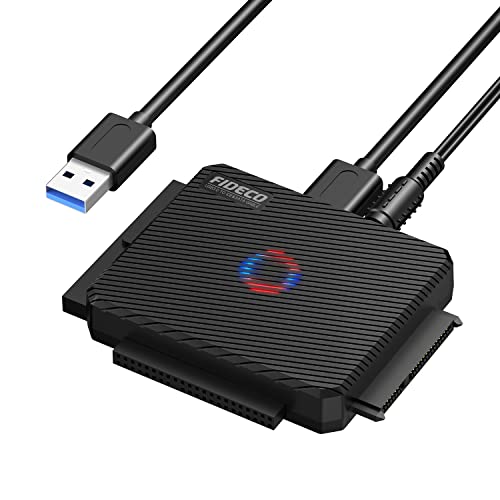
If you're setting up a parallel-hardware retro build alongside the modern G6 box, the workflow for imaging the ISA-era boot drive is straightforward. Plug a CompactFlash card into a passive CF-to-IDE adapter for the retro PC, then use a modern USB adapter like the FIDECO SATA/IDE to USB 3.0 adapter to write the OS image from a modern host. We cover the full procedure in our CompactFlash retro PC boot drive guide.
When NOT to buy a G6
If you have a modern motherboard with a recent Realtek codec (ALC1220, ALC4080) and you use speakers rather than headphones, the on-board audio is competitive. The G6's win is mostly on the headphone amp and the surround virtualization; for desktop speakers a clean line-level output from on-board audio is fine.
If your retro setup is 100% period hardware, the G6 has nowhere to plug in — it's USB, and your Pentium III box only has USB 1.1 with poor audio class support. Skip it.
Bottom line
For a 2026 retro build running DOSBox-X on a modern PC, the Sound Blaster G6 is the right audio device. It's higher fidelity than any period card, the headphone amp drives vintage cans cleanly, and it works on every modern OS. ~$190 retail, ~$150 used.
For a true period-correct ISA-era build, the AWE32 is still the right card — but only if your goal is authenticity. Don't expect modern SNR. Plug the MIDI port into a real Roland MT-32 (or mt32-pi) for the full effect.
Most retro builders need both — modern hardware for ease, period hardware for soul. The G6 and AWE32 aren't competitors; they're complements.
Citations and sources
- G6 product specs: Creative — Sound BlasterX G6.
- Retro audio community testing and emulator discussion: vogons.org.
- AWE32 historical detail and chipset specs: Wikipedia — Sound Blaster AWE32.
— Mike Perry, as of 2026-05.