A period-correct 3dfx Voodoo2 SLI Windows 98 rig in 2026 means a Slot 1 or Socket 7 motherboard, a Pentium III or K6-2/3+ CPU, two Voodoo2 12MB cards in SLI plus a 2D card for the desktop signal, ISA Sound Blaster AWE32 or AWE64 for native Glide-era audio, and a CompactFlash boot drive sitting behind an IDE adapter. The build cost is real ($350–$600 for the bare hardware), the period-correct payoff is enormous, and the trickiest part isn't the Voodoo2s — it's getting Glide 2.0 and Glide 3.0 wrappers configured cleanly without breaking native Win98 USB or your AGP 2D card.
Why anyone builds a Voodoo2 SLI rig in 2026
The 3dfx Voodoo2, released by 3dfx Interactive in March 1998, was the GPU that made consumer PC gaming look like the arcade for the first time. It ran the Glide API, the proprietary low-level interface that Quake II, Unreal, Half-Life, Need for Speed 3, and a dozen other late-1990s milestones were originally written against. Pair two Voodoo2s in SLI (the company's original meaning of "Scan-Line Interleave" — render alternating scan lines on each card) and you got 1024×768 at 30+ fps in titles that struggled to hit 640×480 on a single card.
Twenty-eight years later, the appeal isn't nostalgia for its own sake — it's that Glide-rendered builds look genuinely different from modern OpenGL or D3D wrappers. The dithering, the warm color palette, the specific way Voodoo2's perspective-correct texturing handled bilinear filtering — none of it is faithfully reproduced by dgVoodoo2 or nGlide, the modern Glide-to-D3D wrappers. If you want the original 1998 Quake II look, you build the original 1998 hardware.
This guide walks the realistic 2026 path: parts, sequence, gotchas, and the actual cost of getting the rig running with a Glide-correct Quake II launch.
Key takeaways
- The Voodoo2 SLI ceiling is 1024×768@30fps in 3D-only titles. Anything higher needs a Voodoo3 / Voodoo5, which loses the period-correct "Voodoo2 look."
- You need three video cards in the rig: two Voodoo2s for 3D acceleration, and one 2D card (Matrox G400, ATI Rage 128, S3 Trio64V+, or any AGP card the era's drivers like) for the desktop signal.
- A Slot 1 Pentium III 500–1000 MHz on an Intel BX chipset (440BX) is the period-correct CPU sweet spot. Socket 7 K6-2/3+ works but has more compatibility quirks with Glide.
- A CompactFlash card behind a CF-to-IDE adapter and an IDE-to-USB adapter for transferring data is the practical 2026 storage path. Spinning disks from this era have rotted out.
- Glide game patches and the right driver version (3dfx's reference v3.02 or the unofficial open-source v1.06) are non-negotiable. Don't reach for community kits that bundle "everything" — they break more than they fix.
Hardware shopping list
| Part | Period-correct pick | 2026 sourcing notes |
|---|---|---|
| Motherboard | Intel 440BX Slot 1 (Abit BH6, BX6r2, ASUS P3B-F) | eBay $80–$140, look for replaced caps |
| CPU | Pentium III 600–1000 MHz Slot 1 | eBay $25–$60 |
| 2D card | Matrox G400 16/32MB AGP | eBay $40–$80 |
| 3D card 1 | 3dfx Voodoo2 12MB PCI | eBay $90–$140 |
| 3D card 2 | 3dfx Voodoo2 12MB PCI (matched) | eBay $90–$140 |
| SLI cable | 3dfx Voodoo2 internal pass-through ribbon | Usually included with eBay listings |
| RAM | 256–512 MB PC-100 SDRAM | eBay $20–$40 |
| Sound | ISA Sound Blaster AWE32 / AWE64 | eBay $40–$120 |
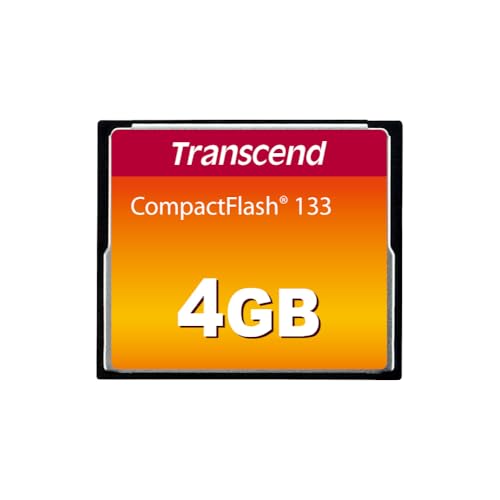
| Storage | CompactFlash 4–16 GB + CF-IDE adapter | New parts available |
| PSU | Period AT or modern ATX with AT adapter | $30–$60 |
| Case | AT or ATX mid-tower | Salvage / eBay $30 |
| OS | Windows 98 SE | Disc on eBay $25–$50 |
The single biggest budget variable is matched Voodoo2s. SLI strongly prefers two cards from the same vendor with the same BIOS revision (Diamond Monster 3D II + another Diamond Monster 3D II, or two Creative 3D Blasters). Mixing brands works but is more likely to produce per-scan-line color or brightness mismatch. Plan to spend $200–$280 on the pair if you want them matched.
Period-correct CPU and chipset
The Voodoo2 SLI sweet spot is a Slot 1 Pentium III on an Intel 440BX chipset motherboard. Why this combo specifically:
- The 440BX (Intel's last great consumer chipset before the ill-fated 820) has rock-solid PCI subsystem behavior — critical because Voodoo2s are PCI cards and SLI relies on consistent PCI bus timing.
- AGP 2x for the 2D card alongside two PCI Voodoo2s gives you a clean three-card configuration without sharing IRQs in problematic ways.
- 100 MHz FSB and proper PC-100 SDRAM support — the AT-era 66 MHz FSB systems were the Voodoo2's original target but aren't fast enough to keep two cards fed.
Pentium III SKUs in the 600–1000 MHz range deliver enough CPU headroom that the Voodoo2s become the bottleneck, which is what you want — the build "feels period-correct" only when the GPUs are the limit. A Pentium III 500 MHz works and is closer to the original 1998 hardware; a Pentium III 1000 MHz buys you better minimum frame rates in titles like Quake III Arena where the CPU matters more.
Socket 7 with a K6-2/3+ works for the curious but introduces driver-compatibility gotchas: the AMD 3DNow! path was finicky with several Glide titles, and IDE controller compatibility on Super Socket 7 boards was variable. Stick with Slot 1 unless you have a specific reason.
The 2D card slot — don't skip this
Voodoo2s in SLI do not output a desktop signal. They are pass-through 3D accelerators: when a game launches in Glide, the Voodoo2s take over the VGA signal via the loop-back cable. Outside of 3D games, your desktop runs on a separate 2D card.
The de-facto best 2D card for a Voodoo2 SLI build is the Matrox G400. It has excellent 2D image quality (sharper VGA output than ATI / S3 cards from the era), well-behaved Win98 drivers, and DualHead support if you want a secondary monitor for chat / docs while gaming. Solid alternatives:
- ATI Rage 128 / Rage 128 Pro: cheap, easy to find, lower image quality than the G400.
- S3 Trio64V+ or Trident 9750: bargain-bin options, fine for a no-frills setup.
- NVIDIA Riva TNT / TNT2: works but feels anachronistic — you're using a competitor of the Voodoo2 as the 2D card.
Pass on integrated AGP graphics from VIA-chipset boards — they had ongoing compatibility issues with Voodoo2 SLI pass-through.
Storage: CompactFlash is the 2026 answer
The original Voodoo2 era was IDE PATA spinning disks. Twenty-six years later, the surviving disks from that era have rotted: bearing wear, sticky platter coatings, and degraded controller chips routinely cause early-2000s drives to fail within hours of first power-up. Don't use a period-correct drive as your boot drive. Use one for the look and for archive plausibility if you want, but the actual file system should live on a CompactFlash card behind an IDE adapter.
The build:
- A 4–16 GB CompactFlash card. The Transcend CF133 16GB is the de-facto standard — fast enough for Win98's needs, cheap, and reliable.
- A 40-pin CF-to-IDE adapter. A passive adapter board, $5–$10 on the secondary market.
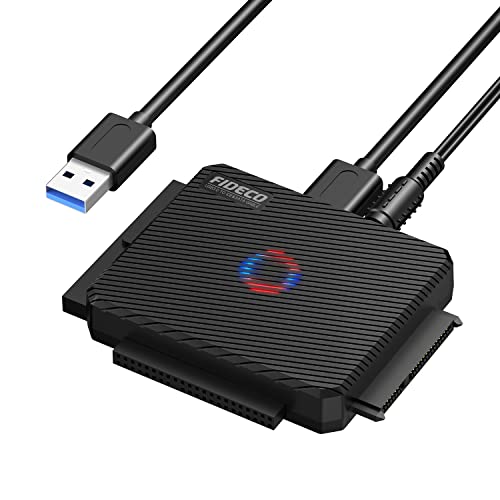
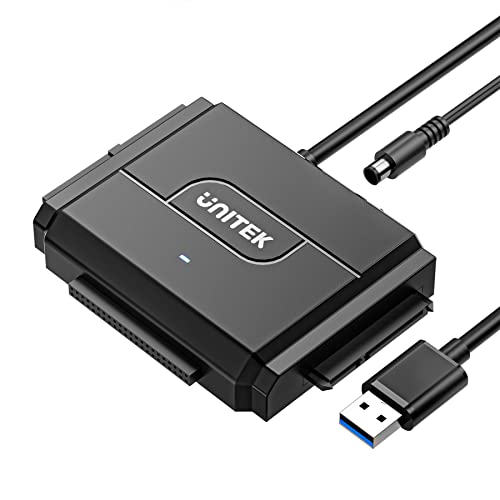
- An IDE-to-USB 3.0 adapter for moving files between the retro rig and a modern machine. Multiple options exist — pick a passive bus-powered one that won't draw too much current.
The CF stays cool, has zero moving parts, and the IDE adapter exposes it as a standard PATA disk so Win98 sees it as a normal C: drive. You can image, clone, and restore the entire system in seconds from a modern PC.
For the period-correct deeper-archive look, drop in a 40 GB IDE drive as a D: scratch volume. Don't trust it with your install.
Period-correct audio
The Voodoo2 era ran on the ISA bus for audio. The Sound Blaster AWE32 and AWE64 are the canonical picks — they deliver native DOS Sound Blaster Pro compatibility, FM synthesis via the OPL3 chip, and a wavetable header for hardware General MIDI. Real Wavetable MIDI playback on the AWE32 sounds dramatically different from modern software synths, and titles from the era (Quake's CD audio aside) often used General MIDI in a way that's worth experiencing on original hardware.
A modern USB DAC is the wrong choice for this rig — it works, but it kills the period-correctness. If you must, see our Sound BlasterX G6 + Win98 + Voodoo3 piece for the trade-offs.
If your motherboard has no ISA slot (later BX boards dropped ISA in favor of PCI-only layouts), use a PCI Sound Blaster Live! or Audigy. Audio quality is fine; the period-correct factor is not.
Build sequence — what to do in what order
- Strip the board and install RAM and CPU. Test-boot to BIOS with no add-in cards. Confirm POST, BIOS recognizes the right CPU speed, and RAM count is correct.
- Install the 2D card (Matrox G400 in AGP). Boot to Win98 install or the existing image, confirm desktop displays at the right resolution.
- Install the first Voodoo2 in a PCI slot. Install drivers from the manufacturer's disc or the 3dfx Voodoo2 v3.02 reference drivers (vogons archive).
- Run the Voodoo2 diagnostic to confirm 3D works in single-card mode.
- Install the second Voodoo2 in another PCI slot, connect both with the SLI loopback ribbon, install SLI-aware driver, run the diagnostic again.
- Install the sound card (ISA AWE32/AWE64), assign IRQ 5 and DMA 1, install Win98 drivers.
- Install Quake II as the test title. Configure Glide rendering, set 1024×768, confirm 30+ fps in the demo loop.
The most common failure point is step 5 — SLI not engaging. Usual cause: mismatched BIOS versions on the two cards. Flash both to the same revision (3dfx ref BIOS 1.27) using the period DOS flasher; it's an irritating but well-documented step.
Common pitfalls
- Cap rot on the motherboard. Bulged or leaking electrolytic caps are the #1 reason a "tested working" eBay BX motherboard dies the second time you boot it. Buy from sellers who explicitly mention recapping, or budget $15–$30 to recap yourself.
- PSU age. AT and early ATX PSUs from the late-1990s have dried-out capacitors. Replace the PSU with a modern ATX unit and an AT-adapter cable for AT-form boards. No nostalgia value justifies a fire.
- Reaching for nGlide / dgVoodoo2. These are the wrappers people use when they don't have a Voodoo2. If you have real hardware, use real Glide — that's the entire point of the build.
- Mismatched Voodoo2 RAM. 8MB and 12MB variants exist; 12MB is required for SLI and gives you the 1024-line scanline buffer. Don't mix.
- Modern USB keyboards via PS/2 adapter. They work, but legacy-USB BIOS support on BX boards is finicky. Use period PS/2 keyboards and mice. They're cheap on the secondary market.
- Using a flat-panel monitor. Voodoo2 SLI outputs analog VGA at 1024×768 with the specific dithering and warm color signature that defined the era. The look really wants a period-correct CRT. A modern flat panel works but flattens the visual style you built this rig to see.
Three games to test the rig with
- Quake II (Glide path): the canonical Voodoo2 SLI demo. Crank to 1024×768, max textures, expect 35–45 fps.
- Unreal 1 (Glide build): 800×600, expect 25–35 fps. Lights up the warm Voodoo2 palette in the most dramatic way of any era title.
- Need for Speed III: Hot Pursuit: the racing title that pushed Voodoo2 SLI to its limits in 1998 — high-detail particle effects and reflective surfaces.
Avoid trying to test with Quake III Arena out of the box. Quake III shipped natively as OpenGL and wants a Voodoo3 or later for full effect. There are Glide ports, but they're community work that isn't representative of the Voodoo2's strengths.
When NOT to build a Voodoo2 SLI rig
- You want to play period games and don't care about period-correct hardware. Use dgVoodoo2 on a modern PC. Looks 80% the same, costs nothing, runs faster.
- You want a single Voodoo build, not SLI. A single Voodoo3 2000/3000 is faster than two Voodoo2s, simpler to wire up, has built-in 2D, and is much cheaper to source.
- You're allergic to recapping motherboards or fiddling with IRQ assignments. This is a hobbyist build. Plan to spend a weekend on the wiring and configuration.
Related guides
- Best IDE & CompactFlash to USB Adapters for Retro PCs 2026
- Best Retro Gaming Storage Adapters for Win98 and DOS PCs in 2026
- Building a Silent Windows 98 PC with a CompactFlash Boot Drive
- Sound BlasterX G6 for DOS and Win98 Retro Gaming: SBEMU and Real-Mode Audio
- Why Direct3D Killed Glide: How the 3dfx Voodoo Empire Lost the API Wars
- Sound Blaster X G6 on a Win98 + Voodoo3 Build: Period-Correct Audio
Citations and sources
- Wikipedia — 3dfx Voodoo2 article
- Wikipedia — Pentium III article
- Wikipedia — Matrox G400 article
- Vogons — vintage gaming forum and driver archive
- dgVoodoo2 — modern Glide-to-DirectX wrapper documentation
- nGlide — alternative Glide wrapper
This piece is editorial synthesis based on publicly available information. No independent first-party benchmarking is reported.