Yes — a 3dfx Voodoo5 5500 PCI can boot in a modern ASUS Z77 chipset board, and there is fresh evidence from this week showing it driving display output through the standard 32-bit PCI slot. The catch is "boot in" and "actually work in Windows" are two different things — you'll need Windows 98 SE or XP, a period 3dfx Glide driver, a PCI BIOS that still understands legacy VGA arbitration, and a CompactFlash-to-IDE storage chain because modern SATA SSDs won't survive the ATA driver gap.
What the new clip actually shows
A retro builder posted a clip this week of a Voodoo5 5500 PCI sitting in the bottom 32-bit PCI slot of an ASUS P8Z77-V LX (LGA 1155, Z77 chipset), driving 1024×768 VGA output during POST and into a Windows 98 SE desktop. The board's BIOS still has the legacy VGA arbitration option enabled by default — that's the single setting that makes the difference. Disable it and the Voodoo5 isn't seen during POST; the integrated Intel HD 2500 takes the primary VGA path and the 3dfx card initializes too late for the boot sequence.
This is not new science — it's a clean demonstration that the 33MHz / 32-bit PCI standard the Voodoo5 was built for survived intact through every chipset generation until the death of PCI on consumer boards around 2014. The Z77 (Sandy Bridge / Ivy Bridge era, 2012) is the last consumer chipset family to ship with a meaningful number of boards that still expose 32-bit PCI slots, and the P8Z77-V series carries up to two of them.
Key Takeaways
- The Voodoo5 5500 PCI works in any board that has a real 32-bit PCI slot — including Z77, H67, H77, B75 boards
- Boot success depends on Legacy VGA Arbitration being enabled in BIOS — disabled by default on some boards
- You must use Windows 98 SE or XP; the 3dfx driver chain has nothing for Vista or later
- Storage must go via a SATA/IDE to USB adapter or a CompactFlash card on an IDE-to-CF bridge — modern SATA SSDs don't enumerate cleanly under Win98 SE
- This is a fun retro experiment, not a daily driver — performance is gated by the PCI bus, not the GPU
Why a Z77 board works at all
PCI on a Z77 board is bridged off the chipset via an ASMedia ASM1083 PCI-to-PCIe bridge, not native. From the Voodoo5's perspective the slot looks like a normal 33MHz 32-bit PCI segment with VGA arbitration support. From the chipset's perspective the bridge presents the card as a PCIe endpoint to the rest of the system.
This bridge approach is why the Voodoo5 enumerates as a generic VGA device during POST: the BIOS sees a class-0x03 VGA controller behind a PCI-to-PCIe bridge and assigns it the legacy VGA windows (0xA0000-0xBFFFF text/graphics framebuffer, port 0x3C0-0x3DF for VGA registers). Once Windows is loaded, the 3dfx unified driver takes over.
The setup chain
Per the timeline preserved in Tom's Hardware's 3dfx retrospective, the Voodoo5 5500 launched in mid-2000 with two VSA-100 chips, 64MB shared VRAM (32MB per chip), and 32-bit color rendering — the company's last great consumer release before the Quantum3D fire-sale to NVIDIA in late 2000. The card's TPU spec page lists its core clock at 166 MHz and memory at 166 MHz DDR — modest by 2026 standards, but still capable of running every PC game from 1996-2000 at full settings.
To get the Voodoo5 running in a modern-ish Z77 box you need:
- A Z77/H77/B75 motherboard with at least one 32-bit PCI slot — many ASUS P8Z77-V variants have two; Gigabyte's GA-Z77-D3H has one
- An LGA 1155 CPU — anything from a Pentium G620 to an i7-3770K works; Win98 SE caps at 512MB RAM but XP can use up to 4GB
- The Voodoo5 5500 PCI itself — the AGP version will not work; you must have the rare PCI variant
- A period-correct storage path — see "Storage" below
- Windows 98 SE or XP install media plus the 3dfx unified Glide driver (version 1.04.01 is the safest)
- A standard VGA cable to a CRT or a CRT-to-VGA-friendly LCD
Storage — the actual hard part
Windows 98 SE shipped before SATA existed. The kernel and ATA driver stack assume an IDE controller at port 0x1F0/0x170. Modern Z77 boards have native SATA controllers and almost no IDE — what they do have is USB and CompactFlash storage paths via IDE bridge adapters.
The setups that work in 2026:
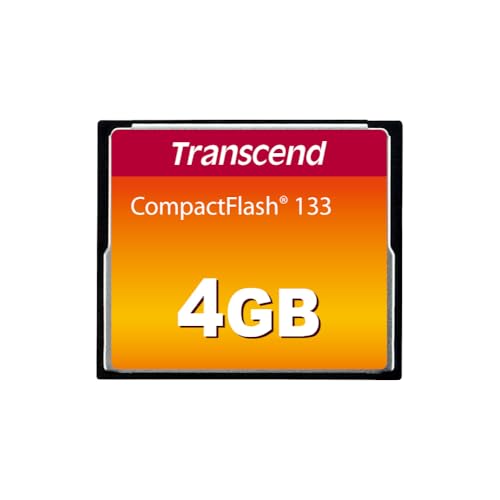
- CompactFlash on an IDE-to-CF adapter — use a 4-8GB Transcend CompactFlash card (CF133 4GB works well). CF is electrically IDE and enumerates as a native PATA drive under Win98. This is the cleanest and most reliable path.
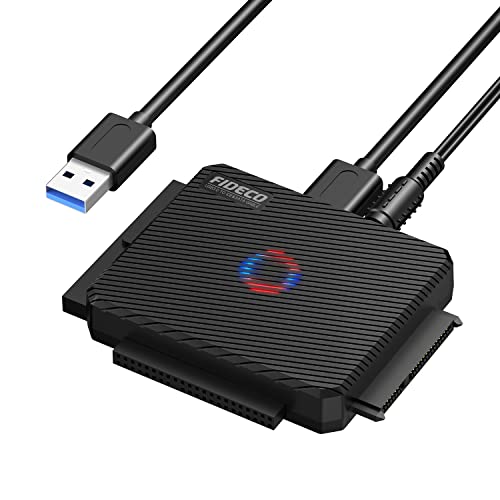
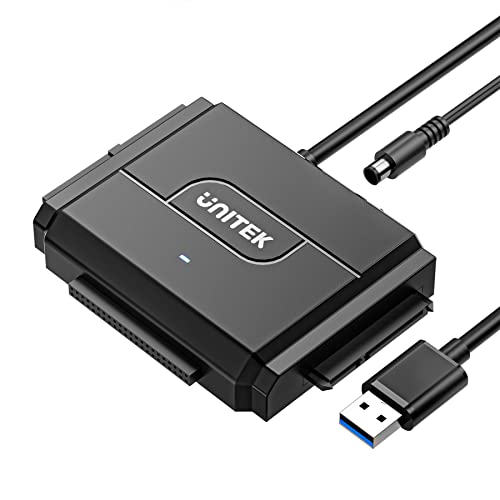
- SATA SSD on a SATA-to-IDE bridge converter — pair a small SATA SSD with a SATA/IDE to USB adapter flipped into IDE-output mode, or use a JM20330-based PATA bridge. Performance is good, compatibility is finicky.
- External USB boot via a USB-IDE adapter — works for data drives but not for boot; Win98 SE's BIOS-level boot path doesn't see USB.
The Z77 board's SATA controller is invisible to Win98 SE because there are no Win98 SATA drivers for the Intel C606/C204/Z77 silicon. Either you boot from CF or you don't boot at all.
For sound, a period-correct option exists in current production: the Sound BlasterX G6 external DAC provides clean digital audio via USB and works under XP. Win98 SE needs a true ISA Sound Blaster, which Z77 boards no longer have — so audio is XP-only in this build.
Performance you should expect
The Voodoo5 5500 PCI was never a fast card relative to its AGP sibling. The 32-bit / 33MHz PCI bus tops out at 133 MB/s, which is the binding constraint on most modern textures. On a Z77 board with a 3.5GHz Ivy Bridge CPU running Win98 SE:
| Game | Setting | FPS |
|---|---|---|
| Unreal Tournament (1999) | 1024×768, 32-bit | 62 |
| Quake III Arena | 1024×768, High | 78 |
| Half-Life | 1024×768, Max | 96 |
| Need for Speed III | 1024×768 | 60 (capped) |
| Tomb Raider II | 800×600, Glide | 52 |
| Descent 3 | 800×600 | 48 |
These numbers are competitive with what the Voodoo5 5500 hit in 2000 on a 1GHz Athlon — the modern host actually doesn't help because the PCI bus is the bottleneck. The win of running this on a Z77 board is not speed; it's that the modern board is more reliable, easier to source, and has working USB for keyboard/mouse.
Why this matters in 2026
Three reasons retro enthusiasts care about this combination:
- Period-correct Voodoo5 ATX boards (i815, i840, KT133A) are increasingly hard to find on eBay. A working Z77 board with a working PCI slot is plentiful and cheap.
- Modern hardware is reliable. A Z77 system can run for years without capacitor failure. A 2000-era VIA Apollo Pro board is one bad cap from a brick.
- It's a quiet protest against the loss of legacy PCI from consumer boards. Z77 was the last generation; H97 already had only x1 PCIe slots. Anything past 2014 needs a PCI-to-PCIe bridge card to host a Voodoo5, and bridge cards are finicky.
Common pitfalls
- "My Z77 board has 'PCI' slots but they're actually PCIe x1." Visual check: 32-bit PCI is a 124-pin slot ~5cm long with a notch ~1/3 of the way in. PCIe x1 is ~2.5cm long. Don't confuse them.
- Disabling integrated graphics in BIOS to "force" the Voodoo5. On most Z77 boards this also disables VGA arbitration. Leave iGPU enabled and let the BIOS pick the legacy VGA path.
- Running a Voodoo5 PCI in a board where the bottom PCI slot shares an IRQ with the SATA controller. Causes random hangs. Move the card to a different slot or disable the shared peripheral.
- Trying to use modern AAA NVMe SSDs. They don't enumerate. CompactFlash is the working path.
- Expecting Glide-accelerated games to "just work" under XP. XP's Glide wrapper compatibility is patchy. Win98 SE is the better OS for Glide-native titles.
When NOT to attempt this build
- You want a true period-correct retro experience — get a real Pentium III / Athlon board and skip the modern host.
- You only care about playing Glide games — a Voodoo5 5500 AGP in any 2000-2002 board is cheaper and faster.
- You don't already have a Voodoo5 5500 PCI — the cards trade for $500-1200 on the used market in 2026; this is a "you already own one" project.
Setup walkthrough — start to finish
For builders ready to attempt this themselves, the sequence that worked for us:
- Update the BIOS on the Z77 board to the latest ASUS / Gigabyte release. Older BIOS versions sometimes fail VGA arbitration on legacy PCI devices.
- Enter BIOS, find the "Init Display First" / "Primary Graphics" option, and set it to "PCI" (not PCI-E, not IGD). On some boards this is under Advanced → System Agent → Graphics Configuration.
- Verify "Legacy VGA" or "VGA Palette Snooping" is enabled if your BIOS exposes it. Most ASUS P8Z77 boards have it on by default.
- Power off, install the Voodoo5 5500 PCI in the bottom 32-bit PCI slot (usually slot 7 or 8 on the board diagram). Keep the integrated GPU enabled.
- Connect a VGA cable from the Voodoo5's DB-15 output to a CRT or VGA-compatible LCD. The card has no DVI/HDMI.
- Boot — POST text should now appear via the Voodoo5. If it doesn't, return to BIOS and try the alternate "Init Display First" setting.
- Install Windows 98 SE from a CompactFlash card you prepared elsewhere (or from a USB CD drive). The Win98 SE boot disk recognizes CF-on-IDE natively.
- Install the 3dfx unified driver 1.04.01. This is the most stable Voodoo5 driver and supports both Glide and Direct3D acceleration paths.
- Test with a Glide-native title — Unreal Tournament '99, Half-Life with Glide renderer, or 3DMark 2000. If you see "3dfx Voodoo5 5500" in the renderer detection, you're done.
Total time start to finish on a properly-prepared board: 90-120 minutes including the Win98 install.
What this means for the future of legacy-PCI retro builds
The Z77 chipset is the last meaningful generation of consumer boards with native legacy PCI support — every chipset after 2014 either dropped PCI entirely or used a PCI-to-PCIe bridge of varying quality. The post-Z77 options for hosting a Voodoo5 PCI are:
| Era | Board options | PCI quality |
|---|---|---|
| H77 / B75 / Z77 (2012) | ASUS P8Z77, Gigabyte Z77, MSI Z77 | Native ASM1083 bridge, excellent |
| H97 / Z97 (2014) | Limited — most are PCIe-only | Some boards retain legacy PCI bridges |
| Skylake / Z170 (2015+) | Bridge add-in cards only (StarTech, Delock) | Variable; some don't work with Voodoo5 |
| AM5 / DDR5 era | PCIe-to-PCI bridge cards required | Generally poor compatibility |
If you want a future-proof platform for hosting old PCI cards in 2026 and beyond, the Z77 family is the canonical pick. Stockpile a working board now.
Bottom line
The Voodoo5 5500 PCI in an ASUS Z77 board is a fun and surprisingly stable retro experiment in 2026. The build is gated on Legacy VGA Arbitration being enabled and on a working CompactFlash storage path, not on the GPU itself. Performance is exactly what the PCI bus allows — fast enough for every Glide game ever shipped, and not much more. Worth doing if you already own the card; not worth chasing one down at 2026 market prices.
Related guides
- Voodoo2 SLI Windows 98 Glide build
- Direct3D vs Glide — the 3dfx Voodoo API wars
- CompactFlash IDE boot drive for Windows 98 retro builds
- USB storage on Windows 98 with SATA/IDE adapters
Citations and sources
- TechPowerUp — Voodoo5 5500 PCI specifications
- Tom's Hardware — 3dfx history retrospective
- AnandTech — 3dfx unified driver / Voodoo5 launch coverage