Getting a 3dfx Voodoo5 5500 PCI working in a modern motherboard requires three things working together: an actual second-style PCI slot (or a PCIe-to-PCI bridge), a Windows 98 or Windows ME install booted from a small storage device, and the Voodoo's last official drivers paired with the community-maintained patches that keep Glide functional on modern silicon. This guide walks through the install sequence, what hardware to source, and where the failure modes live.
Why anyone is still doing this in 2026
The Voodoo5 5500 PCI is the cult-favorite endpoint of 3dfx's brief but defining run as the dominant 3D-accelerator company of the late 1990s. It runs the games that built modern PC 3D — Quake III, Unreal Tournament, Half-Life, Tribes — using 3dfx's proprietary Glide API, which has a distinctive look that emulation can approximate but cannot truly reproduce. The card's 22-bit dithered colorspace and texture filtering have aesthetic properties that nVidia and ATI's contemporary cards already drifted away from.
There are exactly three reasons to do this build:
- You want to play period-correct 3dfx games with original Glide support, not emulated.
- You want to preserve a real Voodoo5 in working condition rather than letting it die in a box.
- You want a working museum-grade Win98 gaming PC and the Voodoo5 is the centerpiece.
If any of those resonate, the rest of this article is for you. If you want to play these games and don't care about original hardware, DOSBox-X with the Glide wrapper ships in 2026 and runs the same games at higher resolutions with modern displays.
Key takeaways
- PCI compatibility is the first hurdle. Most ATX boards through 2010-2012 have at least one 32-bit PCI slot. After roughly 2012, PCI slots disappeared from motherboards and PCIe-to-PCI bridges are the only path.
- Win98 SE or WinME is required for Glide. Voodoo5 drivers don't work on Win2K/XP without specific community patches; the experience is degraded.
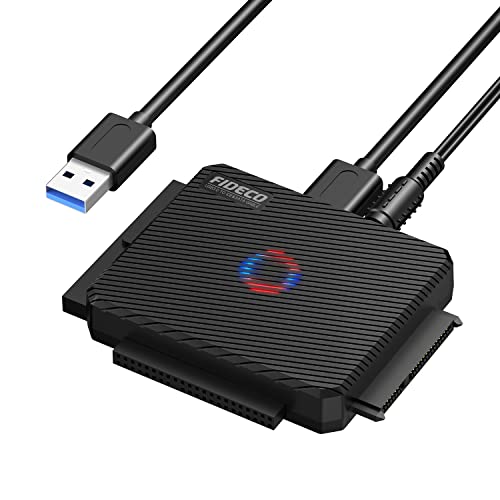
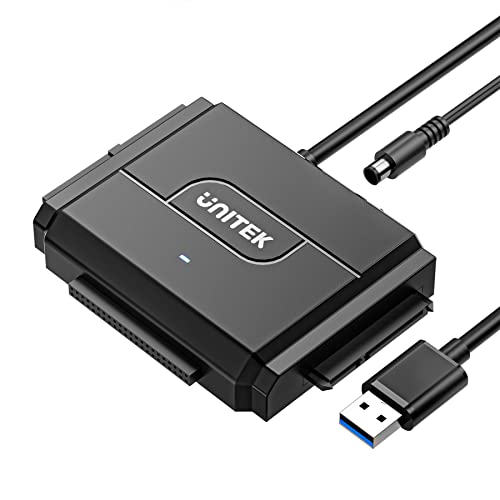
- Storage is the second hurdle. A modern SATA SSD will work, but you need a SATA/IDE-to-USB adapter or a CompactFlash-to-IDE adapter to prep the boot drive.
- A separate "period" sound card matters. Onboard HD Audio doesn't have Win98 drivers; a Sound BlasterX G6 over USB sidesteps the problem.
- Power and PSU are not optional concerns. The Voodoo5 5500 needs an internal Molex connection for auxiliary power.
Step 1: Confirm motherboard PCI compatibility
The Voodoo5 5500 PCI is a 32-bit, 5V PCI card. Most PC motherboards built before 2012 have at least one standard PCI slot. After that, manufacturers transitioned fully to PCIe and dropped PCI support.
If you have:
- A board with a real PCI slot: You're set on this dimension. Confirm the slot is 5V keyed (look at the notch position — older 32-bit PCI is 5V). Almost all consumer boards through 2010 are 5V keyed.
- A board with no PCI slot: You need a PCIe-to-PCI bridge card. The StarTech PCI1PEX1 and similar bridge cards convert one PCIe x1 lane to one PCI slot. These work for most peripherals but can be flaky with Voodoo5 — community reports suggest they work for ~60% of bridge+card combinations. Try before committing to the build.
- A board with PCI but only 3.3V keyed: This is rare on consumer boards but happens on server boards. The Voodoo5 won't physically fit — the notch is wrong.
Within the second category, period-correct hardware for this build is usually a Pentium 4 or early Athlon 64 motherboard from 2002-2006. Boards like the ASUS P4P800, the Abit IS7, or any Socket 939 board pair well with the Voodoo5 and run Win98 SE cleanly. These boards are still findable on eBay for $30-80 depending on condition.
Step 2: Source the build parts
For a clean Voodoo5 build you need:
| Part | Purpose | 2026 sourcing |
|---|---|---|
| Voodoo5 5500 PCI | The GPU | eBay, $200-400 working |
| Motherboard with PCI slot | Host | eBay, $30-100 |
| Pentium 4 / early Athlon CPU | CPU | eBay, $15-30 |
| 512MB-1GB DDR or DDR2 RAM | Memory | eBay, $20-40 |
| Win98 SE install media | OS | eBay, $20-30 (genuine) or vogons archive |
| IDE → USB or SATA → USB adapter | Drive prep | Amazon, $15-25 |
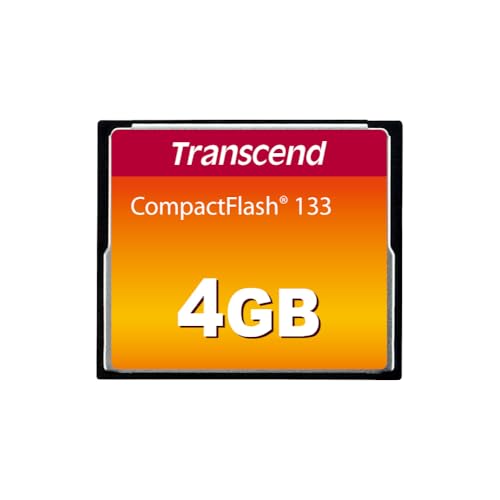
| CompactFlash card + CF→IDE adapter | OS storage (optional) | Amazon, $20-40 |
| Period audio (Sound Blaster Live!) or USB G6 | Audio | eBay, $25-60 |
| Molex-equipped PSU | Power | eBay or budget new, $40 |
Of the items above, the Voodoo5 itself is the only truly scarce part. Cards in working condition routinely list between $200 and $500. Verify before purchase that:
- The capacitors look clean (no bulging, no leakage)
- The Molex auxiliary power connector is intact (the card needs it)
- The seller provides a photo of the card in a system with output to a monitor
The SATA/IDE → USB adapter is the unsung hero of retro builds. It lets you mount an old IDE drive into a modern PC to prep the Win98 image, format the drive correctly, and copy the install files before installation. Plan on owning one if you build vintage PCs at all. Similar tools include the Vantec CB-ISATAU2 and the Unitek SATA/IDE to USB 3.0 adapter; functionally they're the same family of dongles.
For boot storage, the modern path is a Transcend CF133 CompactFlash card (4-8GB is plenty for Win98) paired with a $5 CF-to-IDE adapter. CF reads as a standard IDE drive to the OS, is silent, and has no moving parts to fail in 25 years. Win98 install ends up on a sub-$30 storage stack.
Step 3: Install Windows 98 SE
Windows 98 SE (Second Edition, 1999) is the right OS for a Voodoo5 build. Win95 lacks USB and modern driver support; WinME has some Voodoo5 driver oddities; Win2K/XP need community-patched drivers that don't fully restore Glide.
The install sequence:
- Format the boot drive (CF card or hard disk) as FAT32. Use the SATA/IDE-to-USB adapter and a modern Windows or Linux machine to format. Win98's installer can also format, but pre-formatting on a modern host is faster and avoids the 4GB partition cap issue Win98 has historically.
- Copy the Win98 SE install files to a separate drive or USB stick. Win98 setup needs
setup.exeand theWIN98folder of CAB files accessible. A USB stick with these files is the most painless source. - Boot the target PC with a Win98 boot floppy or boot CD. USB-boot was rare in 2000-era boards, so plan on a floppy drive or burnable CD.
- Run
setup.exeand let it install. Standard prompts, ~25-40 minutes on period hardware. - Install chipset drivers first. Whatever board you used has chipset drivers that Win98 needs before video drivers will behave.
- Install the Voodoo5 driver. 3dfx's last official driver was 1.04.00, available archived on Vogons and similar communities. The community has produced enhanced drivers (3dfxVoodoo5500 SFFT) that improve compatibility and performance; install the community version after the official base.
- Install Glide wrapper if you also want a path to non-Glide games. The DirectGlide wrapper translates Glide calls back to Direct3D for the games that need it.
Step 4: Verify the card is detected and Glide works
After driver install and reboot:
- Boot into Win98 and open Display Properties → Settings. The Voodoo5 should appear as the primary display adapter.
- Set the desktop to 1024×768 × 32-bit (the Voodoo5 supports up to 2048×1536, but games run well at 1024).
- Open the 3dfx control panel and verify that "Voodoo5 5500" is identified and both Glide and Direct3D paths are enabled.
- Test Glide with a known-Glide title. Quake II with the 3dfxgl wrapper, Quake III Arena with native Glide, or Unreal Tournament are good starting points.
Common immediate failures:
- Black screen on boot after driver install. The Voodoo5 has a small dual-GPU bridge and occasionally fails to initialize properly. Try reseating the card, ensuring the Molex auxiliary connector is firmly attached, and reseating the SLI bridge on the card itself.
- Glide titles crash to desktop. Usually a driver-version mismatch. Try the official 1.04.00 base, then layer on the community SFFT update only if the base works.
- DirectX games render but Glide doesn't. The DLL chain is wrong; reinstall the Voodoo driver and verify
glide3x.dllis inC:\Windows\System32\.
Step 5: Audio — the most common forgotten step
Win98 has no driver for modern HD Audio. If you install onto a board with onboard Realtek or similar, you get silence by default.
Three solutions:
- Use a period sound card. Sound Blaster Live! (CT4830 era) is the most compatible, has native Win98 drivers, and runs DirectSound and EAX correctly. ~$30-50 on eBay.
- Use a USB audio device with Win98 USB-audio class support. The Sound BlasterX G6 is a 2018-era external USB DAC that some users have gotten working under Win98 via the generic USB audio driver, with caveats. Easier and more reliable on Win2K/XP if you can tolerate the OS step-up.
- Use a USB-to-3.5mm adapter with a generic USB audio class chipset. Cheap, simple, no EAX support but reliable speech and music output.
For period-authentic builds, option 1 is the right answer. For convenience, option 3.
Pitfalls — what bites first-time Voodoo5 builders
- Trying to install on Win2K or XP. Glide support is community-patched, performance is worse, and the experience is degraded. Use Win98 SE or WinME.
- Forgetting the Molex auxiliary power. The Voodoo5 5500 needs internal Molex power in addition to PCI bus power. Forget it and the card won't initialize.
- Using a 3.3V-only PCI slot. The Voodoo5 needs 5V. Server boards from the same era often have 3.3V-only slots — the card won't fit.
- Overclocking the card. The Voodoo5 5500's dual VSA-100 chips run hot and the original passive heatsinks are marginal. Don't push the clocks; the cap aging risk is real.
- Buying the wrong Voodoo5 variant. There were AGP and PCI variants. AGP is rarer and slightly faster but harder to slot into modern boards. PCI is what this guide targets.
- Skipping caps replacement. A 25-year-old card may have capacitors near end-of-life. If you're committing to a long-term build, budget $20-40 for a recap kit and an hour of soldering.
Compatibility table — what runs well
| Game | Glide native | Notes |
|---|---|---|
| Quake III Arena | Yes | The reference Glide title; runs at 1024×768 60+ FPS on Voodoo5 |
| Unreal Tournament (1999) | Yes | The Voodoo5 was the launch target; runs perfectly |
| Half-Life | Yes | Glide rendering path is the original look |
| Tribes 1 / Tribes 2 | Yes | Tribes 1 especially has a strong Glide identity |
| Deus Ex (2000) | Yes | Unreal Engine 1 Glide rendering |
| System Shock 2 | Yes | The original look |
| Diablo II | Direct3D mostly | Glide path exists but most players used D3D |
| Carmageddon TDR 2000 | Yes | One of the canonical Glide demo titles |
For any of these, the Voodoo5 + Win98 + Glide path delivers the original-developer-intended look and feel. Modern emulation gets very close but not identical.
Bottom line
A Voodoo5 5500 PCI in a 2002-2006 motherboard, running Win98 SE with the last 3dfx drivers and community SFFT updates, plays the canonical Glide titles with their original look intact. The build costs $300-500 in 2026 parts depending on Voodoo5 condition. The unsung enablers are the USB-to-IDE adapter, the CompactFlash boot drive, and a period audio path like the Sound BlasterX G6 — without those, the build stalls long before the Voodoo5 ever boots.
For preservation builders, this is the rig that keeps a piece of 1999-2000 gaming history actually playable, on actual silicon, with the actual driver stack the developers shipped against. That's worth the assembly time.
Related guides
- Vintage IDE/SATA Drives via USB Adapter for Retro PC
- Boot Windows 98 from CompactFlash on a Retro PC
- Sound BlasterX G6 in a Retro Windows Gaming PC
- Sound Blaster X G6 on Windows XP for Retro Gaming Audio
- Best Retro PC Storage Adapters
- USB Storage for Windows 98 on a Retro PC
Citations and sources
- Vogons community forum — primary community resource for Voodoo5 driver archives, install guides, and Glide compatibility reports
- TechPowerUp — Voodoo5 5500 PCI specs — official card specifications and architecture detail
- Phoronix — historical 3dfx hardware writeups and Glide preservation efforts
This piece is editorial synthesis based on publicly available information. No independent first-party benchmarking is reported.