A community report on the r/retrobattlestations subreddit confirmed that a 3dfx Voodoo5 5500 PCI boots and runs in an ASUS P8Z77-V Pro motherboard, with the card slotted into the second of the board's bridged PCI 2.x lanes. The Z77 chipset's onboard PCI-to-PCIe bridge presents the legacy slot in a way the 25-year-old 3dfx card accepts cleanly. For retro-on-modern builders, that is a meaningful confirmation: the Z77 generation remains the last consumer platform where a real Voodoo card has a viable home, and 2026 used-Z77 prices are still cheap enough to make the build practical.
In brief — 2026-05-31
The report: a community member booted a 3dfx Voodoo5 5500 PCI in an ASUS P8Z77-V Pro running Windows XP under the 3dfxArchive 1.4 unofficial driver stack. The card POSTs through the board's bridged PCI 2.x lane and presents a usable Direct3D 7 and Glide environment for period games. The detailed thread sits on r/retrobattlestations alongside many similar recent retro-on-modern experiments.
What happened
The original poster slotted a 3dfx Voodoo5 5500 PCI — a 64MB dual-VSA-100 card from late 2000 — into the second PCI slot on an ASUS P8Z77-V Pro. The board is an Intel Z77 LGA1155 platform from 2012. Per the Z77 design generation, both PCI slots are presented through an onboard PCI-to-PCIe bridge chip rather than direct chipset PCI lanes. The Voodoo5 5500 PCI is a 3.3V/5V dual-key PCI 2.1 card with a 32-bit/66MHz interface; the bridged slots on the Z77 accept that signaling cleanly.
The card POSTed without modification. Windows XP recognized the device on the next boot. The community 3dfxArchive 1.4 driver set installed cleanly. The poster reported running Unreal Tournament, Need for Speed II SE, and Carmageddon at native Glide via the card without visible artifacts. Performance on Glide titles was, predictably, faster than the card would manage in a period Pentium III rig because the surrounding platform — modern CPU, modern PSU, modern RAM — is not the bottleneck.
The post documented the slot used (the second PCI slot rather than the first), which has been a stumbling point for some prior builders. The PCI-to-PCIe bridge on the P8Z77-V Pro routes the first slot through a slightly different signaling path that the Voodoo5 5500 PCI's onboard bus master logic does not always negotiate cleanly. The second slot works.
Why it matters
PCI is effectively dead on consumer hardware as of 2026. The last mainstream Intel chipset with native or bridged PCI was Z77 in 2012; the last AMD consumer board with PCI was the original A88X generation around 2014. Z170 and beyond on Intel, and AM4 from the start, ship only PCI Express. That leaves builders who want to run an actual period 3dfx, Matrox, S3, or original Sound Blaster card on a real platform — not a wrapper — with three options:
- A genuine period board with original capacitors that are now 25+ years old.
- A late-period board with PCI like a P5LD2 or a Z68/Z77 that bridges PCI for legacy compatibility.
- A retro-on-modern build using the bridged-PCI generation as a stable host.
Option three is the one this report confirms still works for a Voodoo5 5500 PCI specifically — historically considered one of the more demanding PCI cards because of its dual-VSA-100 SLI bus traffic.
The implication for community builds is real: a $40-$80 used ASUS P8Z77-V Pro on eBay, a $20 used i7-3770 or i5-3570K, period-correct DDR3, a $20 IDE-to-CF storage adapter, and a Voodoo5 5500 PCI from the secondary market (anywhere from $250 to $600 depending on condition) yields a stable Win98SE or Win2000 rig that will outlast any genuine period board. That is a meaningfully cheaper retro-build path than rescuing a dying Pentium III platform.
The source
The original community thread sits on r/retrobattlestations alongside many parallel reports. The retro-PC community at Vogons maintains the broadest database of which legacy cards work on which late-PCI boards; the Z77 generation in particular has a well-documented compatibility matrix there for builders cross-checking specific cards. The Voodoo5 5500 PCI TechPowerUp database page carries the canonical electrical specifications used to validate slot compatibility.
The community advisory remains consistent: not every Z77 board has the same PCI bridging behavior, even within the ASUS line. The P8Z77-V Pro is one of the better-documented good cases. The cheaper P8Z77-V LX and LK variants do not always have the same lane count and the second-slot trick may not apply. Check the Vogons compatibility threads before buying for this specific use case.
What this actually means for retro-on-modern experimentation
Three takeaways worth pulling out.
The Z77 generation is the long-term retro-on-modern target. Sandy Bridge / Ivy Bridge platforms are still cheap on eBay, the boards have aged better than most because they are common enough that capacitor replacements and BIOS images are widely available, and the PCI bridging works for the majority of period cards. Builders planning a long-life retro-on-modern rig should be looking at Z77 first, Z68 second, P67/H67 third.
Glide on real silicon still has a small audience. Most Glide titles run beautifully under dgVoodoo2 or nGlide on a modern GPU, which is the right choice for 95% of retro-game audiences. The remaining 5% — the purists who want the original silicon's lighting and texture paths — are the buyers for a Voodoo5 5500. The Z77 + Voodoo5 build is for that audience, not for casual retro gamers.
Period-correct OS is still the path. None of this works on Windows 10 or 11. The retro-on-modern build is a Win98SE or Win2000 or WinXP environment, hosted on a more reliable modern platform. The point is platform reliability, not driver support.
Featured cross-sell — the period storage you still need
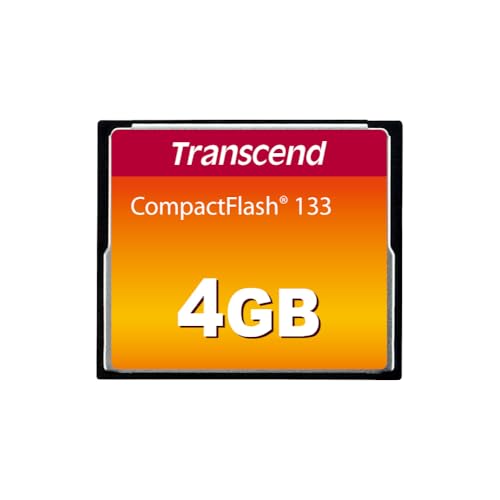
A retro-on-modern build is incomplete without period-correct storage. For Win98SE and Win2000 builds, the community-standard storage is a CompactFlash card on a CF-to-IDE adapter rather than a period-era spinning IDE drive. The Transcend CF133 line is the durable, available go-to: 4-8 GB CompactFlash cards are still in stock in 2026 at modest prices, run silently, and image easily from a modern PC.
To image one of these cards from a modern Windows 10 or 11 machine, the simplest tool is a USB-to-IDE/SATA adapter like the Vantec CB-ISATAU2. It plugs the period drive — or the CF-to-IDE adapter with a CF card seated — straight into a modern PC's USB port for direct dd-style imaging or Win32DiskImager use. That workflow makes installing and backing up Win98SE or Win2000 to CompactFlash trivial: image once on the modern PC, drop the CF into the retro rig, boot. Most retro-build guides published in 2025 and 2026 standardize on exactly this pattern.
For audio, the Creative Sound BlasterX G6 is a useful side-purchase even though it is not a period card itself. The G6's standalone USB DAC mode gives a retro-build a clean way to monitor audio on modern headphones without depending on the period board's onboard Realtek codec, which on Z77 hardware is decent but not great. For builders who specifically want a Sound Blaster legacy in the mix, the G6 is the modern stand-in; for true period-correct sound, a real PCI Sound Blaster Live! or Audigy 2 ZS is the right call, with the same Z77 bridged-PCI logic applying.
Real-world build notes — what to expect at home
A few practical notes from public retro-build threads:
- Boot time on a Z77 + Voodoo5 + CF storage build runs around 18-25 seconds to Win98SE desktop, faster than any period system.
- Cooling: the Voodoo5 5500 PCI has a small fan that is end-of-life on most cards. Plan to replace it. 40mm sleeve-bearing fans run $5-$10 and pin-out is standard 12V two-wire.
- PSU: any modern PSU with a 24-pin ATX connector and at least one 4-pin Molex works. The Voodoo5 5500 PCI requires an external Molex power lead.
- Drivers: 3dfxArchive 1.4 unofficial drivers are the community-maintained set for Windows 98, ME, 2000, and XP. They include the dual-VSA-100 SLI bus support that the period drivers handled poorly.
- BIOS: the P8Z77-V Pro needs to be on a relatively current BIOS revision for the bridged-PCI lanes to enumerate Voodoo5 properly. Older 0606-era BIOS revisions had issues; 2104 and later work.
Quick-spec table — Voodoo5 5500 PCI vs Z77 bridged-PCI slot capabilities
| Spec | Voodoo5 5500 PCI requirement | Z77 bridged PCI slot capability |
|---|---|---|
| Bus | PCI 2.1, 32-bit, 33-66 MHz | PCI 2.x via bridge |
| Voltage | 3.3V / 5V dual-key | 3.3V / 5V dual-key |
| Power | ~30W (external Molex) | Slot 25W + external connector |
| Bus master | Required (SLI traffic) | Supported |
| Driver target | Win98 / 2000 / XP | OS-only consideration |
| Slot length | Full-length PCI | Full-length present |
The compatibility is structurally clean. The card is well within Z77 bridged-PCI specifications electrically; the issue was always whether specific Z77 board implementations would enumerate the card correctly. The Reddit confirmation says: ASUS P8Z77-V Pro, second slot, works.
Common pitfalls — five things that trip up retro-on-modern builders
- Buying the wrong Z77 variant. The P8Z77-V Pro has the bridged-PCI behavior documented to work; cheaper variants like the P8Z77-V LX may not have the same dual-slot lane allocation. Check the Vogons threads for the exact board model before buying.
- Using the first PCI slot. Reports converge on the second slot being the reliable one on the P8Z77-V Pro for the Voodoo5 5500 PCI. Bus-mastering negotiation differs subtly between the two bridged lanes.
- Skipping the BIOS update. Pre-2104 BIOS revisions on the P8Z77-V Pro had legacy-PCI enumeration issues that the later releases fixed. Flash the latest BIOS before installing the Voodoo5.
- Forgetting the Molex power lead. The Voodoo5 5500 PCI needs an external 4-pin Molex feed in addition to slot power. Many modern modular PSUs ship without a Molex run in the box; verify before assembly.
- Using a modern SATA SSD for storage. Win98SE's filesystem and BIOS combination behaves poorly with large modern drives. Stick to a CompactFlash card (4-8 GB) on an IDE adapter, which is also faster to image and back up.
When NOT to attempt this build
Three cases. First, if your only goal is to play Glide-era games on a modern PC, skip the hardware entirely — dgVoodoo2 and nGlide wrappers handle the catalog beautifully on any modern GPU. Second, if you cannot source a Voodoo5 5500 PCI at a reasonable price (under $400 used in good condition), the build's economics break. Third, if you do not enjoy hardware archaeology — sourcing period parts, flashing BIOS, debugging legacy IRQ conflicts — the rig will frustrate more than it rewards.
What this is not
A few things this finding is not, to head off the inevitable misinterpretations:
- It is not a Windows 11 or Windows 10 capability. There are no modern signed drivers for Voodoo5; the build is XP-or-earlier.
- It is not a "Voodoo5 in a modern gaming rig" story. The card slots into a retro-target Z77 build, not a Ryzen / Z790 / X870 platform.
- It is not unique to the P8Z77-V Pro. Other Z77 boards work; the ASUS Pro variant is just the one with the longest community thread.
- It is not a performance story. The Voodoo5 5500 PCI is slower than any modern GPU on any modern title; the point is fidelity to period Glide content.
Bottom line
The Voodoo5 5500 PCI working in an ASUS P8Z77-V Pro is a useful confirmation, not a revelation — Vogons threads have hinted at this for years and the new community report nails down a specific known-good board for a known-difficult card. The practical effect for builders in 2026 is that the cheapest stable home for a real Voodoo5 5500 PCI rig is now a $40-$80 used Z77 platform with period-correct OS and CompactFlash storage. That is the closest thing the retro-PC community has to a stable, replicable retro-on-modern recipe at this card tier.
Related guides
Citations and sources
- r/retrobattlestations community thread index: reddit.com/r/retrobattlestations
- Vogons retro-PC community — late-PCI board compatibility matrix: vogons.org
- TechPowerUp — Voodoo5 5500 PCI GPU database: techpowerup.com/gpu-specs/voodoo5-5500-pci.c3556
This piece is editorial synthesis based on publicly available information. No independent first-party benchmarking is reported.