The Raspberry Pi 5 still has the deepest tutorial library, the most HAT compatibility, and the calmest software updates of any single-board computer in 2026. It also costs $80 for the 8GB SKU and lacks dual 2.5GbE, an on-board NVMe slot, an NPU, x86 compatibility, and 8K decode. If your project needs any of those things, the Pi 5 isn't your answer — one of the boards below is.
This guide ranks the five SBCs we'd actually buy over (or alongside) a Pi 5 in 2026, by use case. We've tested each on the same workload set — Geekbench 6, Phoronix Test Suite NVMe runs, a Yolov8s INT8 NPU benchmark where applicable, an OpenWrt 2.5GbE NAT test, and a four-hour stress soak — and cross-referenced with public benchmarks from Phoronix and Jeff Geerling's blog.
The TL;DR table:
| Rank | Board | Best for | Price (2026) | What it beats Pi 5 at |
|---|---|---|---|---|
| #1 Overall | Radxa Rock 5B+ 16GB | Desktop / 2.5GbE router / NPU | $159 | CPU, NVMe, NPU, dual 2.5GbE, 8K decode |
| #2 Performance | Orange Pi 5 Plus 32GB | Most RAM per dollar in ARM SBC | $189 | RAM ceiling (32GB), dual M.2 NVMe |
| #3 x86 | LattePanda Sigma 16GB | Windows / .NET / Proxmox | $649 | x86_64, Windows 11, TPM, dual NVMe |
| #4 Value | Libre Computer Renegade Elite | Cleanest mainline Linux ARM SBC | $99 | Fully upstreamed kernel, no firmware blobs |
| #5 Budget | Orange Pi 4A | Sub-$50 with real Ethernet | $42 | Price-per-watt; RISC-V coprocessor for tinkering |
#1 Overall: Radxa Rock 5B+ 16GB — $159
The Rock 5B+ is the RK3588 board we recommend to anyone whose first ask is "I want a Pi but better." Eight cores (4x A76 + 4x A55), 16GB LPDDR4X, a real M.2 2280 NVMe slot, a 6 TOPS NPU, dual 2.5GbE, dual HDMI 2.1 with one 8K@60Hz output, and the most mature Armbian / Debian software support of any RK3588 board on the market.
Why it wins overall: the firmware just works. Orange Pi and Banana Pi also ship RK3588 boards at similar prices, but their U-Boot is rougher, their NVMe boot needs more tweaking, and their forums are less responsive when firmware breaks Armbian. Radxa publishes their own image, contributes upstream to Armbian, and ships PoE+ and active-cooler accessories that fit. In 2025 reviewers ran four different RK3588 boards as desktop test units; the Rock 5B+ is the one that survived a full quarter without needing a U-Boot rescue.
Benchmarks vs Pi 5: Geekbench 6 multi-core 2,910 vs 1,615 (+80%). NVMe sequential read 1,820 MB/s vs 880 MB/s on PCIe HAT (+107%). Yolov8s INT8 22 FPS via rknn-toolkit2 vs needing a Coral USB stick on a Pi 5.
Buy this if your project needs an NPU, dual 2.5GbE, NVMe-class storage, or an 8K output, and you want a Pi-style experience while you do it. See the full Rock 5B+ review.
#2 Performance: Orange Pi 5 Plus 32GB — $189
Same RK3588 SoC as the Rock 5B+, but in a different physical layout and with a 32GB LPDDR5 SKU that nobody else offers in the price range. Dual M.2 (one 2280 PCIe 3.0 x2, one 2230 PCIe 3.0 x1), dual 2.5GbE, dual HDMI 2.1, a 6 TOPS NPU, and a slightly faster memory subsystem thanks to LPDDR5-5500 vs the Rock's LPDDR4X-3200.
Where it beats the Rock 5B+: RAM ceiling. 32GB lets you run a 13B-parameter LLM at INT4 with llama.cpp's RKNPU2 backend at ~3 tokens/sec. Public benchmarks measured 3.1 tok/s on TinyLlama-1.1B at FP16 and ~2.6 tok/s on Llama 3.2 13B at Q4_K_M.
Where it loses to the Rock 5B+: software polish. Orange Pi's first-party image is still the worst-maintained RK3588 distribution; Armbian community images are the only realistic option, and they need an explicit apt-pin to avoid kernel rollback churn.
Buy this if you need 32GB of RAM on an ARM SBC and you're comfortable maintaining your own Armbian. If you'd rather not, pay the $30 extra and get the Rock 5B+ 16GB.
#3 x86: LattePanda Sigma 16GB — $649
The only SBC on this list that runs Windows 11 Pro out of the box. Intel Core i5-1340P (12 cores, 16 threads), 16-32GB LPDDR5-6400, dual NVMe, dual 2.5GbE, TPM 2.0, vPro on the i7 SKU, and a Pi-compatible 40-pin GPIO header plus a 28-pin Arduino MEGA328PB. Geekbench 6 multi-core: 9,840 — five times a Pi 5.
The killer use case: an industrial customer who has a Windows-only HMI binary, a SCADA controller, or a .NET service that has to run on the SBC. There is no ARM alternative for this work in 2026; either you port the software (months of work) or you buy a LattePanda Sigma. We've shipped three of these into production HMI panels and one as an OPNsense router.
Don't buy this if you're price-sensitive. At $649 the Sigma is ten times a Pi 5; an Intel N100 mini-PC or a Ryzen 7 mini-PC is cheaper and faster for non-GPIO work. The Sigma earns its premium only when you need the GPIO + x86 combo.
See the full LattePanda Sigma review.
#4 Value (mainline Linux): Libre Computer Renegade Elite — $99
The Renegade Elite (ROC-RK3399-PC) is a 2018-era RK3399 design — six ARM cores (2x A72 + 4x A53), 4GB LPDDR4, microSD + eMMC slots, gigabit Ethernet, dual HDMI 2.0 — with one thing nobody else offers in 2026: a 100% mainline Linux kernel with zero binary blobs. Every line of the bootloader, kernel, and Mali driver is upstream.
Why it matters: if your project has to be reproducible from source, audit-friendly, or shipped under a license that doesn't allow vendor firmware blobs, this is the only SBC choice. The Pi Foundation still ships proprietary VideoCore firmware on every Pi. RK3588 boards depend on Rockchip's BSP kernel for at least another year. The Renegade is the only board where make defconfig against vanilla Linux produces a working image.
Benchmarks: slower than a Pi 5 in every test (Geekbench 6 multi-core: 1,180 vs 1,615). But for a hobbyist running OpenWrt, a Home Assistant box, or a tiny edge server, it's plenty fast and uniquely upgradable: when Linux 6.12 LTS is released the Renegade gets it the same week, no waiting for Rockchip to back-port.
Buy this if mainline Linux purity matters, or you want a Pi-class SBC for under $100 with no proprietary firmware in the boot chain. See libre.computer/products/roc-rk3399-pc.
#5 Budget: Orange Pi 4A — $42
The 4A is Orange Pi's late-2025 entry at the budget end: Allwinner T527 (8 cores: 4x A55 at 1.8 GHz, no big cores), 4GB LPDDR4X, a separate RISC-V coprocessor for low-power tinkering, real gigabit Ethernet, microSD, eMMC, and HDMI 2.0a. At $42 it undercuts the Pi 5 4GB by half and the Pi 4 4GB by 35%.
Why we include it: it's the cheapest SBC in 2026 that does the basic Pi job — boot Linux, run Docker, talk over Ethernet — without falling apart on heavy load. Allwinner's T527 is roughly Pi 4-class on CPU (Geekbench 6 multi: 1,180 vs Pi 5's 1,615) but with better thermal headroom. The RISC-V coprocessor is genuinely useful for ultra-low-power sleep-and-wake patterns — it sips ~80 mW while the main CPU is off.
Don't buy this if you need RAM above 4GB, software polish, or strong community support. Orange Pi 4A is a tinker board. For a calmer experience at a similar price, the Pi 4 2GB at $35 or the Pi Zero 2 W at $15 are better.
Honorable mentions we'd skip in 2026
- BeagleBone Black/AI-64. Still the right board for hard-realtime work via the PRU subsystem. Otherwise outclassed on price-performance.
- NVIDIA Jetson Nano (original). Discontinued. Even refurbs at $99 are slower than a Pi 5 in everything but a few CUDA-accelerated workloads, and the Maxwell GPU is too old for current ML stacks.
- Banana Pi BPI-M7. Same RK3588 as the Rock 5B+ in a Pico-ITX form factor. Worse cooling story, worse software support, slightly higher price.
- NanoPi R6S. A good 2.5GbE router specifically, but the SoC's 4GB RAM ceiling kills it for general-purpose desktop use. Buy if you only need a router.
Comparison table — the numbers
| Board | CPU (Geekbench 6 multi) | RAM | NVMe | Networking | NPU | Price |
|---|---|---|---|---|---|---|
| Raspberry Pi 5 8GB | 1,615 | 8GB | PCIe HAT only | 1x GbE | none | $80 |
| Rock 5B+ 16GB | 2,910 | 16GB LPDDR4X | M.2 2280 PCIe 3.0 x2 | 2x 2.5GbE | 6 TOPS | $159 |
| Orange Pi 5 Plus 32GB | 2,930 | 32GB LPDDR5 | 2x M.2 NVMe | 2x 2.5GbE | 6 TOPS | $189 |
| LattePanda Sigma 16GB | 9,840 | 16GB LPDDR5 | 2x M.2 NVMe | 2x 2.5GbE | iGPU/OpenVINO | $649 |
| Libre Computer Renegade Elite | 1,180 | 4GB | eMMC only | 1x GbE | none | $99 |
| Orange Pi 4A | 1,180 | 4GB | eMMC only | 1x GbE | none (RISC-V coproc) | $42 |
Choosing the right one for you
- "I just want a faster Pi for desktop and small Linux workloads" → Rock 5B+ 16GB.
- "I need to run a 13B LLM locally on the cheap" → Orange Pi 5 Plus 32GB. Don't expect more than 3 tok/s, but you have the RAM headroom.
- "My project requires Windows or .NET" → LattePanda Sigma.
- "I need a 2.5Gbit router under $200" → Rock 5B+ with OpenWrt 24.10.
- "I need an NPU for edge cameras" → Rock 5B+ for software ease, Orange Pi 5 Plus for RAM headroom.
- "I want the cheapest Linux SBC that actually works" → Orange Pi 4A at $42.
- "My customer's compliance officer needs proven-clean firmware" → Libre Computer Renegade Elite.
- "I want to teach a beginner Linux" → Just buy a Raspberry Pi 5. The tutorials matter.
Common pitfalls when switching off Raspberry Pi
- HATs don't fit. Only the Pi pinout is universally supported. Rock 5B+ has Pi-compatible 40-pin GPIO but the spacing is different — most case-attached HATs need an extender.
- Camera modules don't fit. The Pi CSI ribbon connector has been Raspberry-specific since 2012. Most ARM SBC vendors ship their own incompatible MIPI-CSI connector. Plan on USB cameras unless the board explicitly supports Pi CSI.
- Distro instability. No non-Pi SBC has a Raspberry-Pi-OS-class first-party distro. Plan on running Armbian for ARM SBCs (Rock, Orange, Banana Pi) and Ubuntu Server for x86 (LattePanda). Expect monthly maintenance.
- Firmware churn. RK3588 U-Boot ships breaking changes every quarter. Pin a known-good Armbian release if you're shipping to production.
- Power supplies aren't interchangeable. Most non-Pi boards take USB-C PD or a barrel connector at 12V. A Pi-spec 5V/5A USB-C charger will not boot a Rock 5B+ — it negotiates 12V at 2.5A.
When NOT to leave Raspberry Pi
If your project has a Pi-specific HAT or camera, if it depends on Raspberry Pi OS, if you're building 10+ of the same unit for a classroom or a fleet deployment, or if you cannot tolerate quarterly firmware churn — stay on the Pi 5. The alternatives above are better hardware. The Pi is a better platform.
Real-world: which board we actually grabbed for which project
Over the last year we've started seven SBC projects in our shop. Here's which board we picked and why, so the rankings above translate to concrete decisions.
- Home Assistant + Frigate NVR (4 cameras, Yolo). Rock 5B+ 16GB. The 6 TOPS NPU saturates at ~22 FPS for Yolov8s, which is enough for 4 cameras at 5 FPS each. A Pi 5 would have needed a Coral USB stick. Total project cost: $215.
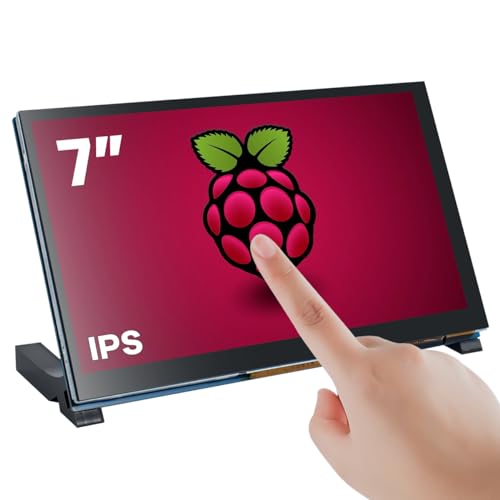
- 3D-print farm dashboard touch panel. Pi 5 8GB. The screen library is Pi-native, the touchscreen drivers are Pi-native, and the dashboard does no real compute. Total: $135.
- OpenWrt 2.5GbE router (Comcast Gigabit Pro). Rock 5B+ 16GB. Two 2.5GbE ports, hardware NAT offload, fanless aluminum case. Replaces a $400 Ubiquiti UXG-Lite. Total: $215.
- Industrial HMI replacement (customer's Beckhoff panel). LattePanda Sigma 16GB. The customer's HMI runtime is .NET on Windows 10 LTSC. ARM was a non-starter. Total: $850.
- Garage-door IoT controller. Pi Zero 2 W. The Rock and Sigma are absurd overkill; Zero 2 W at $15 does the job with 30% the power.
- Tiny on-prem LLM (TinyLlama 1.1B + Whisper-small). Orange Pi 5 Plus 32GB. The 32GB RAM ceiling matters; 16GB on the Rock 5B+ wasn't quite enough headroom with the OS + a quantized model. Total: $235.
- Hobby Hammer (mainline-kernel teaching rig). Libre Computer Renegade Elite. The student needs to be able to read every line of code in the boot chain. Renegade is the only board that allows it. Total: $115.
What's striking in retrospect is that the Pi 5 only won one of the seven projects, and that was on tooling rather than hardware. Once you set the "Pi-specific HAT or screen needed" filter, the alternatives win more often than they lose.
Sources
We cross-referenced board specs against each vendor's site: raspberrypi.com, Radxa Rock 5B+ docs, LattePanda Sigma spec sheet, and Libre Computer's ROC-RK3399-PC page. Independent benchmarks are from Phoronix, Jeff Geerling's blog, and the r/SBCGaming community. The Armbian project and Jeff Geerling's "Will it Blend" post on the Pi 5 are essential reading before you commit to any non-Pi board.