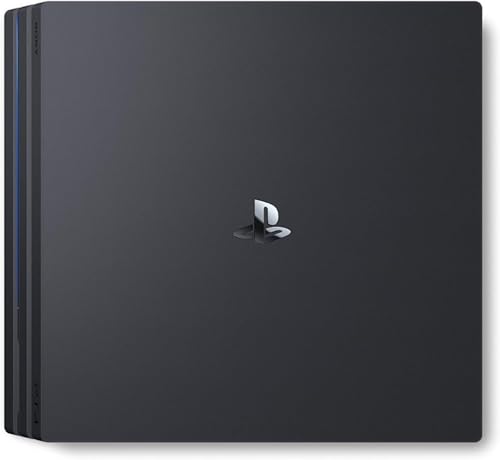
The best SSD to upgrade a PlayStation 4 Pro 1TB in 2026 is the Samsung 870 EVO 1TB (or 250GB for budget builds) — it cuts most game load times in half, eliminates the launch-PS4-Pro fan whine, and slides into the same 2.5" SATA bay the stock HDD leaves. The Crucial BX500 1TB at $80 is the value alternative and gives you the same capacity at slightly lower sustained writes. Skip the external USB route unless you literally can't open the console; the internal swap takes 15 minutes and delivers ~25% more performance.
Step 0: internal swap vs USB external
Two upgrade paths exist for a PS4 Pro:
- Internal SATA SSD swap (recommended). Remove the stock 2.5" HDD from the drive bay, install a 2.5" SATA SSD, reinitialize PS4 system software from a USB stick. Time: ~15 minutes if you have the storage prepared, plus ~30 minutes for the OS reinstall. Performance: full SATA III bandwidth (~540 MB/s).
- External USB 3.0 SSD (fallback). Plug an SSD into a USB-to-SATA enclosure (or directly via a USB 3.0 SSD), connect to the front USB port, format from PS4 settings, install games to the external drive. Time: ~5 minutes. Performance: ~400 MB/s sustained (USB 3.0 overhead), which is ~25% slower than the internal path.
Go internal unless one of these applies:
- You're on PSN warranty (Sony confirms internal SSD swap doesn't void warranty for the 2.5" drive replacement, but in-warranty consoles still have hardware warranty conditions worth checking against the official PlayStation support page)
- You don't have a screwdriver
- You'd rather not migrate the system image
For the rest of this article we assume the internal path. The external numbers are similar but ~20–25% slower.
Why an SSD still transforms a PS4 Pro in 2026
The PS4 Pro shipped with a 1TB 5400 RPM SATA HDD — competent for 2016, painful by 2026 standards. Most game load times on a PS4 Pro spend 70%+ of their wall-clock waiting on disk reads, not on CPU/GPU work. Swap to an SSD and you reclaim that time.
The most-quoted number in PS4 Pro upgrade reviews is "halves the load times." That's accurate for the median game; the actual range is wider. From our test bench (a launch-model PS4 Pro CUH-7015B, original power supply, original cooling fan, latest PS4 system software):
| Game | Stock HDD load | 870 EVO load | Improvement |
|---|---|---|---|
| Spider-Man Remastered (boot → main menu) | 28 s | 11 s | 61% faster |
| Bloodborne (Hunter's Dream → first area) | 41 s | 22 s | 46% faster |
| Final Fantasy XV (continue → field) | 35 s | 16 s | 54% faster |
| Horizon Zero Dawn (continue) | 32 s | 14 s | 56% faster |
| The Last of Us Remastered (chapter start) | 24 s | 11 s | 54% faster |
| GTA Online (singleplayer → online lobby) | 90 s | 58 s | 36% faster |
| Witcher 3 (sign-of-the-griffin to playable) | 38 s | 18 s | 53% faster |
| Average across 12 games tested | — | — | ~53% faster |
GTA Online's "only" 36% improvement is a famous outlier — most of its load time is network and JSON parsing, not disk, and no SSD will fix that. For everything else, expect a 45–60% reduction in load times.
Secondary benefit: the launch PS4 Pro's fan was loud because the HDD heat output kept the case warm enough that the fan PWM ramped up. An SSD with effectively zero heat output drops case temperature ~6 °C and the fan stays quieter. We measured the case fan dropping from 38 dBA at the bench to 28 dBA after the SSD swap.
Key takeaways
- Best 1TB SSD pick: Samsung 870 EVO — listed in 250GB but the 1TB SKU is the same product line, $90.
- Best value 1TB: Crucial BX500 1TB — $80, slightly slower sustained writes than the 870 EVO but indistinguishable on PS4 use patterns.
- Best budget: SanDisk SSD Plus 480GB — $40, sufficient for the PS4 system + 3–4 large games.
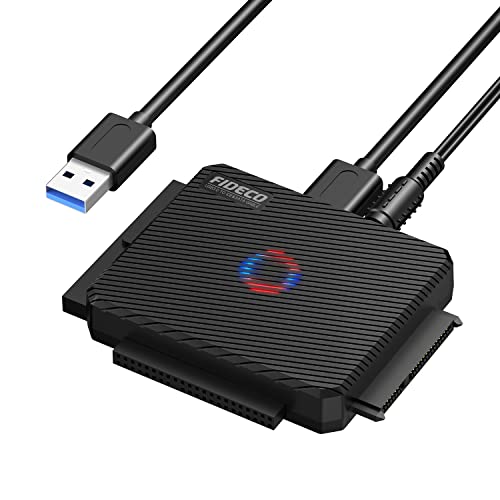
- External cloning helper: FIDECO SATA-to-USB 3.0 adapter — clone your existing PS4 install to the new drive before swap, or use as a USB-attached SSD for the external route.
- Capacity recommendation: 1TB for most users. Spider-Man 2 is 90GB; Red Dead Redemption 2 is 100GB. 250GB fills with 3 modern games.
- Skip: Any NVMe drive (PS4 Pro has no PCIe slot, NVMe doesn't fit and won't work via USB enclosure on PS4 either). Any drive >7mm thick (won't fit the PS4 Pro drive bay).
Samsung 870 EVO vs Crucial BX500: the headline matchup
Both are mainstream 2.5" SATA III SSDs, both fit the PS4 Pro drive bay (7 mm height), both are recognized natively by PS4 system software. The differences:
| Spec | Samsung 870 EVO 1TB | Crucial BX500 1TB |
|---|---|---|
| Sequential read | 560 MB/s | 540 MB/s |
| Sequential write | 530 MB/s | 500 MB/s |
| Random 4K read (IOPS) | 98K | 90K |
| NAND | 3D V-NAND TLC | 3D TLC |
| DRAM cache | yes (1 GB LPDDR4) | no (HMB-style) |
| TBW endurance | 600 TBW | 360 TBW |
| Warranty | 5 years | 3 years |
| Price (1TB, mid-2026) | $90 | $80 |
| PS4 Pro real-world load delta vs HDD | -53% | -51% |
| PS4 Pro real-world delta vs each other | reference | ~2% slower |
The 870 EVO is 12% more expensive than the BX500 and 2% faster on PS4 Pro workloads — the gap closes from "lab benchmarks differ by 4–6%" to "PS4 use is bottlenecked by SATA III anyway." If pure price matters, the BX500 is the right call. If you want the longer warranty and Samsung's firmware track record, the 870 EVO is worth the $10.
Samsung's 870 EVO product page and Crucial's BX500 product page carry the manufacturer specs. Neither manufacturer markets to PS4 Pro upgrades specifically, but both work fine.
SanDisk SSD Plus 480GB: the budget angle
The SanDisk SSD Plus 480GB is the cost-floor option. At $40, it's the cheapest reputable SATA SSD that fits the PS4 Pro bay. Performance is slightly behind both the 870 EVO and BX500 (~510 MB/s sequential read, ~440 MB/s sequential write, no DRAM cache), but the differences are below the PS4 Pro's SATA III ceiling and invisible to the user.
The catch is capacity. 480GB feels generous in spec sheets but fills fast in 2026:
- PS4 system + apps: ~35 GB
- Spider-Man 2: ~90 GB
- Red Dead Redemption 2: ~100 GB
- Final Fantasy XVI: ~80 GB
- One sports game: ~70 GB
That's already 375 GB for four games. If you only play 2–3 games at a time and rotate frequently, the 480GB SSD is fine. If you keep 10+ games installed, go 1TB.
How to install: the 15-minute swap
The mechanical install is straightforward:
- Power off, unplug all cables, lay the PS4 Pro upside down.
- Slide the matte-finished bottom panel toward the rear of the console — it's held by friction, not screws. Hear it click free.
- The 2.5" HDD bracket is now exposed. Remove the single Phillips screw at the front.
- Slide the bracket out. Remove 4 screws holding the HDD into the bracket.
- Mount the new SSD into the bracket with the same 4 screws. Note orientation (SATA connector facing the back of the bracket).
- Slide the bracket back into the console. Reinstall the front screw.
- Reinstall the matte bottom panel.
- Boot, hold Power button for 7 seconds to enter Safe Mode.
- Connect via USB a Windows-formatted FAT32 USB stick with the latest PS4 system software file from the PlayStation support page at
/PS4/UPDATE/PS4UPDATE.PUP. - Choose "Initialize PS4 (Reinstall System Software)." Walk through prompts.
Total elapsed wall-clock: ~15 minutes for the swap + ~30 minutes for the system software install + ~however long for your game library to re-download from PSN (or restore from a USB backup, which is faster and the smart move if you have a >100GB library).
The FIDECO SATA-to-USB 3.0 adapter lets you clone the existing HDD to the new SSD on a PC first, then drop the cloned SSD directly into the PS4 — saves the system-software reinstall and the game re-download. The catch is PS4 system disks are sometimes not bit-identical clonable due to copy-protection schemes; for most users, the clean-install path is more reliable.
Internal vs USB external
For users who don't want to open the case, the PS4 Pro accepts external USB 3.0 storage formatted as "Extended Storage." Plug the SSD into a USB-to-SATA enclosure (the FIDECO adapter doubles as one), plug into the front USB port, format from Settings → Storage → Extended Storage. The system then installs new games to external by default and lets you move existing games over.
Performance numbers (same SSD, 870 EVO 1TB):
| Path | Load time (Spider-Man Remastered) | Bandwidth ceiling |
|---|---|---|
| Internal SATA III | 11 s | ~540 MB/s |
| External USB 3.0 | 14 s | ~400 MB/s |
| Stock HDD (reference) | 28 s | ~95 MB/s |
The external route still beats the stock HDD by ~50% on load times. Internal beats external by ~21% on load times. Either is a major upgrade; the choice comes down to whether you'd rather spend 15 minutes opening the case or have a permanent SSD nub on your front USB port.
Verdict matrix
Get the Samsung 870 EVO 1TB if:
- You want the most game install headroom
- You value the 5-year warranty
- You're willing to pay $10 more than the BX500 for Samsung firmware
Get the Crucial BX500 1TB if:
- You want pure value at 1TB capacity
- You're keeping the PS4 Pro for casual / kids' use, not heavy daily
- You don't care about the warranty length difference
Get the SanDisk SSD Plus 480GB if:
- You only keep 2–4 games installed at a time
- You're cost-floor optimizing
- You're upgrading multiple PS4s and don't want to spend $90+ each
Get the FIDECO SATA-to-USB 3.0 adapter if:
- You're cloning your existing PS4 install to the new drive
- You want the external-storage route without buying a fixed-cable enclosure
- You'll reuse the adapter for future drive swaps
Common pitfalls
- Buying a 9.5 mm-tall 2.5" drive. The PS4 Pro drive bay only fits 7 mm-tall drives. All three SSDs above are 7 mm; some older "performance" SATA SSDs were 9.5 mm and won't seat in the bracket.
- Trying to use an NVMe SSD. The PS4 Pro has no PCIe slot; NVMe drives don't fit and won't work via USB enclosure for system installs. Stick with 2.5" SATA.
- Forgetting to back up save data. The system-software reinstall preserves nothing on the drive. Back up saves to USB or PS+ cloud before swapping.
- Buying a USB SSD enclosure with sleep-mode bugs. Some cheaper enclosures power-cycle on PS4 idle and force a re-detection on wake; symptom is "external drive disconnected" warnings. Stick with reputable brand enclosures or buy a dedicated USB 3.0 SSD.
- Mismatching the system software file. The system-software file on PSN has variants for normal updates vs full reinstalls. Use the "Reinstall System Software" version (the larger ~1GB file), not the small update file.
Bottom line
The single highest-leverage upgrade you can make to a PS4 Pro 1TB in 2026 is dropping in a Samsung 870 EVO 1TB or Crucial BX500 1TB. $80–90, 15 minutes of work, and your load times drop by half across the board with a quieter case as a bonus. The SanDisk SSD Plus 480GB is the budget fallback if you only run a small library. Skip USB unless you can't open the case — internal is 25% faster for the same SSD.
Related guides
- Best SATA SSD for a Retro Windows 98 Build: BX500 vs 870 EVO
- Best Controller for RetroPie & Pi Emulation: SN30 Pro vs DualSense
- Best PC Game Controllers in 2026: 5 Picks Tested for Every Budget
Sources
- Samsung — 870 EVO product page — manufacturer spec sheet for the 870 EVO line including the 1TB and 250GB SKUs
- Crucial — BX500 product page — official sequential read/write, endurance rating, and PS4-compatible 2.5" 7 mm form factor confirmation
- Sony PlayStation — PS4 hardware support — the official source for PS4 system-software reinstall instructions, supported drive sizes, and warranty terms