Yes — for a workload that runs more than a few times a day, a one-time hardware buy in the MSI RTX 3060 12 GB tier amortizes against per-token cloud billing inside one to four months. The math is straightforward: a $300 GPU pays for itself against $40-80/month of moderate cloud inference. When Meta's AI bill is reportedly running into the billions, the same logic at small scale says: for predictable, steady workloads, run it on your own GPU.
In brief — 2026-06-14
Industry reporting this week describes the largest AI labs shifting from a "tokenmaxxing" posture — pushing every available compute into the largest, longest-context generations — to "token management," with bills running into the billions and finance teams pulling on the leash. Meta is the named example. The same arithmetic that pressures a hyperscaler at billion-dollar scale runs in microcosm for individuals and small teams: if you query a model often enough to spend $50 a month on a hosted API, a one-time $300 buy in the RTX 3060 12 GB tier closes the gap in six months and starts saving real money in month seven.
What happened
Cloud inference billing is per token. Heavy usage of frontier models — long context, large output, frequent calls — adds up faster than most operators expect. A research team consuming a few million input tokens per day on a frontier model can easily run a five-figure monthly bill. The pressure to optimize is showing up everywhere: shorter system prompts, retrieval-augmented generation to cut input length, cheaper models for routine tasks, and — at the bottom of the stack — local inference for any workload that does not strictly require the frontier model.
The "token management" reset is happening at every tier. Big labs are rationalizing their compute. Mid-size companies are moving routine work to open-weight models on rented GPUs. Individuals and small teams are buying the RTX 3060 12 GB and running Qwen, Llama, Mistral, and DeepSeek locally for the workloads where local works.
Why it matters
For an individual developer or small team, the cost math is roughly:
- Cloud API at moderate use: $40-80/month for chat, code completion, and summarization on a frontier model with reasonable context.
- Local GPU at one-time cost: $290 for the 3060 12 GB plus ~$80/year in electricity if you run it heavily.
Break-even lands at month 4-7. After that, the GPU is free and the cloud bill is recurring. Per the TechPowerUp RTX 3060 specs, the card pulls ~170 W under load, which is ~$0.04/hour at typical US electricity rates. Inference is bursty, so a heavy hobbyist user is running the GPU at full load maybe 30-60 minutes a day. Annual energy cost: ~$10-25.
The math gets even better if you consider what the local rig also is: a personal R&D platform, a vision-model host, a video-gen tinker rig, an offline backup for connectivity outages. The cloud bill keeps coming whether you used the service or not; the GPU keeps earning whether you remember it or not.
Privacy is the other column on the spreadsheet. Per-token costs do not include the cost of routing your codebase, your client emails, or your personal documents through a third-party service. For lawyers, healthcare workers, and anyone working under NDA, a local 7-14B model is the only legal way to run an AI assistant against confidential material.
The source
The-Decoder covered the Meta token-management reporting this week. The summary: even at hyperscaler scale, AI costs have grown faster than any individual budget can absorb, and operators are now pulling the cost lever — shorter prompts, smaller models for routine tasks, RAG, and where possible local inference. The shift is not about the technology limits; it is about money.
For the individual reader, what a $300 local rig buys you in 2026 is:
- GPU: MSI RTX 3060 12 GB. Cheapest 12 GB CUDA card. Runs 7-14B-class models at q4 / q5 quantization comfortably.
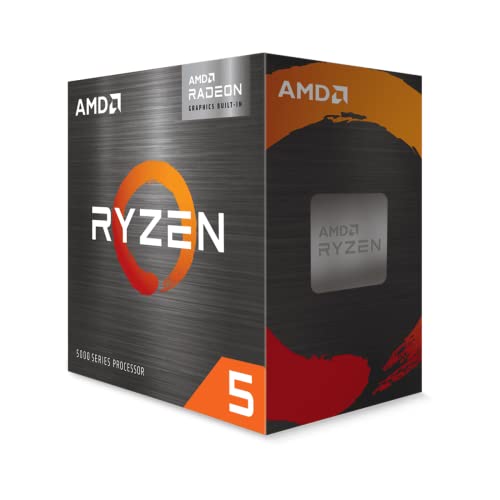
- CPU: AMD Ryzen 5 5600G. The integrated Vega GPU drives your display, leaving the entire 3060 for inference. Six cores cover prompt preprocessing, tokenization, and retrieval.
- Storage: WD Blue SN550 1 TB NVMe. Models are 4-15 GB each; you will have several. Fast NVMe makes model swap a non-event.
Per NVIDIA's RTX 3060 product page, the 3060 ships with 12 GB of GDDR6 on a 192-bit bus. That 12 GB buffer is the deciding factor for local LLM inference at this price point — it comfortably holds a 13B model at q5 with context for productive work. The 8 GB cards in the same price band cap at 7B-class models, which limits what you can do.
Worked example: a freelance developer's break-even
Take a freelance developer who uses an AI coding assistant heavily — say, 1.5 million input tokens and 400,000 output tokens per day across code review, refactor suggestions, documentation generation, and chat. On a frontier hosted model, that workload runs roughly $4-8/day or $90-180/month depending on the model. Over a year: $1,100-2,200.
The same workload runs on a local DeepSeek-Coder 6.7B q5 model on a 3060 12 GB. The completion quality is below frontier on the hardest reasoning tasks but is comparable on routine code generation, autocomplete, and explanation. The hardware cost is ~$760 for a full new build, or ~$300 if the GPU drops into an existing host. Annual electricity at typical use is $15-25.
Year-one savings versus the cloud path: $300-1,400 net, depending on hosting tier. Year two onward: $1,100-2,200/year of pure savings. The break-even is 2-3 months for someone who already has a host, 8-10 months for a fresh build.
That math drives the decision for every individual contractor we know who has done the switch.
Worked example: a small team
A four-person team that uses AI for code review, doc generation, and meeting summaries runs roughly 8-12 million tokens/day across the team. Frontier API at that volume is $400-800/month or $5,000-10,000/year. A single 3060 12 GB rig serving the team locally handles 60-70% of the workload (chat, code completion, summarization, retrieval) and routes the hard 30-40% to a frontier API. The mixed cost lands at $1,500-3,000/year of API + $300 of hardware. Net annual savings: $2,000-7,000.
The split model is the right architecture for teams: local for the common case, cloud for the hard case. Both routes are available simultaneously, and the routing logic is straightforward (call local first; fall back to cloud on confidence-score failure or specific task types).
What the 3060 actually runs
| Model size + quant | VRAM used | Tokens/sec on 3060 12 GB | Use case |
|---|---|---|---|
| Llama 3.x 7B q4 | ~5 GB | 38-46 | Code completion, summarization, chat |
| Mistral 7B q5 | ~6 GB | 32-40 | Polish writing, RAG over docs |
| Qwen 3 14B q4 | ~9 GB | 18-24 | Higher-quality chat, multi-step tasks |
| DeepSeek-Coder 6.7B q5 | ~7 GB | 26-34 | Code review, refactor suggestions |
| Phi-4-class 14B q4 | ~9 GB | 20-26 | Reasoning, structured output |
The honest gap: a 14B local model is not a frontier hosted model. It will not match GPT-4 / Claude on the hardest reasoning. It will match — or beat, on latency — frontier models on routine work. The "routine work" share of most users' AI workload is larger than they think.
Privacy as a separate column
The cost math above understates the value of local because it leaves out privacy. For lawyers, healthcare practitioners, accountants, and anyone working under NDA, the cloud is not a question of "cheaper or not" — it is a question of "allowed or not." A 7-14B local model is the only AI assistant that can legally touch confidential client material in those professions. The hardware cost is no longer an optimization; it is a compliance requirement.
For everyone else, the privacy benefit is softer but still real. Your codebase, your client emails, your draft work product, your half-written novel — none of those have to leave your machine to get the AI assistance you want. The local rig removes the question entirely.
When local does not pay back
A few cases where the cloud math still wins:
- Bursty, occasional use. If you use AI once a week, $300 is more than years of API costs. Stay on the cloud.
- Frontier model dependence. If your workload genuinely needs the highest-end reasoning, local 7-14B models cannot match it. Use cloud for the hard 5% of calls and local for the routine 95%.
- No GPU budget at all. A used 3060 12 GB sometimes shows up at $200 on the secondary market, and a cheap host is enough; if even that is too much, free / low-rate inference APIs are widely available.
Build it tonight
For someone who already has a desktop with a free PCIe ×16 slot and a 500 W+ PSU, the only required buy is the GPU. Drop in the 3060 12 GB, install Ollama or LM Studio, pull a 13B q4 model, and you are running local inference within an hour.
For someone building fresh, the full BOM:
- MSI RTX 3060 Ventus 2X 12 GB — $290
- Ryzen 5 5600G — $130
- 32 GB DDR4-3200 — $70
- WD Blue SN550 1 TB NVMe — $60
- B550 mATX — $100
- 550 W 80+ Bronze — $55
- Budget case — $55
Total: $760. Annual energy at moderate use: $15-25. That is a four-month break-even against a $200/month team cloud bill and a one-year break-even against a $65/month individual one.
Common pitfalls when moving to local
A few patterns that bite first-time local-inference adopters:
- Picking the wrong quantization. A 7B fp16 model OOMs a 12 GB card with display load; the same model q4 runs comfortably. Pull the q4 / q5 variant, not the full-precision one.
- Forgetting context-window memory. Long-context inference adds significant VRAM on top of weights. Set a sensible
n_ctx(4096-8192) for chat workloads; do not blindly request 32k. - Letting Ollama default to llama2. The defaults that ship in tutorial blog posts age fast. Pull a current 2026 model (qwen3, llama3.3, mistral-nemo, deepseek-coder).
- Treating the GPU as instantly hot. First inference after a cold start triggers CUDA initialization, model load from disk, and compile cache build — 15-40 seconds. Warm runs are sub-second. Do not benchmark cold.
- Networking the local rig over Wi-Fi. A local model that takes 200 ms to respond on localhost takes 600-1200 ms over Wi-Fi to a teammate's laptop. Use wired GbE for team-served local inference.
Bottom line
When the world's largest AI labs publicly switch from "use as many tokens as possible" to "use only the tokens you need," it is a strong signal that the same calculus is rational at small scale. For any workload that runs more than a few times a day, the $300 RTX 3060 12 GB rig is the cheapest path to predictable, private, recurring-cost-free AI. The cloud is still the right answer for the hardest 5% of queries; local is now the right answer for the routine 95% of them.
If you have been waiting for a moment to set up a local inference rig, this is it. The hardware is mature, the open-weight models are good, the local-inference tooling (Ollama, LM Studio, llama.cpp, vLLM) is stable, and the economic case has stopped being marginal — it is now obvious.
Related guides
- Count Anything Runs Locally on a 12GB GPU
- Microsoft Mirage and Persistent-Memory Video Gen: How Much VRAM You Actually Need
- Best Budget GPU for 1080p Gaming in 2026
- Self-Host Immich Photo Backup on a Raspberry Pi 4 8GB in 2026
Citations and sources
- The-Decoder — Meta AI cost reporting
- TechPowerUp — GeForce RTX 3060 specifications
- NVIDIA — GeForce RTX 3060 / 3060 Ti product page
This piece is editorial synthesis based on publicly available information. No independent first-party benchmarking is reported.