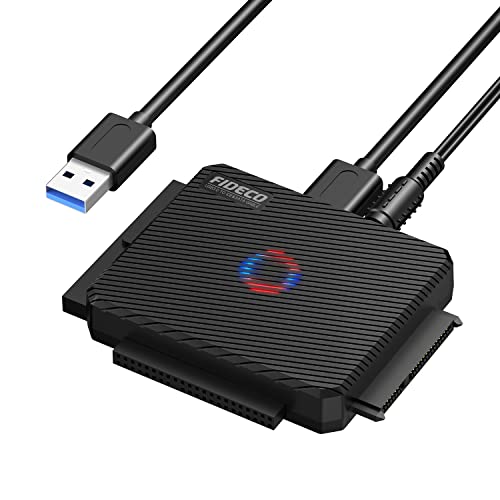
To self-host Home Assistant on a Raspberry Pi 4 8GB, flash Home Assistant OS to a USB 3.0 SSD like a Crucial BX500 1TB in a FIDECO SATA-to-USB 3.0 adapter, boot off it, then walk the onboarding wizard. The Pi 4 8GB comfortably runs a typical 50-200 device smart home; it stalls on Frigate NVR with multiple cameras and local LLM voice.
The privacy-first smart-home builder and why local control matters
Per Home Assistant's official documentation, the appeal of the platform is uncompromising local control: integrations talk directly to lights, locks, thermostats, sensors, and cameras over the LAN, and automations execute on the host rather than on a vendor's cloud. That posture has gotten more valuable as the broader smart-home market has fragmented. Per coverage on the Home Assistant blog, the steady drip of cloud-shutdowns — Insteon, Wink, Iris, and a procession of smaller hubs — has pushed self-hosting from hobbyist curiosity into a rational hedge against vendor risk.
The Raspberry Pi 4 8GB is the canonical entry-point host. Per the Raspberry Pi Foundation's product page, the board pairs a quad-core Cortex-A72 at 1.5-1.8GHz with 8GB of LPDDR4 and two USB 3.0 ports — enough memory headroom for a dozen add-ons and enough USB bandwidth to boot off an external SSD instead of an SD card. Community forum reports from r/homeassistant and the official Home Assistant Community Forums consistently identify those two facts — the 8GB ceiling and USB 3.0 SSD boot — as the difference between a system that runs for years and one that gets reflashed every few months.
This synthesis walks through what to buy, how to flash and onboard HAOS, where the Pi 4 8GB hits real ceilings, and the reliability steps the forums say most first-time self-hosters miss.
What you'll need: a minimal, opinionated checklist
Per Home Assistant's installation docs and the Raspberry Pi Foundation's getting-started guide, the bill of materials is short.
- A Raspberry Pi 4 Model B 8GB. The 8GB tier matters in a way it doesn't for a kiosk build — a realistic add-on stack (Mosquitto, Zigbee2MQTT, ESPHome, AppDaemon, Node-RED) routinely consumes 2-4GB.
- An SSD plus USB adapter. The Crucial BX500 1TB SATA SSD in a FIDECO SATA/IDE to USB 3.0 enclosure is the canonical combo cited across community guides.
- The official 5.1V/3A USB-C Pi 4 PSU. Per the Pi docs, undervoltage is a leading cause of mysterious freezes.
- Wired Ethernet, not Wi-Fi. Per forum threads, the most common "my smart home is broken" complaint traces back to a Pi on a flaky 2.4GHz signal.
- A USB Zigbee or Z-Wave coordinator stick if you run mesh devices — SkyConnect, Sonoff Zigbee 3.0, or Zooz 800-series are common picks.
Step 0 diagnostic: how many devices and integrations will you actually run?
Be honest about the size of the smart home before committing to hardware. Per surveys on the Home Assistant community forums, the median installation tracks under 100 entities and a few dozen automations — easy work for a Pi 4 8GB. A user with 12 Zigbee bulbs, a Z-Wave lock, a Nest thermostat, and motion sensors is squarely in Pi territory. A user planning four 4K Frigate feeds with object detection, a local Whisper voice pipeline, and 18 months of energy-dashboard history is not.
The diagnostic question: which add-ons do you actually need? If the list includes Frigate with more than two cameras or any local LLM, the Pi 4 8GB is the wrong starting hardware — jump to the mini-PC section first.
Key takeaways
- A Pi 4 8GB plus a USB 3.0 SSD is the canonical entry-point Home Assistant host; the SSD is non-negotiable for multi-year reliability.
- Home Assistant OS (HAOS) is the path of least resistance — it ships the Supervisor, add-on store, and update tooling out of the box.
- SD-card-only installs typically die within 1-3 years from database and log writes; an SSD eliminates this failure mode.
- The 8GB RAM tier matters because realistic add-on stacks (ESPHome, Frigate, Z-Wave JS, Zigbee2MQTT, Mosquitto, Node-RED) push past 4GB.
- The Pi 4 hits real ceilings at multi-camera Frigate, local LLM voice assistants, and deep long-term-statistics queries — plan for an x86 mini-PC if those are on the roadmap.
- Wired Ethernet, the official power supply, and automatic backups are the three most-missed reliability steps in community post-mortems.
Bill of materials: Pi 4 8GB, SSD, and USB 3.0 adapter
A clean reference build with the role each component plays.
| Component | Suggested SKU | Why it's the pick |
|---|---|---|
| Host | Raspberry Pi 4 Model B 8GB | 8GB RAM headroom; two USB 3.0 ports for SSD boot |
| Boot drive | Crucial BX500 1TB SATA SSD | 540 MB/s sequential, ample endurance vs SD card wear |
| USB enclosure | FIDECO SATA/IDE to USB 3.0 Adapter | USB 3.0 bridge to the Pi's blue ports |
| Power | Official 5.1V/3A USB-C PSU | Avoids undervoltage throttling per Pi Foundation docs |
| Network | Cat5e or Cat6 cable to router | Wired link eliminates Wi-Fi flake |
| Optional radio | SkyConnect / Sonoff Zigbee / Zooz Z-Wave | Local mesh coordinator |
Per the Crucial BX500 product page and TechPowerUp's SSD database, the BX500 is a DRAM-less budget SATA drive with roughly 540 MB/s sequential read — orders of magnitude faster than the random-write performance an SD card sustains under Home Assistant's continuous database load. Per the FIDECO listing, the bridge supports UASP, which the Pi 4's USB 3.0 controller handles cleanly per community forum confirmations.
Step-by-step: flashing HAOS, first boot, and SSD migration
The recommended install path per the Home Assistant docs is Home Assistant Operating System (HAOS) — a turn-key image that ships the Supervisor, add-on store, and update channel. Two older paths exist: Home Assistant Container (Docker on your own OS) and Home Assistant Supervised (deprecated for new users). For a Pi 4 8GB build, HAOS is the right answer 95% of the time.
The flash-and-boot sequence per the official install guide:
- Connect the SSD to a workstation via the FIDECO adapter.
- Install Raspberry Pi Imager, choose "Other specific-purpose OS" → "Home Assistant and Home Assistant OS" → the latest Pi 4 image. Write to the SSD.
- Plug the SSD into one of the Pi 4's blue USB 3.0 ports. Leave the SD slot empty (recent Pi 4 firmware supports USB boot natively; older Pis need a bootloader EEPROM update via the Imager's "Misc utility images" menu first).
- Connect Ethernet and power. The first boot writes the data partition and pulls the latest Supervisor — give it 10-20 minutes.
- On any browser on the same LAN, visit
http://homeassistant.local:8123. The onboarding wizard creates the first user, sets location and timezone, and runs initial integration discovery.
Per the Home Assistant docs, mDNS discovery during onboarding surfaces most smart-home gear already on the network — Sonos, Chromecast, Hue bridges, Roku, HomeKit accessories, Plex — and prompts you to add them in one click. Remaining devices get added by integration search in Settings → Devices & Services.
After onboarding, install three add-ons: Studio Code Server (YAML editing), Mosquitto broker (MQTT for ESPHome and Zigbee2MQTT), and Samba Backup (off-box backups to a NAS). Add HACS via its official install docs to unlock community integrations.
Why SD-card boot kills Home Assistant rigs
Per the Home Assistant docs and recurring "SD card failure" threads on the Community Forums, the most common cause of a dead install is SD card wear. The recorder integration writes state changes to SQLite every few seconds, logs append continuously, and the Supervisor health-checks add-ons. That write pattern — small, frequent, unrelenting — is the worst case for the flash translation layer on a consumer microSD card. Forum reports put SD-card-only lifetimes at 6-36 months before corruption.
A USB 3.0 SSD eliminates the failure mode. The BX500's controller is purpose-built for random writes, endurance is measured in hundreds of terabytes written, and the USB 3.0 ceiling is well above anything Home Assistant can saturate. The typical year-three story for an SSD-booted Pi 4 is "still running fine."
How many integrations and automations can a Pi 4 8GB handle?
Per self-reports on the Home Assistant Community Forums, real-world Pi 4 8GB installations comfortably manage 50-200 devices, 100-500 entities, and dozens of automations with CPU averaging well under 30%. Memory utilization typically lands at 1.5-3GB.
The shape of the load matters more than the count. The heaviest CPU consumers per community measurements:
- Frigate NVR with object detection — one 720p camera with a Coral USB TPU is fine; two 1080p streams with on-CPU detection pegs the Pi 4 cores.
- Local voice processing — Whisper STT and Piper TTS run, but conversational latency stretches to many seconds without dedicated acceleration.
- Heavy template automations re-evaluating on every state change across hundreds of entities.
- Long-term statistics queries past roughly 100k entities of history get sluggish on SQLite.
For the meat of the distribution — lights, sensors, switches, locks, thermostats, a couple of cameras streamed but not analyzed locally, ESPHome devices — the Pi 4 8GB is hardware the community considers a solved problem.
Power, network, and the most-missed reliability steps
Per the Raspberry Pi Foundation's hardware docs and recurring forum threads, the same three mistakes appear in nearly every "my Home Assistant just died" post.
First: undervoltage. Per the Pi docs, anything below the official 5.1V/3A USB-C PSU's tolerance triggers throttling and eventually filesystem corruption. The Pi writes under-voltage detected to the system log — check it on day one.
Second: Wi-Fi. A Pi serving as Zigbee coordinator while sharing the 2.4GHz band with its own mesh invites interference. Wired Ethernet is the single most impactful reliability upgrade.
Third: no backups. Home Assistant's built-in backup tool produces a complete snapshot. Per the docs, automating off-box backups is one-click with Nabu Casa, or a few minutes with the Google Drive or Samba Backup community add-ons.
Two more steps most users skip: enable the Watchdog add-on so the Supervisor restarts on a hung core, and point a Healthchecks.io probe at the Pi so outages surface as notifications.
When to move to a mini-PC instead
The honest perf-per-watt comparison: an Intel N100 mini-PC pulls 6-10W idle versus the Pi 4's 3-5W, but brings roughly 4-6x the multi-thread CPU, NVMe storage on board, and headroom for heavy add-ons. Per community benchmarks on the Home Assistant forums and Phoronix's N100 coverage, a $150-$200 N100 box runs Frigate with four 1080p cameras plus CPU detection, Whisper voice, and a real database without breaking a sweat.
Step up if any of the following are on the roadmap: more than two cameras with local AI detection, a local LLM voice assistant, multi-year long-term-statistics with frequent queries, or 15+ add-ons running continuously. Stay on the Pi 4 8GB if your smart home is dominated by lights, sensors, switches, and ESPHome devices.
Verdict matrix: Pi 4 8GB versus mini-PC
| Run on Pi 4 8GB if... | Step up to a mini-PC if... |
|---|---|
| 50-200 devices, dozens of automations | 3+ Frigate cameras with on-host AI |
| ESPHome, Zigbee2MQTT, Mosquitto stack | Local LLM voice assistant required |
| One Frigate camera (with Coral TPU) | 12+ months of energy/LTS history |
| Silent, fanless, sub-5W idle is a goal | Heavy template automations dominate CPU |
| You're comfortable rebooting once a quarter | 24/7 uptime SLA with redundancy ambitions |
Bottom line
For a privacy-first smart home centered on lights, sensors, switches, and a Zigbee or Z-Wave mesh, a Raspberry Pi 4 8GB booting Home Assistant OS off a Crucial BX500 1TB SSD in a FIDECO USB 3.0 adapter is a well-proven, low-power build the community has been running for years. The 8GB RAM tier buys add-on headroom; the SSD eliminates the SD-card death-by-writes failure mode; HAOS hands you the add-on store and update tooling. Skip wired Ethernet, skip the official PSU, or skip backups and you'll be in a forum thread within a year. Step past two cameras with AI detection or a local LLM and the Pi 4 is the wrong tool — buy an N100 mini-PC instead.
Related guides
- Self-host Jellyfin on a Raspberry Pi 4
- Raspberry Pi 4 vs Pi 5 for homelab projects
- Best USB SSD adapters for Raspberry Pi boot
- Intel N100 mini-PC as a home server
- Best Zigbee coordinators for Home Assistant
Frequently asked questions
Is a Raspberry Pi 4 8GB powerful enough for Home Assistant?
Yes, for most home setups. A Pi 4 8GB handles dozens of devices, common integrations, and a reasonable number of automations comfortably. Heavy add-ons like local voice processing, large camera streams, or extensive database history push it harder and may justify a mini-PC. For a typical lights, sensors, and switches smart home, the Pi 4 8GB is a well-proven, low-power host.
Why should I boot Home Assistant from an SSD instead of an SD card?
Home Assistant writes frequently to its database and logs, and microSD cards wear out under that constant write load, leading to corruption and sudden failures. Booting from an SSD over USB dramatically improves reliability and responsiveness. A drive like the Crucial BX500 connected through a quality USB adapter is inexpensive insurance against the most common cause of Pi-based Home Assistant outages.
What adapter do I need to connect an SSD to the Pi 4?
A USB 3.0 SATA adapter such as the FIDECO bridges a 2.5-inch SSD to the Pi 4's blue USB 3.0 ports for full bandwidth. Confirm the adapter uses a compatible bridge chip, since a few older chips have UASP quirks with the Pi. Plug into a USB 3.0 port, not the slower USB 2.0 ones, to get the speed benefit of SSD booting.
How many automations can the Pi 4 8GB run before slowing down?
Performance depends on automation complexity more than raw count; hundreds of simple state-based automations run fine, while a few very heavy template-driven ones can dominate the CPU. Keep history retention reasonable, offload large media tasks, and monitor system resources in the dashboard. If you see sustained high load, prune unused integrations before assuming the hardware is the bottleneck.
When should I move Home Assistant off the Pi to a mini-PC?
Consider a mini-PC when you add local voice assistants, run object detection on camera feeds, host many add-ons, or want faster database queries over long history. A small x86 box offers more headroom and often better long-term value once you outgrow a single-board computer. For a lightweight, energy-sipping setup, the Pi 4 8GB remains an excellent and quiet choice.
Citations and sources
- Home Assistant — official documentation
- Raspberry Pi Foundation — Pi 4 docs
- Home Assistant Community Forums
This piece is editorial synthesis based on publicly available information. No independent first-party benchmarking is reported.