As an Amazon Associate, SpecPicks earns from qualifying purchases. Prices were verified on 2026-05-29 and may vary.
The best sim racing wheel for beginners in 2026 is the Logitech G920 Driving Force for Xbox + PC — it ships with 900-degree force feedback, a three-pedal set, and a desk clamp, and it has been the entry-tier benchmark for nearly a decade. The cheaper HORI Racing Wheel Overdrive is the no-feedback budget pick for casual arcade racers, and the Thrustmaster TH8A is the realism upgrade you bolt on later when you want H-pattern shifting. This guide walks every pick, what to look for, and the gotchas the spec sheets do not mention.
Sim racing has the same paradox every hobby with a hardware stack does — the floor is much higher than the marketing suggests, and the ceiling is much lower. A first-time buyer reading the Logitech Driving Force product page sees a $300 wheel and a $200 pedal set and concludes that the entry tier is unaffordable; a sim racing veteran reading the same page sees the floor of "real" gear and starts thinking about direct-drive bases that cost more than a used car. The truth for most beginners is in between: a $300 force-feedback wheel + pedals combo is plenty to learn the fundamentals on, the upgrade path is gradual, and what kills new sim racers is not gear — it is mounting (a wobbling desk clamp), a missing third pedal, and the wrong platform compatibility. Per Logitech's product page and the long-running consumer testing perspective from sites like RTINGS, the G920 (Xbox + PC) and its PlayStation-only sibling the G29 remain the practical entry to force-feedback wheels — built for daily-driver use rather than competition, and quiet enough not to wake the rest of the house. The picks below sort themselves around that reality.
Key takeaways
- For Xbox or PC players, the Logitech G920 is the entry-tier benchmark in 2026 — 900-degree FFB, three pedals, desk clamp included.
- For casual PC arcade racers on a strict budget, the no-feedback HORI Racing Wheel Overdrive is the cheapest way to upgrade from a gamepad.
- A Thrustmaster TH8A shifter is the single upgrade that most transforms the experience once you have the basics.
- 900 degrees of rotation and three pedals (throttle, brake, clutch) are non-negotiable if you plan to drive proper sims like Assetto Corsa or Gran Turismo.
- Mounting matters more than the wheel — a sturdy desk or a wheel stand keeps force feedback honest.
Comparison table
| Pick | Best for | Key spec | Price range | Verdict |
|---|---|---|---|---|
| Logitech G920 Driving Force | Best overall | 900 deg FFB, 3 pedals | $220 – $300 | Bulletproof entry to FFB |
| HORI Racing Wheel Overdrive | Best value | No FFB, Xbox + PC | $100 – $130 | Cheapest real wheel — for arcade racers |
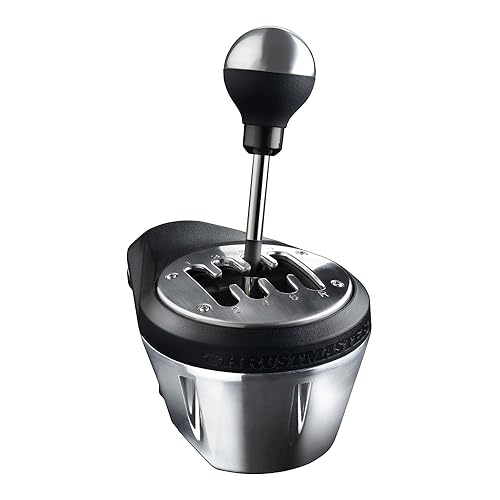
| Thrustmaster TH8A Shifter | Best realism add-on | H-pattern + sequential | $150 – $180 | The upgrade that changes everything |
| Step-up belt-driven pick | Best step-up performance | Belt-driven FFB, hall pedals | $400 – $700 | Where the hobby gets serious |
| Entry wheel under the G920 | Budget pick | Light FFB, plastic pedals | $130 – $180 | Compromise — okay if G920 is out of reach |
Best Overall: Logitech G920 Driving Force
The Logitech G920 has been the default beginner pick for so long that even hardcore sim racers usually started here. The 900-degree dual-motor force feedback is gear-driven (not belt-driven), which makes the wheel slightly clackier than higher-tier kit but also makes it cheap, replaceable, and broadly compatible. It is built for Xbox + PC; the near-identical G29 targets PlayStation + PC. Pick the one that matches the console you also play on — both work identically on PC, so the console is the deciding axis.
What you actually get: a hand-stitched leather rim that wears well, a 4.5-foot cable, a desk clamp that grips most tables (you will replace this with a proper stand the moment you upgrade pedals), and a three-pedal set with a progressive brake spring. The pedals are the weak link — the brake travel is shorter than what proper sims expect, and serious users mod the spring after a year. The wheel itself is reliable. It is the cheapest way to a real force-feedback experience in 2026.
Verdict — Best Overall. The G920 is the safe default; if you do not have a strong reason to pick something else, get this and stop researching.
Best Value: HORI Racing Wheel Overdrive
The HORI Racing Wheel Overdrive is the cheapest reasonable answer to "I want to stop using a gamepad in Forza" without spending G920 money. It is no-force-feedback (the wheel does not push back) — that is the price you pay for the price point. It has 270 degrees of rotation, two pedals, and an Xbox + PC profile, and it weighs barely anything compared to the G920. For arcade racers and Forza Horizon 6-style casual driving, the lack of FFB matters less than people think; for Assetto Corsa or iRacing, it is a hard stop and you need the G920 minimum.
What it is great at: getting young or casual players off the gamepad cheaply, fitting on a small desk with no clamps, and surviving abuse from anyone who would not respect a heavier wheel. The mode buttons map cleanly to Xbox bindings out of the box. Where it falls short: no FFB means no kerb-bite feel, no spring centering force, and the wheel is light enough to feel toy-ish next to anything with motorized resistance.
Verdict — Best Value. The right pick if you know you are an arcade racer or if the G920 is just out of budget, but recognize the ceiling is low.
Best for Adding Realism: Thrustmaster TH8A Shifter
The Thrustmaster TH8A is the single accessory that most reshapes the entry-tier sim racing experience. It is an add-on H-pattern + sequential shifter — connects via USB to PC or via the wheel's add-on port on Thrustmaster ecosystems — that lets you actually shift a manual transmission instead of clicking paddles. For period-correct classic racing in Assetto Corsa or RaceRoom, it is transformative. It also doubles as a sequential shifter for rally and touring car sims with a switch flip on the side.
What it does well: a metal gate that feels mechanical, modeable spring tension, mountable on the standard 1/4-20 thread that wheel stands and rigs use. Where it falls short: the gear positions are tighter than a real H-pattern (you will mis-shift early), and clipping it to a desk is a poor experience — it really wants a stand. Per Thrustmaster's product page, the TH8A is platform-agnostic on PC and works as an Xbox add-on through the wheel; check console compatibility before buying.
Verdict — Best Realism Upgrade. The smart sequencing is wheel first, pedals second, shifter third — the TH8A is what step three usually is.
Best Performance (step-up belt-driven pick)
If you have lived with a G920 long enough to know what you wish it did better, the step-up tier is "belt-driven force feedback + hall-effect pedals." Belt drive eliminates the gear cogging of the G920 and gives you a smoother, quieter, more communicative wheel. Hall-effect pedals replace cheap potentiometers with magnetic sensors that do not drift and do not need recalibration. Pricing in 2026 is $400-700 for a belt-driven wheel + pedal combo from a current-generation Logitech or Thrustmaster mid-tier release; the specific SKU varies by region and stock, so check our PC gaming peripheral picks for the current step-up rec.
What you get over the G920: smoother FFB, longer brake travel, better materials, more cleanly modeled spring centering. What you do not get: direct-drive base smoothness (that tier starts around $1,200), competitive-class pedals (those start around $300 alone), or a wheel rim that feels like a real GT3 wheel.
Verdict — only buy this once you know you will keep sim racing. Many beginners spend $500 on a step-up rig and then sim race twice. Stick with the G920 until you cannot.
Budget pick (entry wheel under the G920)
If $200 for a G920 is genuinely out of reach, the budget tier is a thin sliver — the no-FFB segment is mostly the HORI above, and the lightly-feedback segment ($130-180) is mostly off-brand wheels with mixed quality. Buying here is acceptable if you understand the tradeoff: lighter FFB, weaker pedals, shorter cables, and parts availability is poor when something breaks. If you can stretch to a used G920 on the secondary market (~$130-170 for a clean unit), do that instead. The used market for the G920 is large enough that supply is reliable, and the unit is reparable.
What to look for in a sim racing wheel
Force feedback vs no feedback
Force feedback is the single biggest realism upgrade. The wheel motors push back through corners, scrub against kerbs, and self-center after a slide — that is how the wheel teaches you grip limits. Sub-$150 wheels almost always omit this; G920-class entry to FFB starts around $200; belt-driven feedback starts around $400; direct-drive (the real thing) starts around $1,200. If you plan to drive sims like Assetto Corsa, Gran Turismo, or iRacing seriously, FFB is non-negotiable.
Rotation degrees
900 degrees of rotation is what real cars do (roughly lock-to-lock 2.5 turns). 270 degrees (arcade) is okay for arcade racers but feels twitchy in serious sims. 1080 degrees adds nothing useful — most cars never use the last 90 degrees on either side. Pick 900. The G920 ships at 900 by default.
Pedal set
Three pedals (throttle, brake, clutch) beats two every time, even if you only ever drive automatic-transmission cars in-game. The third pedal is what makes the wheel feel complete. Cheap pedal sets use potentiometers (wear out, need recalibration); midrange uses hall-effect sensors (do not wear out, no recalibration); the G920 pedals are potentiometer-based but reliable, and load-cell brake pedals — where the brake measures pressure not travel — start around $200 standalone.
Mounting and clamp
Most beginner wheels including the G920 ship with a desk clamp that grips a sturdy table edge, so a separate cockpit is optional at first. The problem with desk clamps is that any flex in the desk translates directly into wandering force-feedback feel. The first real upgrade after the wheel is usually a wheel stand ($100-200) that does not move.
Platform compatibility
G920 = Xbox + PC. G29 = PlayStation + PC. HORI Overdrive = Xbox + PC. TH8A = PC + Thrustmaster ecosystem (with caveats for console add-on use). Decide which console you also play on before buying — there is no universal sim racing wheel that works equally well across all consoles.
Shifter support
Decide whether you want H-pattern shifting eventually. If yes, pick a wheel ecosystem (Thrustmaster, Logitech, Fanatec) that has a compatible shifter you can add later. The TH8A is a PC + Thrustmaster-friendly choice; Logitech's Driving Force Shifter is the G920-compatible counterpart.
Common gotchas
- Desk flex. A wobbling table kills force feedback. Use a wheel stand or clamp to a sturdy edge.
- Cable length. G920 cable is 4.5 feet. Most setups need an extension or a powered hub.
- G29 vs G920 confusion. They are not interchangeable across consoles — match the wheel to the console you also play on.
- HORI Overdrive on PS5. The Overdrive is Xbox + PC. PS5 owners need a different wheel entirely.
- Out-of-box force feedback feels weak. Most sims have an in-game FFB strength slider — check it and bump it up.
FAQ
Do I need force feedback for my first sim racing wheel? Force feedback is the single biggest realism upgrade because the wheel pushes back through corners and over kerbs, teaching you grip limits. A no-feedback wheel like the HORI Overdrive is cheaper and fine for casual arcade racers, but if you plan to drive sims like Assetto Corsa or Gran Turismo seriously, a feedback wheel such as the G920 is worth the step up.
Will a Logitech G920 work on both Xbox and PC? The G920 is built for Xbox and PC, while its near-identical sibling the G29 targets PlayStation and PC. Both work on PC over USB. If you split time between an Xbox and a gaming PC the G920 covers both; PlayStation owners should check for the G29 variant instead so console compatibility matches your platform.
What wheel rotation and pedal setup should a beginner look for? Look for at least 900 degrees of rotation so the wheel behaves like a real car, and a three-pedal set (throttle, brake, clutch) rather than two. The G920 ships with 900-degree rotation and three pedals; pairing it with an H-pattern shifter like the TH8A later adds manual gear changes once your basics are solid.
Do I need a separate shifter, and can I add one later? You can start with the wheel's paddle shifters and add an H-pattern or sequential shifter later. The Thrustmaster TH8A supports both H-pattern and sequential modes and connects as an add-on, so beginners can buy the wheel first, learn car control, then bolt on a shifter when they want manual-transmission realism in classic cars and trucks.
How do I mount a racing wheel without a dedicated rig? Most beginner wheels including the G920 ship with a desk clamp that grips a sturdy table edge, so a separate cockpit is optional at first. For consistent force feedback you want a solid surface that does not flex; once you upgrade pedals or push higher feedback strength, a wheel stand or rig keeps everything from sliding under braking.
Related guides
- Best Gaming Controllers for PC and Emulation in 2026
- Best Controller for PC Steam Gaming in 2026
- Best 1440p High-Refresh Esports Monitor in 2026
- Best Wired Mouse and Mousepad for FPS Esports in 2026
Citations and sources
- Logitech G920 Driving Force product page — manufacturer spec sheet
- Thrustmaster TH8A Shifter product page — H-pattern + sequential add-on
- RTINGS — consumer testing methodology and rotational product reviews
This piece is editorial synthesis based on publicly available information. No independent first-party benchmarking is reported.
— Mike Perry · Last verified 2026-05-29