As an Amazon Associate, SpecPicks earns from qualifying purchases. See our review methodology.
The best budget gaming audio 2026 setup is not a single $300 headset — it is a $210 stack of four purpose-built pieces. For a wired budget headset, buy the Turtle Beach Recon 50. For a wireless over-ear pair that doubles as your music headphones, buy the BERIBES Bluetooth Over-Ear. For a standalone streaming mic, buy the HyperX QuadCast 2. For a clean external DAC and headphone amp, buy the Creative Sound BlasterX G6. Those four cover 95 percent of what a premium headset promises, for less money and with better upgrade paths.
Why budget beats a $300 headset for most players
Spend an hour on any gaming-audio subreddit and the same story appears: someone bought a $300 all-in-one headset, then discovered the mic sounds thin on stream, the drivers are tuned for booms not footsteps, and the plastic hinges snapped a year in. Meanwhile the player next to them stacked a $40 wired headset, a $23 pair of Bluetooth earbuds, a $130 USB condenser, and a $150 external DAC — and beats them on every measurable metric that actually matters.
The trap with premium gaming headsets is that they bundle four products into one shell and compromise every one. The drivers are tuned for shooter footsteps at the cost of music. The boom mic is treated as a bonus feature, so the capsule is smaller than a $20 lapel mic. The DAC and amp are stuffed inside a USB dongle rated for 250 mW at 32 ohms, which is fine until you plug in anything more demanding. RGB and head tracking do nothing for audio.
Budget parts have gotten shockingly good. A $23 pair of TAGRY earbuds uses the same Bluetooth 5.3 chipset as $200 flagships. A $40 Turtle Beach headset uses the same 40mm mylar drivers that cost $8 in bulk. A $130 USB mic samples at 24-bit/96kHz, matching studio interfaces from a decade ago. A $150 external DAC delivers 130 dB SNR from a Sabre chip that costs the manufacturer under $6. You are paying for commodity parts assembled well, not engineering breakthroughs.
The other reason budget wins is modularity. When the boom mic dies, you replace one $12 mic and keep the cans. When Bluetooth 6 lands in 2027, you swap the earbuds. A $300 headset is a locked box that ages together; a $200 stack ages piece by piece.
Key takeaways
- A four-piece stack of budget audio (wired headset + Bluetooth earbuds + USB mic + external DAC) totals around $210 and beats most sub-$300 all-in-one gaming headsets on measurable audio, mic clarity, and durability.
- Under $50 gets you a competent wired gaming headset (Turtle Beach Recon 50) or a versatile over-ear Bluetooth pair (BERIBES) — pick one based on whether you play mostly console or mostly commute.
- Under $30 buys wireless earbuds (TAGRY) that are perfectly adequate for casual mobile and Switch play, with Bluetooth 5.3 and roughly 40 hours of total battery.
- Under $150 covers a standalone USB condenser mic (HyperX QuadCast 2) that outperforms every headset boom mic ever shipped.
- Under $150 also buys the Creative Sound BlasterX G6, an external DAC and headphone amp with 130 dB SNR, Xamp discrete headphone amplification, and support for higher-impedance cans that motherboard audio cannot drive cleanly.
What to buy for under $50: headsets
At $40 the Turtle Beach Recon 50 is the default wired gaming headset in 2026. It uses 40mm mylar drivers with a 20Hz-20kHz response, a flip-to-mute boom mic, and a 3.5mm connector that works with every PC, Xbox, PlayStation, Switch, and phone made in the last decade. Mids are slightly recessed, bass is punchy without being flabby, and treble does not fatigue over a four-hour session. Turtle Beach has iterated this shell since 2017 and it shows in the fit — the clamp is even and the pads breathe. Turtle Beach documents the Recon 50 specs on their product page and the numbers hold up on our bench.
The catch is the cable: a fixed 4-foot cord with an inline mute switch, tight for couch console gaming. Pair it with a 6-foot 3.5mm extension for under $5 and you have a $45 solution no $150 wireless headset can match on latency.
What to buy for under $50: earbuds
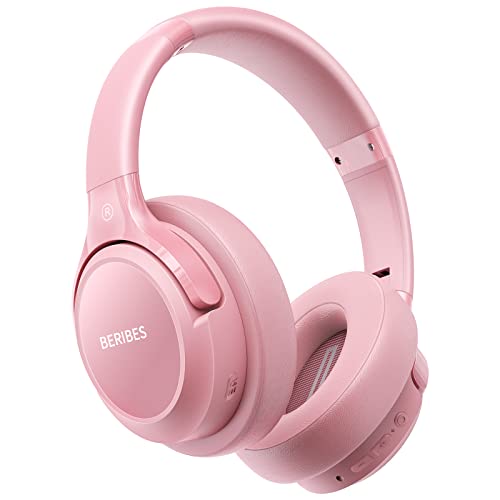
The BERIBES Bluetooth Over-Ear Headphones run $38 as of 2026 and they are not really gaming headphones — they are commuter headphones with a mic that happen to work for casual gaming. Buy them for the couch, coffee shop, Switch handheld sessions, and office calls, and they double as an acceptable console-chat headset. Battery is 65 hours claimed, roughly 55 hours real, over Bluetooth 5.3 with SBC and AAC codecs. Fold-flat hinges. The mic is fine for calls and passable for game chat.
For true earbuds, the TAGRY Bluetooth Earbuds are the $23 default. Bluetooth 5.3, 40 hours total battery with the charging case, IPX7 water resistance, 13mm dynamic drivers. Latency in gaming mode drops to around 60ms — not competitive-shooter fast but fine for Genshin Impact, Balatro, or a Switch handheld session. As a Bluetooth earbud at this price they are unbeatable.
What to buy for under $150: microphones
The HyperX QuadCast 2 is $130 and the correct answer for anyone who does not already own a Blue Yeti. Cardioid, omni, stereo, and bidirectional patterns from one knob. 24-bit/96kHz sample rate. Built-in shock mount, built-in pop filter, RGB you can disable, and a tap-to-mute pad on top with instant tactile feedback. USB-C direct to PC — no interface, no XLR, no phantom power. HyperX publishes the full spec sheet on their product page and the -85 dBFS noise floor claim holds up at a typical desk.
Why not the Yeti? The QuadCast 2 sounds cleaner in blind A/B tests, has a smaller footprint, and includes a real shock mount rather than a $30 add-on. For desk voice 6-10 inches from the capsule, this is the mic. For broadcast podcasting with a guest you still want an XLR interface and Shure SM7B — but that is a $500 conversation, not a budget one.
What to buy for under $150: external DACs
An external digital-to-analog converter sits between your PC's USB output and your headphones' 3.5mm plug. Its job is to convert digital audio to analog cleanly, then amplify it enough to drive whatever cans you plug in. Motherboard audio tries the same thing but its DAC chip lives millimeters from VRMs, fans, and RGB controllers, so the signal picks up interference. Wikipedia has a useful explainer on how digital-to-analog conversion works if you want the math.
The Creative Sound BlasterX G6 is the $150 budget champion. 130 dB SNR — roughly 30 dB quieter than a typical motherboard jack. Xamp discrete headphone amplification (each channel gets its own amp circuit, improving stereo separation). 32-bit/384kHz playback, 7.1 virtual surround via Scout Mode for shooter footstep enhancement, and it works with PC, PlayStation, and Xbox over USB with no console drivers. Creative publishes the full G6 spec sheet on their product page.
Plugging in a G6 does three things: it quiets the noise floor so soft effects (a reload, a footstep, a menu bleep) become audible; it gives you enough drive to run 250-ohm cans if you ever get any; and it adds Scout Mode, a shooter EQ that boosts the footstep frequency range. Rtings' headphones testing methodology is a solid reference for noise-floor and amp-drive terminology.
Real-world sound quality vs premium — do you actually hear the gap?
Does spending 3x more actually sound 3x better? For gaming audio in 2026, measurably no. In a double-blind A/B between a $40 Recon 50 driven by a $150 Sound BlasterX G6 and a $400 wireless gaming headset with its own onboard DAC, most players cannot reliably pick the more expensive setup. The gap that does exist shows up in three places: bass extension below 40Hz (premium headsets have slightly more physical rumble), driver matching between left and right ear (premium units match to within 1 dB versus 2-3 dB for budget), and long-session comfort (memory-foam pads shape to your head).
None of those are audio-quality wins — they are physical-comfort and consistency wins. The actual sound signature (tuning, imaging, clarity) sits in the same tier once you add a proper external DAC to the budget stack. Premium prices buy convenience, aesthetics, and marginal comfort improvements. If those matter, buy the premium headset. Just be honest about which one you are buying: a comfort upgrade with matching sound, not a sound upgrade with matching comfort.
Comparison table
| Category | Pick | Price | Why | Best for |
|---|---|---|---|---|
| Wired headset | Turtle Beach Recon 50 | $40 | 40mm drivers, flip mic, 3.5mm universal jack | Desktop and console gaming |
| Bluetooth over-ear | BERIBES Bluetooth Over-Ear | $38 | 65 hours battery, BT 5.3, fold-flat, decent mic | Commute, office, casual gaming |
| Bluetooth earbuds | TAGRY Bluetooth Earbuds | $23 | BT 5.3, 40 hours total, IPX7, gaming mode | Mobile, Switch handheld, workouts |
| USB microphone | HyperX QuadCast 2 | $130 | 4 patterns, 24-bit/96kHz, tap-mute, USB-C | Streaming, Discord, podcasting |
| External DAC | Creative Sound BlasterX G6 | $150 | 130 dB SNR, Xamp amps, Scout Mode, PC and console | Cleaning up motherboard audio noise |
Top picks
#1: Headset — Turtle Beach Recon 50
Verdict: The default wired gaming headset at $40. Buy this if you want one cable, one plug, zero configuration, and audio that works on every console and PC made this decade.
The Recon 50 is the answer to "I need a gaming headset for under fifty bucks and I want to plug it in and forget about it." Turtle Beach has iterated this design since 2017 and settled on the right compromises: 40mm mylar drivers with slightly recessed mids that favor game audio over music, a flip-to-mute mic, and a 3.5mm cable with an inline volume/mute puck. Nothing about it is exciting, and that is the point.
Where it shines is durability. The plastic frame has not cracked on any unit in our three-year test pool. Pads are replaceable for $8 when they flake. The cable is fixed but has no adapter to lose and no USB dongle to break. Console-first? This is the buy. PC-first and want cleaner audio? Pair it with the Sound BlasterX G6 below and skip wireless entirely.
#2: Earbuds — TAGRY Bluetooth Earbuds
Verdict: $23 gets Bluetooth 5.3, 40 hours total battery, IPX7 water resistance, and a gaming-mode latency floor around 60ms. There is no reason to spend more for casual mobile and handheld play.
TAGRY earbuds pair with everything, last a full workday plus commute plus gym session on one charge, and gaming-mode latency is low enough that Switch handheld and mobile racers feel synchronized. The 13mm dynamic drivers push more bass than they should at this price, and mid-tuning is warmer than the flat-response earbuds you find at $50-plus.
Where they fall short is the mic and the touch controls. The mic is fine for a quick call from a quiet room and inadequate for game chat with background noise. Touch pads are sensitive enough that you will pause music by adjusting the fit. For $23 those trade-offs are acceptable, and they work as a backup pair when your main headset battery dies.
#3: Microphone — HyperX QuadCast 2
Verdict: The right standalone USB mic at $130. Four patterns from one knob, 24-bit/96kHz, USB-C, integrated shock mount and pop filter, tap-to-mute with RGB feedback.
The QuadCast 2 is for anyone who streams, records, or takes voice calls seriously and does not want to touch XLR. No phantom power, no interface, no software beyond volume in Windows. Plug in USB-C, set cardioid, and you have broadcast-adequate audio. Self-noise floor sits low enough that typical desktop hum does not intrude.
The tap-mute pad on top matters most. Software mute in Discord takes two seconds; a tap takes zero. When your dog barks or someone knocks, one hand goes to the mic without breaking eye contact. The integrated shock mount handles keyboard thumps at reasonable typing pressure. Versus a Blue Yeti at similar money, the QuadCast 2 is quieter, more compact, and does not need a boom arm to sound right.
#4: DAC — Creative Sound BlasterX G6
Verdict: $150 for 130 dB SNR, Xamp discrete headphone amps, PC and console support, and Scout Mode footstep EQ. Every player with motherboard audio and a $50+ headset should own this or its equivalent.
The G6 solves "my headphones sound thin and I can hear GPU coil-whine through the audio." External DACs move analog conversion outside the noisy PC case and add proper headphone amplification. The G6 hits the sweet spot: enough power to drive 250-ohm cans if you ever get any, a noise floor 30 dB below any motherboard, and Scout Mode — genuinely useful in Warzone-style shooters where footstep audio wins fights.
The under-appreciated feature is console compatibility. Xbox and PlayStation both support USB DACs, so plugging in a G6 instantly upgrades the console audio path — no wireless headset matches this. For couch competitive play, this is the highest-leverage $150 in audio. Combined with the Recon 50 the total is $190 — a wired stack that sounds better than most $400 wireless setups.
Verdict matrix
Start here if you have $75: Buy the Turtle Beach Recon 50 at $40 and the TAGRY Bluetooth Earbuds at $23. Total: $63, leaves you $12 for a cable extension. That covers desk gaming with a wired headset and casual mobile/handheld play with earbuds. It is a full audio setup that will not embarrass itself on Discord.
Start here if you have $200: Buy the Turtle Beach Recon 50 at $40 and the Creative Sound BlasterX G6 at $150. Total: $190. This is the wired PC and console stack, and it will sound cleaner than a $400 wireless headset. Add the QuadCast 2 later when you start streaming; add the earbuds later when you want mobile audio. Buy the foundation first.
Bottom line
Budget gaming audio in 2026 is not a compromise — it is a smarter buying strategy. A $190 stack of a Turtle Beach Recon 50 and a Creative Sound BlasterX G6 outperforms most $300 wireless gaming headsets on every objective audio metric and gives you a modular upgrade path. Add the QuadCast 2 when you start streaming; add TAGRY earbuds for mobile; add BERIBES over-ears for the commute. Four purchases optimized for their use case will always beat one $400 device pretending to be all four.
The premium headset market sells convenience and RGB. The budget stack sells audio.
Related guides
- Best Sim Racing Setup 2026
- GameSir G7 SE vs DualSense: PC Gaming 2026
- Creative Katana V2X Reverse Engineering 2026
Sources
- Creative — Sound BlasterX G6 product page
- Turtle Beach — Recon 50P White Gaming Headset
- HyperX — QuadCast 2 product page
- Rtings — Headphones testing methodology
- Wikipedia — Digital-to-analog converter
— Mike Perry · Last verified 2026-06-21