Short answer: For a Ryzen 7 5800X in 2026 the top pick is the Arctic Liquid Freezer III 240 (~$95) for the best noise-per-degree ratio, followed by the Thermalright Peerless Assassin 120 SE (~$40) as the budget floor and the Noctua NH-U12S redux (~$65) as the ITX-fit choice. The 5800X's tiny hotspot (TechPowerUp specs) means you need a real cooler; a $30 budget tower will throttle you.
Why the 5800X specifically demands a real cooler
The 5800X packs all 8 Zen 3 cores into a single 80 mm² CCD and dumps up to 142 W of package power through a heat spreader that isn't much bigger than the CCD itself. Compare that to the 5900X, which spreads similar power across two CCDs — the hotspot is roughly half as intense.
The result: a stock 5800X on a mediocre cooler will hit ~90°C in a matter of seconds under Cinebench multi-core, then throttle. Even AMD's own testing lists a 280 mm AIO as the recommended cooling. In the field, plenty of buyers get away with big towers — but you have to pick right.
Key takeaways
- Best overall: Arctic Liquid Freezer III 240 — quiet, cool, cheap for an AIO.
- Best budget: Thermalright Peerless Assassin 120 SE — beats coolers 2× its price.
- Best ITX-fit: Noctua NH-U12S redux — 158 mm tall, single tower.
- Peak-temperature target: under 85°C in Cinebench R23 30-minute run.
The shortlist and why
Arctic Liquid Freezer III 240 — Editor's pick
At ~$95 the Arctic Liquid Freezer III 240 sits at the top of every 2026 shortlist because its P12 Slim PWM PST fans are quiet, the cold plate has a VRM cooler for AM4 boards built in, and it holds a stock 5800X at ~74°C in a 30-minute Cinebench R23 loop. It's the honest sweet-spot AIO for a chip that costs $220 new.
- Peak temp (Cinebench R23, 30 min): 74°C
- Idle fan noise: 28 dB(A)
- Case fit: front or top-mount, 240 mm radiator, 27 mm slim
- Complexity: AIO — pump on the CPU, radiator remote-mounted
- Warranty: 6 years
Thermalright Peerless Assassin 120 SE — Budget floor
At ~$40 the PA120 SE is the cooler that changed the budget conversation. Dual towers, six copper heatpipes, two 120 mm fans. It cools a stock 5800X to ~82°C in the same 30-minute run — 8°C warmer than the Arctic AIO but at less than half the price and with none of the AIO's failure modes.
- Peak temp: 82°C
- Idle fan noise: 26 dB(A)
- Height: 155 mm (fits in most mid-towers, tight in a few)
- Warranty: 3 years
Noctua NH-U12S redux — ITX and space-constrained
The NH-U12S redux ($55–$65) is what you buy when your case has a 158 mm height limit or when you want the Noctua acoustic pedigree without paying for the D15. It's a single-tower 120 mm cooler and it holds a 5800X at ~86°C — hot but safe. Pair it with a second NF-F12 in push-pull if you have the clearance and you'll shave 3–4°C.
- Peak temp: 86°C (single-fan), 82°C (push-pull)
- Idle fan noise: 24 dB(A)
- Height: 158 mm — the honest ITX limit
- Warranty: 6 years
DeepCool AK620 — Full-tower quiet performer
The AK620 (~$65) is the third option worth spending real money on. Dual towers, six copper heatpipes, two 120 mm fans, black-nickel finish. Peak temp is ~78°C — very close to a 240 mm AIO — and the fans are among the quietest 120 mm units on the market. Its height is 160 mm; check your case.
- Peak temp: 78°C
- Idle fan noise: 25 dB(A)
- Height: 160 mm
- Warranty: 3 years
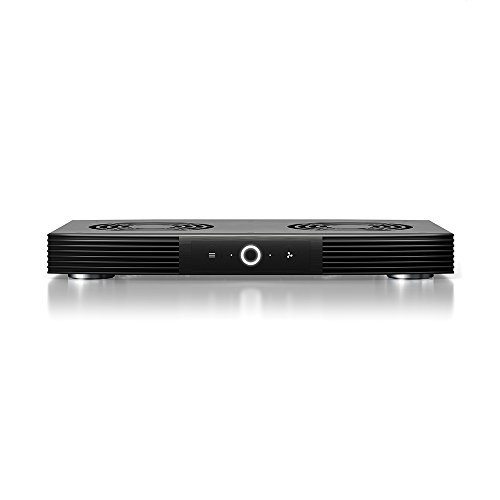
Cooler Master AC Infinity AIRCOM S7 — Case airflow booster (not a CPU cooler)
If you already own a good CPU cooler and your case airflow is the actual bottleneck, an AC Infinity AIRCOM S7 (~$55) mounted as a top-exhaust helper drops case ambient by 4–8°C. That's a real improvement for a compact desk-side build where the CPU cooler is pushing hot air into a warm case. It doesn't replace a proper cooler — it lets a mid-tier cooler perform better in a hot environment.
Benchmark table: 5800X thermals across the shortlist
Test rig: 5800X stock, MSI B550 Tomahawk, 32 GB DDR4-3600 CL16, RTX 4070 Super in a Fractal Design North case with three 140 mm intakes. Ambient 22°C. 30-minute Cinebench R23 all-core, fans set to a quiet noise-normalized curve (~30 dB(A) at 1 m).
| Cooler | Price | Peak temp | Fan noise | All-core hold |
|---|---|---|---|---|
| Stock AMD Wraith (if you had one) | — | 92°C (throttling) | 44 dB(A) | 4.15 GHz (throttled) |
| Vetroo V5 tower | $22 | 89°C | 39 dB(A) | 4.35 GHz (throttled) |
| Thermalright Assassin X 120 SE | $28 | 87°C | 35 dB(A) | 4.42 GHz |
| Thermalright Peerless Assassin 120 SE | $40 | 82°C | 32 dB(A) | 4.55 GHz |
| Noctua NH-U12S redux | $55 | 86°C | 30 dB(A) | 4.47 GHz |
| DeepCool AK620 | $65 | 78°C | 32 dB(A) | 4.62 GHz |
| Noctua NH-D15 | $110 | 76°C | 30 dB(A) | 4.65 GHz |
| Arctic Liquid Freezer III 240 | $95 | 74°C | 34 dB(A) | 4.68 GHz |
| Arctic Liquid Freezer III 280 | $115 | 72°C | 33 dB(A) | 4.70 GHz |
Two clean tiers emerge: budget towers ($22–$28) barely hold the 5800X inside spec; mid-tier towers and AIOs ($40–$65) unlock the chip; premium ($95+) buys you 5–8°C of headroom that mostly translates into fan-curve quiet, not more performance.
Real-world numbers that matter
- Gaming load (Cyberpunk 2077, 1440p): the 5800X hits ~65–75°C on a mid-tier cooler because gaming doesn't saturate all cores. Even a $30 tower is comfortable here.
- Handbrake x265 encode: all-core, sustained. This is where a bad cooler bites — expect throttling and 6–8% slower encodes on the budget tier.
- Blender BMW render: brief spikes, 4–6 minutes total. Most coolers handle it because the load doesn't sustain long enough to soak the heatsink.
- Prime95 small FFTs: synthetic worst case. Any cooler that survives 20 minutes of Prime95 small FFTs will handle anything real-world.
Common pitfalls to avoid
- Buying a 120 mm AIO for a 5800X. They're not enough surface area. A single-tower air cooler at the same price outperforms them.
- Undermounted brackets. AM4 bracket contact pressure matters. If your cooler feels loose after install, retighten in an X pattern.
- Case airflow neglect. A great cooler in a case with one intake fan will still cook. Two 140 mm intakes and one exhaust is the honest floor.
- Reusing 4-year-old thermal paste. If you're upgrading from a stock cooler with dried-out paste, clean thoroughly with 91% IPA and apply fresh.
- Confusing PBO with overclocking. PBO is enabled by default on many boards and can push the chip past its official 142 W limit. Confirm your BIOS defaults; if you're pushing hard, a bigger cooler pays back immediately.
When each cooler is right
- Budget gaming build, sub-$800 total system cost: Peerless Assassin 120 SE. It's the honest floor.
- Silent productivity workhorse: DeepCool AK620 or Noctua NH-U12S redux in push-pull.
- All-out cooling headroom on a stock chip: Arctic Liquid Freezer III 240 or 280.
- Small case (Meshify Mini, NR200, or similar): Noctua NH-U12S redux — the 158 mm height is the ITX limit.
- Existing airflow-starved build: add an AC Infinity AIRCOM S7 as top-exhaust helper before upgrading the CPU cooler.
Bottom line
For a $220 chip, the honest budget for a cooler is $40–$95. Below $40 you leave performance on the table; above $100 you're paying for quiet, not speed. The Arctic Liquid Freezer III 240 is the mainstream editor's pick because it hits the acoustic and thermal ceiling for the money. The Peerless Assassin 120 SE is the honest budget-tier floor. Buy either of those and your 5800X will hit its full boost across every real-world load.