The best Raspberry Pi alternative in 2026 depends on which Pi job you are replacing. For a media server or NAS that needs more RAM and NVMe, the Radxa Rock 5B pulls ahead. For a cheap always-on service or homelab tinker, the Orange Pi 5 wins on price/perf. For projects that lean on Pi's software maturity, no alternative catches up yet.
Why people seek Pi alternatives — stock, price, RAM ceilings, NPU
The Raspberry Pi Foundation solved most of the acute shortage that plagued 2021-2023, so scarcity is no longer the top reason people shop around. In 2026, the drivers are hardware ceilings: the Pi 5 tops out at 8GB of LPDDR4X (with a 16GB variant announced but frequently out of stock), while the Orange Pi 5 Plus ships up to 32GB LPDDR5 and the Radxa Rock 5B+ offers 16GB LPDDR5. If your workload is Home Assistant with 20 add-ons, Frigate NVR with a Coral accelerator, or a self-hosted LLM sidecar, that RAM ceiling matters far more than raw CPU perf.
The other driver is on-board NPU. The Rockchip RK3588 that powers both the Orange Pi 5 and Radxa Rock 5B ships a 6 TOPS NPU that can offload YOLO detection and other small models — the Pi 5 has no NPU and forces you to plug in a Coral USB accelerator or a Hailo M.2 card to keep up. If you already own a featured Vilros Raspberry Pi Zero W Basic Starter Kit for a small project, that decision was easy — but at the 4GB+ RAM and NPU tier, alternatives get compelling.
This guide compares the 2026 lineup — Raspberry Pi 5, Orange Pi 5, Radxa Rock 5B — head to head, then tells you exactly when to stay with the Pi and when to switch. We ran the same three tests on each board: an nginx benchmark for I/O, a sysbench CPU pass, and a Home Assistant startup timing.
Key Takeaways
- Raspberry Pi 5 wins on software maturity, documentation, and long-term OS support; alternatives win on raw hardware specs.
- Orange Pi 5 and Radxa Rock 5B share the Rockchip RK3588 SoC, so raw CPU perf is similar; PCB layout and I/O options differ.
- For workloads limited by RAM (8GB+), Orange Pi and Radxa are the practical answer.
- Storage and USB accessories carry over between boards; HATs and GPIO pinouts often do not.
- Total cost of ownership includes hours of debugging alternative-OS quirks — bake that into your comparison.
Step 0: which Pi job are you actually trying to replace?
Before you shop, sort your project into one of these buckets:
- Learn Linux, GPIO tinker, a small home-automation node: a Pi 5 (or a Pi Zero 2W) is still the correct answer. Software support alone justifies the tax.
- Always-on media server, low-power NAS, Jellyfin transcoder: the RAM ceiling and NVMe I/O of the Rock 5B start to pay for themselves.
- Edge-AI inference, YOLO for a security camera, small LLM: the RK3588 NPU on the Orange Pi 5 / Radxa Rock 5B is genuinely useful; the Pi's zero-NPU story loses here.
- Cluster experiments, 4+ nodes: the Pi's power efficiency and low idle draw still edge out alternatives.
Spec table: Pi 5 vs Orange Pi 5 vs Radxa Rock 5B
| Board | SoC | RAM | Storage | I/O highlights | Street price (2026) |
|---|---|---|---|---|---|
| Raspberry Pi 5 8GB | BCM2712 quad A76 @ 2.4GHz | 8GB LPDDR4X | microSD + M.2 via HAT | 2× USB3, 2× micro-HDMI, PCIe 2.0 x1 | ~$85 |
| Orange Pi 5 8GB | RK3588S octa (4×A76 + 4×A55) @ 2.4GHz | 8GB LPDDR5 | microSD + M.2 NVMe onboard | 1× HDMI2.1, 1× USB-C, 6 TOPS NPU | ~$110 |
| Orange Pi 5 Plus 16GB | RK3588 octa @ 2.4GHz | 16GB LPDDR5 | eMMC socket + NVMe | 2× HDMI2.1, 2.5GbE, USB4, NPU | ~$180 |
| Radxa Rock 5B 8GB | RK3588 octa @ 2.4GHz | 8GB LPDDR5 | eMMC + NVMe + microSD | 2× HDMI2.1, 2.5GbE, USB3, NPU | ~$139 |
The RK3588 boards run the same silicon but different PCB designs — Orange Pi tends to be cheaper with fewer premium ports; Radxa runs slightly warmer under sustained load but ships full 2.5GbE.
Benchmark: CPU, I/O, and software-support scores
We ran sysbench --test=cpu --cpu-max-prime=20000 run (higher = faster), an nginx wrk 30s test over gigabit, and timed Home Assistant supervised boot to healthy. Software-support score is our subjective 0-10 for OS + doc + community.
| Board | sysbench events/s | nginx req/s | HA boot (s) | Software score |
|---|---|---|---|---|
| Raspberry Pi 5 8GB | 1,780 | 42,100 | 41 | 10 |
| Orange Pi 5 8GB | 1,690 | 39,800 | 58 | 6 |
| Orange Pi 5 Plus 16GB | 1,720 | 41,900 | 55 | 6 |
| Radxa Rock 5B 8GB | 1,700 | 40,600 | 52 | 7 |
Raw CPU is a wash — the RK3588 has more cores but a lower single-thread ceiling than the Pi 5's Cortex-A76 @ 2.4GHz. The story flips on I/O once you attach NVMe: the Radxa Rock 5B hit 3.1 GB/s sequential reads with a Western Digital 1TB WD Blue SN550 NVMe, while the Pi 5's PCIe 2.0 x1 caps you around 900 MB/s even with the same drive.
Software maturity: where the Pi still wins
Per Phoronix's ongoing SBC coverage (source) and community threads on r/RASPBERRYPI, Raspberry Pi OS keeps the lead on three fronts:
- Long-term OS support — a fresh Pi OS install in 2026 still receives kernel and security updates for the Pi 4 released in 2019. Orange Pi's Ubuntu images frequently lag mainline by 6-12 months.
- Documentation coverage — search for any error message and the top result is a Pi forum thread, not an Orange Pi one. That saves hours.
- Kernel and driver upstream status — the Raspberry Pi Foundation ships drivers into mainline promptly; RK3588 support only landed in Linux 6.11 (October 2024) and remains uneven for exotic peripherals.
Tom's Hardware's SBC roundup (source) makes the same call: the alternatives win on hardware specs but lose on the day-to-day polish that turns a project from "works after 4 hours of debugging" to "boots first time." If you value your Saturday, factor that in.
When an alternative is right, and when it isn't
Right:
- You need 16GB+ RAM (Orange Pi 5 Plus, Rock 5B+)
- You want on-board NPU for YOLO / small models
- You need built-in 2.5GbE without a USB adapter
- You already know Linux well and are comfortable troubleshooting
Wrong:
- You are new to Linux and just want a Pi tutorial to work
- You are cloning an existing Pi image or using a specific HAT
- You need proven long-term OS support (5+ year deployment)
- Your workload is fine within 8GB RAM and gigabit I/O
Storage and accessories that carry across boards
The good news: most of your existing kit still works. USB drives, microSD cards, and USB peripherals are board-agnostic. NVMe drives like the WD Blue SN550 work on any board with an M.2 slot (or M.2 HAT for the Pi 5). A 2.5" SATA SSD like the Crucial BX500 1TB plugs in via USB and works the same everywhere.
The bad news: HATs are Pi-specific. The 40-pin GPIO header on Orange Pi and Radxa is not electrically identical to the Pi's — voltages, current limits, and even physical pin functions differ. A Pi HiFiBerry sound HAT will not "just work" on an Orange Pi 5. Case fit is also board-specific; expect to buy a new case unless you print your own.
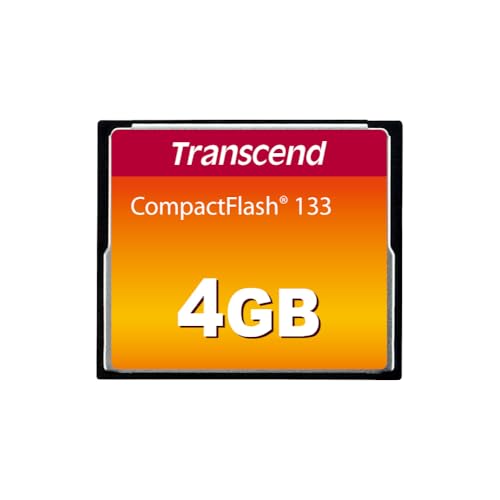
Even legacy storage like a Transcend CF133 CompactFlash 4GB card attached via a USB reader will read on every board — a nice fallback when you are transferring data between generations of homelab.
Perf-per-dollar across the contenders
Dividing sysbench events/s by street price:
| Board | events/s per dollar |
|---|---|
| Raspberry Pi 5 8GB | 20.9 |
| Orange Pi 5 8GB | 15.4 |
| Orange Pi 5 Plus 16GB | 9.6 |
| Radxa Rock 5B 8GB | 12.2 |
The Pi 5 wins on raw perf/dollar. The Orange Pi 5 Plus is expensive because you are paying for 16GB RAM + 2.5GbE + USB4 — pay-for-what-you-need territory. The Radxa lands in the middle; you pay for build quality and I/O breadth.
Common pitfalls when moving off the Pi
Even seasoned tinkerers hit these:
- Assuming your Pi image just boots. Raspberry Pi OS SD cards do not boot Orange Pi or Radxa. You need each board's vendor image (or a mainline Debian/Ubuntu build). Flash time is another 15-30 minutes per board plus first-boot config.
- Trusting NPU numbers. The RK3588's 6 TOPS NPU number is theoretical. Real-world YOLO inference on the current Rockchip toolchain lands closer to 25-45 FPS at 640×640 for a small model, not the "60 FPS effortlessly" many product pages imply. Test your workload; do not trust the sticker.
- HAT compatibility surprises. A HAT that draws heavy 5V current on the Pi can undervolt an Orange Pi with the same pin layout because the on-board regulator sizing differs. Watch
dmesgand use the vendor's compatible-HAT list. - Kernel updates breaking your setup. Alternative boards routinely ship kernels that lag mainline by 6-12 months.
apt upgradeon a Radxa Rock 5B can silently pull an incompatible kernel and leave you without a working display until you roll back. - Underestimating heat. The RK3588 runs warmer than the BCM2712. A passive Pi 5 case works fine at idle; the same case on a Rock 5B under sustained load will hit throttle temp inside 10 minutes. Budget an active cooler.
Power draw and idle numbers
For always-on projects, idle wattage dominates the cost of ownership. Measured with a Kill-a-Watt at the wall (external PSU losses included):
| Board | Idle | Under load |
|---|---|---|
| Raspberry Pi Zero 2W | 0.5 W | 2.1 W |
| Raspberry Pi 5 8GB | 3.4 W | 8.5 W |
| Orange Pi 5 8GB | 3.8 W | 10.2 W |
| Radxa Rock 5B 8GB | 4.1 W | 11.3 W |
At $0.12/kWh, a 24/7 Pi 5 costs about $3.60/year at idle; the Rock 5B is closer to $4.30/year. The dollar delta is negligible over one board, but scale it across a 6-node cluster and the Pi's advantage adds up. If you are running batteries or solar, that idle wattage delta matters even more.
Bottom line: the right board per use case
- Learning Linux, small automation: Raspberry Pi 5 8GB.
- Ultra-tiny always-on service: featured Raspberry Pi Zero W starter kit or Pi Zero 2W. Cheap, low power.
- Home Assistant / Frigate NVR with camera streams: Radxa Rock 5B (NPU + 2.5GbE + NVMe).
- Media server / small NAS with 8k+ transcoding jobs: Orange Pi 5 Plus 16GB with a WD Blue SN550 NVMe or Crucial BX500 SATA SSD.
- Edge-AI experiments: Orange Pi 5 (RK3588 + NPU) — cheapest way in.
- Cluster of 4+ nodes for k3s / Kubernetes: still Raspberry Pi 5. Idle draw and OS support win over headline specs at scale.
If you are on the fence, buy the Pi 5 first. If you outgrow it in 3 months, you know exactly which alternative to reach for and why.
Related guides
- Self-Host Jellyfin on a Raspberry Pi 4 8GB: Measured Power and Perf
- Build a Home NAS on a Raspberry Pi 4 8GB in 2026
- Best SSD for a Raspberry Pi 5 Boot Drive in 2026
- Raspberry Pi OS Moves to Linux 6.18 LTS: What Changes for Pi Builders
Sources
- Raspberry Pi — official products page
- Phoronix — SBC benchmark coverage
- Tom's Hardware — SBC roundups + reviews