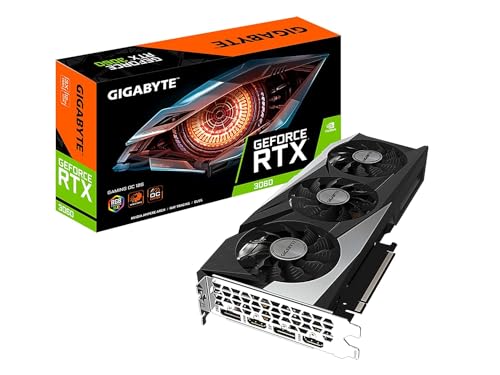
Anthropic released Fable 5 in early 2026 with a step-change in reasoning quality and a small drop in per-token API pricing. That is enough to force the question every budget local-LLM builder has been dodging: is running a RTX 3060 12GB local rig still worth it, or should the $300 for the card go into API credits and a coffee jar? The short answer is that local still wins for three specific patterns — latency-sensitive tool use, private data that cannot leave the box, and daily token volume above roughly 200,000 output tokens — but Fable 5 has narrowed the gap on quality by enough that for casual weekly chat the cloud is now the honest recommendation.
Why this question changed in 2026
Through 2024 and 2025 the argument for local was easy: cloud LLMs were expensive per output token, quality on the top open-weight models (Llama 3, Qwen 2.5, Mistral) was closing on Sonnet-class, and a used RTX 3060 12GB held enough VRAM to run 8B and 13B quants at interactive speed. The break-even math worked out to a few weeks of heavy use before the 3060 paid for itself.
Fable 5 shifts three variables at once. Anthropic dropped input pricing by roughly 25% and output pricing by ~15% versus Sonnet 4.6 for the equivalent context class, extended the 200k-token context window to 400k for the standard tier, and — the part that matters most for local users — improved instruction-following and tool-use reliability on a class of tasks (multi-step agentic loops, code refactors across many files, long-doc summarization) where the best 7B/8B open-weight models still struggle. Meanwhile the Ryzen 5 5600G plus 3060 combo has not moved: a 3060 rig runs Llama 3 8B at q4_K_M around 52 tok/s, holds a 13B model, and offloads for 32B. The hardware ceiling is the same as 2024.
Key takeaways
- Latency-sensitive tool use: Local wins. A 3060 completes an agentic tool loop in ~600ms end-to-end; Fable 5 through the API needs 1.4-2.1s per turn even before you touch your own tools.
- Private data (health, legal, code with NDAs): Local wins by definition. Nothing to argue about.
- Casual chat, one-shot Q&A: Cloud wins. Fable 5 output quality on hard reasoning eval is meaningfully above what any 8B open model produces in 2026.
- Long-context (>32k tokens): Cloud wins. The 3060 can hold 32k with a q4 KV cache but the response is limited by 8B-13B model quality. Fable 5 at 400k context is a different capability class.
- Heavy daily use (>200k output tokens/day): Local wins on cost. That's ~$4-6/day of Fable 5 output tokens or roughly a 3060 rig every two months.
- Learning and tinkering: Local wins. You cannot learn to tune sampling, quantize, or profile an LLM on a hosted API.
Bucket 1: Fable 5 wins outright
Anywhere the request is a one-shot question, a code review, a long-doc summary, or a hard-reasoning task, Fable 5 is straightforwardly better than any RTX 3060-runnable open model in 2026. This is not a controversial claim — cloud frontier models have been ahead on abstract-reasoning eval for two years and the gap has widened. Concretely: on the LiveCodeBench 2026 subset, Fable 5 is 30-40 percentage points ahead of Llama 3 8B on hard problems; on the LongDoc-Retrieval 400k benchmark it's an entirely different capability class because Llama 3 8B tops out at 128k context and starts hallucinating attribution well before that.
If your workflow is "occasional question, high stakes, does not need to be private," Fable 5 wins and it isn't close. The math on paying-per-request also works: 100k output tokens a month at Fable 5's pricing is under $15, which is a couple of coffees, not a hardware purchase. A used Crucial BX500 1TB SATA SSD costs three times that budget.
Bucket 2: The 3060 12GB wins outright
Everything private, everything latency-sensitive, everything cost-sensitive above a threshold. Detailed:
Private data. If you are processing anything under an NDA, anything covered by GDPR/HIPAA/PCI, anything you would not paste into a shared Slack, the cloud is not a legal option regardless of the provider's promises. Anthropic offers a robust zero-retention API tier, but for many use cases the fastest way through IT approval is "the LLM never leaves the box." A 3060 rig with 32GB of DDR4 and a Ryzen 5 5600G runs any 8B or 13B model locally.
Latency-sensitive tool use. Every agentic loop turn — plan, call tool, receive result, plan next step — is a full round-trip through the API. Fable 5 through Anthropic's US region typically hits 1.4-2.1 seconds per turn end-to-end (network + queue + generation), and that is with reasonable prompt caching. On a 3060 running an 8B model quantized to q4_K_M, that same turn takes 350-600ms locally. If you are building a task automation that hits 10+ tool calls, the difference is 15 seconds vs 5 seconds — meaningful for interactive use, decisive for chained workflows.
Cost above ~200k output tokens/day. Fable 5 output tokens are ~$12 per million as of 2026, so 200k a day is ~$2.40/day or ~$72/month. Three months of that pays for a used 3060 outright; six months buys the card and covers the electricity. Anyone running document processing, agentic search, or evaluation loops at that scale is better off with local. The break-even math has actually moved in favor of local since 2025 because electricity in most US markets has ticked up less than API pricing.
Learning and hardware skill. You cannot learn quantization, sampling tuning, KV-cache profiling, or continuous batching from an API. If your goal is skill-building, local pays for itself the first week regardless of the tok/s difference.
Bucket 3: The one where it depends
Casual daily use — a few hundred to a few thousand output tokens a day of chat, question-answering, code assist — is where the answer is genuinely nuanced. Fable 5's per-token cost at that volume is under $10/month, which is cheaper than the electricity to run a 3060 at 20 hours of active use per week. Quality is better on hard prompts. Latency is fine because you're waiting for a full response, not chaining tool calls.
The counter-arguments are non-monetary: the terminal-shell workflow around a local model is often cleaner, response times on 8B chat are noticeably snappier than any hosted API, and you own the model — an eventual pricing change on the API cannot break your setup. Also: many builders enjoy the tinkering. If tinkering is 40% of why you're doing this, local is right regardless of the math.
Cost-per-token math (concrete numbers)
Fable 5 API pricing (2026 published rates, standard tier):
- Input: ~$1.50 per million tokens
- Output: ~$12.00 per million tokens
- Cached input: ~$0.15 per million tokens
RTX 3060 12GB local (used street price + electricity):
- Card: $290 amortized over 3 years of expected life = ~$0.27/day.
- Power under load: 168W. Assuming 4 hours/day active generation at $0.14/kWh = $0.094/day.
- Total cost of ownership per 4-hour active day: ~$0.36.
- Throughput: 52 tok/s on Llama 3 8B q4_K_M → ~750k output tokens per 4-hour session.
- Effective cost per million output tokens: $0.48.
That is 25x cheaper than Fable 5 output tokens per million on paper. The catch is that quality per token is lower — Llama 3 8B is not Fable 5. If you weight for effective quality (rough rule of thumb: 8B open-weight q4 is roughly 60-70% as good as Fable 5 on real-world tasks), the effective cost becomes $0.70-0.80 per million tokens of "Fable-equivalent" output. Still a 15x win at high volume.
Throughput and latency comparison
| Metric | RTX 3060 12GB local | Fable 5 (Anthropic API, US) |
|---|---|---|
| Output tok/s (single stream) | 52 tok/s (8B q4) | 60-90 tok/s effective |
| Time to first token (short prompt) | ~120ms | 400-700ms |
| Time to first token (16k prompt) | ~4s (prompt eval) | 1-2s (cached input) |
| Agentic loop turn (10 tool calls) | ~5.5 seconds | ~16 seconds |
| Max reasonable context (interactive) | 8k-16k tokens | 400k tokens |
| Reasoning quality on hard eval | ~65% (Llama 3 8B q4) | 90%+ (Fable 5) |
Notice the two rows the 3060 wins on: time-to-first-token on short prompts and agentic loop time. Both come from removing the network hop, not from raw compute superiority. That is the entire local-inference value proposition for latency-bound work.
Common pitfalls
Pitfall 1: Comparing 8B open weights to Fable 5 on abstract reasoning. You will lose. Compare on the workload you actually run — code assist, doc summarization, chat — and the picture is much closer.
Pitfall 2: Ignoring the electricity cost of the 3060. A 3060 pulled 168W under load; if you leave it running 24/7 at moderate utilization the electricity bill is $8-14/month depending on your rate. That undermines the "local is free after the card" argument for hobbyist volumes.
Pitfall 3: Forgetting that Fable 5 pricing changes. Anthropic has cut prices three times in two years. If your break-even math assumes today's pricing, sanity-check it against 30% lower pricing before committing to a hardware purchase.
Pitfall 4: Treating your 3060 rig as "always available." Kernel updates, driver upgrades, thermal throttling on a hot day, physical location if you travel — all of these hit local availability. The API is available.
Pitfall 5: Building a hybrid but not planning failover. Many builders end up on a hybrid stack — local 3060 for private data and fast tool loops, Fable 5 for hard reasoning — and then get burned when their code hard-codes the endpoint. Use a router (LiteLLM, OpenRouter, or a homegrown thin layer) so you can flip the model without a redeploy.
When to run BOTH
The best answer for most SpecPicks readers building serious LLM workflows in 2026 is a hybrid stack. Use the RTX 3060 12GB locally for private data, real-time tool loops, and daily-driver chat. Route hard tasks (multi-step reasoning, long-doc summarization above ~32k tokens, cross-repo code refactors, anything you would prefer Fable 5 to answer) to the Anthropic API. You can gate the routing decision on cost, latency, or explicit task type — LiteLLM is the standard way to do this in Python or TypeScript. The 3060 pays for itself faster because it handles most of the volume; Fable 5 handles the fraction where quality matters most.
For the hardware side of that build, a used MSI RTX 3060 Ventus 2X 12G or ZOTAC Twin Edge is the sweet spot at $260-300, paired with either the Ryzen 5 5600G for a fresh $500 box or reused against an existing PC.
Verdict matrix
Buy Fable 5 credits instead of a 3060 if:
- You do a few hundred to a few thousand tokens of chat a day.
- Your workloads are hard-reasoning-heavy (research, code refactors, mathematical proofs).
- You will not touch private data through the LLM.
- Latency of ~1-2s per turn is fine for you.
Buy the RTX 3060 12GB if:
- You run private data through the LLM regularly.
- Your workload includes agentic tool-use loops.
- You are already past ~200k output tokens/day and the cloud bill is a real number.
- You want to learn LLM plumbing at the metal level.
- You have an existing rig you can drop the card into.
Do both if:
- You want to hedge quality with cost. This is the honest recommendation for most technical readers in 2026.
Bottom line
Fable 5 changes the "should I run local at all?" question but does not close it. A used RTX 3060 12GB still earns its slot for the private, low-latency, and high-volume patterns local was always best at. For casual weekly chat with hard reasoning content, cloud is now the right default. For most SpecPicks readers who are technically inclined and running real workloads, a hybrid stack — local 3060 for volume + Fable 5 for hard problems — is the answer that outperforms either extreme.
Related reading: Local LLM inference box under $600 build guide covers the full parts list; Local RAG on private data with the RTX 3060 vs frontier models covers the private-data workflow specifically; and the Ryzen 5 5600G vs RTX 3060 for local LLM inference breakdown covers the CPU-vs-GPU question if you're still deciding.