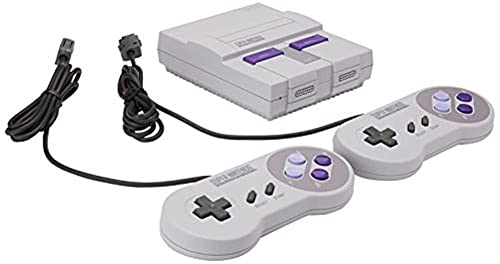
Buy the Sega Genesis Mini or Nintendo Super NES Classic Edition if you want twenty-plus polished classics on your TV in ten minutes with zero setup and no ROM sourcing. Build a Raspberry Pi RetroPie box (start with a Raspberry Pi 4 8GB) if you want a library that spans everything from Atari 2600 through PS1 and light Dreamcast, you already own your cartridges, and you enjoy a weekend of tinkering to save decades of collecting.
Plug-and-play nostalgia vs a flexible DIY emulation box
Every year around the holidays the same buying decision resurfaces: should you drop $80 on a Genesis Mini or an SNES Classic, or spend a similar amount on a Raspberry Pi kit and build a real retro emulation box? These are legitimately different products with different trade-offs, and the "correct" answer changes depending on whether the person unwrapping it is a nostalgic parent, a curious teenager, or a hobbyist who already has a soldering iron and a spare TV.
The Sega Genesis Mini and Nintendo Super NES Classic Edition are consumer appliances. You plug them in, pick a game, and the emulator inside is invisible. Nintendo and Sega both licensed the ROMs, tuned the emulator to a specific game list, and packaged the whole thing with proper controllers and HDMI output. This matters more than it sounds: the emulation quality on the SNES Classic in particular is genuinely excellent, and Nintendo built save states, rewind, and per-game display filters into the shell so a five-year-old can use it without help.
A Raspberry Pi RetroPie build is a completely different proposition. It's an open-source software distribution running on a general-purpose single-board computer, and it can emulate everything from a 1977 Atari 2600 through a 2000 PS1 (with tuning) — call it 15,000+ titles across dozens of systems, if you have legal access to those game files. The catch is that you own the whole setup: choosing a case, flashing an SD card, mapping controllers, fetching box art, calibrating video output, and staying on the right side of copyright for the ROMs. RetroPie itself is well-maintained and the community has been running it on the Pi since 2013, so it's not fragile — but it is a project.
The rest of this piece dissects those two paths on the axes that actually matter: what's inside each device, library size and expandability, DIY effort, emulation accuracy, video output, cost math, and where each option makes sense.
Key takeaways
- Genesis Mini and SNES Classic are polished, licensed, plug-and-play devices with fixed ~20–40-game libraries. Best gift-buy path.
- Raspberry Pi 4 8GB with RetroPie can emulate everything from Atari through PS1 (with tuning) and light Dreamcast — but you supply the game files legally.
- Cost is similar upfront — mini consoles run ~$60–$100 street, a fully kitted Raspberry Pi 4 8GB build lands at $130–$200 depending on controllers and case.
- Emulation quality: SNES Classic > Genesis Mini > RetroPie on Pi Zero W ≫ RetroPie on Pi 4 for accuracy of shipped titles. RetroPie on Pi 4 wins the moment you need anything outside those two shipped libraries.
- Time investment: minis are 10 minutes from unboxing to play. A first-time RetroPie build is a full weekend if you want it right.
What's actually inside the Sega Genesis Mini and SNES Classic?
Both are ARM SBCs running a locked-down Linux and a custom-tuned emulator. The Sega Genesis Mini uses M2's emulation engine — the same team behind the Sega Ages re-releases — which is widely regarded as the gold standard for Mega Drive/Genesis emulation, with cycle-accurate YM2612 audio and correct 240p/320p output modes. The library is 42 titles including Sonic the Hedgehog 1/2, Streets of Rage 2, Gunstar Heroes, and Contra: Hard Corps.
The Nintendo Super NES Classic Edition ships 21 titles including Super Mario World, The Legend of Zelda: A Link to the Past, Super Metroid, Street Fighter II Turbo, and, notably, Star Fox 2 — a completed but never-released 1995 SNES title. Nintendo's emulator is a bespoke build that handles the SNES's various coprocessor chips (SuperFX, DSP-1, SA-1) properly. Save states and rewind are built in.
Both devices include two controllers (the SNES Classic's are physically superb — arguably the best mass-market SNES pad ever produced) and an HDMI cable. Setup is: plug in HDMI, plug in USB power, turn on TV, done.
How big is each official library and can you expand it?
Officially, no. The library is what ships. Both devices have been community-modded to load additional games — Hakchi for the SNES Classic and Project Lunar for the Genesis Mini are the mature toolchains — but modding voids the frictionless experience that is the whole point of the device. Once you're loading extra ROMs onto a Genesis Mini, you might as well have bought a Pi.
There's also a legal wrinkle. Loading ROMs onto a modded mini console has the same copyright status as loading them onto a Pi: you must legally own the game. The devices' first-party libraries are licensed on your behalf; anything you add isn't.
What can a Raspberry Pi RetroPie build emulate that the minis can't?
Effectively every 8-bit and 16-bit console, every major 8-bit and 16-bit computer (Amiga, ZX Spectrum, C64, DOS via DOSBox), most 32-bit and portable systems, and — with tuning on a Pi 4 — the light end of the PS1 catalogue. A Raspberry Pi 4 8GB with a modern RetroPie image is a genuine PS1 emulator for the vast majority of the library, though CPU-heavy titles like Ridge Racer Type 4 or Gran Turismo 2 want tuning.
Dreamcast on a Pi 4 works for a subset of titles via Reicast/Flycast, but it's the ceiling — expect setting-per-game tweaks. N64 is similarly patchy: Zelda: Ocarina of Time and Mario 64 run beautifully, Perfect Dark and Conker's Bad Fur Day fight you. Sega Saturn is basically off the table on a Pi 4.
A Raspberry Pi Zero W is a tiny, low-cost SBC that can emulate up through SNES and Genesis reliably. It's the platform behind the "handheld RetroPie in an old Game Boy shell" projects that flooded MakerFaires in 2020–2023. It cannot handle PS1 or later.
5-column spec-delta table
| Attribute | Genesis Mini | SNES Classic | Pi Zero W RetroPie | Pi 4 8GB RetroPie |
|---|---|---|---|---|
| Library size | 42 curated | 21 curated | Up to ~15,000 (you supply) | Up to ~50,000 (you supply) |
| Expandability | None official | None official | Full | Full |
| Video output | HDMI 720p | HDMI 720p | HDMI + composite | HDMI up to 4K |
| Setup effort | 10 minutes | 10 minutes | 3–5 hours first build | Full weekend for a polished build |
| Street price (device only) | ~$70 | ~$80 | ~$25 | ~$95 |
Comparison table — emulation accuracy and video output per option
| System / need | Best on |
|---|---|
| Genesis / Mega Drive 240p accuracy | Genesis Mini (M2 engine) |
| SNES accuracy including SuperFX titles | SNES Classic |
| NES, Master System, Game Gear | Any RetroPie build |
| PS1 | Pi 4 RetroPie |
| N64 (Mario 64, Zelda OOT) | Pi 4 RetroPie |
| Dreamcast (light titles) | Pi 4 RetroPie |
| Arcade (CPS1/CPS2, Neo Geo) | Pi 4 RetroPie |
| Zero-effort gift setup | Genesis Mini or SNES Classic |
| Handheld portable retro | Pi Zero W in a custom case |
| Living-room retro appliance with any-game freedom | Pi 4 RetroPie |
How much work is a RetroPie build for a non-technical buyer?
Honest answer: more than the marketing suggests, less than internet folklore suggests. The official RetroPie docs walk you through the whole flow, and it's well-written. The steps are:
- Buy a Raspberry Pi 4 8GB (or a starter kit if you want a case and PSU bundled), a class-10 microSD (32 GB minimum), and one or two USB controllers.
- Download the RetroPie image from retropie.org.uk, flash it to the microSD with Raspberry Pi Imager or balenaEtcher.
- Boot the Pi. RetroPie autodetects the controllers on first launch — press buttons when it prompts.
- Set your Wi-Fi credentials in the built-in Wi-Fi wizard.
- Legally acquire your ROMs. Dump your own cartridges with a Retrode or similar, use games from your Steam / GOG / Nintendo Switch Online catalog when possible, or stick to homebrew/public-domain titles. RetroPie itself ships zero games. See the Raspberry Pi 4 product page for hardware specs.
- Copy ROMs into the platform folders on the SD card over the network (
\\retropie\roms\snes\...). - (Optional but recommended) Configure scraping for box art and metadata in EmulationStation, tune shaders per system, and back the whole SD card image up.
A first-time build is a weekend project if you want the polished experience — controller mapping done right, box art everywhere, per-system shader presets, a tidy case. A "just enough to play" build is a Saturday afternoon.
Perf-per-dollar: curated nostalgia vs open-ended DIY
For under $100 the Sega Genesis Mini or Nintendo Super NES Classic delivers around 20–40 excellent titles you can play immediately, with the specific games those platforms are known for, presented well. On a per-game-you'll-actually-play basis that's excellent value.
For $150–$200 an all-in Raspberry Pi 4 8GB RetroPie build delivers access to thousands of titles across dozens of platforms, assuming you have legal source for the game files. On a per-title-that-exists basis, it's dramatically better value — but the "per title you'll actually play" gap narrows because most people only play a couple dozen games from any of these platforms in practice.
If you're a Game Pass / Nintendo Switch Online subscriber, factor that in — the SNES Classic library overlaps heavily with NSO's SNES catalog on your existing Switch.
Verdict matrix
Buy a Genesis Mini or SNES Classic if:
- The recipient is under 12 or over 60 and setup effort is a deal-breaker.
- You want a specific curated library of the era, not "everything ever."
- You care about legally-licensed ROMs on the device and don't want to dump your own.
- Frictionless HDMI + polished controllers matter to you.
Build a Pi 4 RetroPie if:
- You already own cartridges you can dump legally.
- You want more than one platform in one box (NES + SNES + Genesis + PS1 + arcade).
- You enjoy the setup as part of the hobby.
- You want future flexibility — new emulator cores, new shaders, new front-ends.
Build a Pi Zero W in a handheld case if:
- Your target is portable rather than living-room.
- You're happy topping out at SNES/Genesis-era systems.
- The build itself IS the project.
Common pitfalls when building a RetroPie box
- Cheap microSD cards die. Class-10 A1 from a name brand (SanDisk, Samsung, Kingston). Off-brand SD cards on a Pi under heavy read/write eventually corrupt.
- USB-C power to the Pi 4 must be 3A. Under-powered supplies cause instant crashes and mysterious file-system errors. Use the official Pi 4 power supply or a phone charger you've verified.
- Controller mapping is per-emulator. Set it once in EmulationStation but be ready to remap inside RetroArch for a few emulators (PS1 in particular).
- PS1 BIOS files aren't shipped. You need to supply your own; RetroPie ships zero BIOS/ROM content. This is a legal boundary.
- N64 is not "N64 emulation" as one thing. It's a per-game compatibility list. Do not promise a non-technical recipient "you can play any N64 game" — that's not accurate on any Pi.
- Passive cooling on a Pi 4 in a case with no airflow overheats. Add a small heatsink or use a case with a passive-cooling design (Argon ONE is popular).
Bottom line + recommended pick
If you want zero-friction retro on the living-room TV and don't need to go beyond ~40 curated titles per box, the Sega Genesis Mini or Nintendo Super NES Classic is the right buy. As of 2026 they're both still widely available and prices are stable in the $60–$100 range. Nintendo's SNES Classic in particular is a genuinely great appliance.
If your household is going to want NES + SNES + Genesis + PS1 + arcade in one place, and you're willing to spend a weekend on it, a Raspberry Pi 4 8GB with RetroPie is the durable answer. It grows with the hobby — you can swap the SD card to try Batocera or Recalbox, add a Bluetooth 8bitdo controller, upgrade the case, or eventually drop the whole build into a small arcade cabinet. Nothing about a mini console offers that path.
For anyone new to Pi computing, a Raspberry Pi Zero W starter kit is a low-risk way to try the concept — you're out about $25–$40 for the hardware, and if the setup effort turns you off you haven't over-invested. If the ceiling of "8-bit and 16-bit systems only" is a dealbreaker, jump straight to the Pi 4 build and skip the Zero.
Related guides
- 3dfx Voodoo2 SLI 1998 build guide 2026
- NES graphics upgrade mod news 2026
- Rescue a retro PC image from IDE to CompactFlash
- Voodoo2 SLI Glide 1998 build with CompactFlash
- Linux on Sega Mega Drive hack news 2026
Citations and sources
- RetroPie official documentation — install guides, supported systems, community forum
- Raspberry Pi 4 Model B product page — canonical hardware specs
- Tom's Hardware Raspberry Pi coverage — long-running Pi 4 benchmarks and emulation deep-dives